

The facade of a building is more than just an aesthetic element—it's the first line of defense against India's diverse climate, a reflection of architectural intent, and a significant investment in your project's longevity. Choosing the right facade material can mean the difference between a building that thrives for decades and one that deteriorates rapidly under the relentless Indian sun, monsoons, and humidity.
In this comprehensive guide, we'll compare five of the most popular facade materials used across India: glass, stone, metal, brick, and terracotta. We'll examine their costs, durability, maintenance requirements, aesthetic qualities, and suitability for different Indian climates to help you make an informed decision for your next project.
Understanding Facade Materials in the Indian Context
India's architectural landscape is incredibly diverse, with buildings ranging from traditional heritage structures to modern commercial complexes. The climate varies dramatically—from the humid coastal regions of Mumbai and Chennai to the dry heat of Delhi and Jaipur, and the heavy monsoon areas of Kerala and the Northeast.
Each facade material performs differently under these varying conditions, and the choice often depends on your project's location, budget, maintenance capacity, and aesthetic vision. Let's break down each material to help you understand which might be best suited for your needs.
Build cost · Bengaluru, May 2026
Glass Facades: Modern Aesthetics with Performance Trade-offs
Cost Analysis
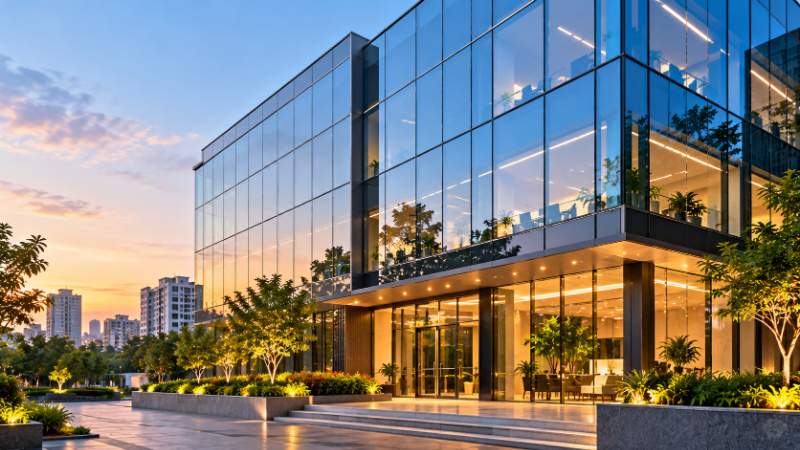
Glass facades are among the most expensive options in India. Expect to pay between ₹1,500 to ₹4,000 per square meter for standard glazing systems, with premium options like double-glazed or low-emissivity (Low-E) glass ranging from ₹3,500 to ₹6,500 per square meter. Installation costs can add another 30-40% to material expenses.
High-rise buildings in major metros like Mumbai, Bangalore, and Delhi frequently use glass facades, with total project costs ranging from ₹5 to ₹8 crores for medium-sized commercial buildings.
Durability and Climate Suitability
Glass facades perform well in India's urban environments but require careful consideration of climatic factors. In coastal cities like Mumbai and Chennai, salt spray can corrode aluminum frames over time. The intense heat in cities like Delhi and Jaipur can cause thermal stress and expansion issues.
However, modern glass systems with proper framing and sealing can last 20-25 years with adequate maintenance. The real challenge is thermal performance—glass conducts heat efficiently, which can increase cooling costs significantly in hot climates.
Frequently asked
Maintenance Requirements
Glass facades demand regular maintenance, especially in polluted urban areas. Monthly or quarterly cleaning is necessary to maintain transparency and aesthetics. In dusty regions like Rajasthan or during monsoon seasons, you might need more frequent cleaning.
Sealant deterioration is a common issue, particularly in high-humidity coastal areas. Plan for sealant replacement every 5-7 years at a cost of ₹200-500 per meter of joint.
Aesthetic Appeal
Glass facades offer unmatched transparency and modernity, creating striking visual effects, especially when combined with reflective or tinted options. They're ideal for corporate offices, shopping malls, and luxury residential projects seeking a contemporary image.
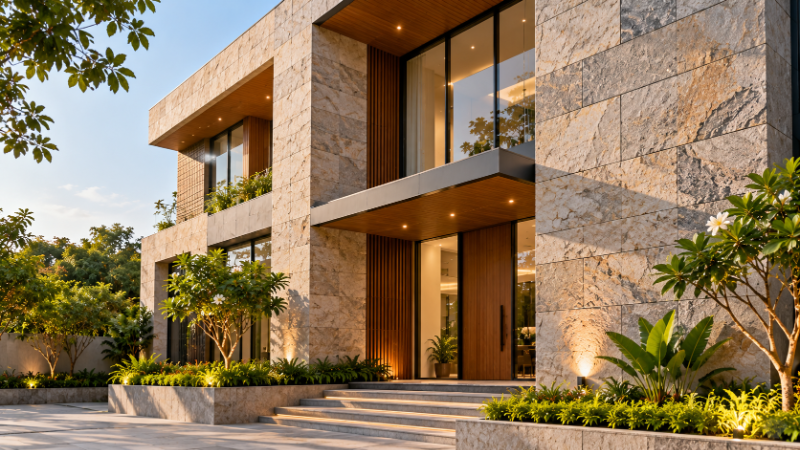
Stone Facades: Timeless Elegance and Proven Performance
Cost Analysis
Stone facades are moderately priced, ranging from ₹800 to ₹2,500 per square meter depending on the type and quality. Premium imported stones like Italian marble or granite cost more, while locally sourced materials like Rajasthani or Karnataka stone are more economical.
Common options include granite (₹1,000-2,000/sqm), marble (₹1,200-2,500/sqm), and sandstone (₹600-1,500/sqm). Installation typically adds 20-30% to material costs.
Durability and Climate Suitability
Stone is exceptionally durable and performs well across all Indian climates. Buildings with stone facades in cities like Jaipur, Delhi, and Bangalore have remained structurally sound for 50+ years. Stone resists weathering, UV radiation, and temperature fluctuations effectively.
However, softer stones like sandstone can be affected by acid rain, particularly in industrial areas. Granite and marble are more resistant to such environmental factors. In coastal regions, ensure proper sealing to prevent salt penetration.
Maintenance Requirements
Stone facades require moderate maintenance. Annual cleaning with appropriate methods (pressure washing for granite, gentle cleaning for marble) costs ₹50-150 per square meter. Sealing every 3-5 years (₹100-300/sqm) protects against staining and moisture ingress.
Watch for efflorescence (white salt deposits) in high-humidity areas, which requires specialized cleaning. Overall maintenance costs are relatively low compared to other materials.
Aesthetic Appeal
Stone facades exude permanence, luxury, and architectural sophistication. They're ideal for heritage projects, high-end residential complexes, and institutional buildings. The natural variations in stone create unique visual character that improves with age.
Metal Facades: Industrial Strength with Modern Appeal
Cost Analysis
Metal facades (primarily aluminum and steel) cost between ₹1,200 to ₹3,500 per square meter. Aluminum composite panels (ACP) are more affordable at ₹800-1,500/sqm, while standing seam metal roofing systems cost ₹1,500-3,000/sqm.
Installation costs add 25-35% to material expenses. While initially comparable to stone, long-term value depends heavily on maintenance practices.
Durability and Climate Suitability
Metal facades face significant challenges in India's climate. Coastal regions pose the greatest threat—salt spray causes rapid corrosion of unprotected steel. Even aluminum requires protective coatings in such environments. Standard metal facades typically last 15-20 years, while properly maintained systems can reach 25-30 years.
In dry climates like Rajasthan or Delhi, metal facades perform better. However, thermal expansion and contraction cycles can be problematic, potentially leading to joint separation and water infiltration.
Maintenance Requirements
Metal facades demand consistent maintenance to prevent corrosion. Annual inspection and touch-up painting costs ₹200-400 per square meter. Coastal projects require semi-annual maintenance at higher costs.
Sealant replacement is frequent (every 3-4 years), adding ₹150-300/sqm to maintenance budgets. Neglected metal facades can deteriorate rapidly, making this an ongoing commitment.
Aesthetic Appeal
Metal facades offer contemporary, industrial aesthetics with excellent design flexibility. They're popular for tech parks, manufacturing facilities, and modern commercial buildings. The variety of finishes—matte, glossy, or textured—provides design versatility.
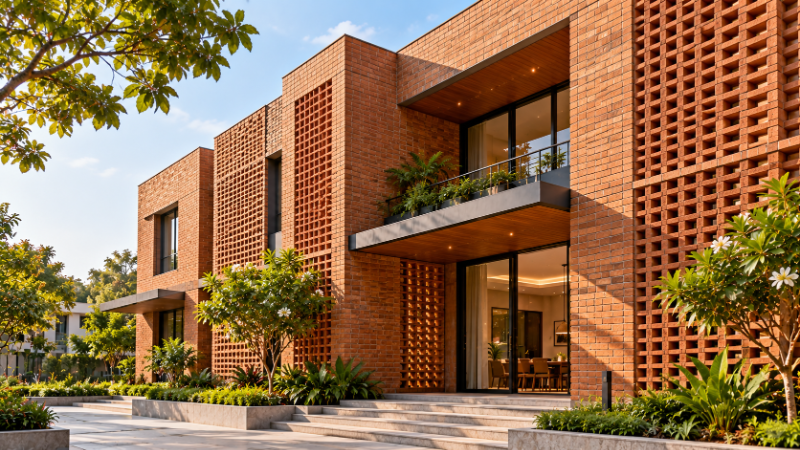
Brick Facades: Traditional, Economical, and Sustainable
Cost Analysis
Brick is the most economical facade option at ₹300 to ₹800 per square meter for materials and labor combined. Standard clay bricks cost ₹4-8 per unit, while decorative or engineered bricks range from ₹10-25 per unit.
For a typical residential building in Indian cities like Pune, Mumbai, or Bangalore, brick facades represent the lowest initial investment, making them ideal for budget-conscious projects.
Durability and Climate Suitability
Brick is remarkably durable, with buildings standing for 100+ years across India. It performs exceptionally well in all climates—from coastal humidity to desert heat. Brick naturally regulates temperature and moisture, reducing cooling loads in hot climates.
However, quality varies significantly. Poor-quality bricks or improper construction can lead to water infiltration, efflorescence, and structural issues. Ensure bricks meet IS 1077 standards for Indian construction.
Maintenance Requirements
Brick facades require minimal maintenance. Periodic repointing of mortar joints (every 20-30 years) costs ₹100-200 per square meter. Cleaning can be done with mild pressure washing at ₹20-50/sqm, though harsh methods damage the material.
Watch for rising damp in high-water-table areas and ensure proper damp-proof courses during construction. Overall, brick is one of the lowest-maintenance facade options available.
Aesthetic Appeal
Brick offers warm, traditional aesthetics that age beautifully. Modern architects are increasingly using exposed brick in contemporary designs, creating striking visual effects. The variety of colors—from deep red to golden yellow to grey—allows significant design flexibility.
Brick facades are ideal for residential projects, educational institutions, and heritage-conscious developments across Indian cities.
Terracotta: Heritage Material with Modern Applications
Cost Analysis
Terracotta facades cost between ₹600 to ₹1,500 per square meter depending on the tile size and intricacy of installation. Handcrafted terracotta tiles are more expensive than machine-made options.
Installation requires skilled labor, adding 30-40% to material costs. Despite moderate pricing, terracotta remains less common than brick in contemporary Indian construction.
Durability and Climate Suitability
Terracotta is extremely durable and performs excellently in Indian climates. Historical buildings across Rajasthan, Gujarat, and South India demonstrate terracotta's longevity—many structures remain intact after 200+ years.
Terracotta naturally resists weathering, temperature fluctuations, and moisture. It's particularly suitable for hot, dry climates and performs well in coastal regions when properly sealed.
Maintenance Requirements
Terracotta requires minimal maintenance. Annual cleaning with mild solutions costs ₹20-40/sqm. Sealing every 5-7 years (₹100-200/sqm) protects against staining and moisture penetration, particularly in high-humidity areas.
Unlike brick, terracotta doesn't require repointing as frequently, making it a low-maintenance option overall.
Aesthetic Appeal
Terracotta offers distinctive warm tones and artisanal character that complement both traditional and contemporary architecture. It's experiencing a revival in India, particularly in heritage conservation projects and sustainable architecture movements.
The material's thermal mass properties also contribute to energy efficiency, making it attractive for environmentally conscious developers.
Comparative Analysis: Which Material Wins?
Cost Comparison
Most Economical: Brick (₹300-800/sqm) Mid-Range: Terracotta (₹600-1,500/sqm), Stone (₹800-2,500/sqm) Premium: Metal (₹1,200-3,500/sqm), Glass (₹1,500-6,500/sqm)
Durability Ranking
1. Stone – 50+ years with minimal degradation 2. Brick & Terracotta – 50+ years, proven performance 3. Metal – 15-30 years depending on climate 4. Glass – 20-25 years with regular maintenance
Maintenance Intensity
Low Maintenance: Brick, Terracotta, Stone Moderate Maintenance: Glass High Maintenance: Metal (especially in coastal areas)
Climate Suitability by Region
Coastal Cities (Mumbai, Chennai, Goa): Stone, Brick, Terracotta (best); Glass and Metal require protective measures Hot Dry Climates (Delhi, Rajasthan, Gujarat): All materials perform well; Brick and Terracotta offer superior thermal performance Humid Tropical (Kerala, Northeast): Stone, Brick, Terracotta excel; Metal requires robust protection Temperate (Bangalore, Pune): All materials suitable; choose based on aesthetic and budget preferences
Hybrid Approaches: Combining Materials for Optimal Performance
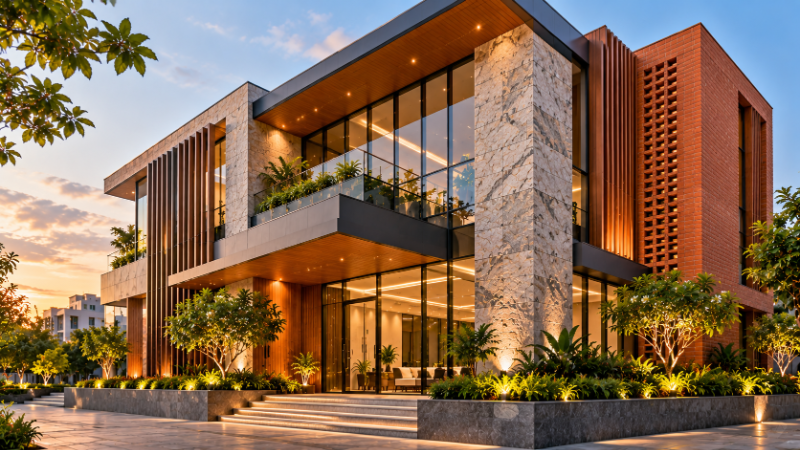
Many modern Indian buildings employ hybrid facade systems combining multiple materials. For example, combining stone cladding with glass for transparency, or using brick with terracotta accents for visual interest while maintaining durability.
These approaches leverage each material's strengths while minimizing weaknesses. A building might use stone for the base (weather-resistant), glass for office areas (transparency and light), and metal for accent panels (contemporary aesthetics).
Regulatory and Sustainability Considerations
India's building codes, including the National Building Code (NBC) 2016, specify requirements for facade materials regarding fire safety, thermal performance, and structural integrity. Ensure your chosen material complies with local regulations in your city.
Sustainability is increasingly important. Brick and terracotta are locally sourced and have lower embodied carbon. Stone requires quarrying but lasts exceptionally long, offsetting environmental costs. Glass and metal recycling programs are expanding in major Indian metros.
Making Your Decision: Key Questions to Ask
What is your total budget for facade materials and installation?
What is your building's location and local climate profile?
How much ongoing maintenance can you realistically commit to?
What aesthetic vision do you want to achieve?
What is the expected lifespan of your building?
Are there local regulatory requirements affecting material choice?
Do sustainability and embodied carbon matter for your project?
Finding the Right Facade Specialist on AECORD
Selecting facade materials is a critical decision that impacts your building's performance, maintenance costs, and aesthetic value for decades. While this guide provides comprehensive information, working with experienced facade specialists, architects, and engineers is essential for your specific context.
AECORD connects you with qualified facade consultants, material suppliers, and installation contractors across India who specialize in glass, stone, metal, brick, and terracotta systems. These professionals understand regional climate challenges, local regulations, and cost optimization strategies specific to Indian markets.
Whether you're developing a commercial complex in Bangalore, a residential project in Mumbai, or a heritage restoration in Jaipur, finding the right facade partner through AECORD ensures your building receives expert guidance tailored to your location, budget, and vision.
Conclusion
Each facade material offers distinct advantages suited to different project requirements and Indian climatic conditions. Brick and terracotta provide economical, durable solutions ideal for most projects. Stone offers timeless elegance with exceptional longevity. Glass delivers modern aesthetics but requires higher maintenance. Metal provides contemporary appeal with climate-dependent durability.
The best choice depends on your specific circumstances—budget, location, maintenance capacity, and aesthetic goals. Consider consulting with AECORD's network of facade specialists who can provide localized recommendations based on your building's unique requirements and regional conditions.
Your facade is your building's most visible and weathered element. Choosing the right material ensures your project thrives for generations while maintaining aesthetic appeal and structural integrity throughout India's diverse climate zones.