

Understanding Energy-Efficient Windows in the Indian Context
India's climate varies dramatically across regions—from the scorching heat of Delhi and Mumbai to the humid monsoons of Kerala and the cold winters of Himachal Pradesh. This diversity makes energy-efficient windows not just a luxury but a practical necessity for Indian homeowners. Energy-efficient windows can reduce your annual cooling and heating costs by 15-30%, depending on your location and current window specifications.
The concept of energy-efficient windows goes beyond simple glass panes. It encompasses a complete system including the glass type, frame material, sealing mechanisms, and installation quality. For Indian homes, understanding these components is essential to making an informed decision that balances comfort, durability, and cost-effectiveness.
Build cost · Bengaluru, May 2026
The Science Behind Energy-Efficient Glass Types
Double-Glazed (Double-Pane) Windows
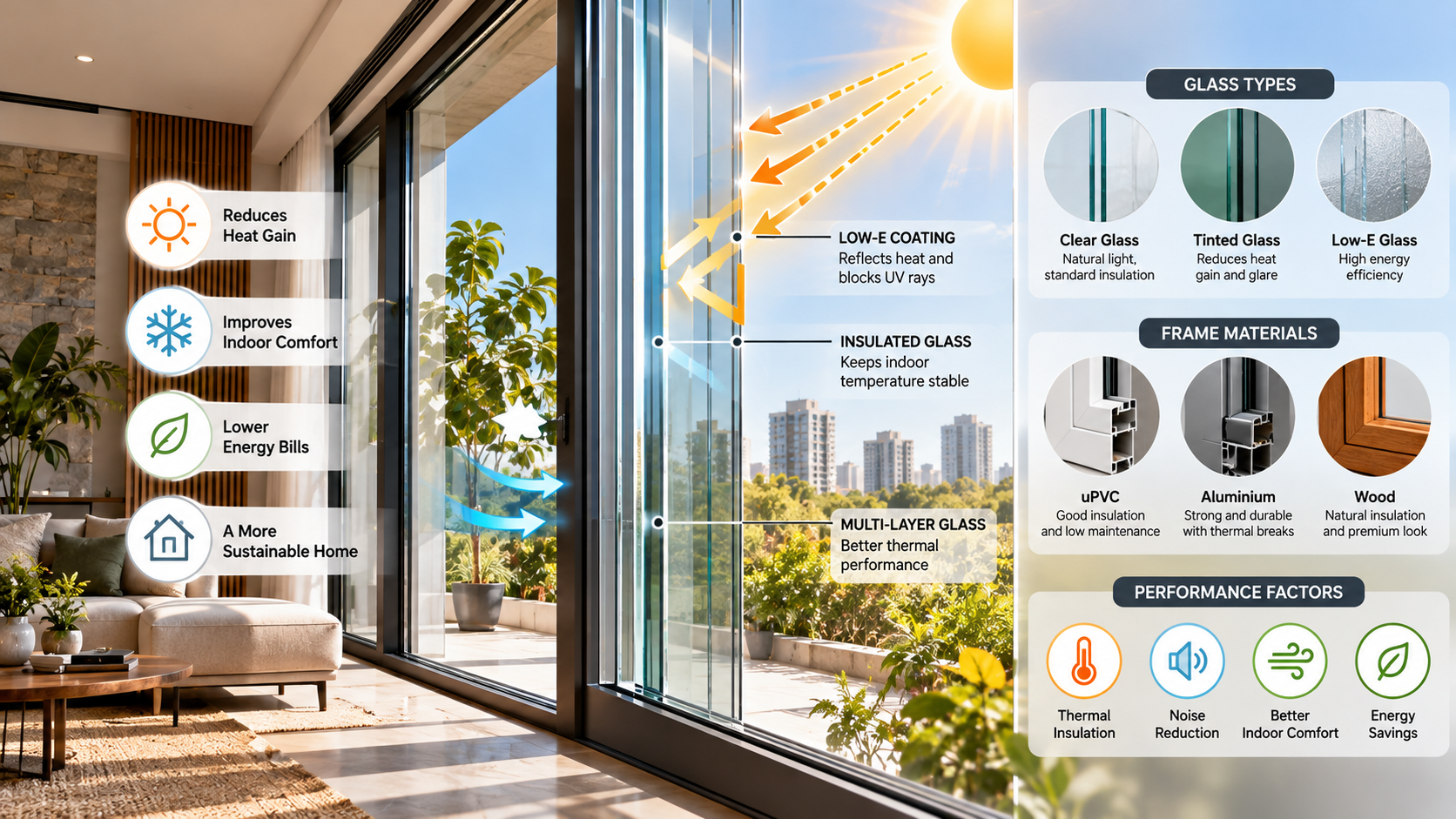
Double-glazed windows consist of two glass panes separated by an air gap, typically 6-12mm wide. This design creates an insulating barrier that significantly reduces heat transfer compared to single-pane windows. In India, where air conditioning costs can constitute 40-50% of household electricity bills during summer months, double-glazed windows offer substantial savings.
The trapped air between the panes acts as an insulator. During summer, it prevents external heat from entering your home, while in winter (particularly relevant in northern Indian cities like Delhi, Shimla, and Srinagar), it prevents indoor heat from escaping. The cost of double-glazed windows in India ranges from ₹800 to ₹2,500 per square foot, depending on quality and specifications.
Triple-Glazed Windows
Triple-glazed windows feature three glass panes with two air gaps, offering superior insulation compared to double-glazed options. While less common in India due to higher costs (₹1,500-₹4,000 per square foot), they are increasingly popular in cold regions like Himachal Pradesh, Uttarakhand, and Kashmir.
The additional pane provides 20-30% better insulation than double-glazed windows. However, for most Indian climates, double-glazed windows provide an optimal balance between performance and cost. Triple-glazing becomes more economically justified in regions where winter temperatures regularly drop below 5°C.
Frequently asked
Low-Emissivity (Low-E) Glass Coatings
Low-E coatings are microscopically thin, transparent layers applied to glass surfaces to reflect infrared radiation while allowing visible light to pass through. These coatings are particularly valuable in India's hot climate.
There are two types of Low-E coatings:
Solar-Control (Hard-Coat) Low-E: Ideal for hot climates like Bangalore, Hyderabad, and coastal cities. These coatings reflect up to 70% of solar heat, reducing cooling loads significantly.
Thermal (Soft-Coat) Low-E: Better suited for cooler regions where retaining indoor heat is important. These are more effective at night when heat loss is a concern.
Low-E coating adds ₹200-₹600 per square foot to window costs but can reduce energy consumption by 20-30% in hot climates, making the investment worthwhile over a 10-15 year period.
Tinted and Reflective Glass
Tinted glass absorbs solar radiation, reducing glare and heat gain. Common tints in India include bronze, gray, and green. While less effective than Low-E coatings, tinted glass is more affordable (₹300-₹800 per square foot) and provides aesthetic benefits.
Reflective glass, which has a metallic coating, is highly effective at rejecting solar heat but can create external reflections that may not be desirable in residential settings. It's more commonly used in commercial buildings across Indian cities.
Frame Materials: Choosing the Right System Aluminum Frames
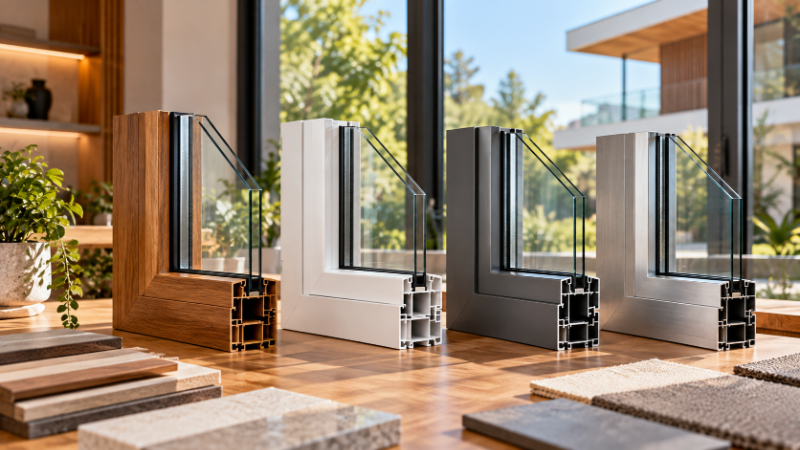
Aluminum is the most common window frame material in India due to its affordability, durability, and low maintenance requirements. Aluminum frames cost approximately ₹400-₹1,000 per square foot and are resistant to rust and corrosion, making them ideal for coastal cities like Mumbai, Chennai, and Goa.
However, aluminum is a thermal conductor, meaning it readily transfers heat and cold. To address this limitation, modern aluminum frames feature thermal breaks—insulating materials inserted between interior and exterior aluminum sections. This can improve thermal performance by 50-70%.
For Indian homeowners, aluminum frames with thermal breaks offer the best balance of cost, durability, and performance.
uPVC (Unplasticized Polyvinyl Chloride) Frames
uPVC frames are increasingly popular in India, particularly in metropolitan areas. They cost ₹600-₹1,500 per square foot and offer excellent thermal insulation properties. uPVC doesn't conduct heat or cold, making it inherently more energy-efficient than aluminum.
Benefits of uPVC include:
Superior insulation (U-value as low as 1.4 W/m²K compared to 5-6 for aluminum)
Low maintenance—no painting or varnishing required
Excellent weather resistance, suitable for all Indian climates
Good acoustic insulation, reducing outside noise by 30-40%
Drawbacks include potential brittleness in extreme temperatures and a higher initial cost. However, the long-term energy savings and minimal maintenance make uPVC a worthwhile investment for most Indian homeowners, especially in cities like Pune, Bangalore, and Delhi.
Wood Frames
Traditional wooden frames offer aesthetic appeal and natural insulation. They cost ₹800-₹2,500 per square foot and are popular in heritage homes and hill stations. However, wood requires regular maintenance, including painting and sealing, and is susceptible to termite damage—a significant concern in India's humid climate.
For most modern Indian homes, wood frames are less practical than uPVC or aluminum alternatives, though they remain popular in specific architectural contexts.
Composite Frames
Composite frames combine materials like wood-plastic composites or fiberglass with other materials to optimize performance and durability. They typically cost ₹1,200-₹2,000 per square foot and offer the aesthetic appeal of wood with improved durability and lower maintenance requirements.
Key Performance Metrics for Energy-Efficient Windows
U-Value (Thermal Transmittance)
The U-value measures how much heat passes through a window. Lower U-values indicate better insulation. In India:
Single-pane windows: U-value 5.5-6.0 W/m²K
Double-glazed (aluminum frame): U-value 2.8-3.5 W/m²K
Double-glazed (uPVC frame with Low-E): U-value 1.4-1.8 W/m²K
Triple-glazed (uPVC frame with Low-E): U-value 0.8-1.2 W/m²K
For hot Indian climates, a U-value between 1.5-2.0 W/m²K is considered optimal, balancing performance with cost.
Solar Heat Gain Coefficient (SHGC)
SHGC measures the fraction of solar radiation that passes through the window. Lower SHGC values are desirable in hot climates. In India:
Single-pane clear glass: SHGC 0.86
Double-glazed clear glass: SHGC 0.76
Double-glazed with solar-control Low-E: SHGC 0.30-0.40
For cities like Ahmedabad, Jaipur, and Lucknow, an SHGC of 0.30-0.40 can reduce cooling loads by 20-25%.
Visible Light Transmittance (VLT)
VLT indicates the percentage of visible light passing through the window. While Low-E coatings reduce heat, quality coatings maintain VLT above 70%, ensuring adequate natural lighting without excessive glare.
Installation and Sealing: Critical for Performance
Even the best energy-efficient windows perform poorly if installed incorrectly. Proper installation includes:
Air sealing: Gaps around the window frame must be sealed with weatherstripping and caulking to prevent air leakage. Poor sealing can reduce energy efficiency by 10-15%.
Proper framing: Windows must be installed level and plumb, with appropriate spacing from the wall structure.
Insulation: The space between the window frame and wall opening should be filled with foam insulation or mineral wool.
In India, installation quality varies significantly. When selecting windows, choose certified installers or professionals available on platforms like AECORD, where you can find experienced window installation specialists in your area.
Regional Considerations for Indian Climates
Hot and Dry Regions (Delhi, Jaipur, Lucknow)
Prioritize low SHGC values (0.25-0.35) with double-glazed windows and solar-control Low-E coatings. Aluminum frames with thermal breaks offer good performance at reasonable costs. Expected annual cooling savings: 25-30% compared to single-pane windows.
Hot and Humid Regions (Mumbai, Bangalore, Hyderabad)
Choose corrosion-resistant materials like aluminum or uPVC. Double-glazed windows with Low-E coatings are essential. Ensure proper ventilation to prevent condensation. Expected annual savings: 20-25%.

Coastal Regions (Chennai, Goa, Kochi)
Salt spray corrosion is a major concern. uPVC or aluminum with specialized coatings are recommended. Double-glazed windows provide additional acoustic insulation against ocean noise. Expected annual savings: 20-28%.
Cold Regions (Shimla, Srinagar, Manali)
Triple-glazed windows with thermal Low-E coatings and uPVC frames are ideal. High U-value performance (0.8-1.2 W/m²K) is essential. Expected annual heating savings: 30-40% compared to single-pane windows.
Cost-Benefit Analysis for Indian Homeowners
A typical middle-class home in India has 8-12 windows, averaging 2-3 square meters each. The total window area is approximately 20-30 square meters.
Investment Comparison:
Single-pane windows: ₹16,000-₹24,000 (total)
Double-glazed aluminum with thermal break: ₹96,000-₹180,000
Double-glazed uPVC with Low-E coating: ₹144,000-₹270,000
In a hot climate like Delhi or Bangalore, double-glazed windows with Low-E coatings can reduce annual electricity costs by ₹8,000-₹15,000, depending on current consumption patterns. This means the investment pays for itself in 10-18 years, after which you enjoy pure savings.
Additionally, energy-efficient windows improve comfort, reduce noise pollution, and increase property value—factors that enhance quality of life beyond mere financial returns.
Government Incentives and Standards
India's Bureau of Energy Efficiency (BEE) has established standards for window performance. While incentives for residential window upgrades are limited compared to commercial buildings, some state governments offer subsidies under energy efficiency programs.
Check with your state's energy department for potential rebates. Additionally, energy-efficient windows may qualify for benefits under certain home improvement loan schemes.
Maintenance Tips for Long-Term Performance
Clean glass and frames quarterly to maintain efficiency and appearance
Check weatherstripping annually and replace if damaged
Inspect caulking and re-seal if cracks appear
For uPVC frames, avoid harsh chemicals; use mild soap and water
For aluminum frames, apply protective coatings every 3-5 years in coastal areas
Making Your Decision: A Practical Checklist
Identify your climate zone and primary concern (cooling vs. heating)
Set a realistic budget, considering both installation and long-term savings
Compare U-values and SHGC ratings for your specific needs
Choose frame materials based on durability and maintenance preferences
Prioritize quality installation by certified professionals
Request warranties covering both materials and labor
Plan for regular maintenance to maximize window lifespan (15-25 years)
Conclusion: Investing in Comfort and Sustainability
Energy-efficient windows represent a smart investment for Indian homeowners seeking to reduce energy consumption, improve indoor comfort, and create more sustainable living spaces. Whether you're in the sweltering heat of Chennai, the temperate climate of Bangalore, or the cold winters of Shimla, there's an energy-efficient window solution tailored to your needs.
The key is understanding your specific requirements, comparing performance metrics, and choosing quality materials installed by experienced professionals. While the initial investment may seem substantial, the long-term savings, improved comfort, and environmental benefits make energy-efficient windows a worthwhile upgrade for any home.
Ready to find the right window solution for your home? Connect with certified window installation specialists and AECO professionals on AECORD. Our platform connects you with trusted experts across Indian cities who can assess your specific needs, provide detailed quotes, and ensure professional installation. Whether you're in Delhi, Mumbai, Bangalore, or any other Indian city, AECORD makes it easy to find the right professionals for your energy-efficient window project. Browse profiles, compare expertise, and start your journey toward a more comfortable and energy-efficient home today.