

The facade of a home is more than just its face—it's a reflection of the homeowner's personality, lifestyle, and values. As we move into 2026, Indian house facades are evolving with a blend of contemporary aesthetics, sustainable materials, and designs that celebrate cultural heritage while embracing modernity. Whether you're planning a renovation or building a new home, understanding these emerging trends will help you create a stunning exterior that stands the test of time.
The Evolution of Indian House Facade Design
Indian architecture has traditionally emphasized ornate details, vibrant colours, and intricate patterns. However, 2026 is witnessing a significant shift toward minimalism, sustainability, and functional beauty. This transformation is driven by changing lifestyles, environmental consciousness, and the influence of global design movements adapted to Indian climates and cultural contexts.
The modern Indian homeowner is increasingly seeking facades that are not only visually appealing but also energy-efficient, low-maintenance, and aligned with contemporary living standards. Cities like Bangalore, Mumbai, Delhi, and Pune are setting the pace with innovative residential projects that showcase these new design philosophies.
Build cost · Bengaluru, May 2026
Top Facade Materials Trending in 2026
1. Exposed Brick and Stone Cladding
Exposed brick facades have made a strong comeback, offering warmth and texture that resonates with both traditional and modern aesthetics. In Indian homes, especially in metros like Delhi and Bangalore, architects are using locally sourced stone cladding—such as Rajasthani sandstone, Kerala granite, and Himalayan slate—to create sophisticated exteriors.
Benefits: Durability, excellent thermal insulation, low maintenance, and authentic Indian character. The cost typically ranges from ₹800 to ₹2,500 per square foot, depending on the stone quality and sourcing.
2. Fiber-Reinforced Polymer (FRP) and Composite Panels
FRP panels are gaining traction in Indian residential design due to their lightweight nature, durability, and versatility. These materials can mimic the appearance of wood, stone, or metal while offering superior weather resistance—crucial for India's diverse climate zones.
Cities experiencing heavy monsoons, like Mumbai and Goa, are particularly embracing these materials for their water-resistant properties. FRP panels cost between ₹600 to ₹1,800 per square foot and require minimal maintenance.
Frequently asked
3. Recycled and Sustainable Materials
Eco-conscious homeowners are increasingly opting for facades made from recycled materials, including recycled plastic lumber, reclaimed wood, and upcycled metal. This trend aligns with India's growing focus on sustainability and reduces the environmental footprint of residential construction.
Sustainable cladding options typically cost ₹1,000 to ₹3,000 per square foot but offer long-term savings through reduced maintenance and energy efficiency.
4. Perforated Metal Screens
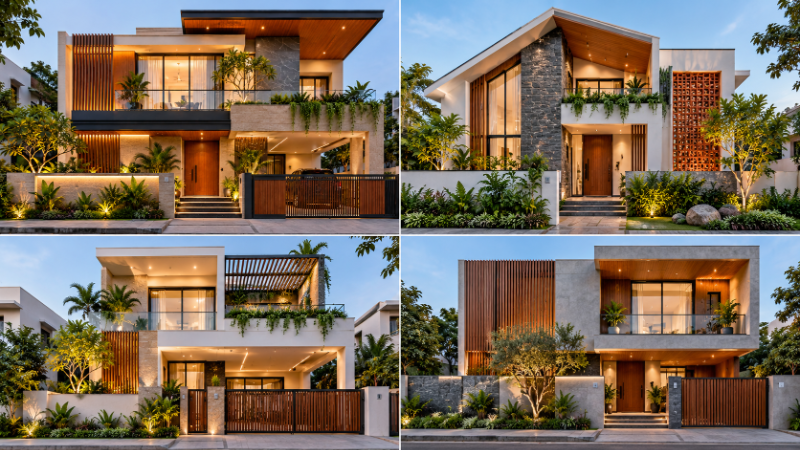
Perforated aluminum and steel screens are creating striking visual effects while serving functional purposes like solar shading and ventilation. These screens, often featuring geometric patterns or custom designs, add a contemporary edge to Indian facades.
This trend is particularly popular in Hyderabad and Pune, where architects are designing intricate patterns inspired by traditional Indian lattice work (jali). Costs range from ₹1,200 to ₹2,800 per square foot.
5. Living Walls and Green Facades
Vertical gardens and living walls are transforming Indian house facades into green spaces. These eco-friendly solutions improve air quality, reduce building temperature by up to 5°C, and create a unique aesthetic appeal.
While installation costs are higher (₹2,000 to ₹5,000 per square foot), the long-term benefits in terms of environmental impact and energy savings make them increasingly attractive to premium residential projects across Indian cities.
Colour Trends for 2026
Warm Neutrals and Earthy Tones
Moving away from the stark whites and greys of recent years, 2026 sees a return to warm, earthy tones inspired by Indian landscapes. Terracotta, ochre, warm beige, and soft taupe are dominating facade colour palettes.
These colours complement natural materials beautifully and perform well in India's intense sunlight, as they absorb less heat compared to darker shades. They're also timeless, ensuring your home remains stylish for decades.
Deep, Moody Tones
Charcoal grey, deep navy, and forest green are gaining popularity for creating sophisticated, contemporary facades. These colours work exceptionally well when combined with natural stone or wood elements, creating striking contrast.
In cities like Mumbai and Delhi, premium residential developments are featuring deep-toned facades paired with warm lighting, creating dramatic evening aesthetics.
Accent Colours and Biophilic Design
Rather than painting entire facades in bold colours, the trend is toward subtle accent walls featuring muted versions of vibrant hues—soft sage green, dusty terracotta, or muted indigo. These accents celebrate Indian heritage while maintaining contemporary sophistication.
Biophilic design principles are influencing colour choices, with natural greens and blues creating a connection between the home and nature.
Colour Psychology in Indian Homes
Traditional Indian culture associates colours with specific meanings. Modern facades are thoughtfully incorporating these principles: warm golds for prosperity, greens for growth and freshness, and blues for tranquility. This blend of cultural significance with contemporary design is uniquely Indian.
Contemporary Facade Design Styles for 2026
Minimalist Modernism
Clean lines, uncluttered surfaces, and geometric forms define minimalist modern facades. This style emphasizes functionality and simplicity, with facades featuring large glass panels, smooth wall surfaces, and minimal ornamentation.
This approach is particularly popular in Bangalore and Pune's tech-savvy communities, where residents appreciate the blend of aesthetics and practicality.
Contemporary Farmhouse
Blending rustic charm with modern sensibilities, contemporary farmhouse facades feature pitched roofs, natural materials, and warm colour palettes. This style is gaining traction in suburban developments across India, particularly in cities like Pune, Nashik, and Chandigarh.
The style works beautifully with exposed stone, wooden elements, and generous window placements that maximize natural light.
Neo-Indian Architecture
This emerging style celebrates Indian architectural heritage through modern interpretations. Facades feature traditional jali patterns, chajjas (overhanging eaves), and courtyards, but executed with contemporary materials and minimalist aesthetics.
Architects in Delhi, Jaipur, and Bangalore are leading this movement, creating homes that honour cultural roots while embracing modern living.
Industrial Chic
Exposed concrete, metal beams, large glass windows, and raw finishes characterize industrial-style facades. This aesthetic appeals to creative professionals and is particularly popular in creative hubs across Indian metros.
Biophilic and Organic Forms
Curved facades, flowing lines, and integration of natural elements create organic architectural forms. This style emphasizes harmony with nature and is often combined with green walls, water features, and natural lighting strategies.
Innovative Design Elements and Features
Smart Facade Technology
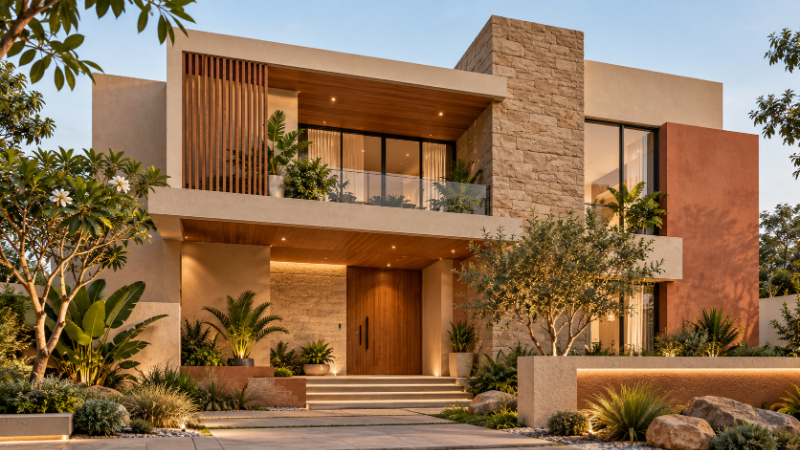
2026 is witnessing the integration of smart technology into home facades. Automated louvers, dynamic glass that adjusts tint based on sunlight, and LED lighting systems are becoming more common in premium Indian residential projects.
These technologies enhance energy efficiency and provide homeowners with greater control over their home's thermal performance—crucial in India's varied climate zones.
Multi-Functional Outdoor Spaces
Modern facades are increasingly designed with integrated outdoor living spaces—balconies, terraces, and verandas that serve multiple functions. These spaces blur the boundary between indoor and outdoor living, a concept deeply rooted in Indian architecture.
Water Management Features
Sustainable facades now incorporate rainwater harvesting systems, permeable surfaces, and strategic water features. This is particularly important in Indian cities facing water scarcity challenges.
Modular and Flexible Designs
Facades featuring modular elements allow homeowners to update or modify their exteriors without major renovations. Interchangeable panels, adjustable screens, and flexible material options provide long-term adaptability.
Regional Variations in Indian Facade Trends
Northern India (Delhi, Chandigarh, Jaipur)
Northern facades emphasize thermal efficiency due to extreme temperature variations. Thick walls, strategic window placement, and materials with high thermal mass are preferred. Warm earthy tones and traditional jali patterns remain popular.
Western India (Mumbai, Pune, Ahmedabad)
Western facades prioritize monsoon resistance and heat management. Perforated screens, overhanging elements, and light-reflecting materials are common. Contemporary and industrial styles are particularly popular in these metros.
Southern India (Bangalore, Chennai, Hyderabad)
Southern facades often feature green elements and water features due to relatively higher rainfall. Natural materials, open verandas, and biophilic design principles are prominent. Tech-forward minimalism is also gaining traction.
Eastern India (Kolkata)
Eastern facades blend colonial heritage with modern design. Materials like exposed brick and traditional courtyards are reinterpreted in contemporary styles, creating unique aesthetic expressions.
Budget Considerations for Modern Facade Projects
The cost of implementing modern facade trends varies significantly based on materials, design complexity, and location. Here's a general breakdown for Indian projects:
Basic Modern Facade: ₹600-₹1,200 per square foot
Mid-Range Contemporary Design: ₹1,200-₹2,500 per square foot
Premium Facades with Smart Features: ₹2,500-₹5,000+ per square foot
Remember that while premium materials and designs require higher initial investment, they often provide better durability, lower maintenance costs, and superior energy efficiency over time.
Practical Tips for Choosing Your 2026 Facade
Consider Your Climate Zone
India's diverse climate demands region-specific solutions. Choose materials and designs that address your area's specific challenges—monsoons in coastal regions, extreme heat in northern plains, or humidity in eastern regions.
Balance Aesthetics with Functionality
While visual appeal is important, prioritize functionality. Your facade should manage heat, moisture, and weather effectively while maintaining its beauty.
Plan for Maintenance
Consider long-term maintenance requirements. While some materials are stunning but demanding, others offer durability with minimal upkeep.
Seek Professional Guidance
Working with experienced architects and designers familiar with current trends and local conditions is crucial. Professionals on AECORD can help you navigate material choices, design options, and budget considerations specific to your location.
Invest in Quality
Quality materials and craftsmanship pay dividends. A well-executed facade adds significant value to your property and ensures longevity.
Sustainability and Future-Proofing Your Facade
2026 is a pivotal year for sustainable residential design in India. Modern facades increasingly incorporate:
Energy-efficient materials that reduce cooling and heating loads
Rainwater harvesting and management systems
Materials with low embodied carbon and recyclability
Designs that maximize natural ventilation and lighting
Green infrastructure like living walls and rooftop gardens
These sustainable approaches not only benefit the environment but also reduce operational costs and align with India's commitment to green building standards.
The Role of Technology in Modern Facade Design
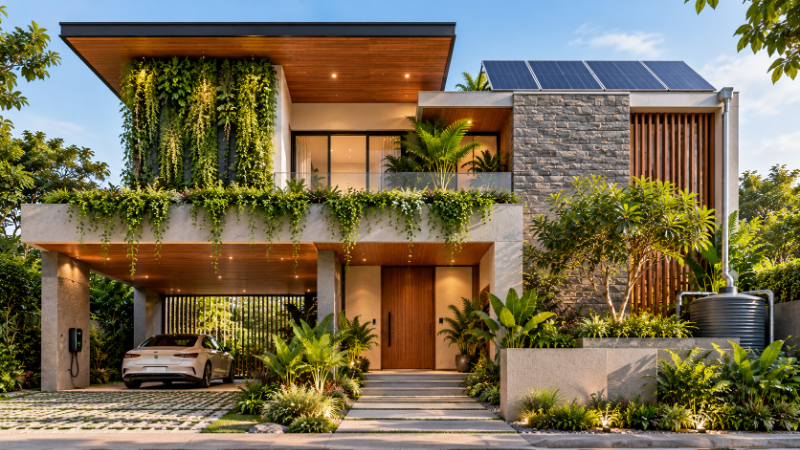
Digital tools are revolutionizing facade design. 3D visualization, virtual reality walkthroughs, and computational design allow homeowners to preview their facades before construction. These technologies help ensure that your vision aligns with the final result.
Additionally, simulation software can analyze thermal performance, natural lighting, and weather resistance, enabling data-driven design decisions.
Conclusion: Creating Your Dream Facade in 2026
The facade trends of 2026 reflect a sophisticated blend of aesthetics, functionality, sustainability, and cultural sensitivity. Whether you're drawn to minimalist modernism, neo-Indian architecture, or contemporary farmhouse styles, there's a design approach that resonates with your vision.
The key is to work with professionals who understand both current trends and your specific needs. From material selection to colour coordination to innovative design elements, every decision contributes to creating a facade that's not just beautiful today but remains timeless for decades.
When you're ready to bring your facade vision to life, AECORD connects you with experienced architects, designers, and contractors who specialize in modern Indian residential design. Browse through portfolios, compare expertise, and find the right professionals to transform your home's exterior into a stunning expression of contemporary Indian design.
Ready to explore modern facade options for your home? Visit AECORD today to connect with skilled AECO professionals who can help you design and execute the perfect facade for your 2026 home project. Whether you're in Bangalore, Mumbai, Delhi, Pune, or any other Indian city, find the expertise you need to create a beautiful, functional, and future-ready home exterior.
Frequently Asked Questions
What are the most popular facade materials for Indian homes in 2026?
The top trending materials include exposed brick and stone cladding (using locally sourced materials like Rajasthani sandstone), FRP composite panels, recycled sustainable materials, perforated metal screens, and living green walls. Each offers different benefits ranging from thermal insulation to weather resistance and environmental sustainability.
How much does it cost to install a modern facade in India?
Facade costs vary by material: exposed stone cladding ranges from ₹800-₹2,500 per sq ft, FRP panels cost ₹600-₹1,800 per sq ft, sustainable materials range from ₹1,000-₹3,000 per sq ft, and living walls are the most expensive at ₹2,000-₹5,000 per sq ft. The final cost depends on material quality, location, and complexity.
What is driving the shift in Indian house facade design trends?
The evolution is driven by changing homeowner preferences for minimalism and sustainability, increased environmental consciousness, energy efficiency requirements, and the influence of global design movements adapted to Indian climates and cultural contexts. Modern homeowners seek facades that are visually appealing, low-maintenance, and aligned with contemporary living standards.
Which facade materials are best for monsoon-prone Indian cities?
FRP composite panels and perforated metal screens are ideal for monsoon regions like Mumbai and Goa due to their superior water-resistant properties and durability against heavy rainfall. These materials maintain their integrity in high-moisture environments while requiring minimal maintenance.
How can green facades benefit Indian homes?
Living walls and vertical gardens improve air quality, reduce building temperature by up to 5°C, and create unique aesthetic appeal while lowering energy consumption. Though installation costs are higher, they provide significant long-term environmental and energy-saving benefits.