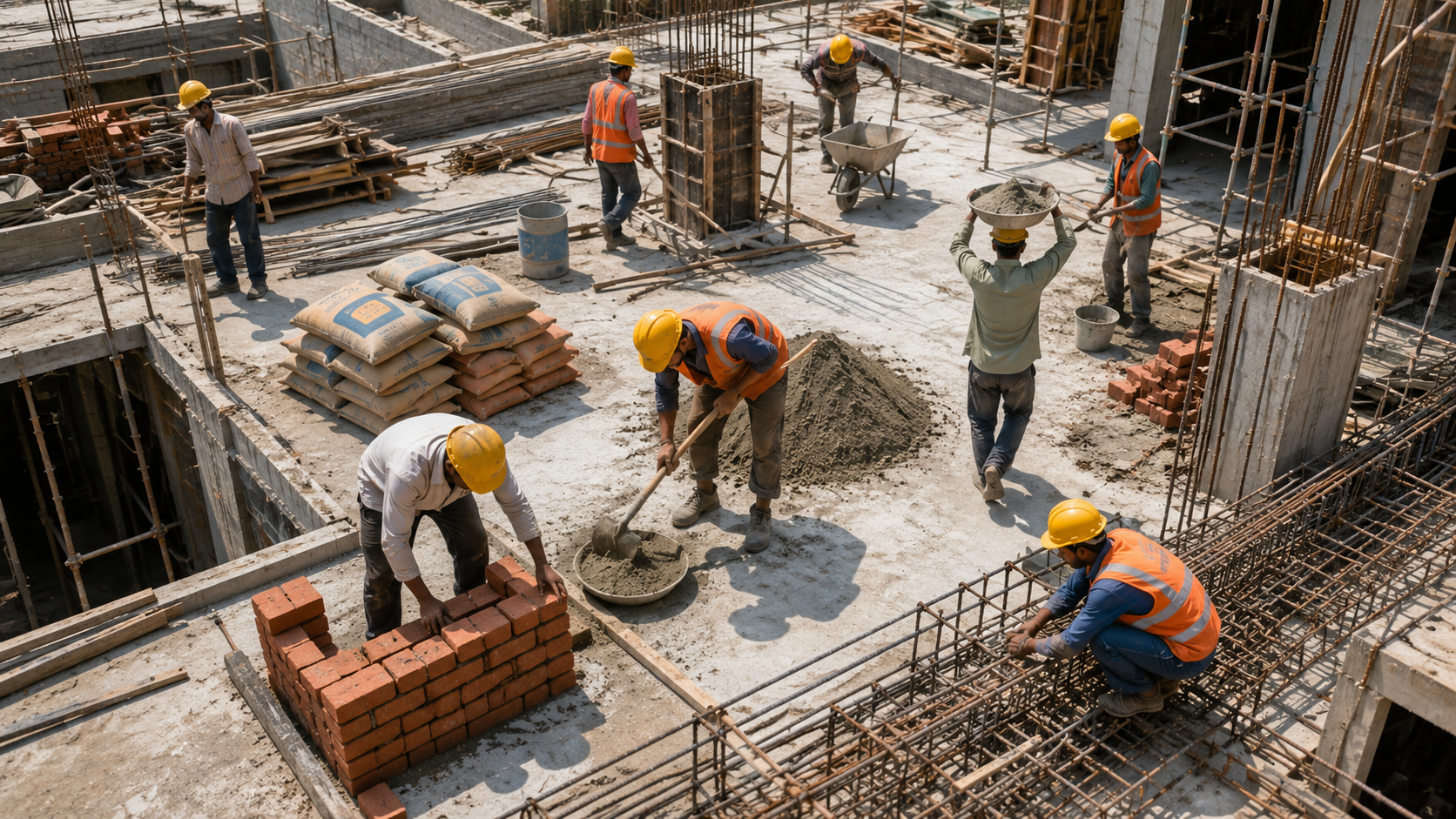


Construction waste has become one of India's most pressing environmental challenges. With rapid urbanization transforming cities like Mumbai, Bangalore, Delhi, and Pune, construction sites generate massive quantities of waste—concrete, steel, wood, and other materials that often end up in landfills. According to estimates, India generates over 500 million tons of construction and demolition waste annually, yet only a fraction is recycled or reused.
As architects, you hold significant influence over how materials flow through a project. Your design decisions, material specifications, and site coordination directly impact waste generation. The good news? Strategic planning and thoughtful design can dramatically reduce waste, lower project costs, and create more sustainable buildings. Let's explore 12 practical ways architects can lead the charge toward waste reduction on Indian construction sites.
1. Design with Modular and Standardized Dimensions
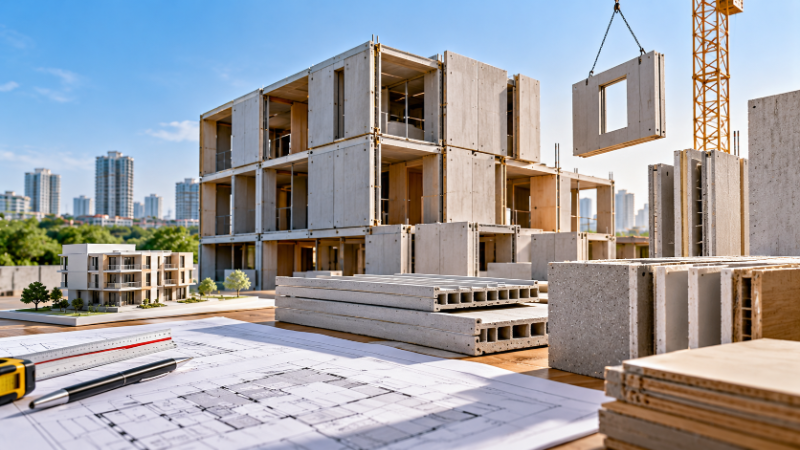
One of the most effective waste-reduction strategies starts in the design phase. When you design buildings using standardized dimensions that align with common material sizes—particularly for bricks, concrete blocks, and steel sections—you dramatically reduce cutting waste.
In India, standard brick sizes are 190mm × 90mm × 90mm. If your wall dimensions are designed as multiples of these measurements, bricklayers won't need to cut bricks, eliminating waste. Similarly, standard concrete block sizes (400mm × 200mm × 200mm) and steel sections available in Indian markets should inform your design grid.
Modular design also extends to floor plans. Designing spaces in 3-meter or 4-meter modules aligns with standard construction practices and reduces the need for custom-cut materials. This approach is particularly effective in residential projects across Indian metros where standardization can significantly reduce both waste and labor costs.
Build cost · Bengaluru, May 2026
2. Conduct Detailed Material Takeoffs and Planning
Precise material quantification prevents over-ordering and waste. Many Indian construction projects suffer from vague material estimates, leading to excess purchases that end up as waste. As the architect, insist on detailed bills of quantities (BOQ) prepared by qualified quantity surveyors.
Work with contractors to create material schedules that account for:
Exact quantities needed per phase
Wastage factors based on realistic site conditions (typically 5-10% for most materials, not the 15-20% often assumed)
Delivery schedules that minimize on-site storage and material degradation
Seasonal variations affecting material availability and quality
When materials are precisely calculated and delivered just-in-time, waste naturally decreases. This requires coordination, but the savings—both in material costs and disposal fees—justify the effort.
3. Specify Locally-Sourced Materials
Transportation of materials over long distances increases costs and environmental impact. More importantly for waste reduction, locally-sourced materials are often better suited to local site conditions and construction practices.
In Bangalore, specify materials from surrounding regions. In Mumbai, leverage the extensive supply chains already established in the city and nearby areas. Local materials reduce:
Transportation damage requiring material replacement
Storage time on-site, which can degrade materials
Supply chain complexity, reducing ordering errors
Additionally, when you work with local suppliers and manufacturers, they often provide better technical support for proper material handling and installation, reducing site waste from improper use.
4. Design for Deconstruction and Material Recovery
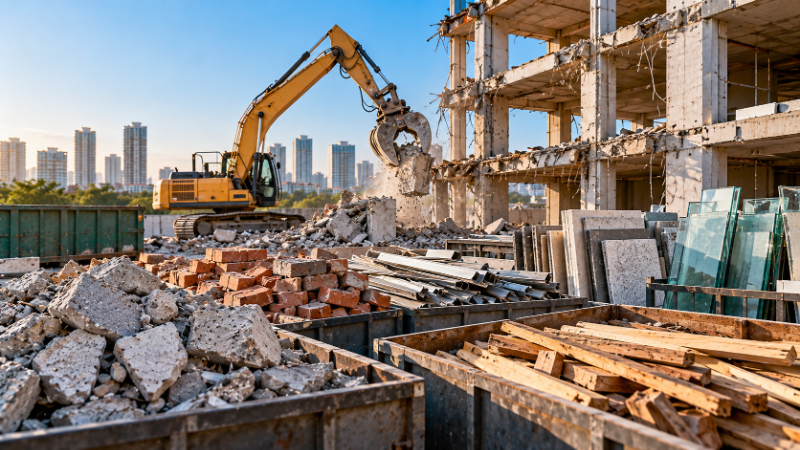
Thinking about end-of-life during the design phase is revolutionary in India's construction industry. Design buildings so that materials can be easily separated and recovered when renovation or demolition occurs.
This means:
Using mechanical connections (bolts, screws) instead of permanent adhesives where possible
Specifying materials that can be cleanly separated during deconstruction
Designing structural systems that allow for component reuse
Avoiding composite materials that are difficult to recycle
While deconstruction thinking is relatively new in India, progressive projects in Delhi and Bangalore are pioneering these approaches. It reduces long-term waste and creates value recovery opportunities.
Frequently asked
5. Implement Robust Site Waste Management Plans
A well-designed site waste management plan (SWMP) is essential. This isn't just documentation—it's an active operational tool that should include:
Waste segregation: Separate concrete, steel, wood, and mixed waste at source
Storage areas: Designated zones for different waste types, protecting materials from weather damage
Recycling partnerships: Contracts with authorized recyclers for concrete, steel, and other materials
Monitoring systems: Regular tracking of waste quantities and types
Worker training: Ensuring all site personnel understand waste segregation procedures
Many Indian cities now require SWMPs for projects above certain sizes. Rather than viewing this as compliance burden, embrace it as an opportunity to systematically reduce waste and potentially generate revenue from recycled materials.
6. Optimize Temporary Works and Formwork Design
Temporary structures—formwork, scaffolding, and site facilities—represent significant waste sources. Design these elements for reusability:
Specify modular formwork systems that can be reused across multiple projects
Design concrete formwork to be easily dismantled and reused rather than discarded
Plan temporary site facilities (offices, stores, toilets) using prefabricated units that can be relocated or reused
In major construction hubs like Pune and Hyderabad, several contractors now maintain formwork pools, reducing waste and costs. Architects can encourage this by designing with reusable formwork systems in mind.
7. Specify Prefabricated and Precast Components
Prefabrication and precast elements are manufactured in controlled factory environments where waste is minimized and materials are optimized. Moving production off-site offers multiple waste-reduction benefits:
Factory-controlled quality reduces defects and rework
Precise manufacturing minimizes cutting waste
Scrap from prefabrication is managed by manufacturers, not on-site
Faster on-site assembly reduces temporary works and storage needs
Precast concrete elements, prefabricated steel frames, and modular wall systems are increasingly available across Indian metros. Specifying these components can reduce site waste by 20-30% compared to traditional in-situ construction.
8. Coordinate with Contractors Early on Waste Reduction
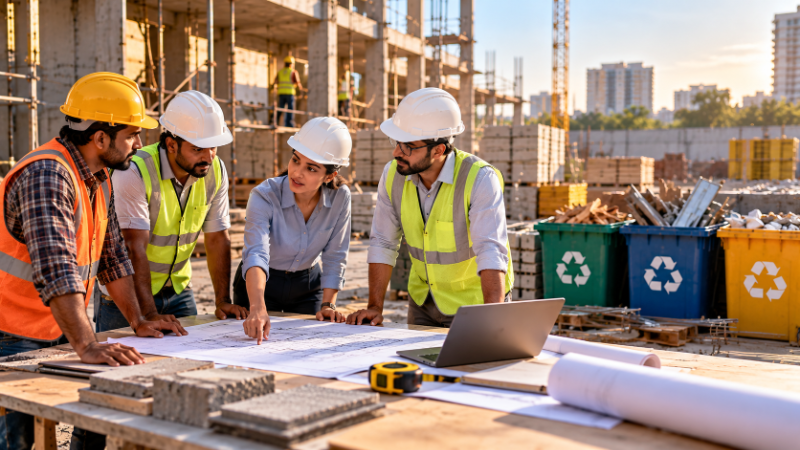
Architects must engage contractors during design development, not just at tender stage. Contractors have practical experience with waste generation on Indian sites and can provide valuable input on design decisions that reduce waste.
Hold coordination meetings covering:
Construction methodology and sequencing
Material handling and storage strategies
Realistic wastage factors for local conditions
Opportunities for material reuse within the project
When contractors feel ownership of waste reduction goals, they're more likely to implement them effectively. Many contractors using platforms like AECORD appreciate architects who engage collaboratively on sustainability.
9. Design Efficient Layouts to Minimize Cutting and Fitting
Complex, irregular layouts require extensive cutting and fitting, generating waste. While creative design is valuable, efficiency matters too. Consider:
Rectangular or simple geometric forms reduce cutting waste in structural systems and finishes
Regular column grids and structural bays minimize custom-cut elements
Standardized ceiling and partition systems reduce on-site adjustments
Simple roof forms reduce waste in roofing materials and waterproofing
This doesn't mean boring buildings. Many award-winning sustainable projects in India demonstrate that efficient design and aesthetic excellence aren't mutually exclusive.
10. Specify Materials with Recycled Content and Recyclability
Influence waste reduction across the material lifecycle by specifying materials with recycled content and those that can be recycled at end-of-life. In India's growing sustainable construction market, options include:
Recycled aggregate concrete and recycled plastic lumber
Steel with high recycled content (widely available in India)
Recycled brick and stone for non-structural applications
Fly ash-based materials reducing virgin material extraction
These materials often cost similarly to virgin materials while reducing environmental impact. Specifying them creates market demand, encouraging Indian manufacturers to expand sustainable product lines.
11. Plan Efficient Material Delivery and Sequencing
Poor delivery coordination causes material damage, on-site congestion, and waste. Develop detailed delivery schedules that:
Coordinate with construction phases to avoid long storage periods
Account for site access constraints in congested Indian cities
Sequence deliveries to minimize on-site storage areas
Plan for weather protection of sensitive materials (cement, steel, wood)
In cities like Mumbai and Delhi where site space is premium, efficient delivery sequencing also reduces the footprint needed for material storage, allowing more space for actual construction work.
12. Monitor, Measure, and Report Waste Reduction
What gets measured gets managed. Establish clear metrics for waste reduction:
Waste per square meter: Track total waste generated relative to building area
Waste diversion rate: Percentage of waste diverted from landfills through recycling and reuse
Cost savings: Quantify savings from reduced material purchases and disposal fees
Recycled material quantity: Track weight of materials recycled or reused
Regular monitoring keeps waste reduction as an active priority rather than a one-time initiative. Monthly waste audits on site help identify problems early and celebrate successes with the team. Transparent reporting also builds your reputation as a sustainability-focused architect.
Creating a Culture of Waste Reduction
Implementing these 12 strategies requires more than technical knowledge—it requires cultural shift. In India's construction industry, where timelines and budgets often dominate decision-making, positioning waste reduction as a cost-saving and efficiency measure helps gain buy-in.
Frame waste reduction not as environmental idealism but as smart business: reduced material costs, lower disposal fees, faster construction timelines, and enhanced project reputation. When stakeholders see the financial benefits alongside environmental gains, adoption accelerates.
The Role of Professional Collaboration
Waste reduction is inherently collaborative. Architects must work with structural engineers optimizing material use, MEP consultants designing efficient systems, contractors implementing strategies on-site, and waste management specialists ensuring proper segregation and recycling.
Platforms like AECORD connect architects with specialized professionals—structural engineers, quantity surveyors, waste management consultants, and sustainable construction specialists—who can contribute expertise to waste reduction initiatives. Leveraging AECORD's network ensures you have the right team to implement comprehensive waste reduction strategies across your projects.
Scaling Impact Across Projects
As an architect, each project is an opportunity to refine waste reduction practices. Document what works in your projects—which material specifications reduce waste, which contractor practices prove most effective, which design strategies minimize cutting and fitting. Over time, you'll develop a proprietary approach to sustainable construction that becomes your competitive advantage.
Share your learnings with peers. As more architects in Indian cities embrace waste reduction, industry standards shift, and sustainable practices become mainstream rather than exceptional.
Conclusion: Your Leadership Matters
Construction waste in India is a massive challenge, but it's not inevitable. Through thoughtful design, precise planning, and active site management, architects can dramatically reduce waste while improving project outcomes. The 12 strategies outlined here—from modular design to material monitoring—provide a comprehensive framework for waste reduction.
Your role as architect extends beyond aesthetics and functionality. You're a steward of resources and a leader in your project teams. By prioritizing waste reduction, you influence contractors, consultants, and clients toward more sustainable practices.
Ready to implement waste reduction on your next project? Connect with experienced contractors, waste management specialists, and sustainable construction professionals on AECORD. Our platform makes it easy to find vetted professionals who share your commitment to reducing construction waste. Browse AECORD's directory of specialists today and build a team equipped to execute waste-reduction strategies effectively across your projects in India.
Frequently Asked Questions
How much construction waste does India generate annually?
India generates over 500 million tons of construction and demolition waste annually, yet only a fraction is recycled or reused. This massive volume has become one of India's most pressing environmental challenges, particularly as rapid urbanization continues in cities like Mumbai, Bangalore, Delhi, and Pune.
How can architects reduce construction waste through design?
Architects can reduce waste by designing with modular and standardized dimensions that align with common material sizes like standard brick (190mm × 90mm × 90mm) and concrete blocks (400mm × 200mm × 200mm). This eliminates the need for custom cutting and significantly reduces material waste on site.
What is the ideal wastage factor for construction materials?
Realistic wastage factors for most construction materials typically range from 5-10%, though many Indian projects incorrectly assume 15-20%. Precise material quantification through detailed bills of quantities (BOQ) helps contractors order exact quantities needed and minimize excess waste.
Why should architects specify locally-sourced materials?
Locally-sourced materials reduce transportation damage, minimize on-site storage time that can degrade materials, and simplify supply chains to reduce ordering errors. Local suppliers also typically provide better technical support for proper material handling and installation, further reducing site waste.
What role do architects play in reducing construction waste?
Architects hold significant influence over material flow through their design decisions, material specifications, and site coordination. Strategic planning and thoughtful design can dramatically reduce waste, lower project costs, and create more sustainable buildings on Indian construction sites.