

Understanding Jali Screens: A Modern Take on Traditional Design
Jali screens, with their intricate lattice patterns, represent one of India's most enduring architectural elements. Originating from Mughal and Islamic architecture, these decorative screens have seamlessly transitioned into contemporary interior design, offering far more than aesthetic appeal. In modern Indian homes, jalis serve as functional design elements that address practical concerns like ventilation, natural lighting, and privacy—all while maintaining a connection to India's rich cultural heritage.
The term "jali" comes from the Urdu word "jaal," meaning net or lattice. Traditionally crafted from stone or marble, modern jalis are now created using various materials including wood, metal, plaster, and even composite materials. This evolution has made them more accessible and adaptable to different architectural styles, from ultra-modern apartments in Bangalore to heritage homes in Jaipur.
Build cost · Bengaluru, May 2026
Why Jali Screens Matter in Contemporary Indian Homes
Natural Ventilation and Air Circulation
One of the most significant advantages of jali screens is their ability to facilitate natural ventilation. In India's hot climate, where air conditioning costs can quickly escalate, jalis provide an energy-efficient alternative. The geometric patterns allow air to flow freely while maintaining privacy, making them particularly valuable in cities like Delhi, Mumbai, and Hyderabad where temperatures regularly exceed 40°C during summer months.
The lattice design creates multiple pathways for air movement, preventing stagnant pockets and improving indoor air quality. When positioned strategically on windows or as room dividers, jalis can create cross-ventilation that naturally cools interior spaces. This passive cooling approach can reduce electricity consumption by 15-20%, translating to significant savings on your monthly utility bills.
Light Filtration and Ambiance
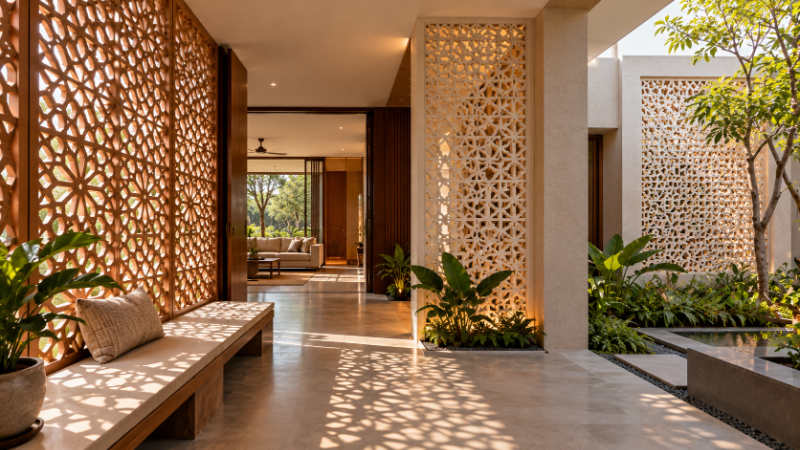
Jali screens excel at managing natural light. Rather than completely blocking sunlight like traditional curtains or blinds, they filter light into beautiful patterns that dance across your walls and floors throughout the day. This creates dynamic, ever-changing ambiance that enhances the visual appeal of any space.
The shadow patterns created by jalis add depth and character to rooms, making them appear larger and more sophisticated. In Indian homes where natural light is abundant, this feature prevents the harsh glare that can make spaces uncomfortable during peak afternoon hours, particularly in south-facing rooms.
Frequently asked
Privacy Without Sacrificing Light
Modern Indian homes often struggle with the balance between privacy and natural lighting. Jali screens solve this dilemma elegantly. They obscure the view from outside while allowing light and air to penetrate, making them ideal for bedrooms, bathrooms, and living areas that face neighboring properties—a common scenario in densely populated Indian cities like Pune, Chennai, and Kolkata.
The intricate patterns ensure that while someone outside cannot see clearly into your home, you can still enjoy unobstructed views and natural illumination from within. This is particularly valuable in apartment complexes where windows often face adjacent buildings.
Jali Design Patterns and Their Applications
Traditional Geometric Patterns
Classic jali patterns include the jaali-e-khas (royal lattice), featuring intricate floral and geometric designs, and the charbagh pattern, inspired by Persian garden designs. These traditional patterns work beautifully in homes that embrace Indian aesthetics, particularly in heritage properties or those designed with a contemporary-traditional fusion approach.
The star pattern (often eight-pointed) is another popular choice, offering both visual interest and excellent ventilation. The Islamic geometric patterns create a sophisticated, timeless appeal that complements both traditional and modern interiors.
Contemporary and Minimalist Designs
Modern jali designs have evolved to include minimalist patterns featuring simple lines, abstract shapes, and asymmetrical arrangements. These contemporary interpretations appeal to homeowners who want the functional benefits of jalis without the ornate aesthetic. Designs featuring horizontal or vertical lines, hexagonal patterns, or even custom motifs can be tailored to match specific interior design schemes.
Many architects and interior designers working on projects across Indian metros are incorporating simplified jali patterns that complement modern furniture and color palettes. These designs prove that jalis aren't confined to traditional homes—they're equally at home in sleek, contemporary spaces.
Custom and Personalized Jalis
Today's craftspeople can create custom jali designs based on your preferences. Whether you want your family name incorporated into the pattern, a design featuring your favorite motifs, or a pattern that matches your home's architectural style, customization options are extensive. This personalization trend has made jalis increasingly popular among homeowners who want unique design elements that reflect their individual taste.
Material Choices for Modern Jali Screens
Wood
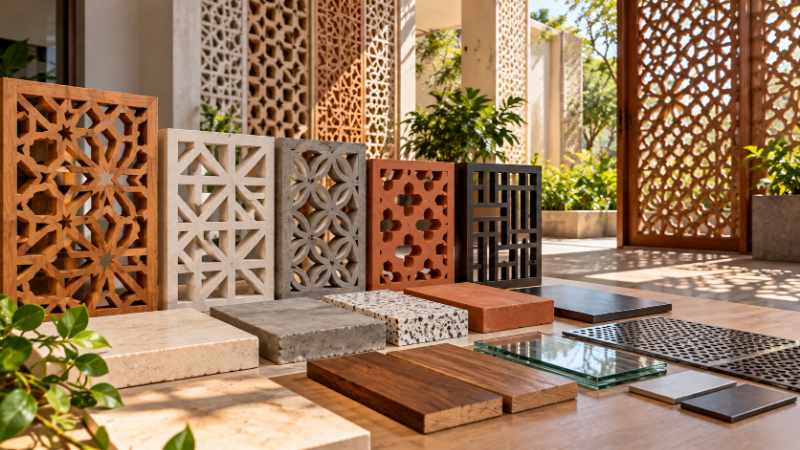
Wooden jalis remain the most popular choice for residential applications. They're warm, versatile, and can be crafted from various wood types including teak, sheesham, sal, and engineered wood. Teak jalis, while more expensive (typically ₹800-1500 per square foot), offer exceptional durability and a rich aesthetic. Engineered wood and plywood options (₹300-600 per square foot) provide budget-friendly alternatives that still deliver excellent results when properly finished.
Wood jalis work particularly well in bedrooms, living rooms, and as decorative room dividers. They can be stained, painted, or left natural depending on your interior design preferences. However, in high-moisture areas like kitchens or bathrooms, wood requires protective coating to prevent warping and deterioration.
Metal
Metal jalis, crafted from aluminum, steel, or brass, offer a contemporary aesthetic while providing superior durability. Aluminum jalis (₹400-900 per square foot) are lightweight, rust-resistant, and require minimal maintenance—making them ideal for balconies, outdoor spaces, and high-moisture areas. Steel jalis provide a more industrial look and can be powder-coated in various colors to match your design scheme.
Brass jalis add a luxurious touch and develop a beautiful patina over time. While more expensive (₹1200-2000 per square foot), they make stunning statement pieces in living areas and entryways.
Stone and Marble
For those seeking to replicate traditional Mughal aesthetics, stone and marble jalis offer unparalleled elegance. Marble jalis (₹1500-3000 per square foot) are particularly popular in heritage homes and upscale residences. While expensive and heavy, requiring professional installation, they create a timeless, sophisticated appearance that justifies the investment for many homeowners.
Composite and Modern Materials
Fiberglass, PVC, and composite jalis represent the most budget-friendly options (₹200-400 per square foot). These materials are lightweight, weather-resistant, and require minimal maintenance. While they may lack the aesthetic warmth of natural materials, modern composite jalis have improved significantly in appearance and are increasingly used in contemporary homes and commercial spaces.
Practical Applications in Indian Homes
Window Screens and Balcony Railings
Jali screens are increasingly used to replace or complement traditional window grilles. In Indian cities where security is a concern, jalis provide an attractive alternative to heavy iron grilles while maintaining safety and ventilation. Balcony railings featuring jali designs add architectural interest while ensuring child safety and preventing objects from falling.
Room Dividers and Space Partitioning
In open-plan homes—increasingly common in modern Indian apartments—jali screens serve as elegant space dividers. They separate the living area from the bedroom or kitchen without completely closing off the space, maintaining visual continuity while defining different functional zones. This is particularly valuable in compact apartments where space efficiency is crucial.
Outdoor Spaces
Jali screens are excellent for creating privacy in outdoor areas like terraces, gardens, and balconies. They protect against harsh sun while maintaining the connection to outdoor spaces. Many homeowners in Gurgaon, Noida, and Bangalore use jali screens to create private outdoor lounging areas that remain cool and comfortable even during peak summer hours.
Decorative Wall Features
Beyond functional applications, jalis serve as stunning decorative elements. A jali screen mounted on an accent wall can become a focal point, particularly when backlit or positioned to cast dramatic shadows. This approach works beautifully in entryways, behind beds, or in meditation and prayer rooms.
Installation Considerations and Best Practices
Professional Installation
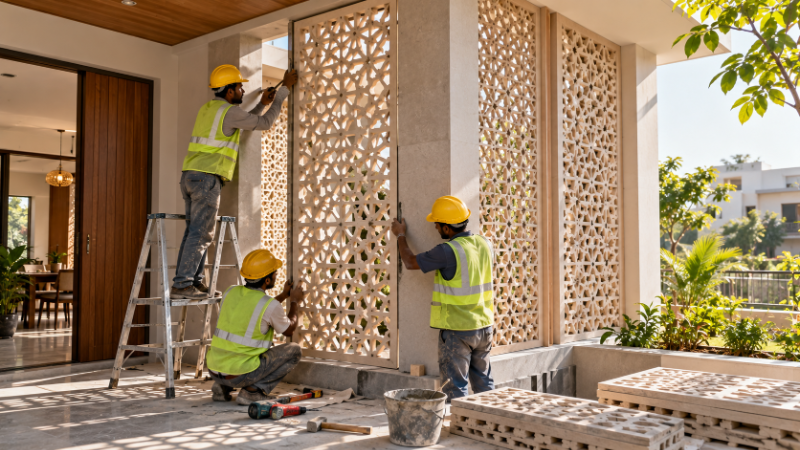
While some jali designs can be DIY projects, professional installation ensures proper alignment, structural integrity, and longevity. When searching for installation services, AECORD can connect you with experienced professionals in your city who specialize in jali installation and can advise on optimal placement for your specific needs.
Maintenance Requirements
Maintenance varies by material. Wooden jalis require periodic cleaning and may need refinishing every 3-5 years. Metal jalis need occasional dusting and, for brass varieties, polishing to maintain their luster. Stone jalis require sealing to prevent staining. Composite materials demand the least maintenance, requiring only regular cleaning with mild soap and water.
Structural Considerations
Ensure that your walls or support structures can bear the weight of your chosen jali material. Stone and marble jalis are significantly heavier than wood or composite options and may require reinforcement. Consult with a structural engineer or experienced installer before proceeding with installation, particularly for large jali installations.
Cost Considerations for Indian Homeowners
Jali screen costs vary considerably based on material, complexity of design, and installation. A basic wooden jali screen for a standard window (approximately 3x4 feet) typically costs between ₹5,000-15,000. More elaborate designs or premium materials can range from ₹20,000-50,000 or more.
Custom jali designs command higher prices due to the craftsmanship involved. However, considering the long-term benefits—reduced air conditioning costs, improved natural lighting, and enhanced aesthetic appeal—jalis represent a worthwhile investment for most Indian homeowners.
Combining Jalis with Modern Interior Design
The beauty of jalis lies in their versatility. They complement various interior design styles:
Contemporary Minimalist: Pair simple geometric jalis with clean lines and neutral color palettes
Eclectic Fusion: Mix traditional jali patterns with modern furniture and artwork
Industrial Modern: Use metal jalis alongside exposed brick, concrete, and steel elements
Bohemian: Combine ornate wooden jalis with colorful textiles and natural materials
Scandinavian: Choose minimalist jali designs in light wood or white composite materials
Sustainability and Environmental Benefits
Jali screens contribute to sustainable home design. By maximizing natural ventilation and reducing reliance on air conditioning, they lower your home's carbon footprint and energy consumption. Wooden jalis from sustainably managed forests, composite jalis made from recycled materials, and metal jalis that can be recycled at end-of-life all represent environmentally responsible choices.
In India's context, where energy demand continues to surge and environmental concerns grow increasingly urgent, choosing jali screens aligns with both personal financial interests and broader sustainability goals.
Conclusion: Bringing Tradition and Modernity Together
Jali screens represent a perfect intersection of tradition and modernity in Indian home design. They solve practical problems—ventilation, light management, and privacy—while adding aesthetic value and maintaining cultural connections. Whether you're designing a new home, renovating an existing space, or simply looking to enhance a specific room, jalis offer versatile solutions that work in contemporary Indian homes.
The key is selecting the right design, material, and placement for your specific needs and preferences. If you're ready to incorporate jali screens into your home, AECORD can help you connect with experienced architects, interior designers, and craftspeople who understand how to maximize the benefits of jali screens in modern Indian homes. Browse through AECORD's network of professionals to find the right expert for your project, and take the first step toward creating a home that beautifully balances tradition, functionality, and contemporary style.
Whether you're in Delhi, Mumbai, Bangalore, or any other Indian city, AECORD makes it easy to find specialists who can help you select, design, and install the perfect jali screens for your home.