

The Agricultural Waste Crisis and Its Architectural Solution
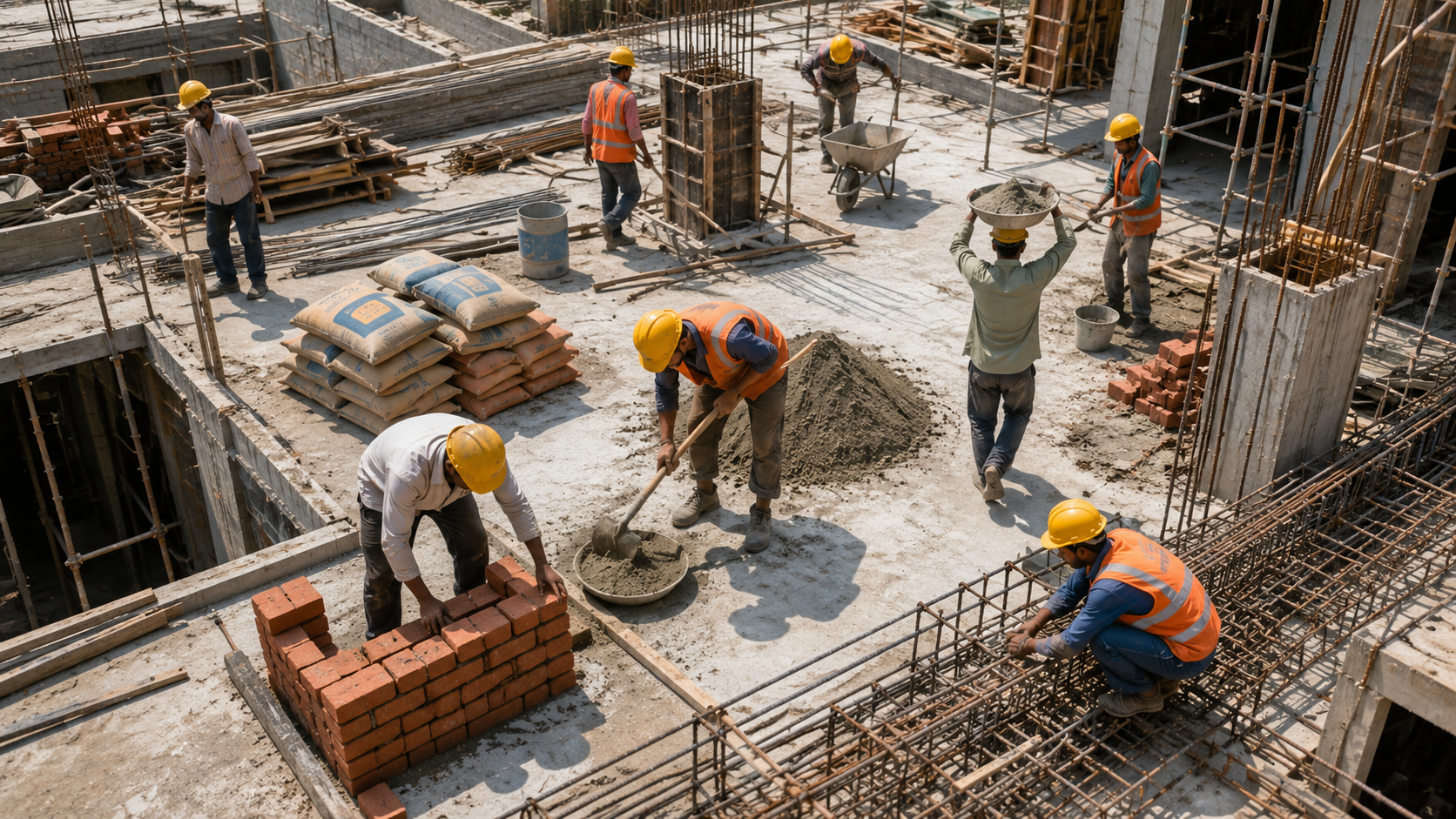
India produces over 150 million tonnes of agricultural waste annually, with rice husk accounting for approximately 20 million tonnes per year. Traditionally, this waste has been burned in fields, contributing significantly to air pollution across northern India—particularly in states like Punjab, Haryana, and Uttar Pradesh. However, a quiet revolution is underway in Indian architecture and construction, where agricultural waste is being transformed into innovative, sustainable building materials that are reshaping how we design and construct buildings.
The conversion of rice husk and other agricultural byproducts into viable construction materials represents a convergence of environmental necessity and technological innovation. This shift is not merely an environmental gesture; it's becoming a practical and economically viable solution for architects, engineers, and builders across India who are seeking to reduce costs while improving sustainability credentials.
Build cost · Bengaluru, May 2026
Understanding Rice Husk as a Building Material
What Makes Rice Husk Valuable?
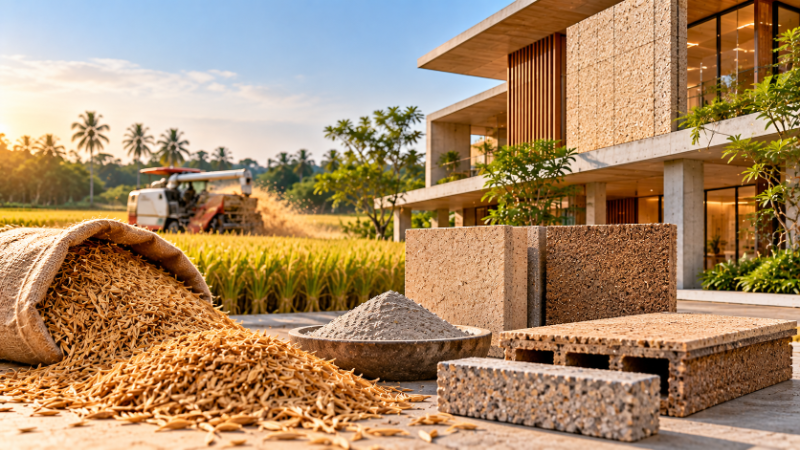
Rice husk is the outer covering of rice grains removed during the milling process. When burned in controlled environments, it produces rice husk ash (RHA)—a silica-rich material with remarkable properties for construction. The silica content in RHA typically ranges from 85-95%, making it an excellent pozzolanic material (a substance that reacts with calcium hydroxide to form compounds with cementitious properties).
The key advantages of rice husk ash include:
High silica content that improves concrete strength and durability
Reduced water permeability, making structures more resistant to moisture infiltration
Enhanced resistance to sulfate attack, crucial for structures in coastal or industrial areas
Improved workability of concrete mixes, reducing water demand
Lower carbon footprint compared to conventional cement production
The Science Behind the Transformation
When rice husk is burned at temperatures between 600-800°C in controlled kilns, the organic matter burns away, leaving behind amorphous silica ash. This ash, when finely ground and added to concrete mixtures at 10-30% replacement levels for Portland cement, significantly enhances concrete properties. Studies conducted at Indian Institute of Technology (IIT) Delhi and IIT Madras have demonstrated that concrete incorporating 20% RHA can achieve compressive strengths comparable to or exceeding conventional concrete while using less Portland cement.
The reduction in Portland cement content is particularly significant because cement production accounts for approximately 8% of global carbon dioxide emissions. By substituting 20-30% of cement with RHA, a typical construction project in India can reduce its carbon footprint by 4-6 tonnes of CO₂ per 100 cubic meters of concrete.
Frequently asked
Agricultural Waste Beyond Rice Husk
Sugarcane Bagasse Fiber
Sugarcane bagasse—the fibrous residue left after juice extraction—is being utilized as reinforcement in composite building materials. India produces approximately 50 million tonnes of bagasse annually, with only 30% currently being utilized. Progressive manufacturers are now incorporating bagasse fibers into:
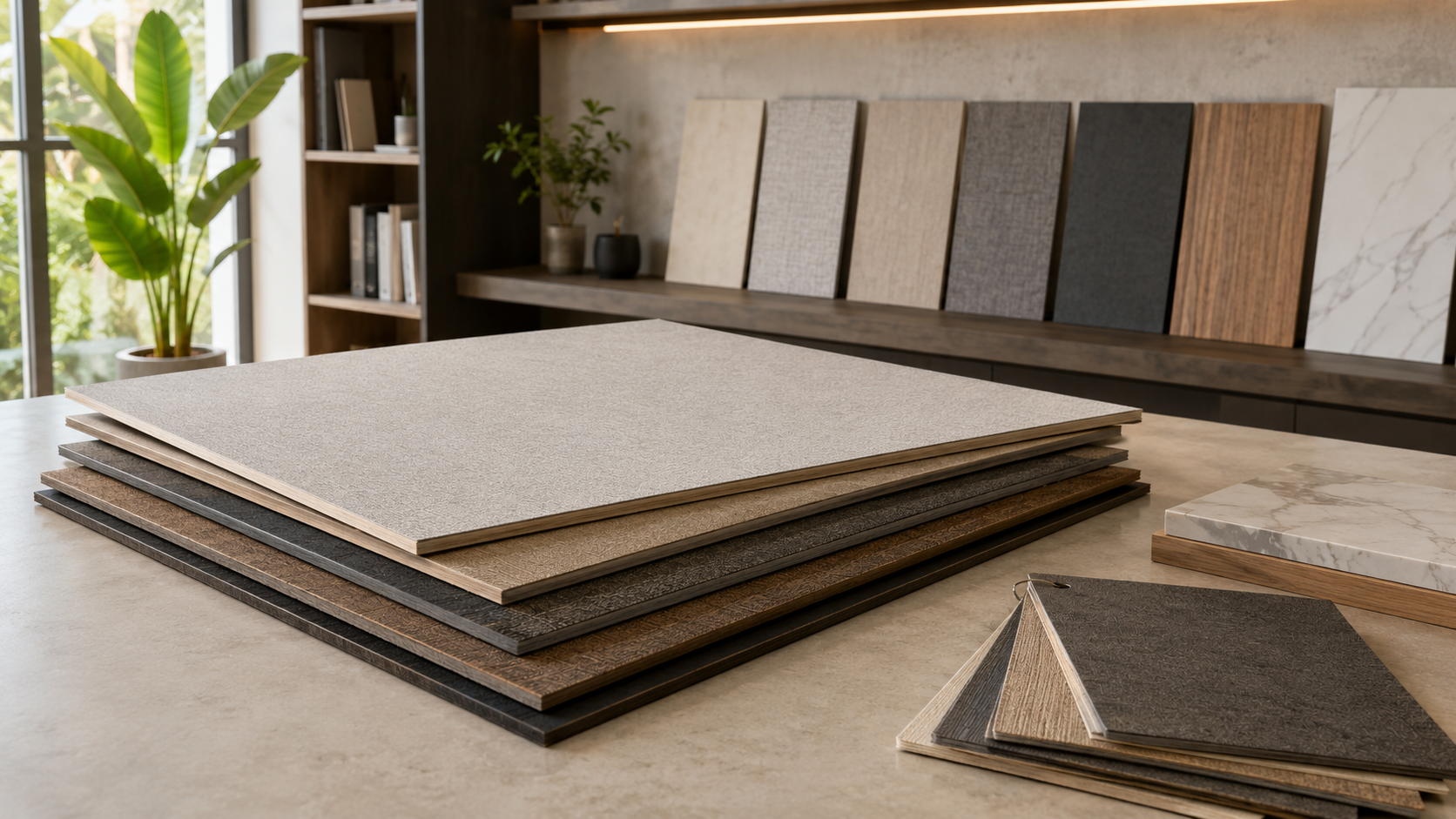
Lightweight partition panels
Acoustic ceiling tiles
Insulation boards for thermal management
Composite roofing materials
Bagasse-based materials offer excellent acoustic properties and thermal insulation, making them ideal for office buildings and residential projects in India's diverse climate zones.
Wheat Straw and Rice Straw Composites
The straw remaining after grain harvesting is being transformed into compressed panels and blocks. In states like Punjab and Haryana, where wheat cultivation is extensive, agricultural engineers are developing straw-based composite materials that provide:
Natural insulation properties (R-value of 2.5-3.5 per inch)
Breathability, reducing moisture-related issues in buildings
Lower embodied energy compared to conventional materials
Complete biodegradability at end-of-life
Coconut Coir and Shell Waste
In coastal states like Kerala, Tamil Nadu, and Karnataka, coconut waste is being repurposed into:
Coir-reinforced concrete blocks
Insulation materials for tropical climates
Natural fiber-reinforced composites
Sustainable plaster additives
Coconut shell ash, when processed properly, can replace 15-20% of fine aggregates in concrete without compromising structural integrity.
Real-World Applications in Indian Architecture
Residential Construction Projects
Several housing projects across India have successfully integrated agricultural waste materials. In Bangalore, a residential complex comprising 200 units utilized rice husk ash in concrete for the structural frame, reducing cement consumption by 25% while maintaining structural standards. The project reported a cost reduction of approximately 8-12% in material expenses and significantly improved durability in Bangalore's humid climate.
Similarly, in Delhi NCR, affordable housing projects have incorporated bagasse-based insulation panels, resulting in thermal performance improvements of 20-30% and reduced air conditioning loads during summer months.
Commercial and Institutional Buildings
Green building projects targeting LEED and IGBC (Indian Green Building Council) certifications are increasingly specifying agricultural waste-based materials. A corporate office building in Hyderabad achieved LEED Platinum certification partly through the use of sugarcane bagasse acoustic panels and rice husk ash concrete. The building reported:
35% reduction in embodied carbon for structural elements
Improved indoor air quality due to natural fiber materials
15% savings in material costs
Enhanced thermal comfort without increased energy consumption
Rural and Semi-Urban Construction
Perhaps the most transformative applications are in rural India, where agricultural waste materials are enabling sustainable local construction. In villages across Maharashtra, Madhya Pradesh, and Rajasthan, community-based construction initiatives are using locally-produced rice husk ash and straw composites to build schools, health centers, and community facilities. This approach simultaneously:
Creates local employment in processing agricultural waste
Reduces construction costs by 20-35%
Eliminates the need for transporting materials from distant suppliers
Prevents agricultural waste burning, improving local air quality
Economic Benefits and Cost Implications
Material Cost Comparison
When evaluating the economics of agricultural waste-based materials in India:
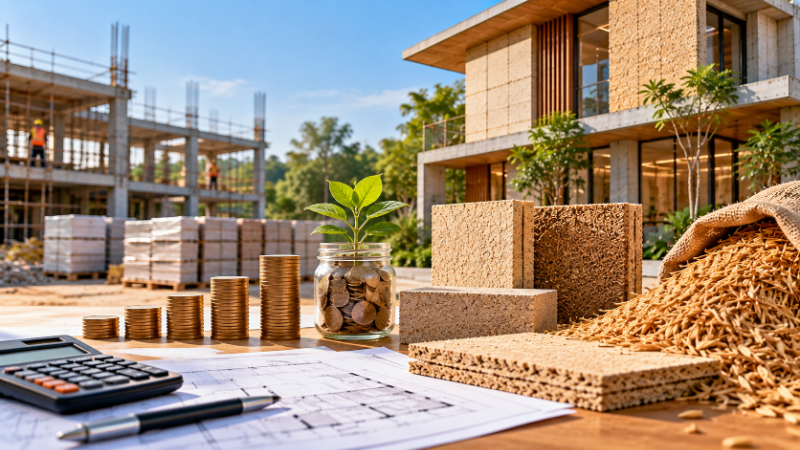
Rice husk ash: ₹800-1,500 per tonne (compared to ₹4,000-5,500 per tonne for Portland cement)
Sugarcane bagasse composites: ₹12,000-18,000 per cubic meter (compared to ₹15,000-22,000 for conventional insulation)
Straw-based panels: ₹8,000-12,000 per square meter (compared to ₹10,000-16,000 for conventional partition materials)
For a typical 10,000 square meter commercial building using conventional concrete, switching to 20% rice husk ash replacement can save approximately ₹8-12 lakhs in material costs alone, while simultaneously reducing environmental impact.
Long-Term Value Proposition
Beyond initial material costs, agricultural waste-based materials offer superior long-term value:
Enhanced durability: Structures last 10-15% longer due to improved concrete properties
Reduced maintenance: Lower water permeability means reduced maintenance costs over 30-50 years
Energy savings: Better insulation properties reduce HVAC operational costs by 15-25%
Regulatory compliance: Easier achievement of green building certifications, which can increase property values by 8-15%
Challenges and Solutions in Implementation
Quality Control and Standardization
One significant challenge is ensuring consistent quality of agricultural waste materials. Rice husk ash quality varies depending on burning temperature, duration, and cooling methods. The Indian Standards Institution (ISI) has developed IS 1641:2017, which specifies requirements for rice husk ash, but implementation remains inconsistent across suppliers.
Solution: Forward-thinking projects are partnering with certified suppliers and implementing rigorous testing protocols. AECORD platform connects architects and engineers with verified suppliers who maintain consistent quality standards, ensuring materials meet specified requirements.
Market Awareness and Adoption
Many architects and builders remain unfamiliar with agricultural waste materials or harbor concerns about their reliability. Traditional materials have decades of proven performance data, while agricultural waste alternatives are relatively newer to mainstream construction.
Solution: Professional education and case study documentation are driving adoption. Organizations like AECORD are facilitating knowledge sharing by connecting professionals with proven implementations and technical experts who can guide material selection and specification.
Supply Chain Infrastructure
Establishing reliable supply chains for processed agricultural waste materials remains challenging in many regions. Processing facilities require capital investment and technical expertise, which are not universally available.
Solution: Government initiatives and private sector investments are expanding processing infrastructure. Several states, including Punjab and Haryana, are incentivizing the establishment of rice husk ash processing units through subsidies and tax benefits.
Environmental Impact and Sustainability Metrics
Carbon Footprint Reduction
The environmental benefits of utilizing agricultural waste in construction are substantial:
Cement reduction: Using 20% RHA reduces embodied carbon by approximately 4-5 kg CO₂ per cubic meter of concrete
Waste diversion: Each tonne of rice husk ash used prevents burning of rice husk in fields, eliminating approximately 1.2 tonnes of CO₂ equivalent emissions
Aggregate savings: Natural fiber composites reduce mining-related environmental degradation
Air Quality Improvements
Preventing agricultural waste burning has direct health and environmental benefits. In Punjab alone, shifting 50% of agricultural waste to construction applications could reduce post-harvest burning by approximately 2-3 million tonnes annually, significantly improving air quality during winter months.
Resource Conservation
Agricultural waste-based materials reduce pressure on natural resources:
Reduced limestone quarrying for cement production
Decreased sand mining for concrete production
Lower water consumption in manufacturing processes
Reduced transportation and associated emissions
Future Prospects and Emerging Innovations
Advanced Processing Technologies
Emerging technologies are enhancing the performance and applicability of agricultural waste materials. Researchers at various Indian institutes are developing:
Geopolymer concrete: Using rice husk ash as a primary binder instead of cement, potentially reducing embodied carbon by 50-70%
Nano-silica extraction: Processing rice husk ash to create nano-scale particles for enhanced concrete properties
Hybrid composites: Combining multiple agricultural wastes to optimize performance characteristics
Policy Support and Incentives
Government recognition of agricultural waste-based materials is growing. Several state governments and the central government are introducing policies to encourage their use, including:
Tax incentives for manufacturing units processing agricultural waste
Preferential procurement policies for government projects
Subsidies for farmers who supply agricultural waste to processing units instead of burning
Research and development funding for innovation in this sector
Practical Guidance for Architects and Engineers
Specification and Material Selection
When considering agricultural waste materials for your projects:
Define performance requirements: Clearly specify structural, thermal, and durability requirements before material selection
Verify compliance: Ensure materials comply with relevant ISI standards and IGBC requirements
Request test reports: Demand third-party testing certificates for strength, durability, and environmental claims
Conduct trials: For new applications, conduct small-scale trials before full-scale implementation
Finding Reliable Suppliers
The AECORD marketplace platform can help you identify and connect with verified suppliers of agricultural waste-based materials. The platform allows you to:
Review supplier credentials and certifications
Access case studies and project references
Compare pricing and delivery capabilities
Communicate directly with technical experts
Conclusion
The transformation of agricultural waste into sustainable building materials represents one of the most promising developments in Indian architecture and construction. Rice husk ash, sugarcane bagasse, wheat straw, and coconut waste are no longer merely agricultural byproducts—they are valuable resources that can enhance building performance while reducing environmental impact and construction costs.
As India continues to urbanize and construction activity accelerates, the adoption of these materials at scale could have transformative effects on the sustainability of the built environment. The economic benefits, environmental advantages, and proven performance in real-world applications make agricultural waste-based materials a compelling choice for architects, engineers, and builders.
Whether you're designing a residential complex in Bangalore, a commercial building in Hyderabad, or a community facility in rural Maharashtra, agricultural waste materials merit serious consideration. To explore materials, connect with experts, and find verified suppliers for your next project, visit AECORD—India's comprehensive B2B2C marketplace for AECO professionals. Browse our extensive network of material suppliers, contractors, and technical consultants who specialize in sustainable construction solutions. Start building a more sustainable future today by exploring agricultural waste-based materials for your next project on AECORD.
Frequently Asked Questions
Can rice husk ash be used to replace cement in concrete?
Yes, rice husk ash (RHA) can replace 10-30% of Portland cement in concrete mixtures. Studies show that concrete with 20% RHA replacement achieves compressive strengths comparable to or exceeding conventional concrete while reducing carbon emissions by 4-6 tonnes of CO₂ per 100 cubic meters.
What is rice husk ash and how is it made?
Rice husk ash is produced by burning rice husks (the outer covering of rice grains) at controlled temperatures of 600-800°C in kilns. The resulting ash contains 85-95% silica, which acts as a pozzolanic material that improves concrete strength, durability, and water resistance.
How much agricultural waste does India produce annually?
India produces over 150 million tonnes of agricultural waste annually, including approximately 20 million tonnes of rice husk and 50 million tonnes of sugarcane bagasse. Historically, much of this waste was burned in fields, contributing to air pollution.
What are the benefits of using agricultural waste in building materials?
Agricultural waste materials offer reduced water permeability, enhanced sulfate resistance, improved concrete workability, and significantly lower carbon footprints compared to conventional cement. They also help solve the agricultural waste disposal problem while reducing construction costs.
What building materials can be made from sugarcane bagasse?
Sugarcane bagasse fibers are used to create lightweight partition panels, acoustic ceiling tiles, thermal insulation boards, and composite roofing materials. These materials offer excellent acoustic properties and thermal insulation, making them ideal for various building types across India's climate zones.