![TMT Steel Price Today [Updated: August 2026] — Current Rates & Market Guide India](/_next/image?url=https%3A%2F%2Fpub-a8ebad8b0a19407a910fcded3dcc2ace.r2.dev%2Fblog%2Ffeatured-2026%2F07%2F1784264332186-roi9sl.png&w=3840&q=75)
Introduction
For residential builders, structural engineers, and infrastructure developers across India, tracking daily fluctuations in Thermomechanically Treated (TMT) steel bar prices is critical for accurate project budgeting. With material costs accounting for a significant share of structural budgets, volatility driven by raw material shifts, energy costs, and regional freight can heavily impact project margins.
This comprehensive guide tracks current real-time market rates, analyzes regional pricing variations, and details the core macroeconomic factors steering the TMT steel market

Build cost · Bengaluru, May 2026
Current TMT Steel Price Range & Brand Tier Breakdown
To accurately estimate your material expenses, examine how primary, secondary, and economy brands stack up in the current market:
Brand Tier / Category | Representative Brands | Price Range per Tonne (INR) | Price Range per Kg (INR) | Ideal Use Case |
Primary Brands (High Tier) | Tata Tiscon, Vizag Steel (RINL), SAIL | ₹57,000 – ₹76,000 | ₹57 – ₹76 | Premium high-rises, government infrastructure, critical seismic zones. |
Secondary & Popular Brands | Jindal Panther, JSW Neosteel, JSPL | ₹54,000 – ₹65,000 | ₹54 – ₹65 | Standard residential buildings, independent houses, commercial complexes. |
Economy & Local Brands | Regional Mills, Aditya, Agni, local rollings | ₹51,600 – ₹55,000 | ₹51 – ₹55 | Budget housing, boundary walls, low-load ancillary structures. 2. City-Wise TMT Steel Price Variations Across India |
Logistics, mill proximities, and regional taxation create distinct price bands across major commercial hubs:
Delhi-NCR Region: ₹52,000 – ₹58,000 per tonne (Benefiting from close proximity to northern manufacturing and rolling mills).
Mumbai & Western Region: ₹54,000 – ₹62,000 per tonne (Impacted slightly by coastal transport logistics and municipal transit costs).
Bangalore & Southern Region: ₹53,000 – ₹60,000 per tonne (Driven by steady residential demand corridors across Karnataka, Tamil Nadu, and Telangana).
Kolkata & Eastern Region: ₹50,000 – ₹56,000 per tonne (Closer proximity to raw material ore belts and primary steel plants).
Hyderabad & Central Region: ₹51,000 – ₹57,000 per tonne.
Grade-Wise & Diameter-Wise Cost Metrics
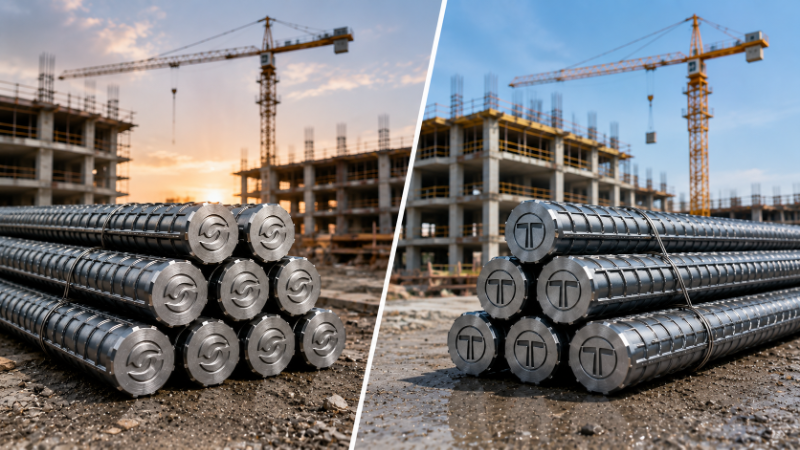
Understanding TMT Steel Grades
Fe 415 / Fe 500: Standard grades for basic load-bearing residential work. Fe 500 commands a minor ₹2,000 to ₹4,000 premium over base rates due to higher tensile yield strength.
Fe 500D & Fe 550D: The gold standard for modern earthquake-resistant construction, combining high ductility with ultimate tensile strength.
Fe 600 & Above: Premium high-strength bars utilized in specialized industrial foundations, bridges, and multi-story structural columns.
Frequently asked
Diameter-Wise Approximate Pricing (Single Piece - 12 Meter Length)
8mm / 10mm bars: ~₹350 to ₹583 per piece (Higher relative per-tonne rolling/handling weight ratios).
12mm bars: ~₹750 to ₹824 per piece.
16mm / 20mm / 25mm structural bars: Ranges from ₹1,360 to ₹3,400+ per piece depending on precise diameter thickness and brand.
Key Factors Driving Steel Price Fluctuations in 2026
Raw Material Dynamics: Global pricing for coking coal, iron ore, and scrap metal heavily dictates baseline production costs.
Seasonal Construction Cycles: Peak construction windows (post-monsoon through March) routinely experience tighter supply and mild pricing upticks.
Freight & Energy Rates: Fuel cost revisions and power tariffs directly influence factory-gate-to-site transportation totals. 4. TMT steel prices vary by grade, brand reputation, and logistical distance from manufacturing plants. Below are the average retail price ranges per metric ton (excluding GST) across primary and secondary producers in India.
Brand / Category | Grade | Average Price (Per Metric Ton) | Price Range (Per Kg) |
Primary Producers (SAIL, Tata, JSW) | Fe 500D | ₹62,000 – ₹66,000 | ₹62 – ₹66 |
Primary Producers (SAIL, Tata, JSW) | Fe 550D | ₹64,000 – ₹68,500 | ₹64 – ₹68.50 |
Secondary Producers (Local/Semi-Primary) | Fe 500 / 500D | ₹52,000 – ₹58,000 | ₹52 – ₹58 |
Premium High-Strength (Fe 600) | Fe 600 | ₹67,000 – ₹72,000 | ₹67 – ₹72 |
Quality Assurance Checklist
Before finalizing any TMT steel purchase, ensure the following:
Verify manufacturer credentials and IS 1786 certification
Confirm grade (Fe415, Fe500, etc.) matches structural specifications
Request mill test certificates for chemical and mechanical properties
Inspect physical condition (no cracks, proper straightness)
Verify weight per rod matches specifications (typically 0.89 kg per meter for 10mm diameter)
Confirm delivery timeline aligns with project schedule
Negotiate payment terms and warranty provisions 2. Brand-Wise Price Breakdown & Top 5 Comparison
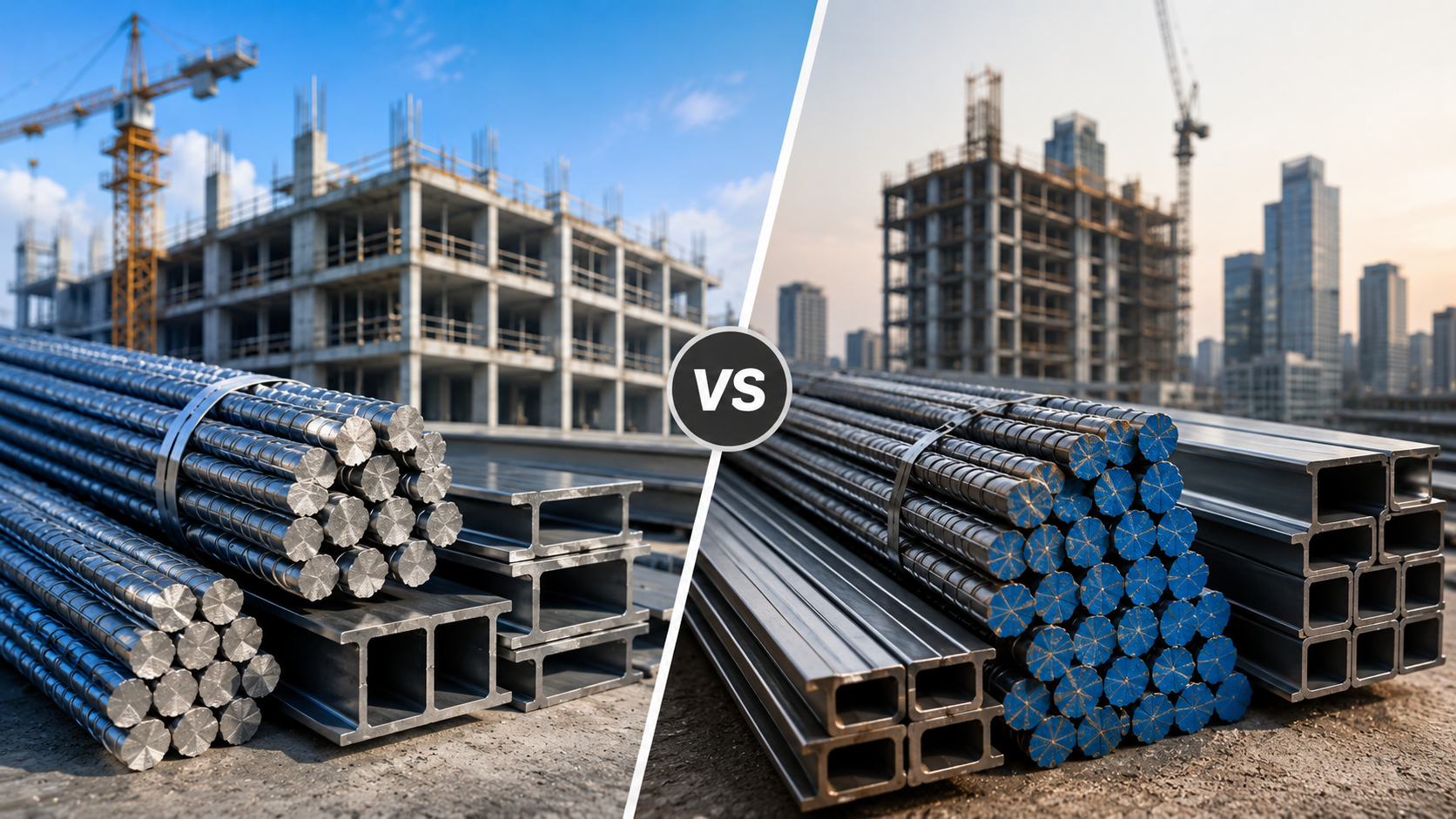
Choosing the right steel brand impacts both structural integrity and overall budget. Here is how the top manufacturers compare in terms of pricing, quality standards, and market reputation:
Tata Tiscon (Tata Steel)
Price Range: ₹64,000 – ₹68,500 / MT
Key Advantage: Superior bonding strength, strict quality control, and micro-alloyed manufacturing process.
SAIL (Steel Authority of India Limited)
Price Range: ₹63,000 – ₹67,000 / MT
Key Advantage: Government-backed assurance, uniform elongation, and high earthquake resistance.
JSW Steel (JSW Neosteel)
Price Range: ₹62,500 – ₹66,500 / MT
Key Advantage: Environmentally sustainable production (Green Steel initiative) and high corrosion resistance.
Jindal Panther
Price Range: ₹62,000 – ₹66,000 / MT
Key Advantage: High ductility and superior bendability, ideal for complex architectural designs.
Kamdhenu / Shyam Steel (Secondary/Semi-Primary Leaders)
Price Range: ₹54,000 – ₹59,000 / MT
Key Advantage: Cost-effective alternative widely available through extensive dealer networks across Tier 2 and Tier 3 cities.
3. Regional Price Variations Across India
Steel prices fluctuate regionally due to freight costs, local taxation, and proximity to major steel hubs (such as Jamshedpur, Durgapur, and Visakhapatnam).
North India (Delhi, NCR, Punjab): Prices tend to run ₹1,000 to ₹1,500 higher per ton compared to Eastern regions due to transportation costs from primary mills in the East.
South India (Karnataka, Tamil Nadu, Andhra Pradesh): Balanced pricing influenced by local primary manufacturing units and coastal import logistics.
East India (West Bengal, Odisha, Jharkhand): Generally the most competitive pricing nationwide given direct proximity to iron ore mines and major manufacturing plants (SAIL, Tata).
West India (Maharashtra, Gujarat): High demand driven by commercial real estate and infrastructure projects keeps supply steady, with moderate freight premiums.
4. Understanding TMT Steel Grades: Which Should You Choose?
Selecting the correct grade is essential for structural safety. Here is a breakdown of commonly used grades in residential and commercial construction:
Fe 500 / Fe 500D: The gold standard for independent residential buildings up to G+3 floors. The "D" stands for Ductility, indicating higher energy absorption capacity during seismic activity.
Fe 550 / Fe 550D: Recommended for heavy-load structures, high-rises, industrial buildings, and structures built in high seismic zones (Zones IV and V).
Fe 600: Ultra-high-strength steel used primarily in massive infrastructure projects, bridges, and commercial skyscrapers where column size reduction is necessary.
5. Key Factors Affecting TMT Steel Prices in 2026
Raw Material Costs: Fluctuations in coking coal, iron ore, and scrap metal prices directly dictate finished rebar pricing.
Seasonal Construction Demand: Prices typically peak between November and May when construction activity accelerates across India, while monsoon seasons (June–September) often see softer demand and price stabilization.
Government Policies & Import Duties: Changes in export duties, anti-dumping measures, and public infrastructure spending heavily influence domestic market equilibrium.
Logistics & Fuel Costs: Diesel price fluctuations impact freight rates, altering local retail prices across different states.
6. Expert Tips for Buying TMT Steel
Check for Certification: Always insist on BIS certification (IS 1786) and verify manufacturer test certificates (MTC) for batch quality.
Inspect Ribs & Surface: High-quality TMT bars feature deep, uniform parallel ribs that enhance concrete grip.
Buy in Bulk vs. Local Dealer: Purchasing directly from authorized distributors or company depots ensures genuine material and protects against counterfeit secondary bars sold as primary brands. Standard TMT Bar Diameters & Applications
Bar Diameter | Weight per Meter | Primary Structural Application |
8 mm | 0.395 kg | Stirrups, column ties, and slab distribution temperature bars |
10 mm | 0.617 kg | Slab main reinforcement, light canopy beams, and lintels |
12 mm | 0.888 kg | Main slab bars, secondary beam bottom bars, and staircase framing |
16 mm | 1.580 kg | Primary column longitudinal bars, heavy beam spans, and footings |
20 mm & 25 mm | 2.469 – 3.858 kg | Heavy-load columns, multi-story transfer girders, and raft foundations |
Frequently Asked Questions (FAQ)
How much steel is required for a 1,000 sq ft house?
Using standard thumb rules for RCC structures, a 1,000 sq ft residential build typically requires 8 to 12 metric tonnes of TMT steel, translating to roughly ₹4,00,000 to ₹7,00,000 in material expenses depending on your structural design.
Is buying primary brand steel worth the extra cost?
Primary brands (like Tata Tiscon or JSW Neosteel) guarantee strict chemical compliance, precise weight tolerances, and superior seismic elongation properties. For load-bearing columns and multi-story foundations, primary brands are heavily recommended by structural engineers.
Conclusion & Smart Procurement on AECORD
Navigating current TMT steel market rates requires real-time transparency across brands and regional suppliers. Rather than relying on rigid local dealer estimates, streamline your material sourcing by comparing verified quotes, accessing mill-direct catalogs, and managing procurement budgets efficiently through AECORD—India's leading B2B2C marketplace for architecture, engineering, and construction professionals.