Understanding Tile Fixing Mortars and Fillers: A Complete Guide for Indian Construction Professionals
Tile installation is one of the most critical aspects of construction and renovation projects in India. Whether you're working on residential apartments in Mumbai, commercial spaces in Bangalore, or hospitality projects in Delhi, the quality of tile fixing mortars and fillers directly impacts the longevity and aesthetic appeal of your project. This comprehensive guide explores everything you need to know about tile fixing mortars and fillers, with specific insights for the Indian construction market.
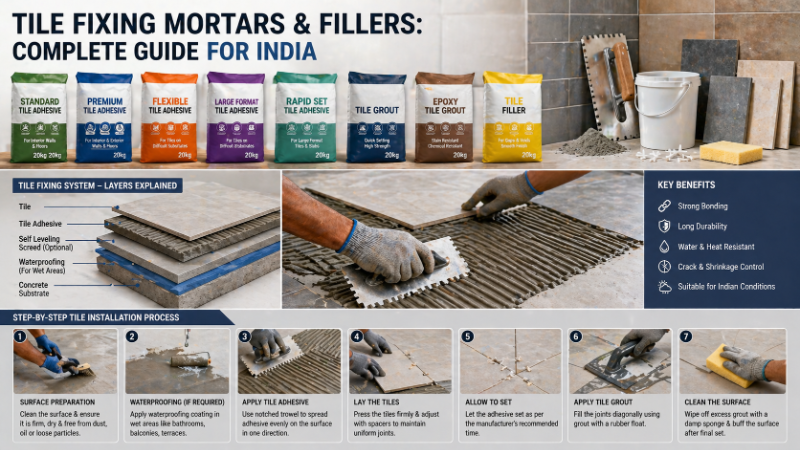
Build cost · Bengaluru, May 2026
What Are Tile Fixing Mortars?
Tile fixing mortars are adhesive materials used to bond tiles to various substrates such as concrete, brick, or existing tile surfaces. These mortars create a permanent bond between the tile and the base, ensuring durability and preventing tile displacement over time. In the Indian construction industry, the choice of tile fixing mortar significantly affects project costs, timeline, and final quality.
Unlike traditional cement-based adhesives, modern tile fixing mortars offer superior bonding strength, flexibility, and water resistance. They're engineered to accommodate thermal expansion, moisture movement, and substrate vibration—critical considerations in India's diverse climate zones ranging from humid coastal areas to dry inland regions.
Types of Tile Fixing Mortars Available in India
1. Cement-Based Mortars (Traditional Method)
Cement-based mortars remain the most economical option in India, costing between ₹150-₹300 per 20kg bag. These are prepared on-site by mixing cement, sand, and water in specific proportions. While cost-effective, they require skilled labor and careful water management to achieve optimal results.
Advantages:
Lowest initial cost
Wide availability across Indian markets
Suitable for large-scale projects
Good for rustic or traditional aesthetics
Disadvantages:
Lower bonding strength compared to modern alternatives
Prone to shrinkage cracks
Limited flexibility in movement accommodation
Requires proper curing time (typically 7-14 days)
Frequently asked
2. Ready-Mix Tile Adhesives (Thin-Set Mortars)
Ready-mix tile adhesives, commonly called thin-set mortars, are pre-formulated products requiring only water addition. Popular brands in India include Birla White, JSW Cement, and Ultratech's tile fixing solutions. Prices range from ₹400-₹800 per 20kg bag.
These mortars are increasingly preferred in urban Indian construction, particularly in Tier 1 cities like Bangalore, Hyderabad, and Pune, where quality standards and project timelines are stringent.
Advantages:
Consistent quality and strength
Better bonding properties (typically 1.5-2 MPa)
Reduced curing time (24-48 hours)
Better water resistance
Excellent for large format tiles and natural stone
Disadvantages:
Higher cost than traditional cement mortars
Limited working time (typically 20-30 minutes)
Requires precise water ratio
3. Epoxy-Based Mortars
Epoxy mortars offer the highest performance, with bonding strength exceeding 3 MPa. In India, these premium products cost ₹1,200-₹2,500 per 20kg bag and are typically used in specialized applications such as pharmaceutical facilities, food processing units, and high-traffic commercial spaces.
Best Applications:
Wet areas requiring superior waterproofing
Chemical-resistant environments
High-traffic commercial zones
Swimming pools and water features
4. Polymer-Modified Mortars
These mortars combine cement with polymer additives, offering a middle ground between traditional and epoxy options. Cost-effective at ₹500-₹900 per bag, they're increasingly popular for residential projects in Indian metro cities.
Understanding Tile Fillers and Grouts
While tile fixing mortars bond tiles to substrates, fillers and grouts fill the gaps between tiles. This distinction is crucial for proper installation.
Types of Tile Fillers
Cement-Based Grouts: Traditional option costing ₹80-₹200 per kg. Requires careful mixing and application. Prone to cracking and discoloration in wet areas.
Epoxy Grouts: Premium choice at ₹400-₹800 per kg. Offers superior stain resistance, chemical resistance, and durability. Ideal for kitchens and bathrooms in Indian homes.
Urethane Grouts: Mid-range option (₹250-₹500 per kg) combining flexibility with water resistance. Excellent for areas experiencing thermal movement.
Silicone Sealants: Used at movement joints and transitions, typically ₹150-₹400 per cartridge. Essential for accommodating expansion in Indian climates with significant temperature variations.
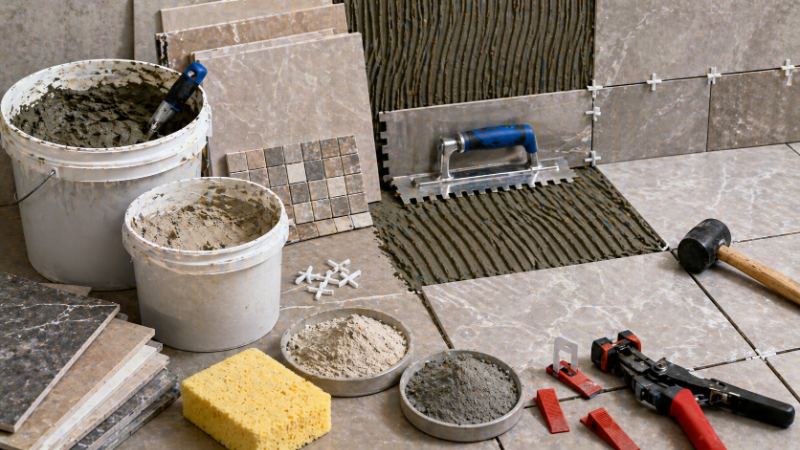
Key Factors for Selecting Tile Fixing Mortars in Indian Projects
1. Climate Considerations
India's diverse climate demands careful mortar selection. In coastal cities like Mumbai and Chennai, high humidity and salt exposure require mortars with superior water resistance. In northern regions like Delhi and Punjab, temperature fluctuations necessitate flexible mortars that accommodate expansion and contraction.
For projects in Bangalore or Hyderabad's moderate climate, standard cement-based or ready-mix mortars typically suffice. However, always verify local building codes and consult with experienced contractors familiar with regional conditions.
2. Substrate Type
Different substrates require different mortars:
Concrete: Ready-mix or epoxy mortars for better bonding
Brick: Traditional cement mortars work well; ensure proper surface preparation
Existing Tiles: Polymer-modified or epoxy mortars necessary for good adhesion
Gypsum Boards: Specialized mortars with latex additives recommended
Wood Subfloors: Flexible mortars essential to accommodate wood movement
3. Tile Type and Size
Large format tiles (600x600mm or larger) increasingly popular in Indian residential and commercial projects require mortars with superior bonding strength. Small mosaic tiles (25x25mm to 100x100mm) work with traditional mortars but benefit from modern adhesives for faster installation.
Natural stone tiles demand specialized mortars to prevent staining and chemical reactions. Glazed ceramic tiles require different bonding approaches than unglazed options.
4. Application Area
Dry Areas (Living Rooms, Bedrooms): Standard cement-based or ready-mix mortars suitable. Cost-conscious projects often use traditional options here.
Wet Areas (Bathrooms, Kitchens): Epoxy or polymer-modified mortars essential. The investment in premium mortars (₹500-₹1,000 additional per 100 sq.ft.) prevents costly repairs within 3-5 years.
Exterior Surfaces: Weather-resistant mortars mandatory. Monsoon exposure in Indian cities demands superior water resistance and flexibility.
Installation Best Practices for Indian Construction
Surface Preparation
Proper substrate preparation is non-negotiable. Surfaces must be:
Clean and free from dust, oil, and loose material
Structurally sound and stable
Adequately cured (minimum 28 days for concrete in India's climate)
Properly sloped for water drainage in wet areas
In many Indian projects, inadequate surface preparation causes 60-70% of tile failures within 2-3 years. Investing time and resources here prevents expensive remedial work later.
Mortar Application Techniques
Trowel Selection: Use notched trowels matching tile size. For tiles under 300x300mm, use 6mm notched trowels. Larger tiles require 10-12mm trowels for adequate mortar coverage.
Coverage: Achieve 80-95% mortar coverage on tile backs. Inadequate coverage leads to hollow spots, causing tiles to crack under load—a common issue in high-traffic Indian commercial spaces.
Application Method: Apply mortar using the "butter and comb" technique: spread mortar on substrate using trowel's flat side, then comb with notched side to create uniform ridges. This ensures consistent mortar distribution.
Curing and Drying
Proper curing is critical in India's variable climate:
Allow 24-48 hours before grouting (varies by mortar type and humidity)
Protect installations from rain during monsoon season
Avoid water exposure for 7 days after grouting
In hot, dry climates, mist tiles lightly to prevent rapid drying
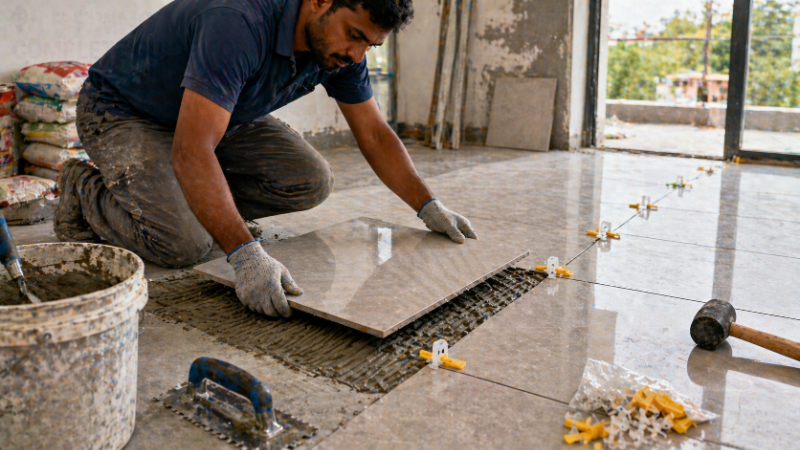
Common Issues and Solutions in Indian Projects
Tile Popping and Lippage
Tiles lifting or showing height differences indicate inadequate mortar coverage or substrate issues. Solution: Use appropriate mortar type, ensure proper trowel technique, and verify substrate flatness (maximum 3mm variation per meter in India's building codes).
Grout Discoloration
Common in Indian bathrooms due to moisture and mineral-rich water. Prevention: Use epoxy or urethane grouts in wet areas instead of cement-based options. Cost difference (₹200-₹300 additional per sq.ft.) is justified by longevity.
Cracking and Efflorescence
White crystalline deposits on tiles result from salt migration through grout. Use quality mortars with low water absorption, ensure proper ventilation, and apply hydrophobic sealers in wet areas.
Cost Analysis for Indian Projects
For a typical 100 sq.ft. bathroom tile installation in Indian metros:
Traditional cement mortar: ₹800-₹1,200 (material + labor)
Ready-mix adhesive: ₹1,500-₹2,200
Epoxy system: ₹3,000-₹4,500
Grouting (cement-based): ₹500-₹800
Grouting (epoxy): ₹1,500-₹2,500
While premium mortars increase initial costs by 30-50%, they reduce maintenance expenses and extend tile life by 10+ years, making them economically superior for long-term projects.
Regulatory Standards and Compliance in India
Indian Standard IS 2250 specifies mortar composition and quality requirements. For tile adhesives, IS 12467 provides guidelines for bonding strength and water absorption. Ensure your selected mortars comply with these standards, particularly for projects requiring certification or in regulated sectors.
Many state building codes in India now mandate specific mortar types for particular applications. Consult local building departments in your project location—requirements differ between Mumbai, Delhi, Bangalore, and other major cities.
Choosing the Right Professional for Your Project
Tile fixing mortar selection and application require expertise. Whether you're managing a residential renovation in Pune or a large commercial project in Hyderabad, partnering with experienced professionals ensures optimal results. AECORD connects you with vetted tile fixing specialists, contractors, and material suppliers across India who understand regional requirements and building codes.
On AECORD, you can find professionals who:
Understand local climate and building code requirements
Have proven experience with various mortar types
Provide quality assurance and warranty
Source quality materials at competitive prices
Future Trends in Tile Fixing Technology
The Indian construction industry is increasingly adopting:
Eco-friendly mortars: Low-carbon alternatives gaining traction in sustainable projects
Fast-setting adhesives: Reducing project timelines in time-critical installations
Pre-mixed epoxy systems: Simplifying application of premium mortars
Self-leveling grouts: Improving finish quality and reducing labor dependency
Conclusion
Tile fixing mortars and fillers are foundational to successful tile installations across Indian construction projects. From budget-conscious residential renovations to high-specification commercial spaces, selecting appropriate mortars based on climate, substrate, application area, and long-term durability requirements is essential.
While cement-based mortars remain economical for certain applications, modern ready-mix and epoxy alternatives offer superior performance, faster installation, and better longevity—often justifying their higher initial cost through reduced maintenance and extended lifespan.
For your next tiling project in India, whether in Bangalore, Mumbai, Delhi, or any other city, invest time in selecting the right mortar system. Connect with experienced professionals on AECORD who can guide you through material selection, installation best practices, and quality assurance. Your investment in proper tile fixing mortars today will ensure beautiful, durable surfaces for years to come.
Ready to find the right tile fixing specialists for your project? Explore AECORD's network of verified professionals across India who specialize in tile installation and can recommend the perfect mortar solutions for your specific needs.