

In India, where energy costs continue to rise and environmental concerns grow more pressing, sustainable home design has become not just an ethical choice but a practical one. Homeowners across the country are discovering that incorporating sustainable design principles can significantly reduce energy bills while creating healthier, more comfortable living spaces. Whether you're building a new home in Bangalore, renovating an apartment in Mumbai, or designing a villa in Delhi, sustainable home design offers solutions tailored to India's diverse climate zones and building conditions.
Understanding Sustainable Home Design in the Indian Context
Sustainable home design refers to creating living spaces that minimize environmental impact while maximizing energy efficiency and occupant well-being. In India, this approach is particularly relevant given our varied climate zones—from the tropical humidity of coastal cities to the extreme heat of Rajasthan and the cold winters of Himachal Pradesh.
The financial benefits are compelling. A well-designed sustainable home can reduce energy consumption by 30-50%, translating to monthly savings of ₹2,000-5,000 on electricity bills for an average Indian household. Over a 25-year period, these savings can amount to ₹6-15 lakhs, making the initial investment in sustainable design highly worthwhile.
Build cost · Bengaluru, May 2026
Passive Cooling Strategies for Indian Homes
India's hot climate makes passive cooling one of the most effective sustainable design strategies. Unlike air conditioning, which consumes significant electricity, passive cooling uses natural ventilation and thermal mass to maintain comfortable indoor temperatures.
Cross-Ventilation Design
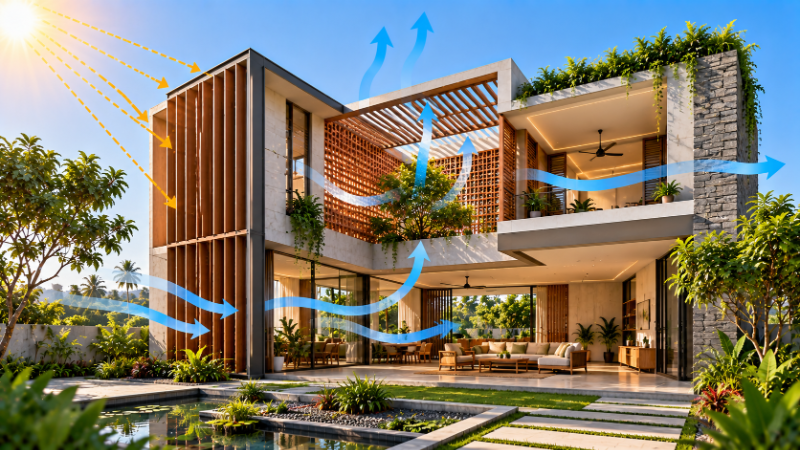
Strategic placement of windows and openings on opposite walls allows natural air circulation. In cities like Pune and Hyderabad, designing homes with north-south orientation and openable windows on both sides can reduce indoor temperatures by 3-5°C without active cooling. This is particularly effective during monsoon and winter months.
Thermal Mass and Materials
Using materials with high thermal mass—such as brick, stone, and concrete—helps absorb heat during the day and release it at night. In hot cities like Ahmedabad and Jaipur, thick walls (300-400mm) with materials like laterite blocks or clay bricks can significantly reduce heat penetration. The initial cost is minimal (approximately ₹50-100 per square foot additional), but the cooling benefits are substantial.
Frequently asked
Courtyards and Water Features
Traditional Indian architecture incorporated courtyards for a reason. A central courtyard with a small water feature or fountain can cool surrounding spaces through evaporative cooling. This ancient principle remains highly effective in modern sustainable home design and requires minimal maintenance.
Harnessing Natural Light Effectively
Natural lighting reduces dependence on artificial lighting, which accounts for 10-15% of household electricity consumption in India. Strategic design can maximize daylight while minimizing heat gain.
Window Placement and Orientation
In northern Indian cities like Delhi and Chandigarh, south-facing windows should be minimized or shaded during summer but allowed to receive winter sun. North-facing windows provide consistent, indirect light without excessive heat gain. East-facing windows capture morning light, while west-facing windows should be heavily shaded to prevent afternoon heat.
Skylights and Light Shelves
Skylights in interior spaces like bathrooms and corridors can reduce daytime lighting needs by 50-70%. Light shelves—horizontal surfaces that reflect light deeper into rooms—are particularly effective in multi-story homes. These additions typically cost ₹5,000-15,000 per unit but pay for themselves within 3-4 years through reduced electricity consumption.
Color and Reflectivity
Light interior colors and reflective surfaces bounce natural light throughout spaces, reducing the need for artificial lighting. Using light-colored paints (reflectivity of 60-70%) instead of dark colors (reflectivity of 20-30%) can make a noticeable difference in perceived brightness and lighting needs.
Solar Energy Integration
Solar power has become increasingly affordable in India. The cost of solar photovoltaic systems has dropped by 80% over the past decade, making residential solar installations economically attractive across the country.
Solar Photovoltaic Systems
A typical 3-5 kW rooftop solar system costs ₹4-6 lakhs and can generate 4,000-6,000 kWh annually, depending on your location and sun exposure. In sunny cities like Bangalore, Hyderabad, and Pune, a well-designed system can offset 60-80% of household electricity consumption. With government subsidies and net metering schemes available in many states, the payback period is typically 5-7 years.
Solar Water Heating
Solar water heating is one of the most cost-effective renewable energy investments. A 100-150 liter solar water heater costs ₹20,000-40,000 and can save ₹200-400 monthly on water heating costs. Since 25-30% of household energy in India goes to water heating, this single upgrade can reduce overall energy consumption significantly.
Solar Design Integration
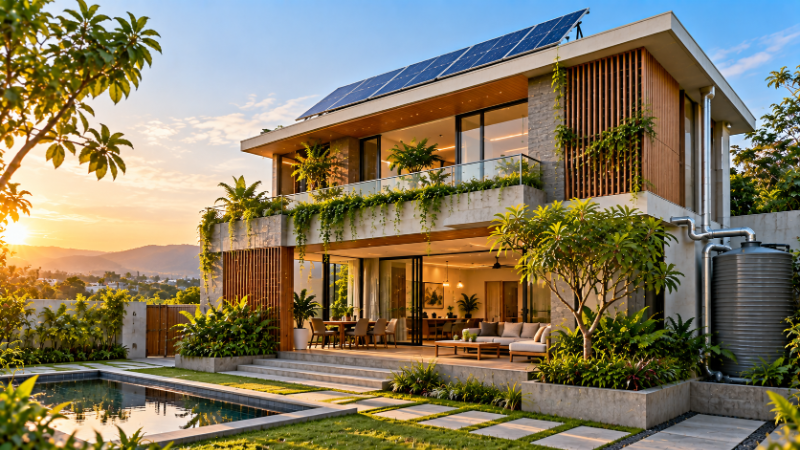
Sustainable home design should incorporate solar potential from the planning stage. Ensuring adequate roof space with proper orientation (south-facing in the Northern Hemisphere), minimizing shading from trees and adjacent buildings, and designing roof structures that can support solar panels are essential considerations.
Water Conservation and Management
Water scarcity is a growing concern across Indian cities. Sustainable homes incorporate water conservation measures that reduce both consumption and the energy required for water heating and pumping.
Rainwater Harvesting
Rainwater harvesting systems capture roof runoff for non-potable uses like gardening and toilet flushing. In cities receiving 600-1000mm annual rainfall (most of India), a 100 square meter roof can harvest 60,000-100,000 liters annually. Installing a basic system costs ₹30,000-50,000 and can reduce municipal water consumption by 30-40%.
Greywater Recycling
Greywater from bathrooms and kitchens can be treated and reused for irrigation and toilet flushing. This requires initial investment (₹40,000-80,000) but reduces freshwater demand significantly. In water-stressed cities like Bangalore and Hyderabad, this is increasingly important.
Water-Efficient Fixtures
Installing low-flow taps (3-4 liters per minute instead of 8-10), dual-flush toilets, and water-efficient showerheads costs ₹10,000-20,000 but reduces water consumption by 30-50%. The payback period is typically 2-3 years through reduced water bills.
Energy-Efficient Building Materials
The materials used in construction significantly impact a home's thermal performance and embodied carbon footprint.
Insulation Solutions
Proper insulation is essential in extreme climates. In hill stations like Shimla and Manali, roof insulation with materials like rock wool or fiberglass (100-150mm thickness) can reduce heating costs by 40-50%. In hot cities, wall insulation can reduce cooling needs by 20-30%. Costs range from ₹30-80 per square foot depending on material and thickness.
Eco-Friendly Materials
Consider locally-sourced, low-embodied-carbon materials:
Rammed earth and adobe blocks: Traditional, locally available, excellent thermal mass
Recycled materials: Reclaimed wood, recycled plastic lumber, and reclaimed bricks reduce environmental impact
Bamboo: A rapidly renewable resource ideal for flooring, scaffolding, and interior elements
Fly ash bricks: Made from industrial waste, they're affordable (₹3-4 per brick vs. ₹7-8 for clay) and have good thermal properties
Green Roofs and Living Walls
Green roofs with vegetation provide excellent insulation, reduce urban heat island effect, and manage stormwater. While installation costs ₹1,000-2,000 per square meter, they extend roof life by 40-50 years and provide aesthetic and mental health benefits.
Smart Design for Indian Climate Zones
India's diverse climate requires tailored sustainable design approaches. When working with architects and designers on platforms like AECORD, specify your climate zone for customized recommendations.
Hot and Dry Climates (Rajasthan, Gujarat)
Priority strategies: thick walls, minimal windows on east-west faces, courtyards, evaporative cooling, light colors, and ventilation. Solar potential is excellent for PV and water heating.
Hot and Humid Climates (Coastal Areas, Kerala, West Bengal)
Focus on cross-ventilation, elevated structures to allow air circulation underneath, moisture-resistant materials, and shading. Dehumidification through ventilation is more important than insulation.
Composite Climates (Bangalore, Pune, Hyderabad)
These moderate climates benefit from balanced strategies: moderate insulation, good natural ventilation, shading, and solar systems. Cooling and heating loads are lower than extreme climates, making payback periods shorter.
Cold Climates (Himachal Pradesh, Kashmir)
Prioritize insulation, thermal mass, south-facing windows for winter sun, minimal north-facing openings, and solar water heating. Passive solar design can reduce heating needs by 50-60%.
Integration and Implementation
Implementing sustainable home design requires coordination among multiple professionals. AECORD connects homeowners with experienced architects, engineers, and contractors who specialize in sustainable design across India. When planning your project, ensure your team includes:
Architects experienced in climate-responsive design
Structural engineers who understand thermal performance
MEP (Mechanical, Electrical, Plumbing) engineers for efficient systems
Contractors familiar with sustainable materials and techniques
The design phase is crucial. Investing 2-3% additional cost in planning can reduce long-term operational costs by 30-40%. A 2,000 square foot home might spend an extra ₹2-3 lakhs on sustainable design but save ₹6-15 lakhs over 25 years.
Certifications and Standards
Several certification systems validate sustainable home design in India:
LEED India: International standard with Indian adaptations
GRIHA (Green Rating for Integrated Habitat Assessment): India-specific certification developed by TERI
IGBC (Indian Green Building Council): Standards for green buildings
While certification isn't mandatory, it provides third-party validation and can increase property value by 5-15%.
Overcoming Common Challenges
Initial Cost Concerns
While sustainable design requires upfront investment, lifecycle cost analysis shows clear benefits. A ₹50 lakh home with sustainable features might cost ₹52-55 lakhs initially but save ₹15-20 lakhs over 25 years through reduced utility bills and maintenance.
Space Constraints in Urban Areas
Even in compact apartments in Mumbai, Delhi, or Bangalore, many strategies apply: solar water heaters, efficient lighting, water conservation fixtures, and proper ventilation. AECORD professionals can suggest space-efficient solutions for urban contexts.
Regulatory Compliance
Building codes vary by city. Ensure your design complies with local regulations while maximizing sustainability. Many Indian cities now incentivize sustainable construction through FSI bonuses and tax benefits.
Maintenance and Long-Term Performance
Sustainable homes require proper maintenance to perform optimally. Regular servicing of solar systems (annual cost: ₹2,000-3,000), cleaning of water harvesting filters, and HVAC maintenance ensure systems operate efficiently throughout their lifespan.
Smart monitoring systems (₹15,000-30,000) can track energy consumption in real-time, helping identify inefficiencies and optimize usage patterns.
The Path Forward
Sustainable home design isn't a luxury—it's a practical investment that pays dividends through reduced energy bills, improved comfort, and environmental responsibility. Whether you're building new or renovating, the principles outlined here can be adapted to your specific situation, climate, and budget.
The transition to sustainable homes also supports India's broader climate goals. If every household reduced energy consumption by 30-40%, the cumulative impact would be substantial in meeting our renewable energy and emission reduction targets.
Getting Started with Your Sustainable Home
Begin by assessing your home's current energy consumption and identifying priority areas for improvement. Small changes like LED lighting and efficient fixtures provide immediate returns, while larger investments like solar systems and insulation offer long-term benefits.
Connect with experienced sustainable design professionals who understand India's climate zones, building practices, and regulatory environment. AECORD's network includes architects, engineers, and contractors across major Indian cities who specialize in sustainable home design. Whether you need a complete sustainable home design or want to retrofit existing properties, you can find vetted professionals ready to help.
Your journey toward a more sustainable, energy-efficient home starts with a single decision—to prioritize both environmental responsibility and financial savings. The combination of passive design, renewable energy, water conservation, and eco-friendly materials creates homes that are comfortable, healthy, and economical to operate for decades to come.
Ready to design or renovate your home sustainably? Visit AECORD today to find qualified architects, engineers, and contractors in your city who can turn your sustainable home vision into reality. Get multiple quotes, compare expertise, and connect with professionals who understand sustainable design in the Indian context.
Frequently Asked Questions
How much can sustainable home design reduce energy bills in India?
A well-designed sustainable home can reduce energy consumption by 30-50%, translating to monthly savings of ₹2,000-5,000 for an average Indian household. Over 25 years, these savings can amount to ₹6-15 lakhs, making the initial investment highly worthwhile.
What is passive cooling and how does it work in Indian homes?
Passive cooling uses natural ventilation and thermal mass to maintain comfortable indoor temperatures without air conditioning. Strategies include cross-ventilation design, thick walls with high thermal mass materials, and courtyards with water features that can reduce indoor temperatures by 3-5°C naturally.
How should windows be oriented for sustainable home design in India?
In northern Indian cities, south-facing windows should be minimized or shaded in summer but allowed winter sun, while north-facing windows provide consistent indirect light without heat gain. East-facing windows capture morning light, and west-facing windows should be heavily shaded to prevent afternoon heat.
Can skylights and light shelves reduce electricity consumption?
Yes, skylights in interior spaces like bathrooms and corridors can reduce daytime lighting needs by 50-70%. Light shelves reflect light deeper into rooms and typically cost ₹5,000-15,000 per unit, paying for themselves within 3-4 years through reduced electricity consumption.
What materials are best for sustainable home construction in hot Indian cities?
Materials with high thermal mass like brick, stone, concrete, laterite blocks, and clay bricks are most effective in hot cities like Ahmedabad and Jaipur. Thick walls (300-400mm) with these materials significantly reduce heat penetration with minimal additional cost (₹50-100 per square foot).