Structural glass has revolutionized modern architecture and construction, offering architects and engineers unprecedented design flexibility while maintaining exceptional strength and safety. In India's rapidly evolving construction landscape, structural glass is becoming increasingly popular for commercial buildings, residential complexes, and innovative infrastructure projects across cities like Mumbai, Bangalore, Delhi, and Hyderabad.
Understanding Structural Glass: Definition and Types
Structural glass refers to glass elements that bear loads and contribute to the overall structural integrity of a building, rather than merely serving as a non-load-bearing infill material. Unlike conventional glazing, structural glass is engineered to support vertical and lateral loads, making it a critical component of the building's primary structural system.
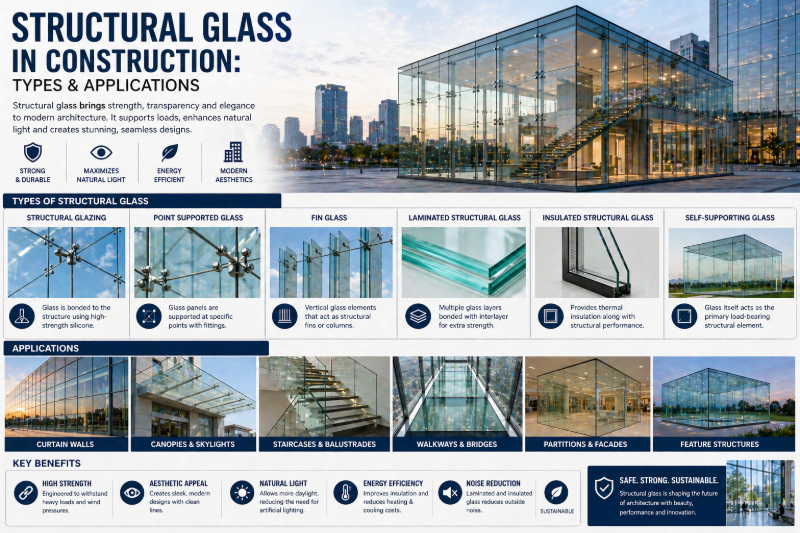
The primary types of structural glass used in modern construction include:
Laminated Glass: Multiple glass layers bonded with polyvinyl butyral (PVB) interlayers, providing enhanced safety and structural performance. When broken, the interlayer holds glass fragments together, preventing collapse.
Tempered Glass: Heat-treated glass that is 4-5 times stronger than annealed glass. Upon failure, it breaks into small, relatively harmless granules rather than sharp shards.
Insulated Glass Units (IGUs): Double or triple-glazed systems with sealed air or inert gas spaces, offering excellent thermal and acoustic insulation while maintaining structural capacity.
Toughened Laminated Glass: A combination of tempered and laminated glass, offering superior impact resistance and safety characteristics.
Structural Silicone Glazing: Glass panes bonded directly to the building frame using structural silicone sealants, eliminating the need for traditional mechanical framing.
Build cost · Bengaluru, May 2026
Advantages of Structural Glass in Modern Construction
Aesthetic and Design Benefits
Structural glass enables architects to create visually stunning facades and interior spaces with unobstructed views. The transparency of glass allows natural light penetration, reducing dependency on artificial lighting and creating psychologically beneficial work and living environments. In Indian cities experiencing rapid urbanization, structural glass has become a hallmark of contemporary architecture, particularly in premium office buildings and luxury residential developments across Bangalore's IT corridor and Mumbai's commercial districts.
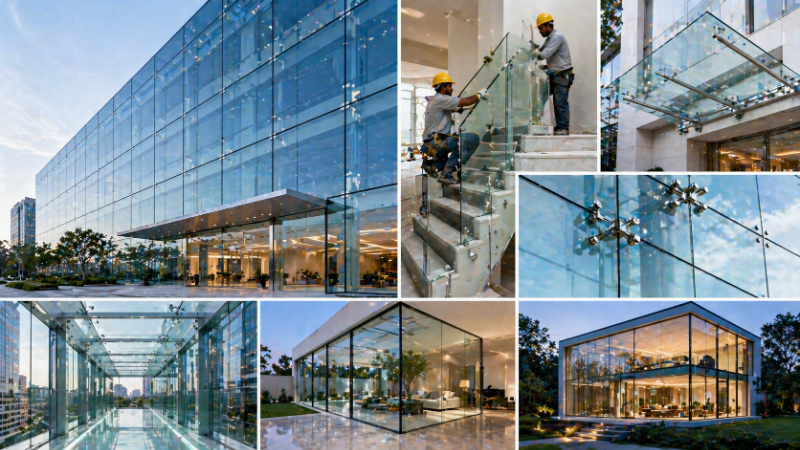
The material's versatility allows for creative applications including glass floors, glass staircases, glass balustrades, and fully glazed facades that were previously impossible with conventional building materials.
Energy Efficiency
Modern structural glass systems, particularly insulated glass units with low-emissivity (Low-E) coatings, significantly reduce heat transfer through building envelopes. In India's hot and humid climate, this translates to reduced air conditioning loads and lower energy consumption. Buildings incorporating structural glass with proper orientation and shading strategies can achieve 20-30% reduction in cooling energy compared to conventional construction.
Frequently asked
Safety and Durability
Laminated and tempered structural glass provides superior safety characteristics. Even when broken, the glass remains intact, preventing injuries and maintaining the building's weather envelope. Structural glass is also highly durable, resistant to UV degradation, and requires minimal maintenance—a significant advantage in India's diverse climate conditions ranging from coastal salt spray in Mumbai to intense solar radiation in Delhi.
Sustainability
Glass is 100% recyclable and can be reprocessed indefinitely without loss of quality. Using structural glass reduces the need for other materials like concrete and steel in certain applications, contributing to lower embodied carbon. This aligns with India's growing emphasis on sustainable construction practices and green building certifications like LEED and GRIHA.
Technical Specifications and Performance Standards
Load-Bearing Capacity
Structural glass can support significant loads when properly engineered. Laminated glass with appropriate interlayer thickness can support vertical loads ranging from 50 to 300 kN/m² depending on span and support conditions. The actual capacity depends on:
Glass thickness (typically 6-19mm for structural applications)
Type and number of interlayers
Support conditions and span length
Environmental factors and safety factors applied
Interlayer material properties and temperature effects
Indian Standards and Regulations
In India, structural glass applications must comply with:
IS 875 (Code of Practice for Design Loads for Buildings and Structures): Specifies load combinations and safety factors
IS 1857 (Code of Practice for Design, Fabrication and Erection of Structural Steelwork in Buildings): Contains provisions for glass connections
IS 2911 (Code of Practice for Design, Fabrication and Erection of Structural Steelwork in Buildings): Relevant for steel-glass connections
National Building Code of India (NBC): Provides comprehensive guidelines for glass in buildings
Bureau of Indian Standards (BIS) Certification: Essential for all glass products used in structural applications
Additionally, projects in major Indian cities often need to comply with local building bylaws. For instance, Mumbai's Municipal Corporation regulations and Bangalore's Building Bye-laws have specific provisions for glass applications in high-rise buildings.
Applications of Structural Glass in Indian Construction
Facade Systems
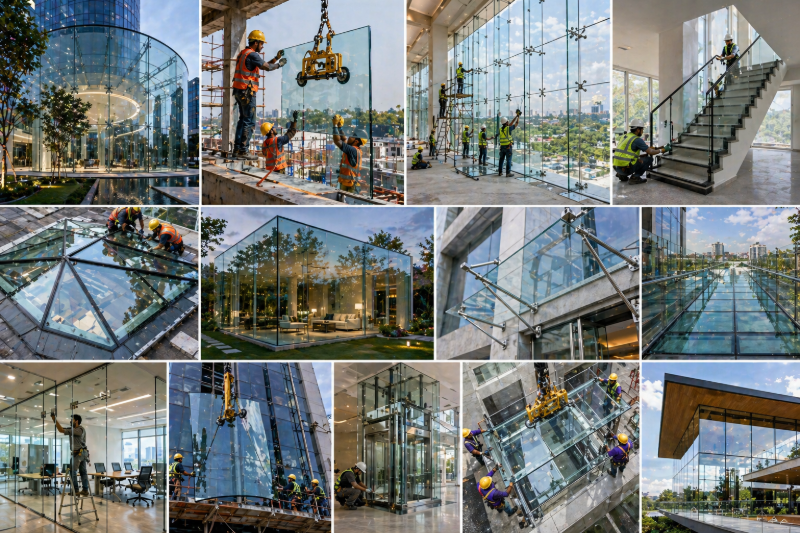
Structural glass facades are increasingly common in India's commercial real estate sector. Premium office buildings in Mumbai's Bandra-Kurla Complex, Bangalore's central business district, and Hyderabad's financial hub feature innovative glass facade systems. These systems can be:
Frameless glass facades using structural silicone
Point-supported glass with stainless steel fittings
Unitized curtain wall systems with structural glass components
Double-skin facades with ventilated air spaces for enhanced thermal performance
Interior Applications
Structural glass is extensively used for interior partitioning, creating open-plan office spaces while maintaining acoustic privacy. Glass staircases, glass floor systems, and glass balustrades are becoming standard features in contemporary Indian residential and commercial projects. These applications enhance spatial perception and create modern, sophisticated interiors.
Structural Glass Floors
Laminated glass floors can support loads up to 100 kN/m² with appropriate support structures. These are used in museums, galleries, and premium residential projects to create dramatic visual effects while maintaining structural integrity. The cost of structural glass flooring in India typically ranges from ₹8,000 to ₹15,000 per square meter, depending on thickness, interlayer specifications, and installation complexity.
Atrium and Skylight Systems
Large-span structural glass skylights and atrium covers allow natural light penetration while protecting interior spaces. These applications are particularly popular in shopping malls, hospitality projects, and institutional buildings across Indian metros.
Design Considerations and Best Practices
Thermal Expansion and Movement
Glass expands and contracts with temperature changes. In India, where temperature variations can be significant (especially in Delhi and northern regions), proper accommodation of thermal movement is critical. Structural glass systems must include:
Adequate joint spacing and sealant flexibility
Structural supports that allow for differential movement
Proper drainage to prevent water infiltration
Expansion joints designed to accommodate movements of 3-5mm over typical building heights
Connection Details
The connections between glass and supporting structure are critical for safety and performance. Common connection methods include:
Structural Silicone Joints: Flexible connections that accommodate movement and vibration
Mechanical Fasteners: Stainless steel bolts and clamps with proper load distribution
Hybrid Systems: Combining silicone and mechanical fasteners for redundancy
All connections must be designed by structural engineers with experience in glass structures and must comply with Indian standards.
Safety Factors and Redundancy
Structural glass systems should incorporate appropriate safety factors (typically 1.5 to 2.0 depending on application) and redundancy. Laminated glass provides inherent redundancy as the interlayer can support loads even if the glass cracks. Point-supported glass systems often use multiple supports to ensure that failure of a single support point doesn't compromise the entire system.
Cost Considerations in the Indian Market
The cost of structural glass applications in India varies significantly based on several factors:
Laminated Glass (6-12mm): ₹400-800 per square meter for basic specifications, up to ₹1,500-2,500 per square meter for high-performance variants with specialized interlayers
Tempered Glass (6-10mm): ₹300-600 per square meter
Insulated Glass Units: ₹800-1,500 per square meter for standard double-glazing, up to ₹2,500+ per square meter for triple-glazing with Low-E coatings
Structural Silicone Sealants: ₹500-1,000 per linear meter for application
Installation and Engineering: Additional 30-50% of material costs depending on complexity
These costs are subject to market fluctuations, material availability, and project-specific requirements. Projects in Tier-1 cities like Mumbai and Bangalore typically have higher labor costs compared to emerging metros.
Installation and Quality Control
Professional Installation Requirements
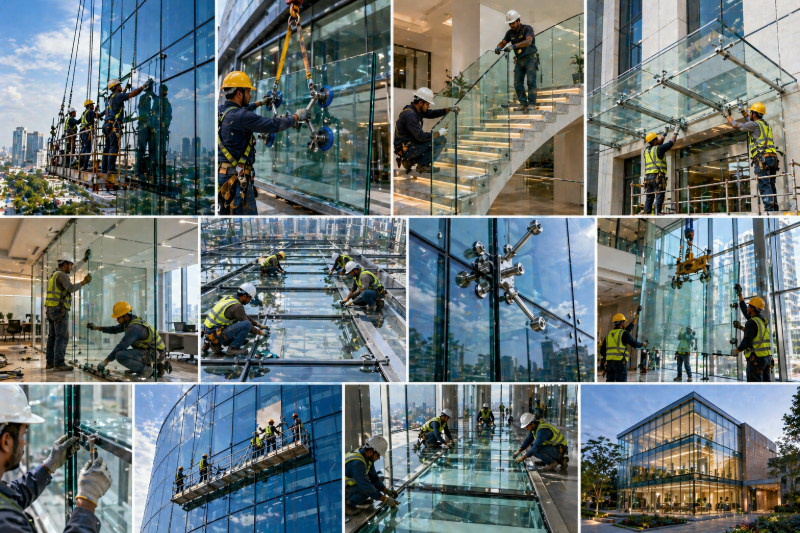
Structural glass installation requires specialized expertise and should only be undertaken by certified professionals. The installation process includes:
Careful handling and storage to prevent damage
Proper cleaning and preparation of surfaces
Precise alignment and leveling
Correct application of sealants and fasteners
Quality testing and inspection
Quality Assurance
All structural glass should be sourced from BIS-certified manufacturers. Third-party testing and certification are essential for:
Glass strength and composition verification
Interlayer adhesion testing
Sealant compatibility and durability assessment
Installation quality verification
Regular inspections during construction and after completion ensure compliance with design specifications and safety standards.
Challenges and Limitations
Acoustic Performance
While glass provides visual transparency, acoustic performance can be a challenge. Standard glass has limited sound insulation properties. However, laminated glass with specialized interlayers can provide noise reduction coefficients (NRC) of 0.4-0.6, making it suitable for open-plan offices and other noise-sensitive applications.
Privacy Concerns
Full transparency can compromise privacy in certain applications. Solutions include:
Frosted or etched glass finishes
Smart glass technologies that can switch between transparent and opaque states
Integrated blinds and shading systems
Strategic placement of structural elements
Maintenance Requirements
While glass is durable, maintaining transparent facades requires regular cleaning. In Indian cities with high pollution levels (particularly Delhi and industrial areas), more frequent cleaning may be necessary, adding to operational costs.
Future Trends in Structural Glass
The structural glass industry in India is evolving with emerging technologies:
Smart Glass Technologies: Electrochromic and thermochromic glasses that respond to environmental conditions
Self-Cleaning Glass: Photocatalytic coatings that reduce maintenance requirements
Integrated Photovoltaic Glass: Glass that generates electricity while maintaining structural function
Advanced Interlayer Materials: Improved durability, strength, and sustainability characteristics
Working with Professionals on AECORD
Designing and implementing structural glass systems requires collaboration with specialized professionals. AECORD, India's leading B2B2C marketplace for AECO professionals, connects architects, structural engineers, and contractors with certified glass specialists and suppliers across major Indian cities. Whether you're planning a structural glass facade for a Mumbai high-rise, designing glass staircases for a Bangalore corporate office, or implementing innovative glass solutions in Delhi, AECORD helps you find vetted professionals with proven expertise in structural glass applications.
The platform allows you to review portfolios, compare specifications, and connect with specialists who understand Indian building codes and climate considerations. This ensures your structural glass projects meet the highest standards of safety, aesthetics, and performance.
Conclusion
Structural glass represents a sophisticated and increasingly popular choice in modern Indian architecture and construction. Its combination of aesthetic appeal, structural performance, energy efficiency, and sustainability makes it an excellent option for contemporary building projects. By understanding the technical requirements, compliance standards, cost implications, and available applications, architects and engineers can effectively leverage structural glass to create innovative, visually stunning, and functionally superior buildings.
Whether you're embarking on a new structural glass project or seeking to upgrade existing systems, connecting with experienced professionals through AECORD ensures you access the expertise necessary to deliver exceptional results. Explore the marketplace today to find the right partners for your structural glass initiatives.
Frequently Asked Questions
What is the difference between structural glass and regular glazing in construction?
Structural glass is engineered to bear loads and contribute to a building's primary structural integrity, while regular glazing is non-load-bearing infill material. Structural glass supports vertical and lateral loads as a critical component of the building system, whereas conventional glass only provides transparency and weather protection.
Which type of structural glass is safest for buildings?
Toughened laminated glass and laminated glass are the safest options because they hold fragments together when broken, preventing collapse and injuries. Laminated glass uses polyvinyl butyral (PVB) interlayers to keep pieces intact, while tempered glass breaks into small, harmless granules rather than sharp shards.
How much energy can structural glass save in Indian buildings?
Buildings incorporating structural glass with insulated glass units and Low-E coatings can achieve 20-30% reduction in cooling energy compared to conventional construction. This is particularly beneficial in India's hot and humid climate, significantly lowering air conditioning loads and energy consumption.
What are the main advantages of structural glass in modern architecture?
Structural glass offers aesthetic benefits with unobstructed views and natural light penetration, improved energy efficiency through thermal insulation, superior safety characteristics, and sustainability since glass is 100% recyclable. It also enables creative applications like glass floors, staircases, and fully glazed facades that weren't possible with traditional materials.
Is structural glass durable in India's climate conditions?
Yes, structural glass is highly durable and resistant to UV degradation, making it suitable for India's diverse climates from coastal salt spray in Mumbai to intense solar radiation in Delhi. It requires minimal maintenance and performs well across varying environmental conditions.
Frequently Asked Questions
What is structural glass and how does it differ from regular glass?
Structural glass refers to glass elements engineered to bear loads and contribute to a building's structural integrity, rather than serving as non-load-bearing infill. Unlike conventional glazing, structural glass supports vertical and lateral loads as part of the primary structural system, making it a critical load-bearing component.
What are the main types of structural glass used in construction?
The primary types include laminated glass (multiple layers bonded with PVB interlayers), tempered glass (heat-treated and 4-5 times stronger than regular glass), insulated glass units (double/triple-glazed systems), toughened laminated glass (combining tempered and laminated properties), and structural silicone glazing (glass bonded directly to frames with silicone sealants).
How much energy can structural glass save in buildings?
Buildings incorporating structural glass with low-emissivity coatings and proper orientation can achieve 20-30% reduction in cooling energy compared to conventional construction. This is especially beneficial in India's hot and humid climate, as modern insulated glass units significantly reduce heat transfer through building envelopes.
Is structural glass safe if it breaks?
Yes, structural glass is highly safe when broken. Laminated and tempered varieties hold glass fragments together or break into small, harmless granules rather than sharp shards, preventing injuries and maintaining the building's weather envelope even after failure.
What are the design advantages of using structural glass?
Structural glass enables architects to create visually stunning facades with unobstructed views, increased natural light penetration, and creative applications like glass floors, staircases, and balustrades. This design flexibility has made it popular in premium office buildings and luxury residential developments across Indian cities.