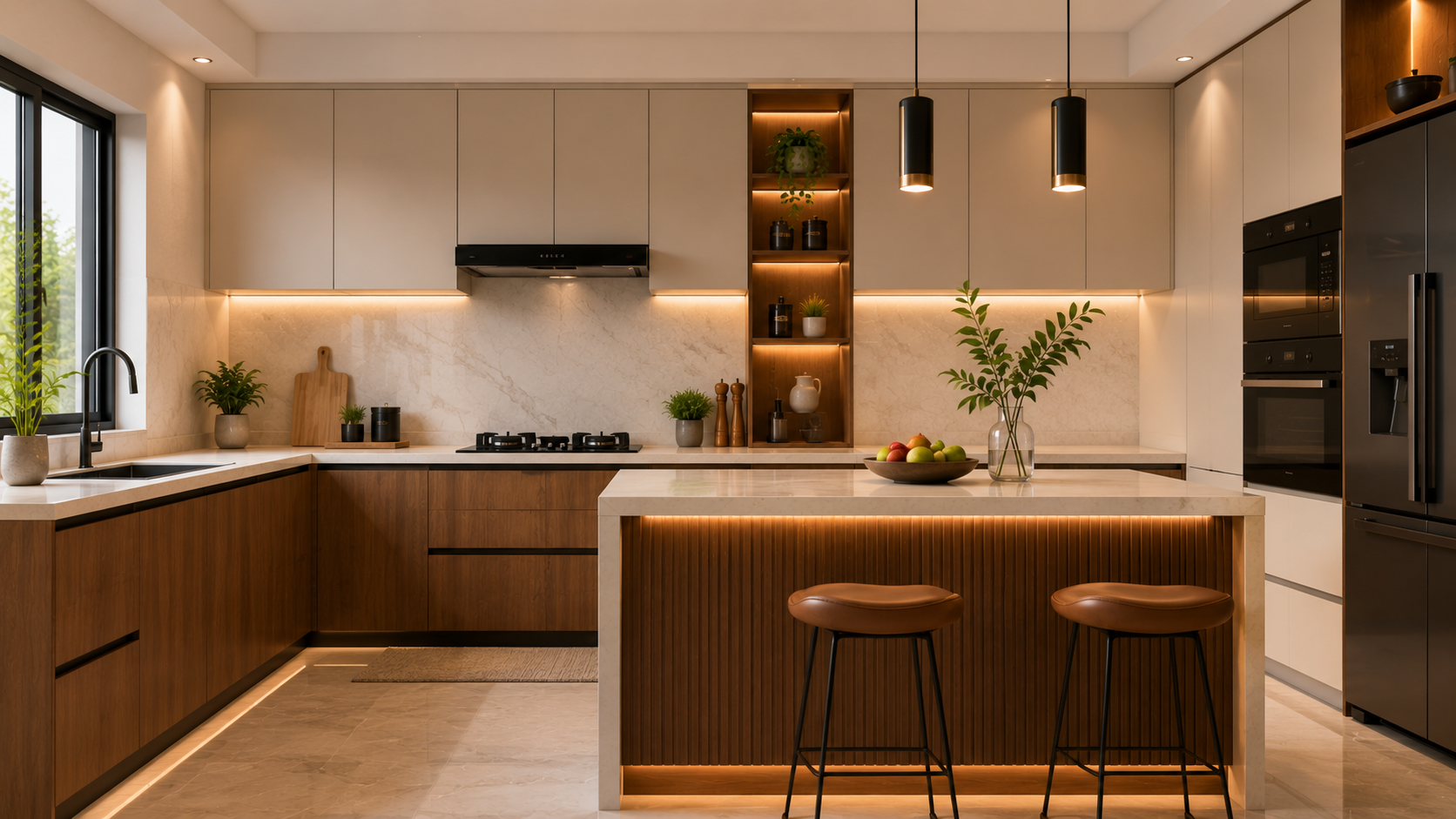


Small apartment living has become the norm in India's urban centers. Whether you're in Mumbai, Bangalore, Delhi, or Pune, maximizing limited space has become an essential skill for modern homeowners. The good news? With thoughtful design choices, your small apartment can feel spacious, functional, and beautiful. This comprehensive guide explores proven interior design strategies tailored to Indian homes and lifestyles.
Understanding Small Space Design Principles
Before diving into specific ideas, it's important to understand the fundamental principles that make small spaces work. Small apartment design isn't just about fitting more furniture into less area—it's about creating an environment that feels open, organized, and reflects your personal style.
The average apartment in Indian cities ranges from 400 to 800 square feet. This limited footprint requires strategic planning to accommodate living, sleeping, dining, and working spaces. The key is to think vertically, use multifunctional furniture, and employ smart color and lighting choices.
Build cost · Bengaluru, May 2026
The Power of Vertical Space
In a small apartment, your walls are your greatest asset. Instead of spreading furniture horizontally across the floor, utilize vertical space to create storage and visual interest. Floor-to-ceiling shelving units, wall-mounted cabinets, and tall bookcases draw the eye upward, making rooms feel taller and more spacious.
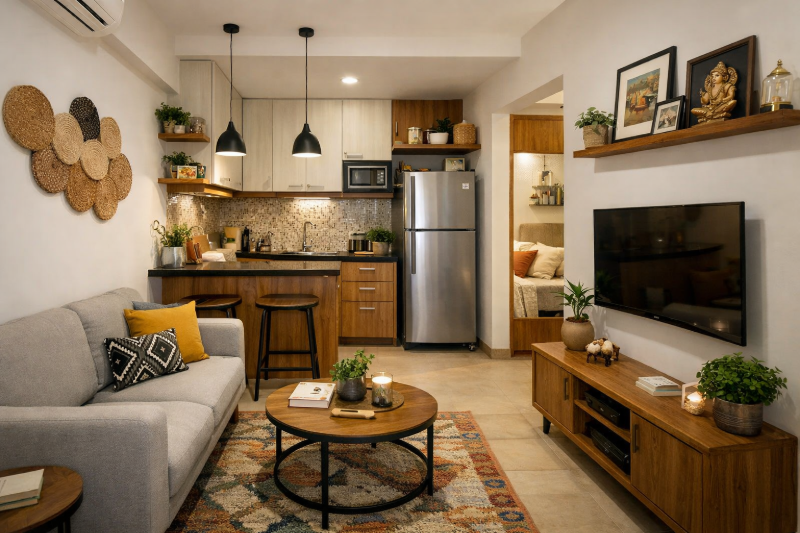
Consider installing floating shelves at varying heights to display books, plants, and decorative items. This approach keeps the floor clear while adding personality to your space. In Indian homes, this is particularly useful for storing prayer items, family photos, and cultural artifacts that add warmth to your living environment.
Color and Lighting: Creating Illusion of Space
Color psychology plays a crucial role in small space design. Light, neutral colors reflect more light and create a sense of openness, while dark colors can make spaces feel cramped.
Choosing the Right Color Palette
For small apartments, consider these color strategies:
Whites and off-whites: These timeless choices make spaces feel airy and are versatile with any décor style
Soft pastels: Pale blues, greens, and grays add subtle color without overwhelming the space
Warm neutrals: Beiges and warm grays create a cozy atmosphere while maintaining openness
Accent walls: Use one darker wall to add depth without closing in the space
When painting your small apartment, avoid using multiple bold colors in different rooms. Instead, maintain a cohesive color flow throughout to make the entire space feel connected and larger. If you're renting and cannot paint, use removable wallpaper or wall decals to add visual interest.
Frequently asked
Maximizing Natural and Artificial Light
Light is perhaps the most important element in making small spaces feel larger. In Indian cities with intense sunlight, manage natural light with sheer curtains that filter light while maintaining privacy. Heavy curtains can make rooms feel smaller, so opt for lightweight fabrics in neutral colors.
For artificial lighting, use a combination of sources:
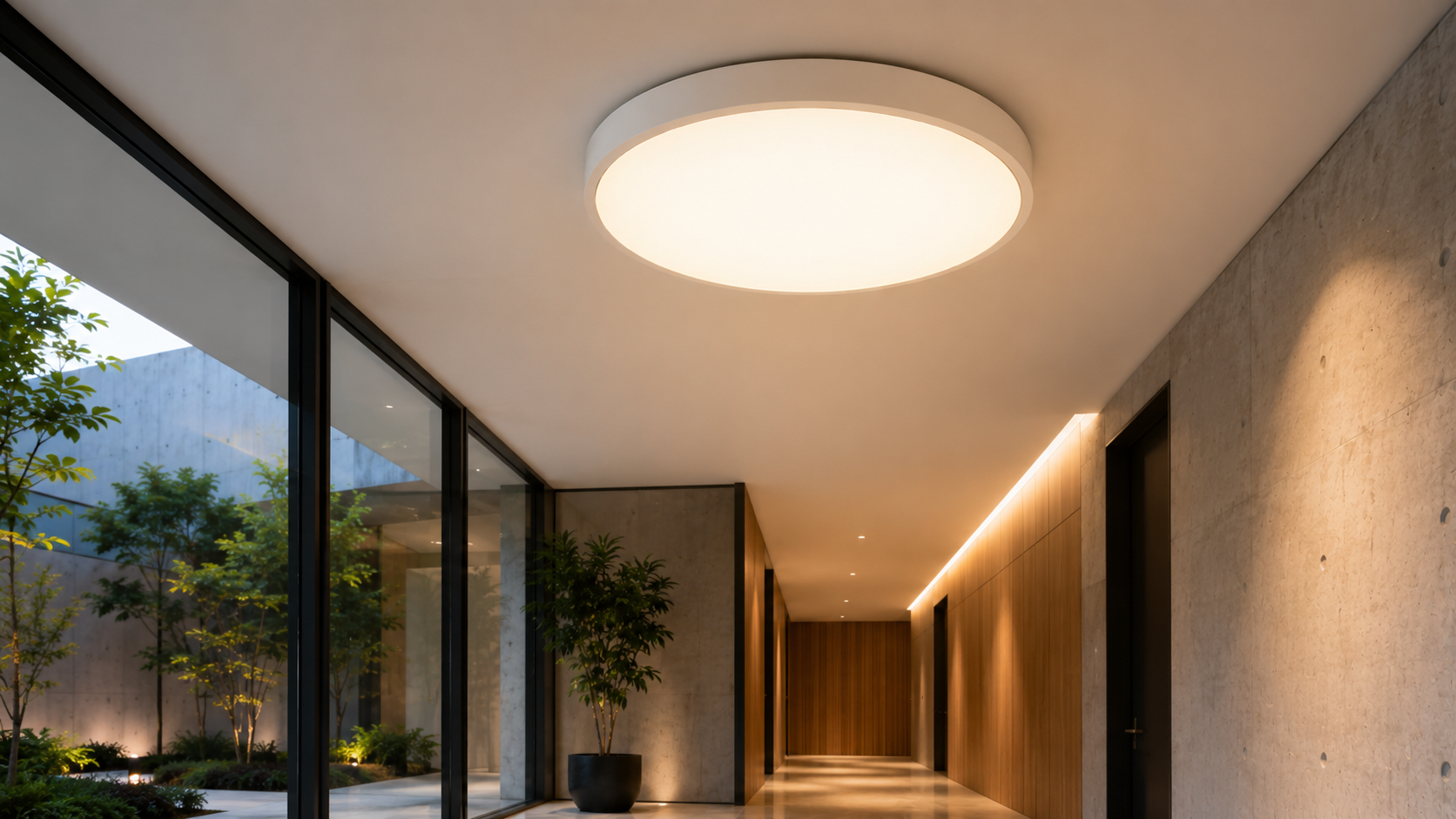
Ambient lighting: Ceiling lights or recessed lights provide overall illumination
Task lighting: Desk lamps and reading lights serve specific functions
Accent lighting: Wall sconces or LED strips highlight artwork or architectural features
LED lights are ideal for small apartments—they consume less electricity (important for managing bills in Indian homes) and generate minimal heat, which is beneficial in warm climates.
Multifunctional Furniture: The Smart Choice
In small apartments, every piece of furniture should earn its place. Multifunctional furniture is not a luxury—it's a necessity.
Essential Multifunctional Pieces
Sofa beds and pull-out couches: These serve as seating by day and sleeping space by night. Many Indian furniture manufacturers now offer affordable options in the ₹15,000-₹40,000 range.
Storage ottomans: These provide seating, footrests, and hidden storage for blankets, books, or seasonal items. They're particularly useful in Indian homes where floor seating is common.
Wall-mounted desks: If you work from home, a folding or wall-mounted desk saves significant floor space. These can be tucked away when not in use, transforming your bedroom into a proper office during work hours.
Nesting tables: These space-saving tables can be separated when you need extra surface area and nested together when space is tight.
Bed with built-in storage: Platform beds with drawers underneath maximize storage without taking additional floor space. This is especially valuable in bedrooms of 100-150 square feet.
Expandable dining tables: A small table that extends when you have guests prevents your dining area from feeling cramped daily. Many Indian manufacturers offer compact solutions starting at ₹8,000-₹15,000.
Smart Storage Solutions
Clutter is the enemy of small spaces. Effective storage solutions keep your apartment organized and visually spacious.
Vertical Storage Systems
Install shelving units that reach the ceiling. The space above your head is often wasted in small apartments. Use baskets and labeled boxes to organize items by category. In Indian homes, this approach works well for storing kitchen items, books, and seasonal decorations.
Under-Bed Storage
Utilize the space beneath your bed for storage boxes containing off-season clothes, extra bedding, or items you use infrequently. Invest in beds with built-in drawers if possible.
Door and Wall Storage
Over-the-door organizers, wall-mounted hooks, and pegboards maximize unused wall space. In Indian kitchens, magnetic strips hold spices and cooking utensils. In bedrooms, hooks organize bags, belts, and scarves.
Closet Organization
Small apartments typically have limited closet space. Use vertical dividers, hanging organizers, and shelf risers to maximize closet capacity. In Indian climates where you need clothes for different seasons, smart organization is essential.
Creating Distinct Zones in Open Spaces
Many small apartments feature open floor plans combining living and dining areas. Create visual separation without walls using strategic design.
Using Furniture Arrangement
Position your sofa to define the living area, with dining furniture arranged in an adjacent zone. This creates psychological separation while maintaining openness. A low bookshelf can serve as a room divider without blocking sight lines.
Rugs as Zone Markers
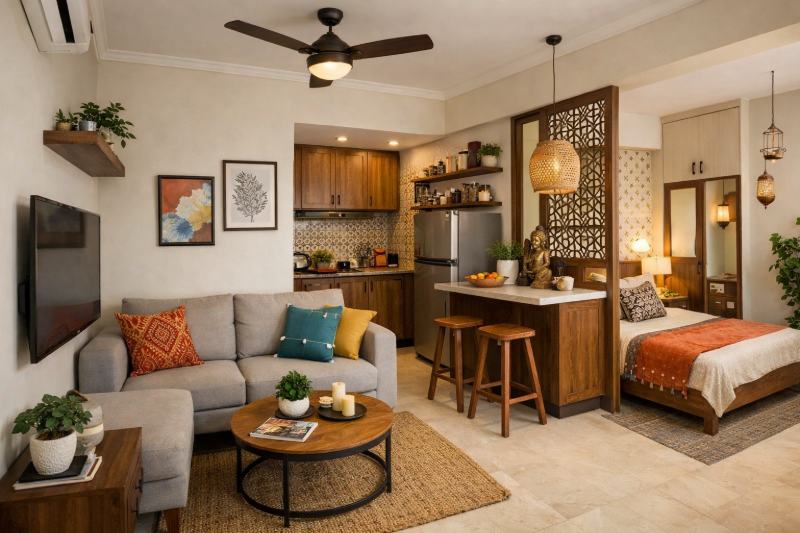
Different rugs define different areas. A living room rug anchors the seating area, while a dining room rug delineates the eating space. This visual separation makes the apartment feel more organized and intentional.
Lighting Zones
Different lighting in different areas creates distinction. Warm ambient lighting in the living area and brighter task lighting in the dining or working zone visually separate spaces.
Mirrors and Reflective Surfaces
Mirrors are powerful tools in small space design. They reflect light, create depth, and make spaces feel larger than they actually are.
Place a large mirror opposite a window to reflect natural light throughout the room. Mirrored cabinet doors in bedrooms or living areas amplify light and create an illusion of depth. Reflective surfaces like glass-top tables and metallic accents also contribute to this effect.
However, avoid placing mirrors directly opposite each other, as this can create a disorienting effect. Instead, position mirrors strategically to reflect light from windows or light sources.
Plants and Natural Elements
Indoor plants add life, improve air quality, and make small spaces feel more inviting. In Indian cities with varying pollution levels, plants are particularly beneficial.
Choose low-maintenance plants suitable for indoor conditions:
Snake plants (Sansevieria) - thrive in low light and require minimal watering
Pothos - adaptable and fast-growing
Rubber plants - add visual impact with large leaves
Spider plants - improve air quality and are nearly indestructible
Bamboo plants - add an Asian aesthetic popular in Indian homes
Hang plants from shelves or walls to save floor space. Use plant stands with multiple tiers to display several plants in a compact footprint. This vertical gardening approach adds greenery without consuming valuable floor area.
Kitchen Solutions for Small Apartments
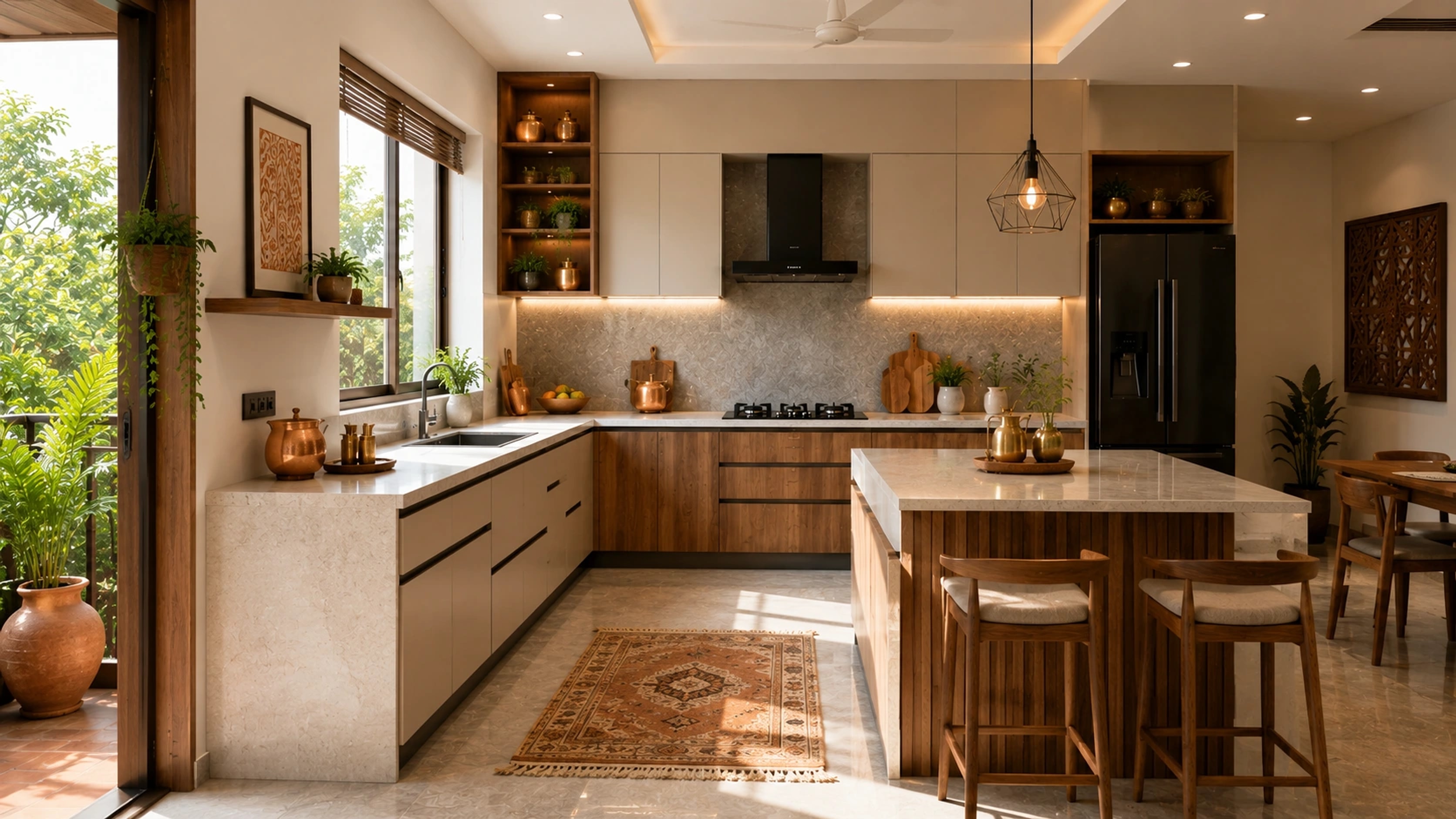
Kitchens in small Indian apartments are often the most challenging spaces to design. A typical small apartment kitchen might be just 60-80 square feet.
Compact Kitchen Layouts
Work with your kitchen's natural shape. Galley kitchens (parallel counters) are efficient for small spaces. L-shaped kitchens maximize corner usage. Ensure your kitchen work triangle (sink, stove, refrigerator) is efficient to minimize unnecessary movement.
Vertical Kitchen Storage
Install shelves above counters and cabinets. Use magnetic strips for knives and spice racks for organized storage. Wall-mounted utensil holders and hanging pots save cabinet space. In Indian kitchens where spices are essential, consider a dedicated spice rack system.
Compact Appliances
Choose smaller appliances: compact microwave ovens, narrow refrigerators, and space-saving dishwashers. Many Indian brands offer efficient, affordable options in the ₹5,000-₹15,000 range for essential appliances.
Bedroom Design for Small Apartments
Bedrooms in small apartments often measure just 100-120 square feet. Strategic design makes them functional and restful.
Bed Placement
Position your bed against the longest wall to maximize floor space. Avoid placing beds in the center of the room, which wastes valuable area. A platform bed with storage drawers maximizes functionality without adding bulk.
Bedroom Storage
Utilize wall space with floating shelves, wall-mounted cabinets, or tall bookcases. A narrow wardrobe against one wall provides essential clothing storage without consuming much floor space. Corner shelves make use of otherwise dead space.
Creating a Retreat
Even in small bedrooms, create a sense of calm and relaxation. Use soft, neutral colors on walls. Layer lighting with a ceiling light, bedside lamps, and perhaps a reading light. Quality bedding and comfortable pillows make the space feel luxurious despite its size.
Bathroom Organization in Compact Spaces
Small bathrooms require clever organization. Most small apartment bathrooms are 30-40 square feet with limited counter and storage space.
Install shelving above the toilet for towels and toiletries. Use wall-mounted cabinets and organizers to keep items off counters. Shower caddies and corner shelves maximize vertical space. Consider a pedestal sink with a wall-mounted cabinet above it to save floor space compared to traditional vanities.
In Indian bathrooms, where space is often at a premium, waterproof storage solutions are essential. Use moisture-resistant materials and ensure proper ventilation to prevent mold and mildew.
Working with Professional Designers
If you're struggling to visualize your small apartment's potential, consider consulting with a professional interior designer. Platforms like AECORD connect you with experienced designers who specialize in small space solutions across Indian cities.
A professional designer can:
Create detailed floor plans optimizing your specific layout
Recommend furniture and materials suitable for your budget and climate
Provide 3D visualizations before making purchases
Source materials and coordinate with contractors
Whether you're in Mumbai, Bangalore, Delhi, or Pune, finding the right designer through AECORD ensures you get expertise tailored to your local market and climate conditions.
Budget-Friendly Design Tips
Small apartment design doesn't require a large budget. Strategic choices maximize impact:
Paint: A fresh coat of light, neutral paint costs ₹2,000-₹5,000 but dramatically transforms a space
Lighting: Affordable LED bulbs (₹100-₹300 each) improve ambiance significantly
Mirrors: A large mirror costs ₹1,500-₹4,000 and creates an illusion of space
Rugs: Quality rugs start at ₹3,000-₹8,000 and define spaces beautifully
Plants: Small plants cost ₹200-₹500 and add life to any space
Secondhand furniture: OLX and local furniture markets offer affordable multifunctional pieces
Focus your budget on pieces you use daily—a comfortable bed, good lighting, and functional storage—before investing in decorative items.
Conclusion: Making Your Small Apartment Feel Spacious
Living in a small apartment in India doesn't mean compromising on comfort or style. By implementing these design strategies—maximizing vertical space, choosing appropriate colors and lighting, investing in multifunctional furniture, and organizing effectively—you can transform your compact home into a spacious, comfortable sanctuary.
The key is thoughtful planning and intentional choices. Every piece of furniture, every color, and every design element should serve a purpose while contributing to an overall sense of openness and functionality.
Whether you're designing your first apartment or redesigning an existing space, remember that small apartment living is about quality over quantity. Choose fewer pieces that you love and that serve your lifestyle well.
Ready to transform your small apartment? Connect with experienced interior designers and architects on AECORD who understand the unique challenges and opportunities of small space design in Indian cities. From initial consultation to final installation, professionals on AECORD can help you create the apartment of your dreams, no matter how limited your square footage. Browse verified professionals in your city today and start your small space transformation journey.
Frequently Asked Questions
What is the best color for small apartments in India?
Light, neutral colors like whites, off-whites, soft pastels, and warm beiges are ideal for small apartments as they reflect light and create a sense of openness. Maintaining a cohesive color palette throughout the space makes the entire apartment feel larger and more connected.
How can I make a small apartment feel more spacious?
Utilize vertical space with floor-to-ceiling shelving and wall-mounted storage, maximize natural and artificial lighting, use light colors, and choose multifunctional furniture. These design strategies create an open, organized environment that feels larger than its actual square footage.
What type of lighting works best for small spaces?
Use a combination of ambient lighting (ceiling lights), task lighting (desk lamps), and accent lighting (wall sconces) to create layers. LED lights are particularly ideal for small Indian apartments as they consume less electricity and generate minimal heat in warm climates.
How should I use vertical space in a small apartment?
Install floor-to-ceiling shelving units, floating shelves at varying heights, and tall bookcases to draw the eye upward and make rooms feel taller. This approach keeps the floor clear while providing storage for books, plants, and decorative items without taking up valuable floor space.
What window treatments are best for small apartments?
Use sheer curtains in neutral colors that filter light while maintaining privacy, as heavy curtains can make rooms feel smaller. In Indian cities with intense sunlight, lightweight fabrics allow natural light to brighten the space while keeping the apartment cool.