Septic Tank Construction Cost in India 2026: A Comprehensive Guide
Septic tank installation is a critical investment for properties in India that lack access to municipal sewage systems. Whether you're building a residential home, commercial property, or industrial facility, understanding the current costs and factors affecting septic tank construction is essential for accurate budgeting. This comprehensive guide covers everything you need to know about septic tank construction costs in India for 2026.
For a closer look, read our guide on Average Cost to Build a Swimming Pool.
Build cost · Bengaluru, May 2026
Current Market Overview: Septic Tank Costs in 2026
The cost of septic tank construction in India has evolved significantly over the past few years, influenced by material prices, labor costs, and regional variations. As of 2026, the average cost of installing a septic tank system ranges from ₹50,000 to ₹3,00,000, depending on various factors including tank capacity, construction materials, and location.
For a standard residential property with a 1,000-liter capacity septic tank, you can expect to pay approximately ₹60,000 to ₹1,20,000. However, larger capacity tanks for commercial or multi-story residential buildings can cost significantly more. The variation in pricing reflects the diversity of the Indian real estate market and the different regional building standards across the country.
Factors Affecting Septic Tank Construction Costs
1. Tank Capacity and Size
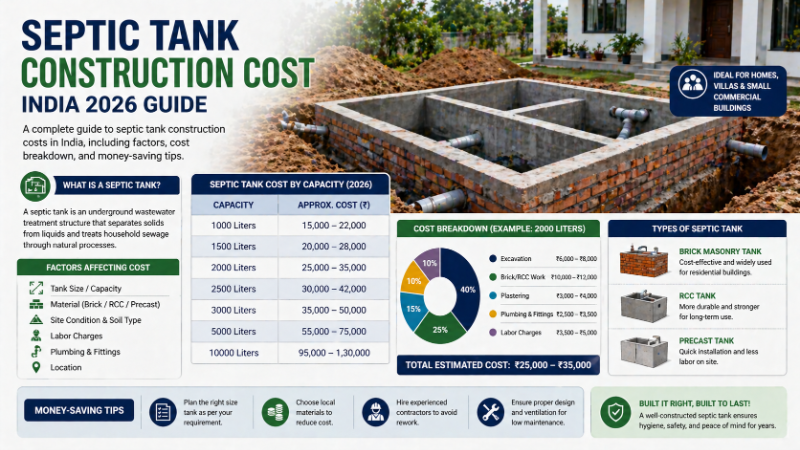
Tank capacity is one of the primary determinants of septic tank construction costs. The size required depends on the number of residents or users and daily water consumption. Standard calculations suggest approximately 1,000 liters of capacity per person per day for residential purposes.
500-1,000 liters: ₹40,000 - ₹70,000 (small residential units)
1,000-2,000 liters: ₹70,000 - ₹1,20,000 (typical 2-4 bedroom homes)
2,000-5,000 liters: ₹1,20,000 - ₹2,00,000 (larger residences, small commercial)
5,000+ liters: ₹2,00,000 - ₹5,00,000+ (commercial establishments, institutions)
Frequently asked
2. Construction Material
The material used for septic tank construction significantly impacts both cost and longevity. India offers several options, each with distinct advantages and price points:
Reinforced Cement Concrete (RCC): This remains the most popular choice in India, offering durability and cost-effectiveness. RCC tanks typically cost 20-30% less than alternatives and last 30-40 years with proper maintenance. Prices range from ₹50 to ₹150 per liter of capacity.
Fiberglass Reinforced Plastic (FRP): These lightweight, corrosion-resistant tanks are increasingly popular in metro areas like Delhi, Mumbai, Bangalore, and Hyderabad. However, they cost 40-50% more than RCC tanks, ranging from ₹80 to ₹200 per liter. They're ideal for areas with high water tables or corrosive soil conditions.
Brick and Mortar: This traditional method is economical but less durable, typically lasting 15-20 years. Costs are lower at ₹40 to ₹100 per liter, making it suitable for budget-conscious projects in smaller towns and rural areas.
Concrete Rings: Pre-cast concrete rings offer a middle ground, costing ₹60 to ₹130 per liter. They're popular for medium-sized installations and offer reasonable durability.
3. Geographic Location and Regional Variations
Construction costs vary considerably across India's different regions. Metropolitan areas and tier-1 cities typically have higher labor and material costs compared to smaller towns.
Metropolitan Cities (Delhi, Mumbai, Bangalore, Hyderabad): 15-25% premium on base costs due to higher labor wages and material prices
Tier-2 Cities (Pune, Ahmedabad, Jaipur, Lucknow): 5-10% variation from base costs
Tier-3 Cities and Rural Areas: 10-20% lower costs compared to metros
For example, the same 2,000-liter RCC tank might cost ₹95,000 in a smaller town but ₹1,15,000 in Mumbai or Bangalore.
4. Soil and Site Conditions
The existing soil composition and site conditions directly affect construction complexity and costs:
Hard Rocky Soil: Requires additional excavation equipment and labor, increasing costs by 20-30%
High Water Table: Necessitates waterproofing measures and proper drainage design, adding ₹15,000 to ₹40,000
Sloped Terrain: May require leveling and additional structural support, increasing costs by 15-25%
Accessible Flat Ground: Minimal additional costs, making installation more economical
5. Labor and Installation Costs
Labor costs typically account for 30-40% of the total septic tank installation expense. As of 2026, skilled septic tank installers in India charge:
₹500 to ₹1,000 per day for general labor
₹1,000 to ₹2,000 per day for skilled technicians
Flat installation fees ranging from ₹20,000 to ₹60,000 depending on tank size and complexity
Installation typically takes 3-7 days for standard residential tanks, though larger systems may require 10-15 days.
Cost Breakdown: What's Included in Septic Tank Installation
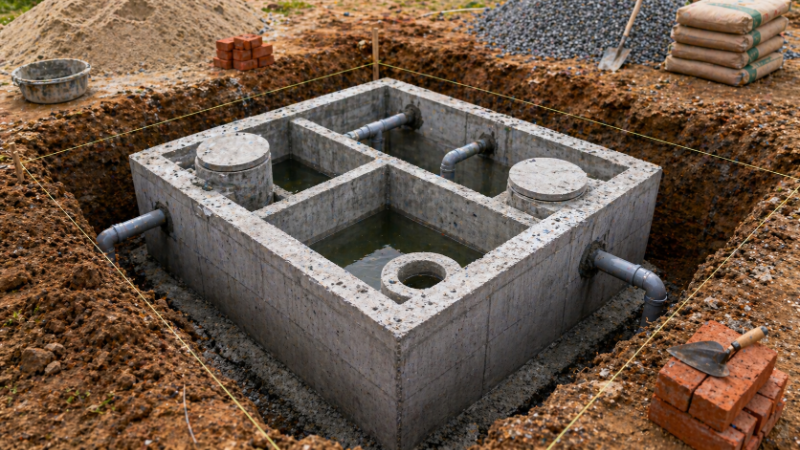
Materials (50-60% of total cost)
Tank structure (RCC, FRP, or other material)
Inlet and outlet pipes
Baffles and internal fittings
Concrete rings or additional support structures
Waterproofing materials and coatings
Inspection chambers and access covers
Labor (30-40% of total cost)
Excavation and site preparation
Tank installation and positioning
Pipe connections and fitting
Backfilling and compaction
Testing and commissioning
Additional Services (10-15% of total cost)
Site survey and soil testing: ₹5,000 to ₹15,000
Design and engineering consultation: ₹5,000 to ₹20,000
Permits and regulatory approvals: ₹2,000 to ₹10,000
Maintenance and after-sales service: ₹5,000 to ₹15,000
Regional Cost Examples for 2026
Delhi NCR Region
A 2,000-liter RCC septic tank installation in Delhi typically costs ₹1,10,000 to ₹1,35,000, including excavation, installation, and basic piping. FRP alternatives would cost ₹1,60,000 to ₹1,90,000.
Mumbai and Western India
Due to higher labor costs and coastal construction requirements, a similar 2,000-liter tank costs ₹1,20,000 to ₹1,50,000 for RCC. The high water table in many areas adds ₹25,000 to ₹40,000 for waterproofing.
Bangalore and Southern India
In tech-driven cities like Bangalore, costs are comparable to Delhi at ₹1,05,000 to ₹1,30,000 for RCC tanks. However, rocky soil conditions often necessitate additional excavation costs of ₹15,000 to ₹30,000.
Smaller Towns and Rural Areas
In towns like Jaipur, Lucknow, or Indore, the same installation costs 15-20% less, ranging from ₹85,000 to ₹1,05,000 for RCC tanks.
Types of Septic Tank Systems and Their Costs
Single Pit System
The most basic and economical option, costing ₹40,000 to ₹80,000. Suitable for small households in areas with good soil permeability. However, it offers limited treatment efficiency and may not comply with modern environmental standards.
Two-Pit System (Septic Tank + Soak Pit)
This standard system costs ₹60,000 to ₹1,20,000 and is the most common in residential areas. It provides better treatment and is recommended for most Indian homes. The second pit allows for better liquid distribution and soil absorption.
Multi-Chamber System
Advanced systems with multiple chambers for better treatment cost ₹1,00,000 to ₹2,00,000. These are ideal for larger residential complexes, hotels, and commercial establishments.
Biodigester Systems
Modern biodigester technology costs ₹1,50,000 to ₹3,00,000 but offers superior treatment, odor control, and environmental compliance. Popular in metro areas and among environmentally conscious developers.
Package Treatment Plants
For commercial and industrial applications, complete treatment plants cost ₹2,00,000 to ₹10,00,000+ depending on capacity and treatment requirements.
Regulatory and Compliance Costs
India's building codes and environmental regulations require septic tank installations to meet specific standards. These compliance requirements add to the overall cost:
Municipal Approvals and Permits: ₹2,000 to ₹10,000 (varies by city)
Environmental Clearance (for larger systems): ₹5,000 to ₹25,000
Regular Inspections and Certification: ₹3,000 to ₹8,000 annually
Water Quality Testing: ₹5,000 to ₹15,000
Cities like Bangalore, Pune, and Hyderabad have stricter regulations requiring advanced treatment systems, which increases installation costs by 20-40% compared to basic compliance requirements.
Hidden Costs to Consider
Beyond the basic installation cost, several hidden expenses often arise:
Contingency for Unexpected Conditions: Budget 10-15% extra for unforeseen soil issues or structural complications
Access Road Preparation: ₹10,000 to ₹30,000 if the site requires temporary roads for equipment
Demolition of Existing Structures: ₹5,000 to ₹50,000 if old systems need removal
Extended Piping: ₹100 to ₹300 per meter for additional pipe runs beyond the standard layout
Maintenance Equipment: ₹5,000 to ₹15,000 for cleaning tools and initial maintenance supplies
Future Maintenance Reserve: Set aside ₹10,000 to ₹20,000 for annual cleaning and maintenance
Cost-Saving Tips for Septic Tank Installation
Plan Ahead and Get Multiple Quotes
Obtain at least 3-4 quotations from reputable contractors. This helps you understand market rates and negotiate better prices. When seeking quotes on platforms like AECORD, you can compare offerings from multiple verified professionals across your region.
Choose Appropriate Tank Capacity
Avoid over-sizing your septic tank, as it increases costs unnecessarily. Calculate your actual requirement based on the number of permanent residents and typical water usage patterns.
Optimize Site Selection
Choose a location with accessible, flat terrain and good soil conditions. This reduces excavation costs and simplifies installation. Avoid areas with high water tables or rocky soil if possible.
Use Standard Materials and Designs
Standard RCC tanks are cost-effective and proven. Unless you have specific requirements (high water table, corrosive soil), premium materials may not provide proportional benefits.
Combine Services
Hire a single contractor for design, installation, and testing rather than multiple vendors. This reduces coordination overhead and often results in better pricing.
Time Your Installation Strategically
Installing during off-season (monsoon transition periods) may offer better labor rates and contractor availability.
Long-term Cost Considerations
While initial installation is important, consider the total cost of ownership over the system's lifespan:
Annual Maintenance: ₹5,000 to ₹15,000 per year
Desludging (every 3-5 years): ₹8,000 to ₹20,000
Repairs and Replacements (over 30-40 years): ₹50,000 to ₹1,50,000
Investing in quality materials and professional installation initially can reduce these long-term costs significantly.
Finding Qualified Professionals on AECORD
Selecting the right contractor is crucial for successful septic tank installation. AECORD connects you with verified architects, engineers, and construction professionals across India who specialize in wastewater management systems. Through AECORD's platform, you can:
View detailed profiles and past project portfolios of septic tank specialists
Read verified client reviews and ratings
Compare quotes from multiple professionals in your area
Ensure compliance with local building codes and regulations
Access professionals experienced with your specific soil and site conditions
Whether you need a simple residential septic tank or a complex commercial treatment system, AECORD helps you find qualified professionals who understand the nuances of septic tank design and installation in your specific region.
Conclusion
Septic tank construction costs in India for 2026 range from ₹50,000 to ₹3,00,000 depending on capacity, materials, location, and complexity. A typical 2,000-liter residential system costs between ₹70,000 and ₹1,50,000, with significant regional variations. By understanding the factors affecting costs, planning appropriately, and selecting qualified professionals, you can ensure a cost-effective installation that meets your needs and regulatory requirements.
The key to successful septic tank installation is thorough planning, obtaining multiple quotes, choosing appropriate materials for your site conditions, and hiring experienced professionals. Whether you're building a new home or upgrading an existing property, taking time to understand these costs and options will result in a reliable wastewater management system that serves you well for decades to come.
Ready to start your septic tank project? Connect with verified AECORD professionals who specialize in septic tank design and installation in your city. Get personalized quotes, view portfolios, and choose the right expert for your specific needs today.
Frequently Asked Questions
How much does a septic tank cost in India in 2026?
The average cost of septic tank installation in India ranges from ₹50,000 to ₹3,00,000, depending on tank capacity, materials, and location. For a standard 1,000-liter residential tank, expect to pay approximately ₹60,000 to ₹1,20,000.
What size septic tank do I need for my home?
Septic tank size depends on the number of residents and daily water consumption, with standard calculations suggesting approximately 1,000 liters of capacity per person per day. A typical 2-4 bedroom home requires a 1,000-2,000 liter tank costing ₹70,000 to ₹1,20,000.
Which septic tank material is best for India?
RCC (Reinforced Cement Concrete) is the most popular choice in India, offering durability and cost-effectiveness with a 30-40 year lifespan. FRP tanks are superior for high water table areas but cost 40-50% more, while brick and mortar is the most economical but less durable option.
Why do septic tank costs vary by region in India?
Metropolitan cities like Delhi, Mumbai, and Bangalore charge 15-25% premiums over base costs due to higher labor wages and material prices, while tier-2 cities and rural areas offer more affordable installation rates.
How long does a septic tank last in India?
RCC and concrete ring tanks last 30-40 years with proper maintenance, FRP tanks offer similar longevity, while brick and mortar tanks typically last only 15-20 years, making material choice crucial for long-term cost efficiency.