

PVC Doors vs Wooden Doors in India: A Complete Comparison Guide
When it comes to choosing doors for residential or commercial spaces in India, the decision between PVC and wooden doors is one of the most critical choices homeowners and builders face. Both materials have distinct advantages and limitations, and understanding their differences can help you make an informed decision that aligns with your budget, climate, and aesthetic preferences.
In this comprehensive guide, we'll explore the key differences between PVC and wooden doors, examining factors like durability, maintenance, cost, environmental impact, and suitability for different Indian climates. Whether you're building a new home in Mumbai, renovating a property in Bangalore, or constructing a commercial space in Delhi, this article will help you understand which option works best for your specific needs.
Build cost · Bengaluru, May 2026
Understanding PVC Doors and Wooden Doors
What Are PVC Doors?
PVC (polyvinyl chloride) doors are manufactured from a synthetic plastic material that offers excellent resistance to moisture, insects, and weathering. These doors are typically hollow or foam-filled, making them lightweight and easy to install. PVC doors have gained significant popularity in India over the past decade, particularly in coastal cities and areas with high humidity.
What Are Wooden Doors?
Wooden doors are crafted from natural timber and have been the traditional choice in India for centuries. They're available in various wood types, from teak and rosewood to sal and pine, each offering different levels of durability and aesthetic appeal. Wooden doors are valued for their warmth, beauty, and traditional appeal.
Frequently asked
Cost Comparison: Initial Investment and Long-Term Expenses
Initial Purchase Price
One of the most significant differences between PVC and wooden doors is the upfront cost. In India's current market:
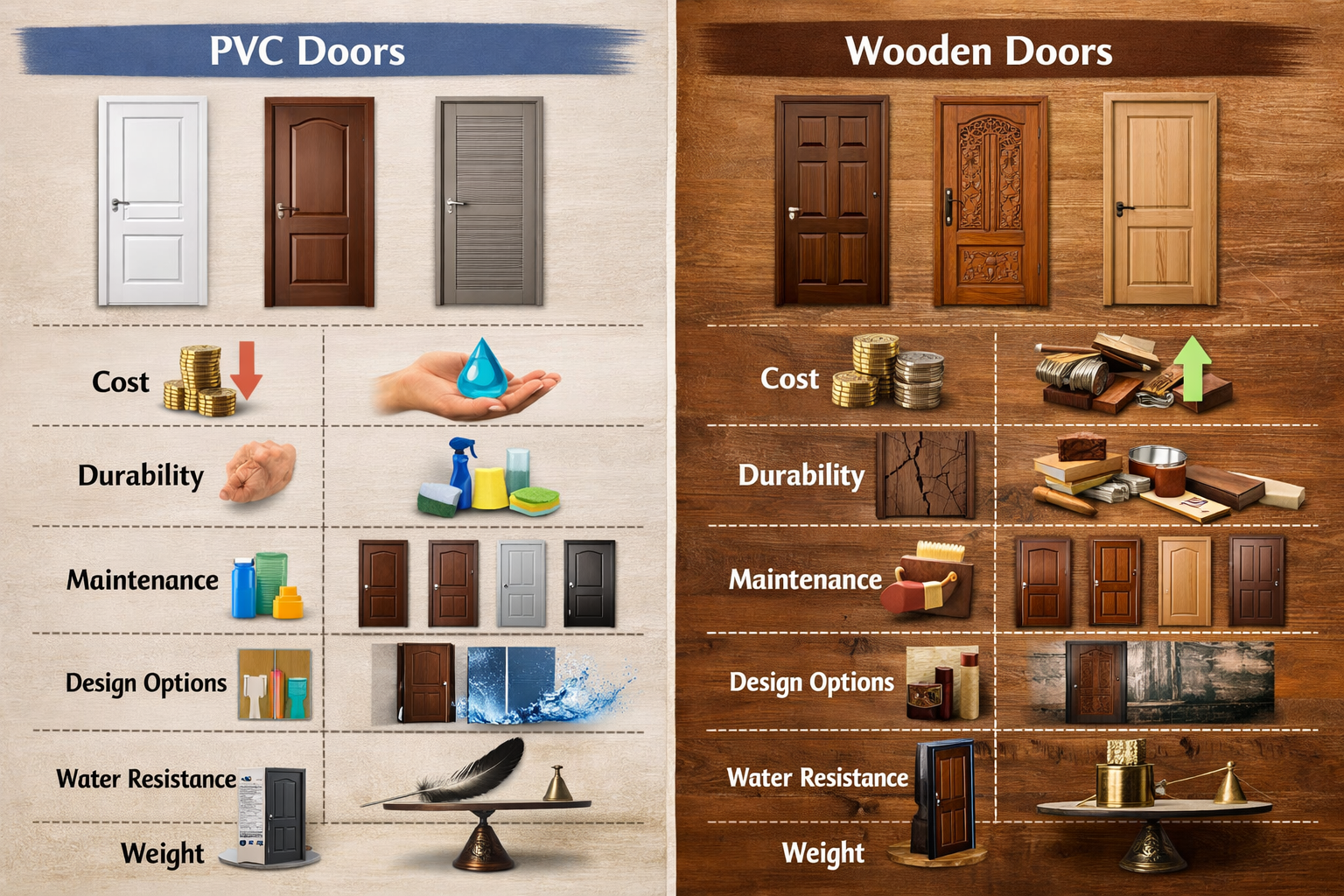
PVC doors: Range from ₹2,500 to ₹8,000 per square foot, depending on thickness, design, and brand
Wooden doors: Start from ₹3,000 per square foot for standard timber and can exceed ₹15,000 per square foot for premium woods like teak
For a standard 3x7 feet door frame, a basic PVC door might cost ₹5,250 to ₹16,800, while a wooden door of similar dimensions could range from ₹6,300 to ₹31,500. This makes PVC doors an attractive option for budget-conscious buyers, though premium PVC options can rival wooden door prices.
Maintenance and Repair Costs
While PVC doors have a lower initial cost, maintenance expenses tell a different story:
PVC doors: Require minimal maintenance—occasional cleaning with mild soap and water. No painting, polishing, or sealing needed. Annual maintenance cost is virtually negligible (₹0-500)
Wooden doors: Require regular polishing (₹500-2,000 annually), periodic varnishing (₹3,000-8,000 every 3-5 years), and potential repairs from termite damage or wood rot (₹5,000-25,000)
Over a 20-year period, maintenance costs for wooden doors can easily accumulate to ₹40,000-80,000, whereas PVC doors might only require ₹5,000-10,000 in total maintenance.
Durability and Longevity in Indian Climate
Moisture and Humidity Resistance
India's diverse climate presents unique challenges for door materials. Cities like Mumbai, Kolkata, and Kochi experience high humidity and coastal salt spray, while inland cities face monsoon rains and temperature fluctuations.
PVC doors excel in humid environments: They're inherently moisture-resistant and won't swell, warp, or rot when exposed to water. This makes them ideal for coastal areas and regions with heavy rainfall. In cities like Mumbai or Goa, PVC doors maintain their integrity even after decades of exposure to salt-laden air.
Wooden doors are vulnerable to moisture: Extended exposure to humidity can cause wood to swell, warp, and eventually develop rot. Without proper sealing and maintenance, wooden doors in high-humidity areas may deteriorate within 5-10 years. However, premium hardwoods like teak have natural oils that provide better moisture resistance.
Termite and Pest Resistance
Termite damage is a significant concern for wooden doors throughout India, particularly in regions with warm, humid climates. Termites can cause structural damage costing thousands of rupees in repairs.
PVC doors: Completely immune to termites, wood-boring insects, and rodents. This immunity is a major advantage in areas prone to pest infestations.
Wooden doors: Require chemical treatment and regular inspection to prevent termite damage. Even treated wood can eventually succumb to persistent termite attacks, particularly if the treatment wears off over time.
Fire Resistance
Both materials have different fire ratings, which is important for safety compliance:
PVC doors: Generally have poor fire resistance and can melt or release toxic fumes when exposed to high temperatures. They're not recommended for fire-rated applications
Wooden doors: Perform better in fire tests, especially hardwoods, and are often preferred for fire-rated door applications in commercial buildings
If you're constructing commercial spaces or multi-story buildings in Indian cities subject to fire safety codes, wooden doors with proper fire ratings might be a better choice.
Aesthetic Appeal and Design Options
Visual Appearance and Customization
The aesthetic difference between PVC and wooden doors is significant and often determines the choice for many homeowners.
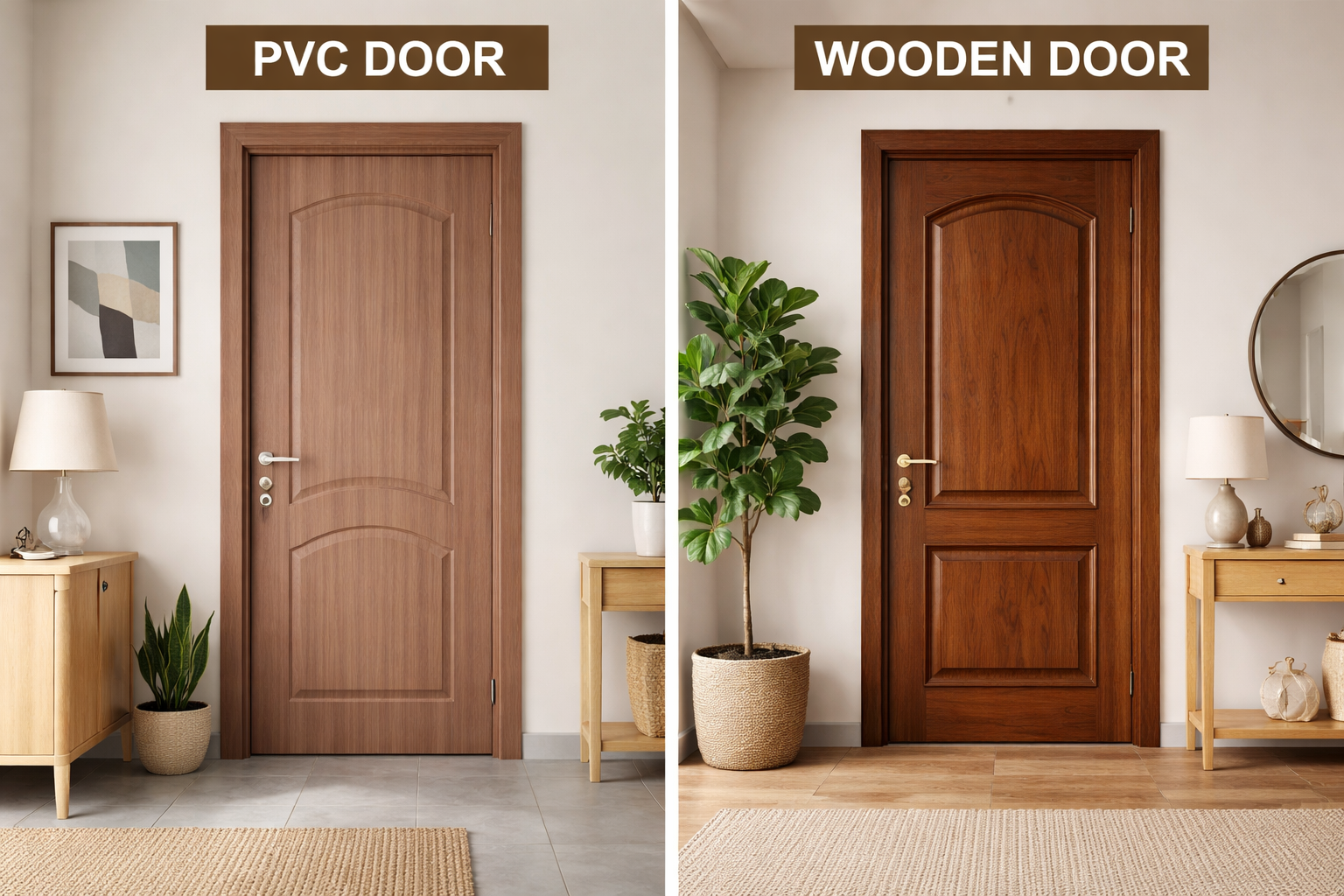
Wooden doors: Offer unmatched natural beauty with visible grain patterns, warm tones, and a sense of luxury. They can be stained, carved, and customized extensively. High-end wooden doors with intricate designs are popular in traditional Indian homes and premium residential projects across Delhi, Bangalore, and Hyderabad.
PVC doors: Available in various colors and finishes, including wood-grain textures that mimic natural wood. However, they lack the authentic warmth and character of genuine wood. While modern PVC designs are improving, many people find them less aesthetically pleasing than real wooden doors.
Customization and Design Flexibility
Wooden doors offer superior customization options. You can commission bespoke designs with traditional patterns, carved details, or contemporary styles. PVC doors, while available in multiple colors and finishes, offer less flexibility for custom designs and modifications.
Environmental Impact and Sustainability
Sustainability Considerations
Environmental consciousness is increasingly important for Indian homeowners and builders.
Wooden doors: Made from natural, renewable materials. However, the timber industry can contribute to deforestation if not sourced responsibly. Choosing doors made from sustainably harvested wood or certified timber (FSC or similar certifications) minimizes environmental impact. The production process for wooden doors also has lower energy requirements compared to PVC manufacturing.
PVC doors: Made from petroleum-derived plastics, making them less environmentally friendly. PVC production involves chemical processes that can release harmful emissions. Additionally, PVC doors are not biodegradable and contribute to landfill waste. However, they have a longer lifespan, which offsets some environmental concerns through reduced replacement frequency.
If sustainability is a priority, wooden doors made from responsibly sourced timber are the better choice.
Installation and Labor Costs
Installation Complexity
Installation costs vary based on door type and local labor rates:
PVC doors: Easier to install due to their lightweight nature. Installation typically costs ₹1,000-3,000 per door. The process is straightforward and doesn't require specialized skills
Wooden doors: May require more careful handling and expertise, especially for premium doors. Installation costs range from ₹1,500-5,000 per door, depending on door complexity and frame requirements
In metropolitan areas like Pune, Chennai, and Ahmedabad, skilled labor for wooden door installation commands premium rates due to the expertise required.
Performance in Different Indian Climates
Coastal Regions
In cities like Mumbai, Goa, Kochi, and Visakhapatnam, the combination of salt spray, high humidity, and intense sunlight creates harsh conditions for doors.
PVC doors are ideal for coastal areas because they resist salt corrosion and moisture damage. They maintain their appearance and functionality for decades without deterioration.
Wooden doors struggle in coastal environments unless made from premium hardwoods with proper sealing and regular maintenance. Many coastal homeowners have switched to PVC doors after experiencing rot and warping in traditional wooden doors.
Semi-Arid and Arid Regions
In cities like Jaipur, Lucknow, and Nagpur, low humidity and temperature fluctuations create different challenges.
Wooden doors perform reasonably well in these regions due to lower moisture exposure. However, extreme temperature variations can cause wood to expand and contract, potentially leading to warping.
PVC doors also perform well and offer the advantage of consistent performance regardless of temperature variations.
High-Rainfall Regions
In areas like Assam, Meghalaya, and the Western Ghats regions, heavy monsoon rains dominate.
PVC doors are the safer choice due to their complete water resistance and immunity to rot and swelling.
Wooden doors require exceptional maintenance and premium wood quality to survive in these regions.
Health and Safety Considerations
Indoor Air Quality
PVC doors: Some PVC products may off-gas volatile organic compounds (VOCs), particularly when new. This can affect indoor air quality in poorly ventilated spaces. However, high-quality PVC doors from reputable manufacturers minimize this concern.
Wooden doors: Natural wood doesn't off-gas harmful chemicals and is generally considered safer for indoor air quality. This is particularly important for homes with children, elderly residents, or people with respiratory sensitivities.
Acoustic Properties
Wooden doors: Provide better sound insulation due to their solid mass and density.
PVC doors: Hollow PVC doors offer poor sound insulation, though foam-filled options provide moderate improvement.
For bedrooms and offices where noise reduction is important, wooden doors are the better choice.
Resale Value Impact
The choice of doors can influence property resale value in India's real estate market:
Wooden doors: Often perceived as a premium feature by buyers, particularly in the luxury segment. High-quality wooden doors can enhance property appeal and value
PVC doors: Viewed more pragmatically by buyers. While they're appreciated for low maintenance, they don't typically command premium prices
In premium residential markets in cities like Mumbai, Delhi, and Bangalore, wooden doors may provide better resale value, while in practical-minded markets, PVC doors are increasingly accepted.
Making Your Decision: A Practical Framework
Choose PVC Doors If:
You live in a coastal area or high-humidity region
Budget is a primary concern
You prefer minimal maintenance
Termite resistance is important
You're looking for long-term cost savings
You need quick installation
Choose Wooden Doors If:
Aesthetic appeal and traditional beauty matter to you
You live in a dry or moderate climate
You're willing to invest in regular maintenance
Sound insulation is important
Resale value is a concern
You prefer environmentally sustainable materials
You need fire-rated doors for commercial applications
Conclusion: Finding the Right Professional Guidance
The choice between PVC and wooden doors ultimately depends on your specific circumstances, climate, budget, and priorities. While PVC doors offer practical advantages in humid climates and require minimal maintenance, wooden doors provide unmatched aesthetic appeal and environmental benefits for those willing to maintain them.
When making this decision, it's valuable to consult with experienced architects, contractors, and door suppliers who understand local climate conditions and building requirements. AECORD, India's leading B2B2C marketplace for AECO professionals, connects you with qualified architects, contractors, and material suppliers across Indian cities who can provide expert guidance tailored to your specific project needs.
Whether you're building a home in Bangalore, renovating an office in Delhi, or constructing a commercial complex in Pune, AECORD's network of professionals can help you evaluate both options and select the doors that best suit your requirements. Visit AECORD today to connect with verified professionals who can guide you through the selection process and ensure quality installation.
Remember, the "best" door is the one that balances your aesthetic preferences, climate requirements, maintenance capacity, and budget constraints. Take time to evaluate both options thoroughly, and don't hesitate to seek professional advice before making your final decision.
```
Frequently Asked Questions
Are PVC doors cheaper than wooden doors in India?
Yes, PVC doors are generally more affordable upfront, ranging from ₹2,500 to ₹8,000 per square foot compared to wooden doors starting at ₹3,000 and exceeding ₹15,000 per square foot for premium woods. However, wooden doors have higher long-term maintenance costs, making PVC more economical over a 20-year period.
Which doors are better for high humidity areas in India?
PVC doors are superior for humid and coastal regions like Mumbai, Kolkata, and Goa because they're inherently moisture-resistant and won't swell, warp, or rot. Wooden doors are susceptible to water damage, termite infestation, and wood rot in high-humidity climates.
How much maintenance do PVC doors require compared to wooden doors?
PVC doors require minimal maintenance—just occasional cleaning with mild soap and water—with virtually no annual maintenance cost. Wooden doors require regular polishing (₹500-2,000 annually), varnishing every 3-5 years (₹3,000-8,000), and potential repairs from termite or rot damage.
What is the long-term cost difference between PVC and wooden doors?
Over 20 years, maintenance costs for wooden doors can accumulate to ₹40,000-80,000, while PVC doors require only ₹5,000-10,000 in total maintenance. This makes PVC doors more economical despite similar upfront costs for premium options.
Which door material is more durable in Indian climate conditions?
PVC doors are more durable in India's diverse climate, particularly in coastal and high-humidity areas, as they resist moisture, salt spray, and temperature fluctuations without warping or deteriorating. Wooden doors require protective treatments and are vulnerable to monsoon damage and pest infestation.