

When it comes to ceiling materials for residential and commercial spaces in India, two options consistently dominate the market: Plaster of Paris (POP) and gypsum board. Both materials have their loyal advocates, and the choice between them can significantly impact your project's budget, durability, and aesthetic appeal. This comprehensive guide will help you understand the differences, advantages, and disadvantages of each option to make an informed decision for your next construction or renovation project.
Understanding POP (Plaster of Paris) Ceilings
Plaster of Paris, commonly referred to as POP, has been a staple in Indian construction for decades. It's a calcium sulfate hemihydrate powder that, when mixed with water, forms a paste that can be molded and shaped. POP ceilings are created by applying this paste over a framework of wooden or metal beams and mesh.
Build cost · Bengaluru, May 2026
Composition and Installation Process
POP ceilings are installed through a multi-step process. First, a framework of wooden battens or metal studs is created. Then, a wire mesh is attached to this framework, and finally, the POP mixture is applied in layers. The installation typically requires skilled labor and takes several days for the material to cure properly. In Indian cities like Mumbai, Delhi, and Bangalore, POP ceiling installation costs range from ₹40 to ₹80 per square foot, depending on the complexity of the design and local labor rates.
Advantages of POP Ceilings
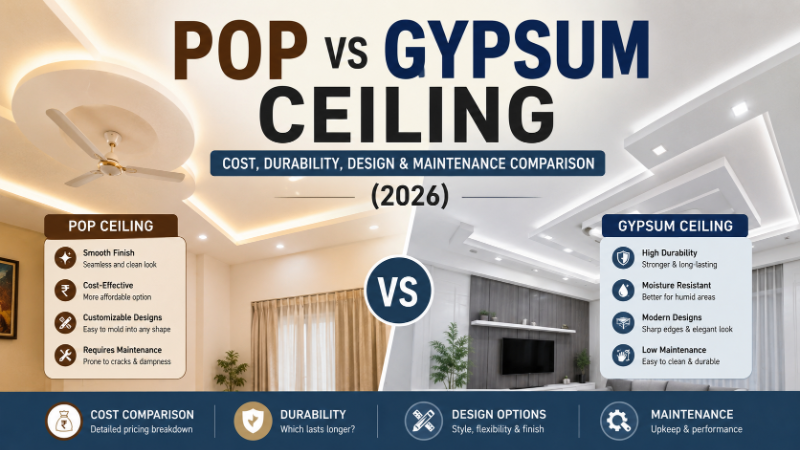
Cost-effective: POP is generally cheaper than gypsum board, making it an attractive option for budget-conscious projects. The material cost is lower, and installation doesn't require specialized equipment.
Design flexibility: POP can be molded into virtually any shape, making it ideal for decorative ceilings, curved designs, and intricate patterns. This flexibility has made it popular for creating false ceilings with ornamental details.
Sound absorption: POP has decent sound-dampening properties, which can help reduce noise levels in commercial spaces and residential areas near busy roads.
Fire resistance: When properly applied, POP provides reasonable fire resistance, which is important for safety compliance in buildings.
Availability: POP materials are readily available across India, from small towns to metropolitan areas, making procurement easier.
Disadvantages of POP Ceilings
Moisture sensitivity: POP is highly susceptible to moisture and humidity. In kitchens, bathrooms, or areas with high moisture levels, POP ceilings can develop cracks, stains, and structural damage over time.
Durability concerns: While POP can last 15-20 years in dry conditions, its lifespan is significantly reduced in humid environments. The material can sag and deteriorate, requiring frequent repairs and maintenance.
Dust and debris: POP ceilings tend to accumulate dust and can shed particles, especially as they age. This can be problematic for people with allergies or respiratory issues.
Installation time: The installation process is labor-intensive and time-consuming. The material needs adequate curing time between coats, extending the overall project timeline.
Repair difficulties: Repairing damaged POP ceilings often requires re-doing larger sections, which can be costly and disruptive.
Frequently asked
Understanding Gypsum Board Ceilings
Gypsum board, also known as drywall or plasterboard, is a modern alternative that has gained significant popularity in India over the past decade. It consists of a gypsum core sandwiched between two layers of paper, providing a smooth, ready-to-use surface for ceilings.
Composition and Installation Process
Gypsum board ceilings are installed by attaching pre-manufactured boards to a metal or wooden framework using screws or adhesive. The joints are then taped and mudded to create a seamless finish. The process is relatively quick and straightforward, typically taking 2-3 days for a standard installation. In major Indian cities, gypsum board ceiling installation costs range from ₹60 to ₹120 per square foot, depending on the board quality and finishing requirements.
Advantages of Gypsum Board Ceilings
Moisture resistance: Modern gypsum boards, especially moisture-resistant varieties, perform significantly better in humid conditions. Brands like Godrej and Saint-Gobain offer specialized boards for kitchens and bathrooms.
Durability: Gypsum board ceilings can last 20-30 years or more with proper maintenance. They're less prone to cracking and sagging compared to POP.
Quick installation: The installation process is faster and requires less curing time, allowing projects to move forward more quickly.
Easy maintenance: Gypsum boards are easier to clean and maintain. They don't shed dust or particles and resist staining better than POP.
Better insulation: Gypsum board provides superior thermal and acoustic insulation properties, making spaces more energy-efficient and quieter.
Smooth finish: The surface is naturally smooth and uniform, requiring minimal finishing work compared to POP.
Easy repairs: Small damages can be easily patched and repaired without affecting large areas of the ceiling.
Disadvantages of Gypsum Board Ceilings
Higher initial cost: Gypsum board is more expensive than POP, both in material and installation costs. This can be a significant factor for large projects or budget-conscious clients.
Design limitations: While gypsum board can be curved and shaped, it's not as flexible as POP for creating intricate decorative designs. Complex curved ceilings may require specialized techniques and additional costs.
Fragility: Gypsum board is more fragile during installation and can be damaged by impact or moisture exposure before sealing.
Availability in smaller towns: While gypsum board is widely available in metropolitan areas, it may be harder to source in smaller Indian towns and rural areas.
Requires skilled installation: Proper installation requires trained professionals familiar with gypsum board techniques. Poor installation can lead to visible joints and uneven surfaces.
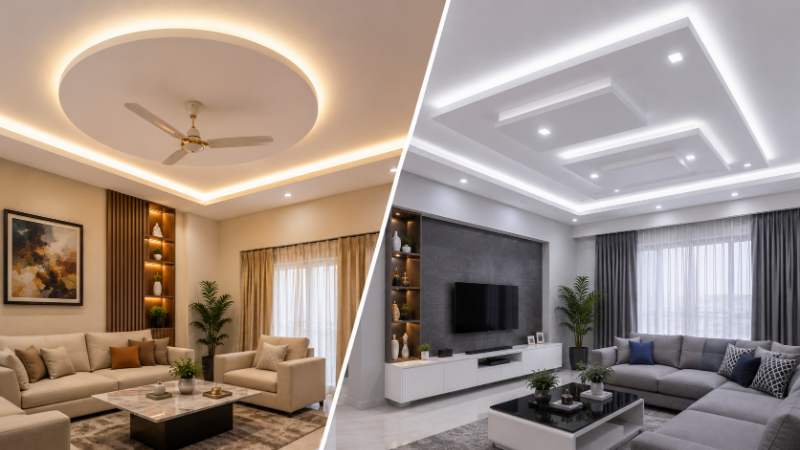
Comparative Analysis: POP vs Gypsum
Cost Comparison
POP remains the more economical choice upfront. For a 1000 square foot ceiling in Delhi or Mumbai, POP would cost approximately ₹40,000-₹80,000, while gypsum board would cost ₹60,000-₹120,000. However, when considering long-term maintenance and replacement costs, gypsum board often proves more cost-effective due to its longer lifespan and lower maintenance requirements.
Durability and Longevity
In India's climate, gypsum board typically outperforms POP. The monsoon season and high humidity levels in coastal cities like Mumbai and Kochi can significantly reduce POP ceiling lifespan. Gypsum board, especially moisture-resistant variants, maintains its integrity much better under these conditions.
Aesthetic Flexibility
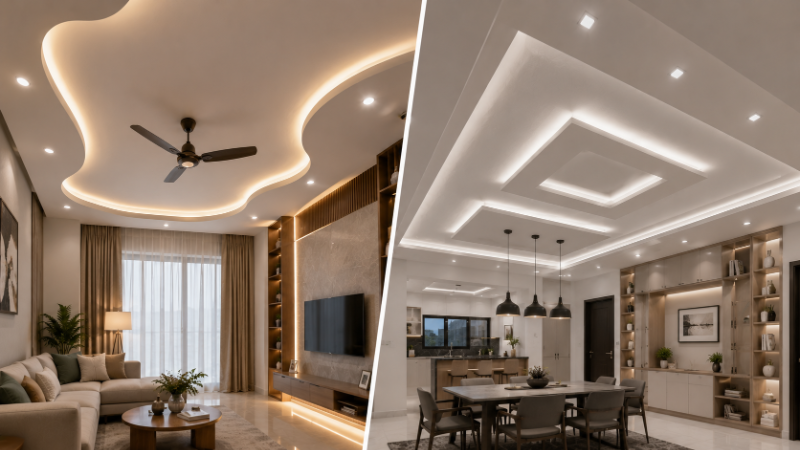
If you're looking for ornate, decorative ceilings with complex designs and curves, POP is the superior choice. However, modern gypsum board techniques can achieve most contemporary designs, and the smooth, clean finish of gypsum is preferred for minimalist and modern interiors.
Installation Timeline
Gypsum board installation is significantly faster. A POP ceiling might require 7-10 days including curing time, while gypsum board typically takes 3-5 days. This is an important consideration for commercial projects where downtime is costly.
Which Should You Choose?
Choose POP If:
You have a tight budget and cost is the primary concern
You want ornate, decorative ceiling designs with intricate details
Your project is in a dry climate or interior space with minimal moisture exposure
You prefer traditional aesthetics and designs
You're working in a smaller town where gypsum board availability is limited
Choose Gypsum Board If:
Your project is in a humid climate or includes kitchens and bathrooms
You prioritize durability and long-term value
You want a quick installation timeline
You prefer a clean, modern aesthetic
You want minimal maintenance and easy repairs
You're in a metropolitan area where quality installation services are readily available
Regional Considerations for India
Coastal Cities (Mumbai, Chennai, Kochi)
In coastal regions with high humidity and salt-laden air, gypsum board is strongly recommended. POP ceilings in these areas tend to deteriorate quickly, with moisture damage becoming visible within 2-3 years. The investment in moisture-resistant gypsum board pays dividends through extended ceiling life.
Metropolitan Areas (Delhi, Bangalore, Hyderabad)
In major cities, both options are viable, but gypsum board is increasingly preferred for commercial and premium residential projects. The availability of skilled installers and quality materials makes gypsum a reliable choice.
Smaller Towns and Rural Areas
POP remains the default choice in smaller towns due to cost and availability. However, as infrastructure improves, gypsum board options are becoming more accessible even in tier-2 and tier-3 cities.
Maintenance Tips for Both Materials
POP Ceiling Maintenance
Keep moisture levels controlled, especially in kitchens and bathrooms
Inspect regularly for cracks and repair promptly
Avoid hanging heavy items directly from POP ceilings
Use dehumidifiers in high-moisture areas
Paint with moisture-resistant paint to extend lifespan
Gypsum Board Ceiling Maintenance
Inspect joints and tape regularly for any signs of cracking
Keep the ceiling clean by dusting regularly
Address water leaks from above immediately
Use primer and quality paint to protect the surface
Avoid excessive impact or pressure on the boards
Finding the Right Professionals on AECORD
Making the right choice between POP and gypsum ceilings is just the first step. The quality of installation is equally important. Whether you choose POP or gypsum board, working with experienced professionals ensures your ceiling looks great and lasts long. AECORD, India's leading B2B2C marketplace for AECO professionals, connects you with verified contractors, architects, and ceiling specialists across India. You can browse portfolios, compare quotes, and read reviews from other clients before making your decision.
When searching on AECORD for ceiling installation services, you'll find professionals who specialize in both POP and gypsum board work. They can provide site-specific recommendations based on your location's climate, your budget, and your design preferences. This personalized approach ensures you get the best solution for your specific project.
Conclusion
The choice between POP and gypsum ceilings depends on your specific needs, budget, location, and design preferences. POP remains an excellent, cost-effective option for dry environments and decorative applications, while gypsum board offers superior durability, faster installation, and better performance in humid climates. In India's diverse climate zones and building conditions, there's no one-size-fits-all answer.
For your next project, carefully evaluate your priorities: budget, durability, aesthetics, and maintenance requirements. Consider your location's climate and humidity levels. Most importantly, consult with experienced professionals who understand both materials and can recommend the best solution for your specific situation. Platforms like AECORD make it easy to connect with qualified ceiling specialists who can guide you through this decision and deliver excellent results.
Whether you opt for the traditional elegance of POP or the modern reliability of gypsum board, investing time in choosing the right material and installer will ensure your ceiling investment pays off for years to come. Visit AECORD today to find certified professionals ready to bring your ceiling vision to life.
Frequently Asked Questions
What is the main difference between POP and gypsum board ceilings?
POP (Plaster of Paris) is a calcium sulfate paste applied in layers over mesh and framework, while gypsum board is a pre-manufactured panel with a gypsum core sandwiched between paper layers. Gypsum board is faster to install and more moisture-resistant, while POP offers greater design flexibility and lower material costs.
Which ceiling material is better for bathrooms and kitchens?
Gypsum board is significantly better for moisture-prone areas like bathrooms and kitchens because POP is highly susceptible to moisture damage, cracking, and deterioration. Moisture-resistant gypsum variants can withstand humid environments much better and last longer in these spaces.
Is POP or gypsum ceiling cheaper?
POP is generally more cost-effective, with installation costs ranging from ₹40 to ₹80 per square foot in Indian cities. However, gypsum board may offer better long-term value due to lower maintenance costs and longer durability, especially in humid climates.
How long do POP and gypsum ceilings last?
POP ceilings typically last 15-20 years in dry conditions but deteriorate faster in humid environments. Gypsum board ceilings generally have a longer lifespan of 20-30+ years with proper installation and maintenance, making them more durable in most Indian climates.
Can POP ceilings be used for decorative designs?
Yes, POP is excellent for decorative ceilings because it can be molded into virtually any shape, including curved designs and intricate patterns. This design flexibility is one of POP's key advantages over rigid gypsum board panels.