

Living Room Interior Design Checklist: A Comprehensive Guide for Indian Homeowners
The living room is often the heart of any Indian home—a space where family gathers, guests are entertained, and countless memories are created. Whether you're designing a new living room or renovating an existing one, having a structured approach can make the difference between a mediocre space and one that truly reflects your lifestyle and aesthetic preferences.
This comprehensive checklist will guide you through every aspect of living room interior design, from foundational planning to the finishing touches. By following these steps, you'll ensure that no important element is overlooked and that your living room becomes a functional, beautiful, and personalized sanctuary.
Build cost · Bengaluru, May 2026
Phase 1: Planning and Assessment
Define Your Purpose and Lifestyle
Before making any design decisions, clearly articulate how you'll use your living room. Are you a family with young children who need a playful, durable space? Do you frequently entertain guests and need a sophisticated setting? Are you a working professional who needs a quiet retreat after long office hours?
In Indian homes, the living room often serves multiple purposes—it might be a formal entertaining space, a family gathering area, and a workspace. Understanding your primary and secondary uses will inform every subsequent decision, from furniture selection to color schemes.
Measure Your Space Accurately
Take precise measurements of your living room, including:
Length, width, and height of the room
Location and dimensions of windows and doors
Position of electrical outlets and switches
Any architectural features like columns, niches, or sloped ceilings
Natural light patterns throughout the day
These measurements are critical for furniture placement and ensuring that pieces you select will actually fit your space. Many design mistakes in Indian homes stem from purchasing furniture without considering the actual room dimensions.
Frequently asked
Assess Your Budget
Establish a realistic budget for your living room design. In India, living room renovation costs can vary dramatically based on location and scope. In metropolitan areas like Mumbai, Delhi, Bangalore, and Hyderabad, expect to spend anywhere from ₹3-5 lakhs for a basic renovation to ₹15+ lakhs for a premium design.
Allocate your budget across major categories:
Furniture (40-50% of budget)
Wall treatments and flooring (20-30%)
Lighting fixtures (10-15%)
Decor and accessories (10-15%)
Professional design services (5-10%, if hiring)
Phase 2: Color and Theme Selection
Choose Your Color Palette
Color sets the emotional tone for your living room. Consider these popular options for Indian homes:
Warm Neutrals: Cream, beige, and warm gray create a sophisticated, timeless backdrop that works well in both traditional and contemporary Indian homes. These colors are particularly effective in smaller apartments in cities like Pune and Chennai.
Deep Jewel Tones: Emerald green, sapphire blue, and rich burgundy are increasingly popular in Indian design, adding depth and cultural resonance while maintaining elegance.
Earthy Tones: Terracotta, ochre, and natural browns complement traditional Indian design elements and work beautifully in heritage homes.
Remember that lighting significantly impacts how colors appear. Natural light in coastal cities like Goa differs from the bright, intense sunlight in Delhi or Jaipur. Test paint samples in your actual space before committing.
Define Your Design Style
Select a style that resonates with you and complements your home's architecture:
Contemporary Indian: Blends modern minimalism with traditional Indian design elements
Traditional/Transitional: Honors classic Indian design while incorporating modern comfort
Minimalist: Clean lines, minimal clutter, and functional design
Eclectic: Mixes styles, periods, and cultural influences for a personalized look
Industrial: Exposed brick, metal fixtures, and raw materials
Phase 3: Furniture Selection
Select Your Seating Arrangement
The sofa is typically the centerpiece of any living room. When selecting seating for Indian homes, consider:
Size and Scale: Ensure your sofa doesn't overwhelm the space. In smaller Mumbai apartments, a compact L-shaped sectional might work better than a large traditional sofa
Fabric Durability: Choose fabrics that withstand India's climate and household wear. Microfiber and performance fabrics are excellent choices
Comfort Level: Test furniture in person—comfort preferences vary greatly
Color and Pattern: Neutral sofas offer flexibility; patterned upholstery adds visual interest but requires careful coordination
Complement your primary seating with accent chairs, ottomans, or poufs that provide flexibility and additional seating for guests.
Choose Additional Furniture Pieces
Beyond seating, consider:
Coffee Table: This functional piece should be proportional to your sofa and leave adequate walking space. A coffee table measuring 90-120 cm in length works well for most Indian living rooms.
Entertainment Unit: Essential for most Indian homes, this piece houses your television and media components. Ensure it accommodates your TV size and provides storage for devices and cables.
Side Tables: These provide practical surfaces for lamps, beverages, and decor. Ensure they're at an appropriate height relative to your seating.
Storage Solutions: Shelving units, cabinets, and bookcases serve dual purposes—functional storage and display opportunities for your belongings and collections.
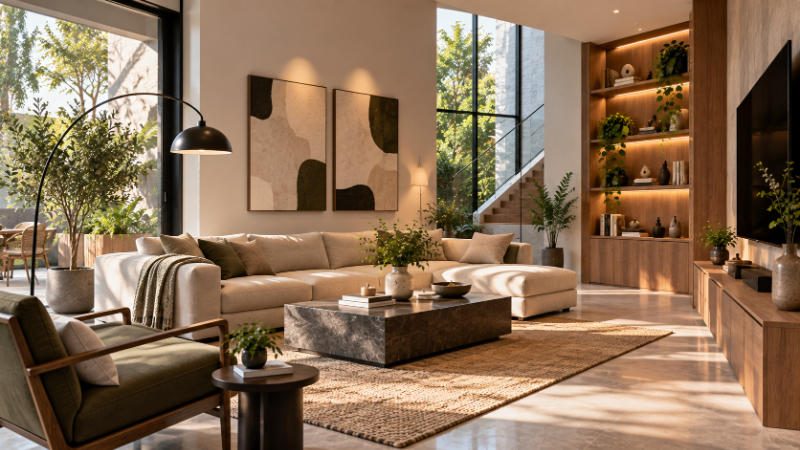
Phase 4: Flooring and Wall Treatments
Select Appropriate Flooring
Living room flooring must balance aesthetics with practicality. Popular options in India include:
Ceramic or Porcelain Tiles: Excellent for Indian climates, easy to maintain, and cost-effective (₹40-150 per sq. ft.)
Natural Stone: Marble, granite, and limestone offer elegance and durability (₹80-300+ per sq. ft.)
Wood or Laminate: Provides warmth and elegance, though real wood can be affected by humidity in coastal regions
Polished Concrete: Increasingly popular in contemporary Indian homes for an industrial aesthetic
Consider using area rugs to define seating zones and add comfort underfoot. A well-placed rug can visually anchor your furniture arrangement and introduce color and texture.
Plan Your Wall Treatment
Walls offer significant design opportunities:
Paint: The most economical option, offering endless color possibilities. Quality paint costs ₹300-800 per liter in India.
Wallpaper: Adds pattern and texture. Modern wallpapers range from ₹100-500+ per sq. meter.
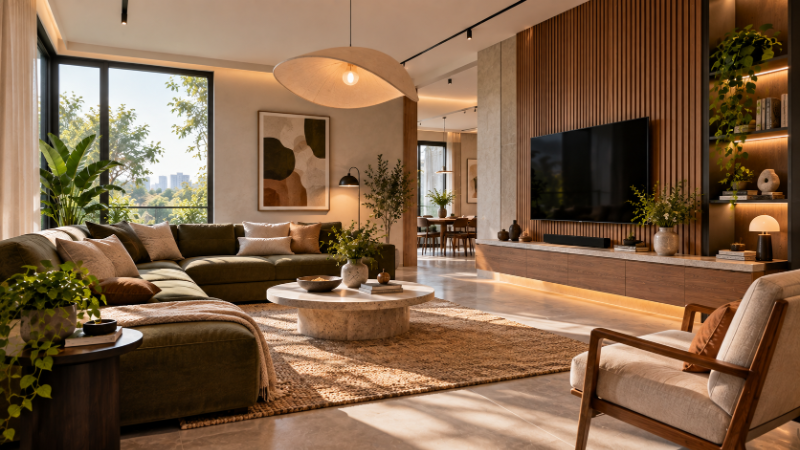
Wall Paneling: Wooden or decorative panels create depth and visual interest, particularly effective in accent walls.
Texture Finishes: Stone texture, stucco, or specialized finishes add dimension without overwhelming the space.
Consider creating a feature wall—perhaps behind your entertainment unit or sofa—to add visual interest without committing the entire room to a bold treatment.
Phase 5: Lighting Design
Implement Layered Lighting
Effective lighting requires three layers:
Ambient Lighting: Provides overall illumination through ceiling fixtures, recessed lights, or chandeliers. This is your base layer, typically requiring 50-100 lumens per square meter in living rooms.
Task Lighting: Focused light for specific activities—reading, working, or hobbies. Table lamps and floor lamps are excellent task lighting solutions.
Accent Lighting: Highlights architectural features or decor items. Wall sconces, picture lights, and uplighting create ambiance and visual depth.
Select Appropriate Fixtures
Choose lighting fixtures that complement your design style:
Chandeliers for traditional or transitional spaces
Pendant lights or track lighting for contemporary designs
Wall sconces flanking a mirror or artwork for elegance
Floor lamps for flexible, layered lighting
In Indian living rooms, consider fixtures that accommodate the intense sunlight—sheer curtains and dimmers help manage natural light while maintaining flexibility for artificial lighting.
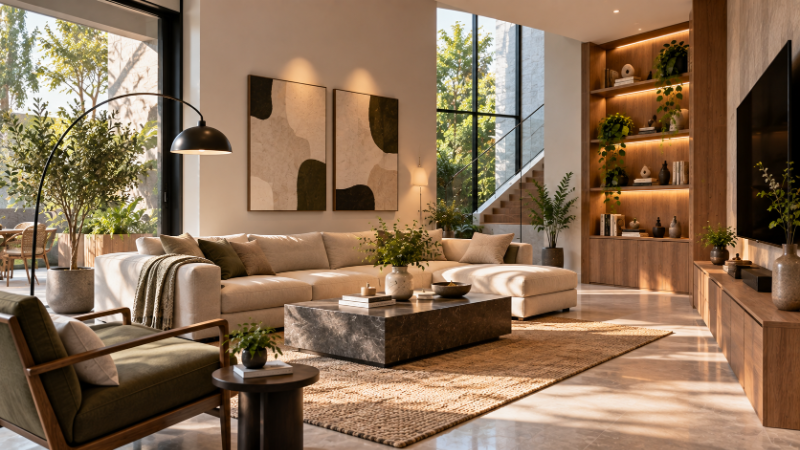
Phase 6: Window Treatments
Choose Functional and Aesthetic Window Coverings
Window treatments serve multiple purposes—controlling light, ensuring privacy, and enhancing aesthetics. Options include:
Curtains: Offer flexibility in color and pattern; thermal-lined curtains help manage India's heat
Blinds: Provide precise light control; vertical blinds work well for large windows
Sheer Curtains: Filter harsh sunlight while maintaining privacy and visibility
Combination Treatments: Pairing sheers with heavier curtains or blinds offers maximum flexibility
Quality window treatments cost ₹50-300 per sq. meter in India. Invest in proper installation to ensure smooth operation and professional appearance.
Phase 7: Accessories and Decor
Add Personality Through Accessories
Accessories transform a well-designed room into a personalized sanctuary. Consider:
Artwork: Paintings, photographs, or prints add color, texture, and personal meaning. Create a gallery wall or select a statement piece as a focal point.
Mirrors: Strategically placed mirrors reflect light, create the illusion of space, and add elegance. A large mirror opposite a window maximizes natural light in apartments across Indian cities.
Plants and Greenery: Indoor plants improve air quality and add life to your space. Consider low-maintenance options like snake plants, pothos, or peace lilies suitable for Indian climates.
Throw Pillows and Blankets: These soft furnishings add comfort, color, and texture. Rotate them seasonally to refresh your space affordably.
Decorative Objects: Books, sculptures, vases, and collectibles tell your story. Display them purposefully to avoid clutter.
Incorporate Cultural Elements
Many Indian homeowners appreciate incorporating cultural elements that reflect their heritage. Consider:
Traditional textiles like ikat or block-printed fabrics
Brass or wooden sculptures
Handcrafted pottery or ceramics
Religious or spiritual artwork
Vintage or antique pieces from local markets
These elements, when thoughtfully integrated, add authenticity and warmth to your living room design.
Phase 8: Climate and Practical Considerations
Account for India's Diverse Climate
India's climate varies significantly by region. Consider your specific location:
Hot and Humid Regions (Coastal areas, South India): Choose moisture-resistant materials, light colors that reflect heat, and adequate ventilation. Avoid materials prone to mildew or warping.
Hot and Dry Regions (Delhi, Rajasthan): Protect fabrics and wood from intense sunlight with UV-protective window treatments. Consider cooler color palettes.
Moderate Climates (Bangalore, Pune): More flexibility in material and color choices, though humidity control remains important.
Plan for Air Circulation
Ensure your furniture arrangement doesn't impede air circulation. Position furniture to allow airflow from windows and doors, particularly important in Indian homes during hot seasons.
Phase 9: Professional Help and Resources
When to Hire a Professional Designer
Consider hiring an interior designer if you:
Have a large budget (₹10+ lakhs)
Are undertaking a major renovation
Feel overwhelmed by design decisions
Want a cohesive design across multiple rooms
Need expertise in managing complex spaces or architectural challenges
Professional designers bring expertise in space planning, material selection, and project management. Many designers in Indian cities offer consultations starting at ₹5,000-20,000.
Finding Reliable Professionals
When selecting professionals for your living room project, platforms like AECORD connect you with verified architects, interior designers, and contractors across India. Whether you're in Delhi, Bangalore, Mumbai, or Hyderabad, AECORD makes it easy to find professionals who understand local regulations, climate considerations, and market rates.
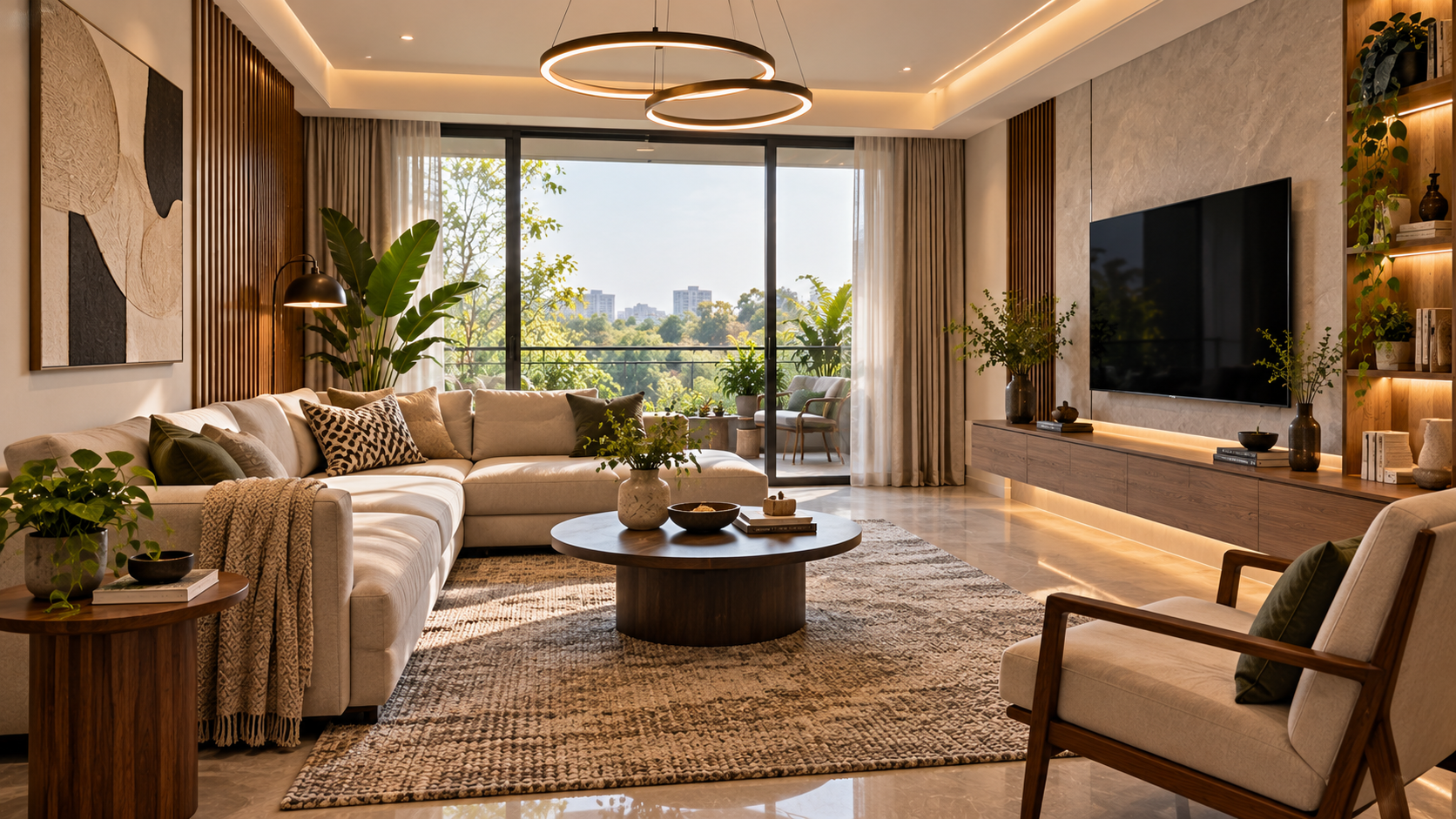
Phase 10: Final Checklist and Implementation
Before finalizing your design, verify that you've addressed:
✓ Space measurements and furniture scale
✓ Color palette and design style consistency
✓ Adequate seating for your lifestyle
✓ Appropriate flooring for your climate
✓ Layered lighting with dimmers
✓ Window treatments for light and privacy control
✓ Storage solutions for organization
✓ Electrical outlets positioned for furniture and devices
✓ Ventilation and air circulation
✓ Personal touches reflecting your personality
✓ Budget allocation across all categories
✓ Timeline for implementation
Conclusion
Designing a living room that's both beautiful and functional requires thoughtful planning and attention to detail. By following this comprehensive checklist, you'll create a space that serves your lifestyle, reflects your personality, and stands the test of time.
Remember that great design is a journey, not a destination. Your living room will evolve as your life changes, and that's perfectly fine. Start with the fundamentals covered in this checklist, and don't hesitate to adjust as you discover what works best for you.
If you're ready to bring your living room vision to life but need expert guidance, consider connecting with experienced interior designers and architects through AECORD. Our platform makes it simple to find vetted professionals who can help you navigate the design process, source quality materials at competitive prices, and ensure your project stays on schedule and budget. Whether you need a complete design overhaul or consultation on specific elements, AECORD connects you with the right professionals for your project.
Start your living room transformation today—your dream space awaits!
Frequently Asked Questions
What should I prioritize when planning a living room interior design?
Start by defining your living room's purpose and how your family will use it, then take accurate measurements of your space including windows, doors, and architectural features. Finally, establish a realistic budget and allocate funds across furniture (40-50%), wall treatments and flooring (20-30%), lighting (10-15%), and decor (10-15%).
How much does a living room renovation cost in India?
Living room renovation costs vary significantly by location, ranging from ₹3-5 lakhs for basic renovations to ₹15+ lakhs for premium designs in metropolitan areas like Mumbai, Delhi, Bangalore, and Hyderabad. Your actual cost depends on the scope of work and materials chosen.
What are the best color palettes for Indian living rooms?
Popular options include warm neutrals (cream, beige, warm gray) for timeless sophistication, deep jewel tones (emerald green, sapphire blue, burgundy) for cultural resonance and depth, and earthy tones (terracotta, ochre, browns) for traditional Indian design elements. Test paint samples in your actual space since natural lighting varies across Indian cities.
How do I choose the right design style for my living room?
Select a style that resonates with your personal taste and complements your home's existing architecture, whether contemporary Indian, traditional, minimalist, or eclectic. Consider how the style aligns with your lifestyle and the multiple purposes your living room may serve in an Indian home.
What measurements should I take before designing my living room?
Measure the room's length, width, and height, plus the location and dimensions of windows, doors, electrical outlets, and any architectural features like columns or sloped ceilings. Also note natural light patterns throughout the day, as these measurements are essential for proper furniture placement and ensuring pieces fit your space.