

Labour Rates for House Construction in India 2026: A Comprehensive Guide
Labour costs represent one of the most significant expenses in any house construction project in India. Whether you're planning a small residential structure in a tier-2 city or a premium villa in metropolitan areas, understanding current labour rates is crucial for accurate project budgeting and timeline planning. In 2026, labour rates have seen considerable variation based on location, skill level, and market demand, making it essential for homeowners, contractors, and project managers to stay informed.
This comprehensive guide breaks down labour rates across different regions of India, explores the factors influencing these rates, and provides practical insights for managing labour costs effectively in your construction project.
Build cost · Bengaluru, May 2026
Understanding Labour Costs in Indian Construction
What's Included in Labour Rates?
Labour rates in construction typically cover the following components:
Skilled Labour: Masons, carpenters, electricians, plumbers, and other specialized workers
Semi-Skilled Labour: Workers with some training in specific tasks like tile laying, waterproofing, or plastering
Unskilled Labour: General labourers involved in material handling, excavation, and basic construction tasks
Supervision Costs: Site supervisors and foremen overseeing work quality and safety
Statutory Contributions: ESI, PF, and other mandatory labour welfare contributions
Understanding these components helps you negotiate better rates and ensure compliance with labour regulations across different states.
Regional Variations in Labour Rates
Labour rates in India vary significantly based on geographic location, economic development, and local market conditions. Metropolitan areas consistently show higher rates compared to smaller towns and rural regions.
Frequently asked
Labour Rates by Region in 2026
Metropolitan Cities (Delhi, Mumbai, Bangalore, Hyderabad)
Metropolitan regions continue to command premium labour rates due to high demand, cost of living, and availability of skilled workers:
Skilled Mason: ₹600-₹850 per day
Carpenter: ₹700-₹950 per day
Electrician: ₹750-₹1,000 per day
Plumber: ₹700-₹950 per day
Unskilled Labourer: ₹400-₹550 per day
Site Supervisor: ₹800-₹1,200 per day
In premium localities of Mumbai and Delhi, rates can exceed these figures by 20-30%, particularly for specialized work like marble finishing or advanced electrical installations.
Tier-1 Cities (Pune, Ahmedabad, Jaipur, Chandigarh)
These cities show moderate labour rates, offering better value than metros while maintaining reasonable quality standards:
Skilled Mason: ₹450-₹650 per day
Carpenter: ₹500-₹700 per day
Electrician: ₹550-₹750 per day
Plumber: ₹500-₹700 per day
Unskilled Labourer: ₹300-₹400 per day
Site Supervisor: ₹600-₹900 per day
Tier-2 Cities (Lucknow, Indore, Nagpur, Coimbatore)
Tier-2 cities offer competitive labour rates, making them attractive for budget-conscious projects:
Skilled Mason: ₹350-₹500 per day
Carpenter: ₹400-₹550 per day
Electrician: ₹450-₹600 per day
Plumber: ₹400-₹550 per day
Unskilled Labourer: ₹250-₹350 per day
Site Supervisor: ₹500-₹700 per day
Rural and Semi-Urban Areas
In smaller towns and rural regions, labour rates remain significantly lower:
Skilled Mason: ₹250-₹400 per day
Carpenter: ₹300-₹450 per day
Electrician: ₹350-₹500 per day
Plumber: ₹300-₹450 per day
Unskilled Labourer: ₹180-₹280 per day
Site Supervisor: ₹400-₹600 per day
Factors Influencing Labour Rates in 2026
Economic Inflation and Cost of Living
India's inflation rate and regional cost of living indices directly impact labour wages. In 2026, skilled workers are commanding higher wages due to increased living expenses, particularly in urban areas where housing, food, and transportation costs have risen significantly. On average, labour rates have increased by 8-12% compared to 2024-2025 levels.
Skill Level and Experience
The expertise and experience of workers significantly affect their daily rates. A mason with 15+ years of experience might charge 40-50% more than a relatively inexperienced worker. Similarly, workers certified in specialized skills like structural steel work, advanced waterproofing, or green building techniques command premium rates.
Project Complexity and Duration
Complex projects requiring specialized skills or tight deadlines often attract higher labour costs. Long-term projects (12+ months) may negotiate better rates compared to short-duration contracts. Seasonal variations also play a role—construction during monsoon seasons typically requires higher wages due to difficult working conditions.
Labour Availability and Demand
Areas experiencing construction booms see increased labour rates due to high demand and limited supply. Cities like Bangalore, Hyderabad, and Pune have witnessed significant rate increases due to rapid urban development. Conversely, areas with surplus labour availability offer more competitive rates.
Regulatory and Compliance Requirements
States with stringent labour regulations and higher statutory contributions (ESI, PF, workmen's compensation) typically show higher labour costs. For instance, projects in states requiring mandatory safety certifications or higher welfare contributions will reflect these costs in labour rates.
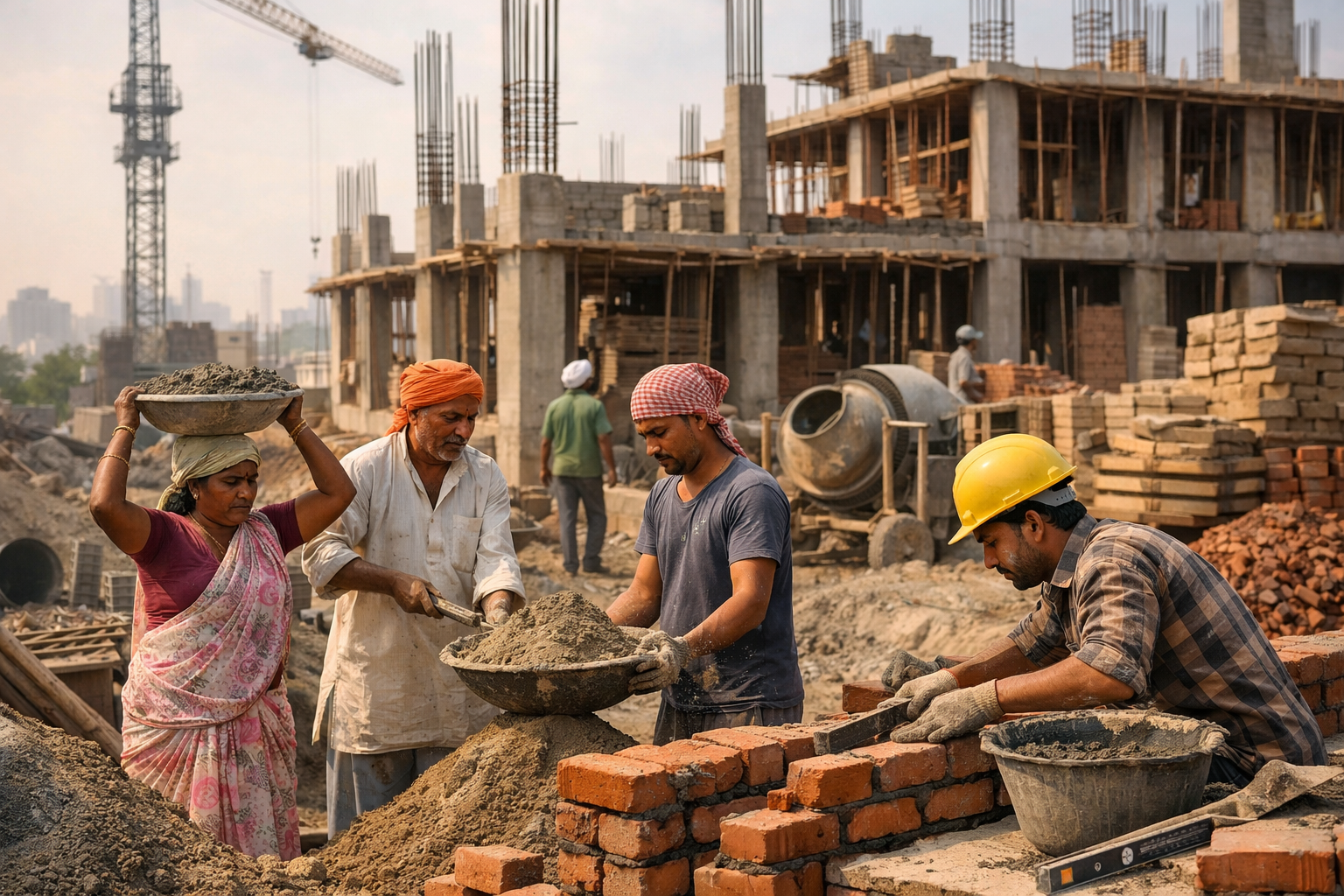
Labour Cost Breakdown for a Typical House Construction Project
Cost Estimation Example: 1,500 sq ft House in Bangalore
Let's examine labour costs for a typical 1,500 sq ft residential house in Bangalore (a Tier-1 city):
Foundation and Excavation: 15 days, 8 labourers × ₹400/day = ₹48,000
Brickwork and Masonry: 45 days, 4 masons + 8 helpers × ₹550/day = ₹264,000
RCC and Concrete Work: 30 days, 2 skilled + 6 unskilled × ₹500/day = ₹120,000
Electrical Installation: 20 days, 2 electricians × ₹650/day = ₹26,000
Plumbing Work: 18 days, 2 plumbers × ₹600/day = ₹21,600
Plastering and Finishing: 40 days, 3 masons + 6 helpers × ₹520/day = ₹187,200
Painting and Final Touches: 15 days, 3 painters × ₹500/day = ₹22,500
Site Supervision (8 months): 1 supervisor × ₹750/day × 240 days = ₹180,000
Total Estimated Labour Cost: ₹869,300
This typically represents 25-35% of the total construction cost, with material costs forming the remaining 65-75%.
Managing Labour Costs Effectively
Strategies for Cost Optimization
1. Detailed Planning and Scheduling: Proper project planning prevents delays and associated labour cost overruns. Using project management tools helps optimize workforce allocation and minimize idle time.
2. Competitive Bidding: Get quotes from multiple contractors and labour suppliers. However, avoid choosing based solely on the lowest rate—quality and reliability are equally important. Negotiate fixed rates for the entire project duration to avoid mid-project price increases.
3. Bulk Hiring Arrangements: Contracting labour through established agencies or contractors often provides better rates than hiring individual workers. These arrangements also include compliance management and insurance coverage.
4. Seasonal Planning: Schedule labour-intensive work during off-peak seasons when rates are lower. Post-monsoon periods typically offer better labour availability and rates.
5. Skill Development Investment: Training workers in specific tasks can increase productivity and reduce overall project duration, thereby lowering labour costs.
Leveraging Technology for Labour Management
Modern construction management platforms help track labour productivity, manage attendance, and optimize scheduling. Tools integrated with AECORD's construction management features allow project managers to monitor labour costs in real-time, identify bottlenecks, and make data-driven decisions to control expenses.
Statutory Obligations and Additional Costs
Mandatory Contributions
Beyond daily wages, employers must contribute to:
Employee State Insurance (ESI): 3.25% of wages (employer contribution)
Provident Fund (PF): 12% of wages for workers earning above ₹15,000/month
Workmen's Compensation Insurance: Varies by state, typically ₹50-₹150 per worker per month
Building and Other Construction Workers (BOCW) Cess: 1% of construction cost in many states
These contributions can increase effective labour costs by 15-20% beyond the quoted daily rates.
Safety and Compliance Costs
Proper safety equipment, training, and compliance with building codes add to labour-related expenses. However, investing in safety reduces accidents, project delays, and potential legal liabilities.
Regional Labour Laws and Their Impact on Costs
State-Specific Regulations
Different states have varying labour laws that impact construction costs:
Maharashtra: Strict BOCW regulations and higher welfare contributions increase costs by 5-8%
Karnataka: Moderate regulations with competitive labour market
Tamil Nadu: Well-established labour norms with reasonable compliance costs
Delhi: High cost of living and strict regulations lead to premium labour rates
Gujarat: Business-friendly policies with reasonable labour compliance costs
Understanding local labour laws helps avoid unexpected costs and legal complications.
Projected Trends for 2026 and Beyond
Expected Rate Increases
Based on current trends, labour rates in India are expected to increase by 6-10% annually. This growth is driven by:
Continued inflation and rising living costs
Increased worker awareness and demand for better wages
Government initiatives for worker welfare and minimum wage increases
Migration of skilled workers to higher-paying sectors
Growing demand for specialized skills in green and smart building construction
Emerging Skill Demands
Workers with expertise in the following areas command premium rates:
Energy-efficient and sustainable construction practices
Advanced waterproofing and damp-proofing techniques
Smart home installation and automation
Structural steel and prefabrication work
Advanced finishing techniques (polished concrete, designer tiles, etc.)
Tips for Homeowners and Contractors
Before Starting Your Project
Research local labour rates in your specific area—rates can vary significantly within the same city
Get detailed labour cost breakdowns from at least 3-4 contractors
Understand what's included in quoted rates (statutory contributions, insurance, etc.)
Verify contractor credentials and past project references
Ensure written contracts specify labour rates, payment schedules, and dispute resolution mechanisms

During Construction
Maintain regular communication with your contractor about labour productivity and costs
Track actual labour days against estimates to identify deviations early
Ensure proper site supervision to maintain quality and prevent rework costs
Document all labour-related agreements and payment records
Use digital tools or apps to track labour attendance and productivity
Frequently Asked Questions
What is the average labour cost for house construction in India in 2026?
Labour costs typically represent 25-35% of total construction expenses. For a 1,500 sq ft house, labour costs range from ₹6-₹12 lakhs depending on location and finish quality. Metropolitan areas cost significantly more than tier-2 or tier-3 cities. The exact cost depends on your location, project complexity, and material choices.
Are labour rates negotiable?
Yes, labour rates are negotiable, especially for larger projects or longer durations. Contractors often offer discounts for bulk work or long-term contracts. However, negotiate fairly—excessively low rates may compromise quality or lead to disputes. It's better to agree on fixed rates upfront to avoid mid-project negotiations and cost overruns.
How can I reduce labour costs without compromising quality?
Several strategies help: (1) Plan projects during off-peak seasons when rates are lower, (2) Use experienced contractors who work efficiently, (3) Invest in proper project planning to minimize rework, (4) Consider modular or prefabricated components, (5) Hire labour through established agencies rather than individuals, and (6) Ensure proper site supervision to prevent quality issues.
What additional costs should I budget beyond daily labour rates?
Beyond daily wages, budget for: ESI contributions (3.25%), PF contributions (12%), workmen's compensation insurance, BOCW cess (1% in many states), safety equipment, and site supervision. These additions typically increase effective labour costs by 15-20% above quoted daily rates. Always ask contractors to provide all-inclusive quotes.
How do I ensure labour compliance and avoid legal issues?
Maintain proper records of all labour agreements, wage payments, and statutory contributions. Ensure your contractor has valid BOCW registration and necessary insurance. Verify that minimum wage requirements are met as per state regulations. Use written contracts specifying all terms and conditions. Consider using construction management platforms to maintain digital records and ensure transparency in labour management.
Conclusion
Labour costs remain a critical component of house construction budgets in India, and understanding current rates is essential for accurate project planning. In 2026, rates vary significantly based on location, skill level, and project complexity, with metropolitan areas commanding premium wages while tier-2 and tier-3 cities offer more competitive rates.
Successful project management requires not just understanding labour rates but also implementing effective cost control strategies, ensuring statutory compliance, and maintaining quality standards. By researching local rates, getting competitive quotes, and using modern project management tools, homeowners and contractors can optimize labour costs while ensuring timely and quality project completion.
Whether you're building in Delhi, Bangalore, or a smaller tier-2 city, the principles of labour cost management remain consistent: plan thoroughly, negotiate fairly, monitor actively, and ensure compliance with all regulations. This approach ensures your construction project stays on budget and schedule while delivering the quality you expect.