




Labour Rates for House Construction in India 2026
Labour costs in India vary significantly by region and skill level, with metropolitan cities like Mumbai commanding rates of ₹600-900 daily for unskilled workers compared to tier 2 cities like Jaipur at ₹350-600. Understanding these regional variations and worker classifications is crucial for accurate budgeting, as skilled workers can earn up to ₹1,500 per day in major metros while semi-skilled and unskilled categories offer more cost-effective options in smaller cities.
AE
AECORD Editorial Team
9 min read
Quick Answer
Current labour rates for house construction across Indian cities. Compare skilled, semi-skilled & unskilled worker costs in Mumbai, Delhi, Bangalore & more.

Understanding Labour Rates for House Construction in India
Labour costs represent one of the most significant expenses in residential construction projects across India. Whether you're building a small apartment in Bangalore, a villa in Mumbai, or a family home in Delhi, understanding current labour rates and how they vary by region is essential for accurate budgeting and project planning.
The construction industry in India employs millions of skilled and semi-skilled workers, and labour costs can fluctuate based on location, skill level, project complexity, and market demand. This comprehensive guide will help you navigate labour rates for house construction, enabling you to make informed decisions for your building project.
Current Labour Rates Across Major Indian Cities
Labour Rates in Metropolitan Areas
Metropolitan cities command the highest labour rates due to increased demand, higher cost of living, and better availability of skilled workers. Here's a breakdown of current rates:
Mumbai: ₹600-900 per day for unskilled labour, ₹800-1,200 for semi-skilled, and ₹1,000-1,500 for skilled workers
Delhi: ₹550-800 per day for unskilled labour, ₹700-1,000 for semi-skilled, and ₹900-1,300 for skilled workers
Bangalore: ₹500-750 per day for unskilled labour, ₹650-950 for semi-skilled, and ₹850-1,200 for skilled workers
Hyderabad: ₹450-700 per day for unskilled labour, ₹600-850 for semi-skilled, and ₹750-1,100 for skilled workers
Pune: ₹500-800 per day for unskilled labour, ₹700-950 for semi-skilled, and ₹900-1,200 for skilled workers
Labour Rates in Tier 2 and Tier 3 Cities
Smaller cities and towns typically offer more competitive labour rates, making them attractive for cost-conscious builders:
Ahmedabad: ₹400-650 per day for unskilled labour, ₹550-800 for semi-skilled, and ₹700-1,000 for skilled workers
Jaipur: ₹350-600 per day for unskilled labour, ₹500-750 for semi-skilled, and ₹650-950 for skilled workers
Chandigarh: ₹450-700 per day for unskilled labour, ₹600-850 for semi-skilled, and ₹800-1,100 for skilled workers
Lucknow: ₹350-550 per day for unskilled labour, ₹500-700 for semi-skilled, and ₹650-900 for skilled workers
These rates are approximate and subject to change based on market conditions, seasonal demand, and project-specific requirements.
Categories of Construction Workers and Their Rates
Unskilled Labour
Unskilled workers perform basic tasks like carrying materials, mixing concrete, and assisting skilled workers. They typically earn between ₹350-900 per day depending on location. These workers require minimal training and are usually hired on a daily or weekly basis.
Semi-Skilled Labour
Semi-skilled workers have some training and experience in specific construction tasks. This category includes:
Concrete finishers
Scaffold workers
Waterproofing workers
Material handlers with specialized knowledge
Daily rates for semi-skilled workers range from ₹500-1,200 depending on the city and their specific expertise.
Skilled Labour
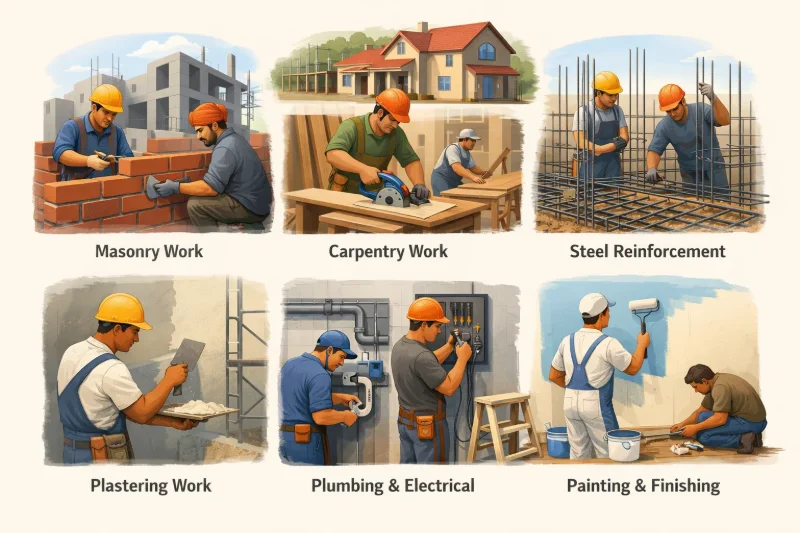
Skilled workers are specialists with significant training and experience. They include:
Masons/Bricklayers: ₹700-1,500 per day
Carpenters: ₹750-1,600 per day
Electricians: ₹800-1,700 per day
Plumbers: ₹750-1,600 per day
Welders: ₹900-1,800 per day
Tile setters: ₹700-1,400 per day
Skilled workers often command premium rates due to their expertise and the critical nature of their work in determining project quality.
Factors Affecting Labour Costs in House Construction
Geographic Location
The most significant factor influencing labour rates is geographic location. Metropolitan areas like Mumbai and Delhi have higher costs due to increased demand and living expenses. Conversely, rural areas and smaller towns offer lower rates, though finding specialized skilled labour may be more challenging.
Skill Level and Specialization
Workers with specialized skills—such as RCC (Reinforced Cement Concrete) specialists, facade workers, or those trained in modern construction techniques—command higher wages. Their expertise directly impacts project quality and timeline.
Project Duration and Continuity
Projects offering longer-term employment opportunities may negotiate lower daily rates. A 6-month residential project can offer better rates than a 2-week specialized task. Continuous work provides workers with income security, making them willing to accept slightly lower daily wages.
Seasonal Variations
Labour availability and rates fluctuate seasonally. During monsoon season (June-September), construction activity slows, and workers may accept lower rates. During peak construction season (October-May), demand increases, and rates rise accordingly.
Supply and Demand Dynamics
In cities experiencing construction booms like Bangalore and Hyderabad, labour rates have increased significantly over the past 3-5 years. Conversely, cities with slower construction activity may have more competitive rates.
Project Complexity
Complex architectural designs, high-rise construction, or specialized finishes require more experienced workers, increasing labour costs. A simple rectangular house will have lower labour costs than a structure with intricate detailing and complex MEP (Mechanical, Electrical, Plumbing) systems.
Labour Cost Estimation for a Typical House Construction Project
Sample Project: 1,200 sq ft House in Bangalore
Let's break down estimated labour costs for a typical 1,200 sq ft residential house in Bangalore:
Excavation and Foundation: ₹1,20,000-1,50,000 (150-200 labour days)
Brickwork and Masonry: ₹2,40,000-3,00,000 (400-500 labour days)
RCC Work (Columns, Beams, Slabs): ₹1,80,000-2,40,000 (300-400 labour days)
Plastering and Finishing: ₹1,20,000-1,50,000 (200-250 labour days)
Electrical Installation: ₹60,000-80,000 (80-100 labour days)
Plumbing Installation: ₹60,000-80,000 (80-100 labour days)
Tile Work and Flooring: ₹1,20,000-1,50,000 (150-200 labour days)
Painting and Final Finishing: ₹80,000-1,00,000 (100-130 labour days)
Total Estimated Labour Cost: ₹7,80,000-10,50,000
This represents approximately 30-40% of total construction cost, which typically ranges from ₹20-25 lakhs for this project size in Bangalore.
How to Manage and Optimize Labour Costs
Get Multiple Quotes
Always obtain quotes from multiple contractors and labour suppliers. This helps you understand market rates and identify outliers. When comparing quotes, ensure you're evaluating similar scope, timelines, and worker categories.
Plan Project Timeline Strategically
Schedule your construction during off-peak seasons when labour is more readily available and rates may be more competitive. However, balance this against weather considerations—avoid monsoon season for concrete work and foundation laying.
Hire Experienced Project Managers
A good project manager can optimize labour deployment, reduce wastage, and improve efficiency. Their coordination ensures smooth workflow and prevents costly delays. This investment often pays for itself through improved labour productivity.
Implement Productivity Measures
Ensure materials are delivered on schedule to avoid worker idle time
Use prefabrication where applicable to reduce on-site labour
Maintain clear communication between supervisors and workers
Invest in proper safety equipment to prevent accidents and delays
Provide adequate tools and equipment to workers
Consider Labour Contracts Carefully
Choose between daily wage contracts, piece-rate contracts, or fixed-price contracts based on your project needs:
Daily Wage: Best for flexible projects with uncertain duration
Piece-Rate: Encourages productivity but requires clear specifications
Fixed-Price: Provides budget certainty but requires detailed planning
Compliance and Legal Considerations
Minimum Wage Requirements
India has minimum wage laws that vary by state. Ensure your labour rates comply with state-mandated minimum wages. For example, Maharashtra's minimum wage for construction workers (as of 2024) is significantly higher than several other states.
Worker Safety and Insurance
Budget for mandatory worker safety measures and insurance. The Building and Other Construction Workers (Regulation of Employment and Conditions of Service) Act requires contractors to maintain safety standards and provide workers' compensation.
Statutory Contributions
Depending on project size and worker classification, you may need to contribute to:
Employee State Insurance (ESI)
Provident Fund (PF)
Labour welfare boards
These contributions typically add 10-15% to base labour costs for formal contracts.
Finding Reliable Labour and Contractors
Connecting with qualified contractors and labour suppliers is crucial for project success. Platforms like AECORD can help you find vetted construction professionals in your area. AECORD connects builders with experienced contractors, project managers, and labour suppliers who understand local market rates and regulations.
When searching for labour resources on AECORD or elsewhere, verify credentials, check references, and review past project experience. Building relationships with reliable contractors often leads to better rates for future projects.
Future Trends in Construction Labour Costs
Increasing Mechanization
Modern construction increasingly uses equipment like concrete pumps, tower cranes, and prefabricated elements. While capital costs increase, labour requirements and overall project timelines often decrease, potentially offsetting labour cost increases.
Skill Development Programs
Government initiatives like Pradhan Mantri Kaushal Vikas Yojana (PMKVY) are training construction workers, potentially improving productivity and justifying higher wages for skilled workers.
Wage Inflation
Construction labour wages have historically increased 8-12% annually in major Indian cities. Plan for 5-10% annual increases when budgeting for multi-year projects.
Conclusion
Labour rates for house construction in India vary significantly based on location, skill level, and market conditions. Understanding these rates is essential for accurate budgeting and successful project execution. Current rates range from ₹350-1,800 per day depending on worker category and city, with metropolitan areas commanding premium prices.
To optimize labour costs, obtain multiple quotes, plan strategically, hire experienced project managers, and ensure compliance with labour laws. Remember that the cheapest labour isn't always the best value—skilled, experienced workers often deliver better results and fewer delays.
Whether you're building in Mumbai, Bangalore, Delhi, or any other Indian city, careful labour cost planning and management is crucial for project success. If you're looking to connect with qualified contractors and construction professionals who understand local labour dynamics, explore AECORD, India's comprehensive B2B2C marketplace for AECO professionals.
Ready to start your construction project? Visit AECORD today to find vetted contractors, labour suppliers, and project managers in your area who can provide accurate labour quotes and reliable service for your house construction project.
Frequently Asked Questions
What are the current labour rates for house construction in India in 2024?
Labour rates in India vary significantly by city and skill level. In metropolitan areas like Mumbai, unskilled workers earn ₹600-900 per day, while skilled workers earn ₹1,000-1,500 per day. Tier 2 and 3 cities offer more competitive rates, with unskilled labour ranging from ₹350-650 per day.
How much do skilled construction workers cost per day in India?
Skilled workers in India earn between ₹700-1,800 per day depending on their specialty and location. Masons earn ₹700-1,500, electricians ₹800-1,700, carpenters ₹750-1,600, and welders ₹900-1,800 per day, with metropolitan areas commanding higher rates.
Which Indian cities have the lowest construction labour rates?
Tier 2 and 3 cities like Jaipur, Lucknow, and Ahmedabad offer the most competitive labour rates. Jaipur has the lowest rates with unskilled labour at ₹350-600 per day, making these cities attractive for cost-conscious construction projects.
What is the difference between unskilled, semi-skilled, and skilled construction labour?
Unskilled workers perform basic tasks like material carrying and earn ₹350-900 daily. Semi-skilled workers handle specialized tasks like waterproofing and earn ₹500-1,200 daily. Skilled workers are specialists like masons and electricians earning ₹700-1,800 daily based on their expertise.
Why do labour rates vary between different Indian cities?
Labour rates fluctuate based on location, cost of living, demand for skilled workers, and market conditions. Metropolitan areas like Mumbai and Delhi have higher rates due to increased demand and higher living costs, while smaller cities offer more competitive pricing.
Topics
Share
AE
Explore more articles
Trending:
Keep Reading
View all
Discussion
Loading comments...