

Choosing the right steel supplier is one of the most critical decisions in any construction project. In India, JSW Steel and Tata Steel are the two dominant players in the construction steel market, each commanding significant market share and offering distinct advantages. This comprehensive guide will help you understand the differences, strengths, and considerations for selecting between these two giants for your construction needs.
Understanding the Indian Steel Market
India's construction industry consumes approximately 35-40 million tonnes of steel annually, with residential, commercial, and infrastructure projects driving this demand. JSW Steel and Tata Steel together account for nearly 50% of India's steel production capacity, making them the primary choice for most construction professionals./blog/jsw-vs-tata-steel
When evaluating steel suppliers for construction projects, you need to consider multiple factors beyond just brand reputation. The decision impacts project timelines, structural integrity, cost efficiency, and long-term durability of your construction. Whether you're working on a residential complex in Bangalore, a commercial tower in Mumbai, or an industrial facility in Kolkata, understanding these two steel manufacturers is essential.
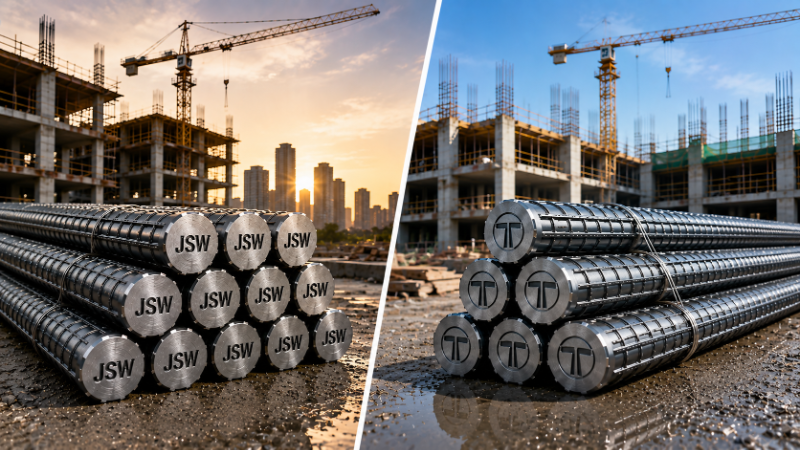
Build cost · Bengaluru, May 2026
JSW Steel: Overview and Strengths
Production Capacity and Infrastructure
JSW Steel, with a crude steel capacity of approximately 18 million tonnes per annum, operates multiple integrated steel plants across India including facilities in Karnataka, Maharashtra, and Odisha. The company has invested heavily in modern manufacturing technology and has a strong presence in the construction steel segment./blog/jsw-vs-tata-tmt-steel-bars-comparison-india
Product Range for Construction
JSW Steel offers a comprehensive range of construction steel products:
TMT Bars (Thermo-Mechanically Treated): Available in grades Fe 415 and Fe 500, with superior ductility and weldability
Structural Steel: H-beams, I-beams, and channels for commercial and industrial construction
Wire Rods: For reinforcement and other construction applications
Plates and Coils: For specialized construction requirements
Frequently asked
Quality and Certifications
JSW Steel products comply with IS 1786:2008 (Indian Standards for high strength deformed steel bars) and are certified by Bureau of Indian Standards (BIS). The company has also obtained ISO 9001:2015 certification, ensuring consistent quality across batches. Their TMT bars feature advanced Nylobar technology, which provides superior corrosion resistance—particularly important for coastal projects in cities like Mumbai, Goa, and Chennai.
Pricing and Market Availability
JSW Steel typically prices its products competitively. As of 2024, JSW TMT bars range from ₹45,000 to ₹55,000 per tonne depending on grade and market conditions. The company has established distribution networks across major Indian cities, ensuring reliable supply and faster delivery timelines.
Customer Service and Support
JSW Steel has invested in customer-centric services including technical support, on-site consultation, and customized solutions for large projects. Their regional offices in major construction hubs provide dedicated support to contractors and builders.
Tata Steel: Overview and Strengths
Production Capacity and Global Presence
Tata Steel, with a crude steel capacity exceeding 25 million tonnes per annum, is India's largest steel manufacturer. The company operates integrated plants in Jamshedpur, Kalinganagar, and other locations, with a strong global presence that brings international best practices to Indian construction projects.
Product Range for Construction
Tata Steel's construction portfolio includes:
Tata Tiscon TMT Bars: Premium range with grades Fe 415 and Fe 500, known for superior strength and ductility
Structural Steel: Wide range of beams, channels, and angles for commercial and industrial applications
Roofing Solutions: Coated steel sheets for construction applications
Speciality Products: Advanced high-strength steel for specialized construction needs
Quality and Certifications
Tata Steel products meet IS 1786:2008 standards and carry BIS certification. The company's Tata Tiscon brand is particularly renowned for consistent quality. Tata Steel has also pioneered seismic-resistant TMT bars specifically designed for earthquake-prone regions like Delhi, parts of Gujarat, and the Northeast—a significant advantage for construction in these areas.
Pricing and Market Availability
Tata Steel's pricing is generally positioned at the premium end of the market. Tata Tiscon TMT bars typically cost ₹48,000 to ₹58,000 per tonne, reflecting the brand premium and superior quality consistency. However, the company's extensive distribution network ensures availability across India, including tier-2 and tier-3 cities.
Innovation and Research
Tata Steel invests significantly in research and development, resulting in innovative products like Tata Tiscon Aashirwad (with superior bendability) and Tata Tiscon Rebend (for easier bending and shaping). These innovations can reduce construction time and labor costs on large projects.
Head-to-Head Comparison
Quality and Durability
Both manufacturers produce high-quality steel meeting Indian standards. However, Tata Steel's longer history and larger R&D budget have resulted in slightly more consistent quality control. For projects in corrosive environments (coastal areas, industrial zones), both offer specialized coatings, but Tata Steel's seismic-resistant variants provide additional benefits in earthquake-prone regions.
Cost Considerations
JSW Steel generally offers better pricing, making it attractive for budget-conscious projects. For a typical residential building requiring 500 tonnes of TMT bars, the cost difference between JSW and Tata could be ₹15-20 lakhs. However, this shouldn't be the only deciding factor—quality consistency and long-term durability matter more for structural integrity.
Supply Chain Reliability
Both companies have robust supply chains, but Tata Steel's larger production capacity and more extensive distribution network provide a slight edge in availability during high-demand periods. JSW Steel has been improving its logistics, but for urgent requirements in remote areas, Tata might be more reliable.
Technical Support and Services
Tata Steel offers more comprehensive technical support, including structural design assistance and on-site training for contractors. JSW Steel is catching up in this area but still lags slightly behind in terms of dedicated technical teams for large projects.
Environmental and Sustainability Practices
Both companies are committed to sustainable manufacturing. Tata Steel has invested more in green initiatives and has achieved better environmental certifications. If your project prioritizes sustainability credentials, Tata Steel's products carry stronger environmental endorsements.

Regional Considerations in India
Western India (Mumbai, Gujarat, Goa)
JSW Steel has a stronger presence in western India due to its manufacturing facilities in Maharashtra and Karnataka. Prices are typically more competitive here, and delivery times are faster. However, for specialized applications, Tata Steel's products are equally available through established distributors.
Eastern India (Kolkata, Odisha, Bihar)
Tata Steel dominates in eastern India with its Jamshedpur headquarters and Kalinganagar facility. Prices are often lower here due to proximity to manufacturing units. For construction projects in Kolkata or Bhubaneswar, Tata Steel offers logistical advantages.
Southern India (Bangalore, Hyderabad, Chennai)
Both manufacturers have established distribution networks. JSW Steel's Karnataka facilities provide competitive pricing in this region. For coastal projects in Chennai and Visakhapatnam, both offer corrosion-resistant variants at comparable prices.
Northern India (Delhi, NCR, Chandigarh)
The NCR market is highly competitive with both brands maintaining strong presence. For seismic-resistant requirements in Delhi and Himachal Pradesh, Tata Steel's specialized products gain an edge, though JSW Steel also offers similar solutions.
Making Your Decision: Key Factors
Project Size and Duration
For large projects (above 1000 tonnes of steel), negotiate directly with both manufacturers for bulk discounts. Long-duration projects benefit from Tata Steel's superior consistency, reducing quality-related delays.
Budget Constraints
If cost is the primary concern, JSW Steel typically offers 5-8% better pricing. For projects where budget flexibility exists, invest in Tata Steel's premium products for enhanced durability.
Location and Logistics
Choose based on proximity to manufacturing units and distribution centers. Check current availability and delivery timelines directly with suppliers, as these can vary significantly based on market conditions.
Specific Application Requirements
For earthquake-prone areas, Tata Steel's seismic-resistant bars are worth the premium. For standard RCC construction in non-seismic zones, JSW Steel provides excellent value. For industrial or specialized applications, consult technical teams from both manufacturers.
Long-term Relationship Value
Consider establishing relationships with one manufacturer for consistent supply across multiple projects. This can lead to better pricing, priority allocation during shortage periods, and dedicated technical support.
Working with Steel Suppliers Through AECORD
Finding the right steel supplier and comparing offerings from JSW Steel, Tata Steel, and other manufacturers is easier when you have access to verified professionals. AECORD, India's B2B2C marketplace for AECO professionals, connects you with authorized distributors and suppliers of both JSW and Tata Steel products. You can compare quotes, verify credentials, and access reviews from other construction professionals who have worked with these suppliers.
Through AECORD's platform, you can also find structural engineers and project managers who can provide expert recommendations based on your specific project requirements. This ensures you're making informed decisions backed by professional expertise and market knowledge.
Quality Assurance and Testing
Regardless of which manufacturer you choose, ensure proper quality testing:
Tensile strength testing: Verify that bars meet specified strength grades (Fe 415 or Fe 500)
Bend and rebend tests: Ensure ductility and workability
Chemical composition analysis: Confirm compliance with standards
Dimensional verification: Check diameter and weight consistency
Both JSW and Tata Steel provide mill certificates with each batch, but independent testing is recommended for large projects.
Future Market Trends
The Indian steel industry is evolving with increasing focus on:
High-strength steel variants: Reducing overall steel consumption while maintaining strength
Sustainable production: Green steel and reduced carbon footprint
Digital traceability: QR codes and blockchain for supply chain transparency
Specialized products: Earthquake-resistant, corrosion-resistant, and fire-resistant variants
Both JSW Steel and Tata Steel are investing in these areas, so expect continued innovation and improved product offerings in coming years.
Conclusion
The choice between JSW Steel and Tata Steel ultimately depends on your specific project requirements, budget constraints, location, and long-term priorities. JSW Steel excels in competitive pricing and regional availability, making it ideal for cost-sensitive projects. Tata Steel leads in quality consistency, technical support, and specialized products, justifying its premium positioning for critical applications.
For most construction projects in India, either manufacturer is an excellent choice. The key is to evaluate your specific needs, compare current market prices and availability, and make a data-driven decision rather than relying solely on brand reputation.
To streamline your selection process and connect with authorized suppliers of both JSW Steel and Tata Steel products, visit AECORD. Our platform allows you to compare suppliers, access authorisedauthorized JSW Steel and Tata Steel distributors in your area.
Frequently Asked Questions
What is the difference between JSW Steel and Tata Steel for construction projects?
JSW Steel has a crude steel capacity of 18 million tonnes per annum with strong presence in TMT bars and structural steel, while Tata Steel is India's largest manufacturer with over 25 million tonnes capacity and global best practices. Both companies dominate India's construction steel market, accounting for nearly 50% of total production capacity, but differ in scale, pricing, and product specialization.
Which steel brand is better for construction: JSW or Tata?
Both JSW and Tata Steel are excellent choices with BIS certifications and IS 1786:2008 compliance. JSW Steel offers competitive pricing (₹45,000-₹55,000 per tonne) and Nylobar technology for corrosion resistance, while Tata Steel brings larger capacity and global standards. Your choice depends on project requirements, location, budget, and delivery timelines.
What are the price differences between JSW Steel and Tata Steel TMT bars?
As of 2024, JSW Steel TMT bars range from ₹45,000 to ₹55,000 per tonne depending on grade and market conditions. Prices fluctuate based on market demand and raw material costs, so it's recommended to get current quotes from both suppliers for your specific project requirements.
Are JSW Steel and Tata Steel products certified for construction use?
Yes, both manufacturers comply with IS 1786:2008 (Indian Standards for high strength deformed steel bars) and hold BIS certification. JSW Steel additionally features Nylobar technology for enhanced corrosion resistance, making both suitable for residential, commercial, and infrastructure construction projects.
Which steel supplier has better availability and delivery in India?
Both JSW Steel and Tata Steel have established distribution networks across major Indian cities. JSW Steel emphasizes faster delivery timelines through regional offices in construction hubs, while Tata Steel's larger capacity ensures consistent supply. Availability depends on your location and project timeline, so comparing local supplier networks is recommended.