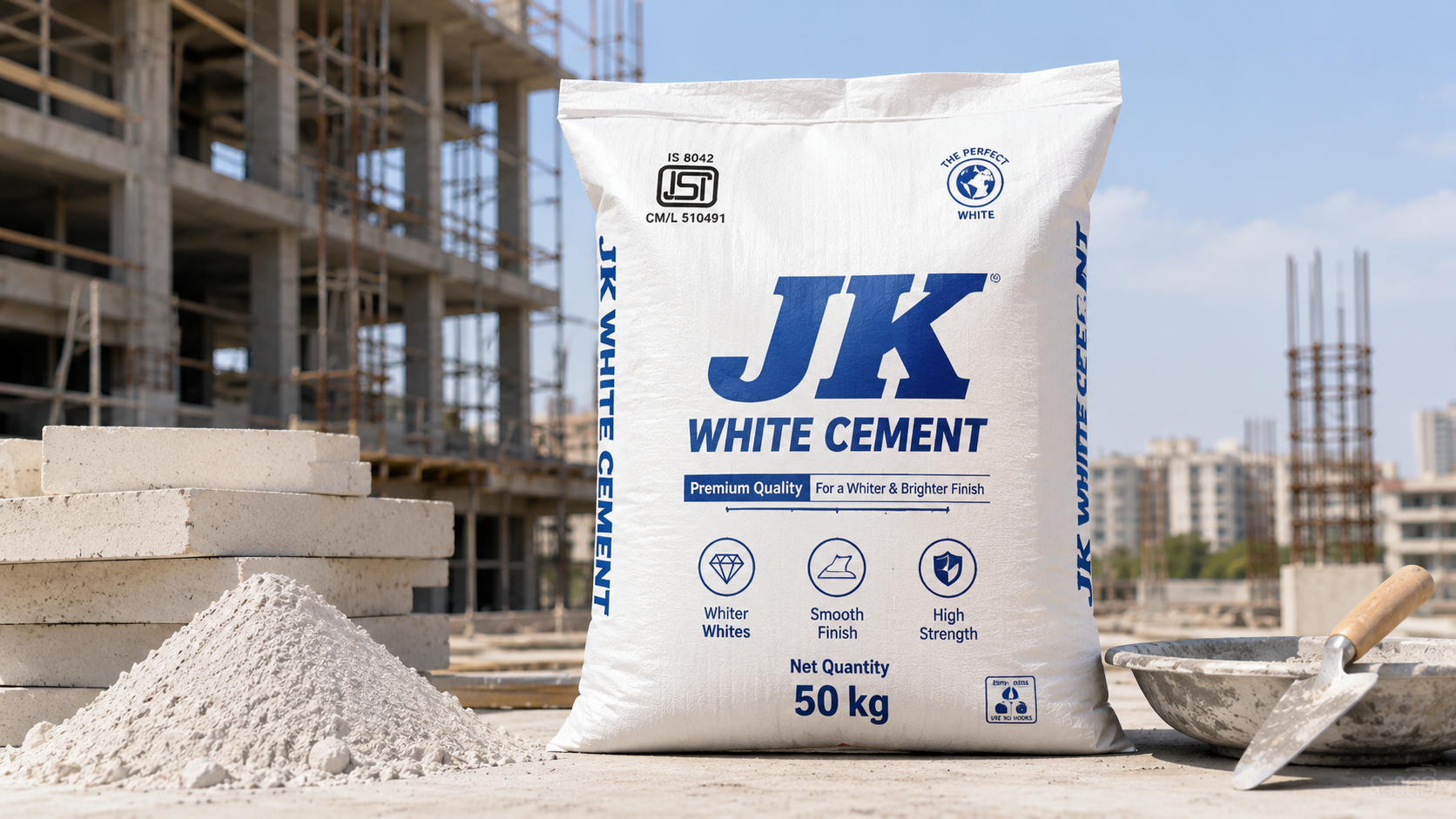
JK White Cement 50 kg: A Comprehensive Guide for Indian Construction Professionals
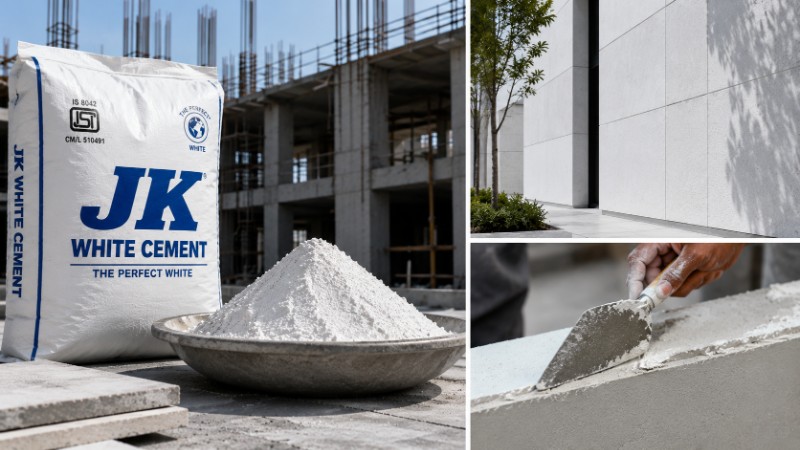
White cement has become an increasingly popular choice among architects, engineers, and construction professionals across India. Among the leading brands in the market, JK White Cement stands out for its quality, consistency, and performance. The 50 kg bag format has become a standard choice for various construction applications, from decorative finishes to structural elements. This comprehensive guide explores everything you need to know about JK White Cement 50 kg and how it can enhance your construction projects.
Build cost · Bengaluru, May 2026
Understanding White Cement: Composition and Properties
What Makes White Cement Different?
White cement is fundamentally different from ordinary Portland cement (OPC) in its raw material composition and manufacturing process. While regular gray cement contains iron oxide and manganese oxide, white cement is produced from raw materials with minimal iron oxide content, resulting in its distinctive white color. This difference isn't merely aesthetic—it significantly impacts the cement's performance characteristics and applications.
JK White Cement 50 kg bags are manufactured following strict quality standards that ensure consistent performance across batches. The cement contains approximately 60-67% calcium oxide (CaO), 17-25% silicon dioxide (SiO2), and minimal iron oxide, which contributes to its superior whiteness and brightness.
Key Technical Specifications
The 50 kg bag format of JK White Cement typically meets Indian Standards (IS 12622:2015) for white Portland cement. Key technical specifications include:
Fineness: Surface area of 3800-4200 cm²/g, ensuring better reactivity and faster strength development
Compressive Strength: 3-day strength of 23-27 MPa and 28-day strength of 42-50 MPa
Setting Time: Initial setting time between 60-90 minutes, final setting time between 150-180 minutes
Soundness: Le Chatelier expansion not exceeding 10 mm
Whiteness Index: Greater than 85%, ensuring bright, clean finishes
Frequently asked
Applications of JK White Cement in Indian Construction
Decorative and Architectural Finishes
One of the primary applications of white cement is in creating decorative finishes that enhance the aesthetic appeal of buildings. In metropolitan areas like Mumbai, Delhi, Bangalore, and Hyderabad, architects increasingly specify white cement for:
Exposed concrete finishes that require a clean, bright appearance
Terrazzo and mosaic tiles manufacturing
Decorative plaster work and wall finishes
Architectural concrete features and facades
Precast concrete elements with aesthetic value
The superior whiteness of JK White Cement ensures that colored aggregates and pigments display their true colors without being muted by gray cement, making it the preferred choice for high-end residential and commercial projects.
Structural Applications
Beyond decorative uses, white cement offers excellent structural performance. The 50 kg bag format is ideal for:
High-strength concrete applications requiring superior durability
Projects in coastal areas where resistance to chloride attack is critical
Repair and restoration work in heritage structures
Swimming pools and water-retaining structures
Road construction and industrial flooring
The low iron oxide content makes JK White Cement particularly suitable for projects in coastal regions like Goa, Kerala, and Tamil Nadu, where the combination of salt spray and humidity demands superior corrosion resistance.
Specialized Construction Uses
White cement's unique properties make it suitable for specialized applications:
Medical and Pharmaceutical Facilities: The bright, clean appearance meets hygiene standards
Food Processing Units: Superior resistance to chemical attack from food acids
Laboratories and Research Centers: Aesthetic appeal combined with chemical resistance
Religious and Heritage Buildings: Restoration work requiring color matching and durability

Cost Analysis: JK White Cement 50 kg in the Indian Market
Pricing Structure
The cost of JK White Cement 50 kg varies across different Indian regions and market conditions. As of recent market data:
Northern India (Delhi, NCR): ₹550-650 per 50 kg bag
Western India (Mumbai, Gujarat): ₹560-680 per 50 kg bag
Southern India (Bangalore, Chennai, Hyderabad): ₹540-620 per 50 kg bag
Eastern India (Kolkata): ₹520-600 per 50 kg bag
These prices fluctuate based on raw material costs, transportation expenses, and seasonal demand variations. For bulk purchases, contractors and builders can typically negotiate discounts of 5-15% depending on order quantity and supplier relationships.
Cost Comparison with Gray Cement
White cement typically costs 2.5 to 3.5 times more than ordinary Portland cement (OPC), which usually ranges from ₹150-250 per 50 kg bag. This price premium reflects the higher cost of raw materials, specialized manufacturing processes, and stringent quality control requirements. However, the superior performance and aesthetic benefits often justify this investment for high-value projects.
Quality Assurance and Standards Compliance
Indian Standards Compliance
JK White Cement 50 kg bags are manufactured to comply with IS 12622:2015, which specifies requirements for white Portland cement. This standard ensures that every bag meets rigorous performance criteria including:
Consistent chemical composition and whiteness
Predictable strength development
Durability under various environmental conditions
Compatibility with different types of aggregates and additives
Third-Party Testing and Certification
Reputable suppliers of JK White Cement provide test certificates confirming compliance with Indian standards. These certificates typically include:
Compressive strength test results at 3, 7, and 28 days
Setting time measurements
Fineness and soundness test data
Chemical composition analysis
Whiteness index confirmation
When sourcing white cement for your projects, always request these test certificates and verify that they're from accredited laboratories recognized by the Bureau of Indian Standards (BIS).
Practical Tips for Using JK White Cement 50 kg
Storage and Handling
Proper storage is crucial to maintain the quality of white cement:
Storage Location: Keep bags in a dry, well-ventilated area away from moisture and humidity
Stacking Height: Don't stack more than 10-12 bags high to prevent compression and quality degradation
Duration: Use cement within 3 months of manufacture; older cement loses strength and reactivity
Protection: Cover stacks with waterproof tarpaulin to prevent moisture absorption
Ground Clearance: Store bags on raised platforms, not directly on the ground
Mixing Proportions and Preparation
White cement requires careful mixing to achieve optimal results. Standard mixing proportions for different applications include:
Plaster Work: 1 part white cement: 2.5-3 parts fine sand
Concrete (High-Strength): 1 part white cement: 1.5 parts fine sand: 3 parts coarse aggregate
Decorative Finishes: 1 part white cement: 2 parts fine sand (with pigments as required)
Tile Adhesive: 1 part white cement: 2.5-3 parts fine sand (with additives)
Always use clean, dry sand free from clay and organic matter. The water-cement ratio should be carefully controlled—typically 0.40-0.50 for structural applications and 0.45-0.55 for decorative work.
Best Practices for Quality Results
Mix white cement separately from gray cement to maintain color consistency
Use separate tools, mixers, and containers exclusively for white cement work
Avoid contamination with iron particles or gray cement dust
Apply white cement within 30 minutes of mixing to prevent loss of workability
Cure the finished work properly with water spray for at least 7 days
Protect white cement surfaces from direct sunlight during the initial curing period
Environmental and Sustainability Considerations
Manufacturing Impact
White cement production does have environmental implications. The manufacturing process requires higher calcination temperatures and more selective raw material sourcing compared to gray cement. However, modern facilities, including those producing JK White Cement, implement:
Advanced emission control systems
Energy-efficient kiln technology
Waste heat recovery systems
Dust collection and air quality management
Sustainable Practices
Architects and engineers can minimize environmental impact when using white cement by:
Specifying white cement only for applications where its properties are truly beneficial
Using supplementary cementitious materials (SCM) like fly ash or slag to reduce overall cement content
Choosing suppliers committed to sustainable manufacturing practices
Optimizing mix designs to minimize waste during construction
Finding Reliable Suppliers: The AECORD Advantage
Sourcing White Cement Through AECORD
For construction professionals across India seeking reliable suppliers of JK White Cement 50 kg and other building materials, AECORD offers a comprehensive B2B2C marketplace solution. The platform connects architects, engineers, contractors, and construction companies with verified suppliers, manufacturers, and distributors.
Using AECORD to source white cement provides several advantages:
Verified Suppliers: Access to pre-vetted suppliers with established track records
Competitive Pricing: Compare quotes from multiple suppliers to ensure best value
Quality Assurance: Suppliers on AECORD maintain quality standards and provide proper documentation
Bulk Order Management: Streamlined processes for large-quantity orders typical in construction projects
Regional Expertise: Connect with suppliers familiar with local market conditions and delivery logistics
Leveraging AECORD for Project Success
Beyond sourcing materials, AECORD facilitates connections with other construction professionals who can provide expert guidance on white cement applications. Whether you're working on a high-rise residential project in Mumbai, a heritage restoration in Delhi, or a commercial complex in Bangalore, AECORD's network includes specialists who understand the nuances of white cement usage in different contexts.
Troubleshooting Common Issues
Color Inconsistency
If you notice variations in the whiteness of finished surfaces:
Verify that all bags are from the same manufacturing batch
Ensure consistent sand quality and cleanliness
Check water quality—iron-rich water can affect color
Maintain uniform mixing ratios and mixing duration
Slower Strength Development
If concrete or mortar isn't reaching expected strength:
Verify the cement hasn't exceeded its shelf life
Check that storage conditions were appropriate
Confirm proper water-cement ratio was maintained
Ensure adequate curing time and moisture
Test cement samples from the batch for compliance
Efflorescence Issues
White deposits appearing on finished surfaces can be minimized by:
Using low-alkali white cement variants
Avoiding excessive water during curing
Applying water-repellent coatings after curing
Ensuring proper drainage and ventilation
Future Trends in White Cement Usage
The Indian construction industry is seeing growing adoption of white cement for sustainable and aesthetically-driven projects. Emerging trends include:
Integration with self-cleaning and photocatalytic finishes
Use in green building certifications (LEED, IGBC) where aesthetic and performance requirements converge
Development of low-carbon white cement variants
Increasing use in infrastructure projects requiring durability and visual appeal
Conclusion
JK White Cement 50 kg represents a premium choice for construction professionals seeking superior aesthetic appeal combined with excellent structural performance. From decorative architectural finishes to high-strength structural applications, white cement delivers consistent quality and reliability when properly specified and applied.
Whether you're managing a luxury residential project, restoration work, or specialized industrial construction, understanding the properties, applications, and best practices for white cement ensures project success. The investment in quality white cement pays dividends through superior durability, enhanced aesthetics, and reduced maintenance requirements over the building's lifetime.
For sourcing JK White Cement and connecting with other construction professionals who can guide your project decisions, explore AECORD's comprehensive marketplace. Our platform makes it easy to find verified suppliers, compare pricing, and access expert advice—all essential for successful construction projects across India. Start sourcing your white cement and other construction materials through AECORD today to streamline your procurement process and ensure project quality.