


India's colonial architectural legacy is far more than a historical curiosity—it has become a significant operational challenge for the country's legal system. From crumbling courthouses in tier-2 cities to overcrowded chambers in metropolitan courts, the physical infrastructure inherited from British rule continues to hamper judicial efficiency, case management, and access to justice. This article explores how colonial-era architecture impacts India's legal system and what modernization efforts are underway.
The Colonial Courthouse: A System Built for a Different Era
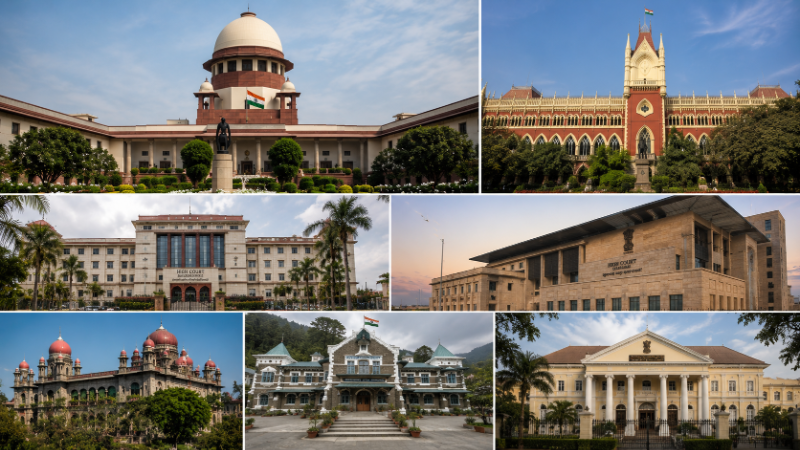
When the British constructed India's courthouses during the colonial period, they designed them for a vastly different judicial landscape. The courthouses that still stand today—from the iconic High Courts in Delhi, Mumbai, and Chennai to smaller district courts across the country—were built with specific constraints in mind: limited case volumes, smaller legal fraternity, and administrative structures that bore little resemblance to today's judicial demands./blog/travelling-through-india-bookmark-these-17-famous-and-historic-buildings-to-see-
Today, India's courts handle over 50 million pending cases across various levels. The average case takes 5-7 years to resolve in district courts and significantly longer in High Courts. While case management practices and legal procedures share responsibility for these delays, the physical infrastructure itself has become a critical bottleneck.
Consider the Delhi High Court, housed in a magnificent colonial structure built in 1941. Despite its architectural grandeur, the building struggles to accommodate modern courtroom technology, digital case management systems, and the sheer volume of litigants who converge on it daily. Similar issues plague courthouses in Bangalore, Hyderabad, Kolkata, and Pune, where colonial-era buildings lack adequate space for:
Digital infrastructure and server rooms
Modern evidence storage systems
Adequate waiting areas for litigants
Accessible facilities for persons with disabilities
Secure holding areas for accused persons
Conference rooms for legal consultations
Build cost · Bengaluru, May 2026
Space Constraints and Case Management Challenges
One of the most pressing issues stemming from colonial architecture is the severe lack of courtroom space. Many district courts across India operate with courtrooms that were designed to handle 50-100 cases per year, now dealing with 2,000-5,000 cases annually. This creates a cascading effect on judicial efficiency.
In cities like Mumbai, Bangalore, and Chennai, district courts have resorted to operating multiple shifts and sharing courtrooms between judges. Some courts conduct proceedings in makeshift spaces, including converted storage rooms and temporary structures. This not only compromises the dignity of the judicial process but also creates security and accessibility concerns.
The architectural limitations also affect case file management. Colonial-era courthouses were designed with physical filing systems in mind, featuring large storage rooms and document archives. The transition to digital case management systems like e-Courts has been hampered by inadequate IT infrastructure, poor electrical systems, and unreliable connectivity in many older courthouse buildings.
Impact on Different Tiers of the Judicial System
District Courts and Lower Courts
District courts, which handle the majority of civil and criminal cases, bear the brunt of infrastructure challenges. Many district courts in smaller cities like Indore, Nagpur, Lucknow, and Chandigarh operate in buildings that are over 100 years old. These structures often lack:
Basic fire safety systems
Proper ventilation and sanitation
Wheelchair accessibility
Adequate security measures
Climate control for document preservation
A 2021 report by the National Judicial Data Grid revealed that courts operating in deteriorating physical conditions showed lower case disposal rates. This correlation underscores how architectural constraints directly impact judicial productivity.
Frequently asked
High Courts
High Courts, while often housed in more impressive colonial structures, face different challenges. The architectural grandeur of buildings like the Bombay High Court or the Madras High Court comes with heritage preservation constraints that limit modernization efforts. Retrofitting these buildings with modern technology, additional courtrooms, and contemporary amenities requires careful planning to preserve historical significance while improving functionality.
The Heritage Preservation Paradox
India's colonial courthouses are recognized as architectural heritage sites, protected under various heritage conservation laws. While preserving these structures is important for historical and cultural reasons, it creates a significant paradox: the very protection that safeguards these buildings also restricts their modernization.
Heritage status prevents:
Structural modifications that could add courtrooms
Installation of modern HVAC systems
Addition of elevators and accessibility features
Expansion of building footprints
Significant interior renovations
This has led to a situation where many High Courts and prominent district courts operate in buildings that are simultaneously protected monuments and functionally inadequate judicial spaces. Balancing heritage conservation with judicial modernization remains one of the most complex challenges facing India's court administration.
Impact on Access to Justice
The architectural limitations of colonial courthouses disproportionately affect India's common citizens. Poor infrastructure in district courts makes the legal process more challenging for:
Rural and small-town litigants: Who must travel to district headquarters, often finding overcrowded courts with minimal waiting facilities.
Persons with disabilities: Many colonial courthouses lack ramps, accessible restrooms, and elevators, effectively denying access to justice for persons with mobility challenges.
Low-income litigants: Who cannot afford to hire agents to navigate the complex logistics of court appearances in inadequate facilities.
Women litigants: Particularly those in family law cases, who often face unsafe or uncomfortable conditions in poorly maintained courthouse facilities.
The lack of adequate waiting areas, drinking water facilities, and restrooms in many courthouses adds to the hardship of litigants who must wait hours for their cases to be called.
Technology Integration Challenges
India's push toward digital courts through the e-Courts initiative has been significantly hampered by colonial-era infrastructure. Many older courthouses have:
Outdated electrical systems incapable of supporting modern IT infrastructure
Poor internet connectivity due to building materials and construction
Insufficient power backup systems
Limited space for server rooms and IT support facilities
Incompatible building layouts for running modern cabling
The cost of retrofitting colonial buildings for modern technology is often significantly higher than constructing new facilities. For instance, upgrading electrical systems in a 100-year-old courthouse to support modern IT infrastructure can cost 40-60% more than installing the same systems in a new building.
Regional Variations in the Problem
The impact of colonial architecture varies significantly across India's regions:
Metropolitan Centers (Delhi, Mumbai, Bangalore)
Major cities have begun addressing the issue through mixed approaches: constructing new court complexes alongside existing colonial structures, implementing digital solutions, and in some cases, relocating courts to modern facilities. However, even these cities struggle with space constraints and heritage preservation issues.
Tier-2 Cities (Pune, Hyderabad, Ahmedabad)
These cities often have adequate colonial courthouses but face challenges in modernization. Many have undertaken renovation projects, though these are often delayed due to budget constraints and the complexity of working with heritage structures.
Smaller Towns and Rural Areas
District courts in smaller cities like Nashik, Aurangabad, Gaya, and Raipur often operate in severely deteriorated colonial buildings. These courts frequently lack basic amenities and have seen minimal investment in modernization due to budget constraints.
Current Modernization Efforts
Recognizing the problem, the Indian judiciary and government have launched several initiatives:
New Court Complex Construction
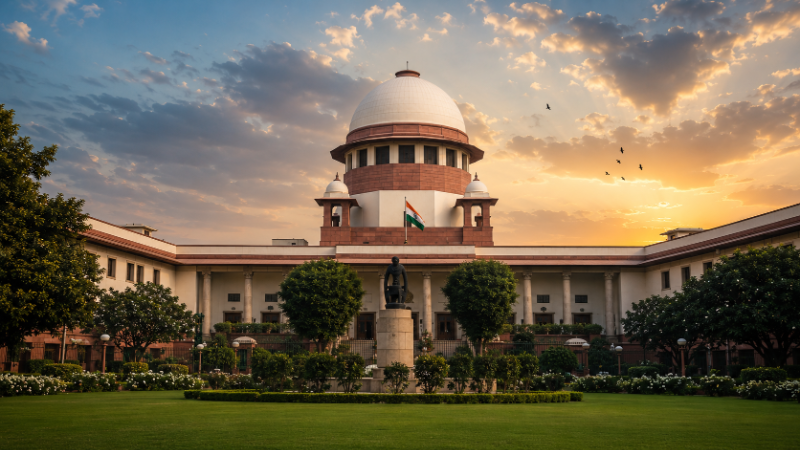
Major projects include the new Supreme Court building, new High Court complexes in several states, and modern district court buildings in metropolitan areas. However, these projects move slowly, with many facing budget constraints and construction delays.
e-Courts Project
The National Judicial Data Grid and e-Courts project aim to digitize case management, reducing dependence on physical infrastructure. However, implementation has been uneven, with better progress in metropolitan courts and slower adoption in smaller towns.
Heritage-Sensitive Retrofitting
Some courts have undertaken careful renovations that preserve historical features while improving functionality. The Madras High Court and Bombay High Court have implemented selective modernization while maintaining architectural integrity.
The Cost of Delay
The delay in addressing infrastructure issues has tangible costs:
Economic impact: Delayed justice increases litigation costs for businesses and individuals. A 2019 World Bank study estimated that India's slow judicial system costs the economy approximately 1.5% of GDP annually.
Social impact: Delayed justice in family law cases, criminal matters, and land disputes perpetuates social problems and prevents closure for victims.
Institutional cost: Outdated infrastructure reduces judicial officer productivity and contributes to burnout among legal professionals.
What Needs to Change
Addressing the colonial architecture bottleneck requires a multi-pronged approach:
Accelerated New Construction
Significant investment in building modern court complexes in tier-2 and tier-3 cities is essential. These new facilities should be designed with contemporary judicial needs in mind, incorporating digital infrastructure from inception.
Strategic Heritage Management
Heritage status should not prevent functional improvements. Authorities should work with heritage conservation experts to identify modifications that can improve accessibility and functionality without compromising historical significance.
Technology-First Solutions
Investing in digital infrastructure and virtual courtroom capabilities can partially mitigate space constraints. The COVID-19 pandemic demonstrated that many judicial functions can occur virtually, reducing physical space requirements.
Decentralization of Courts
Establishing more court facilities across regions can reduce dependence on overcrowded district court headquarters, improving access to justice.
Finding the Right Professionals for Your Court Projects
If you're involved in courthouse modernization, construction, or infrastructure projects, finding the right architects, engineers, and contractors is crucial. AECORD connects you with verified professionals specializing in institutional infrastructure, heritage conservation, and court facility design. Whether you need structural engineers familiar with heritage building retrofitting, architects experienced in judicial infrastructure, or project managers for complex court construction projects, AECORD's marketplace can help you find the right expertise. Many of India's court modernization projects benefit from professionals who understand both heritage preservation and contemporary judicial needs—specialists readily available on AECORD.
Conclusion
Colonial architecture has become a genuine bottleneck in India's legal system, affecting case management, access to justice, and institutional efficiency. While these buildings represent important historical heritage, they also represent a significant operational challenge that demands urgent attention. The solution requires balancing heritage preservation with modernization, investing in new infrastructure, and embracing technology to compensate for physical space constraints. Without addressing this architectural bottleneck, India's judicial system will continue to struggle with the burden of delayed justice and inadequate facilities.
The path forward requires coordinated efforts from the judiciary, government, architects, engineers, and heritage conservation experts—professionals who understand both the historical significance of these structures and the contemporary demands of India's legal system.
Frequently Asked Questions
How does colonial architecture affect India's court system efficiency?
Colonial-era courthouses were designed for vastly smaller case volumes and lack modern infrastructure like digital systems, adequate courtrooms, and IT facilities. This creates significant bottlenecks, with many courts now handling 2,000-5,000 cases annually in spaces originally designed for 50-100 cases per year, contributing to India's 50+ million pending cases.
What specific infrastructure problems do old Indian courthouses face?
Colonial courthouses lack essential modern facilities including adequate courtroom space, digital infrastructure and server rooms, modern evidence storage, accessible facilities for disabled persons, secure holding areas, and proper fire safety systems. Many buildings also suffer from poor ventilation, unreliable electrical systems, and inadequate connectivity for e-Courts implementation.
Which Indian cities have the worst courthouse infrastructure problems?
Major cities like Delhi, Mumbai, Bangalore, Chennai, Kolkata, and Pune struggle with colonial courthouse limitations, while smaller cities like Indore, Nagpur, Lucknow, and Chandigarh operate in buildings over 100 years old with critical deficiencies in fire safety, sanitation, and accessibility.
How long do cases typically take to resolve in Indian courts?
The average case takes 5-7 years to resolve in district courts, with significantly longer delays in High Courts. This is partly attributed to the physical infrastructure bottlenecks created by colonial-era courthouse designs that cannot accommodate modern case management demands.
What modernization efforts are underway to fix India's courthouse infrastructure?
India is implementing digital case management systems like e-Courts and modernizing facilities, though progress is hampered by the limitations of existing colonial buildings. Courts are exploring solutions including multiple shifts, shared courtrooms, and temporary structures while infrastructure upgrades are planned.