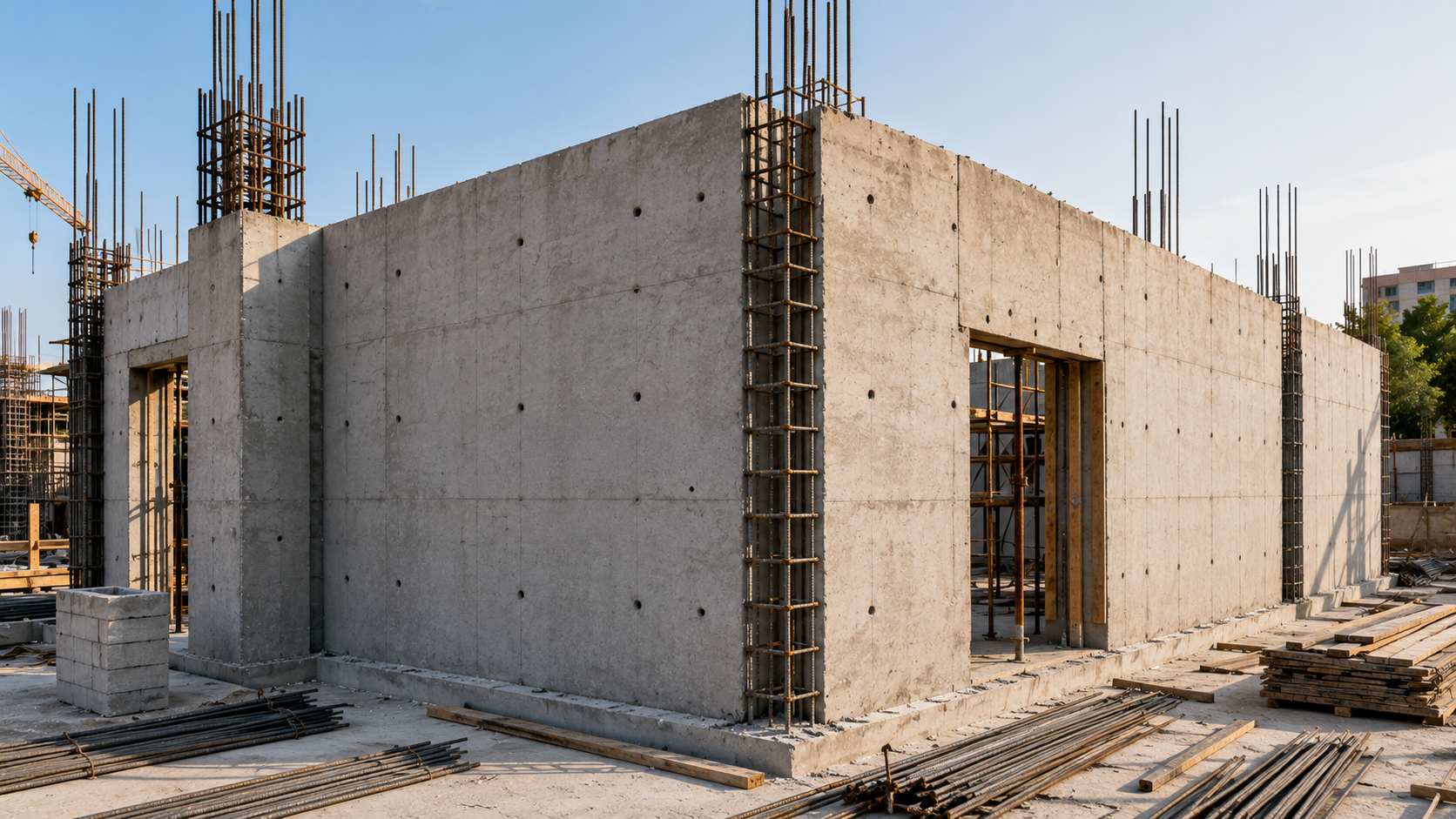


Understanding India House Construction Cost Per Sq Ft in 2026
The cost of constructing a house in India has become increasingly complex, influenced by rising material prices, labour costs, regulatory changes, and regional variations. As we move into 2026, homeowners and developers need accurate, up-to-date information about construction costs per square foot across different cities and tiers. This comprehensive guide breaks down the expected construction costs, providing tier-wise comparisons and practical strategies to optimise your building budget.
India's construction industry is experiencing a significant transformation. Material costs have risen by approximately 12-18% over the past two years, while skilled labor availability remains a challenge in many regions. Understanding these dynamics is crucial for anyone planning a construction project in 2026.
Build cost · Bengaluru, May 2026
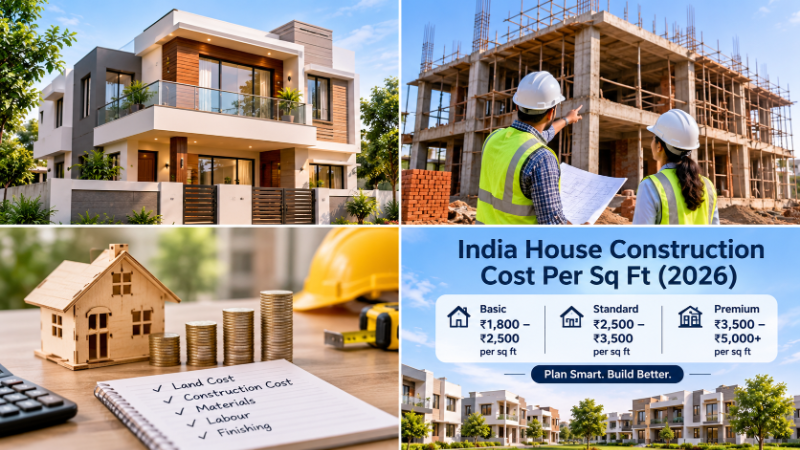
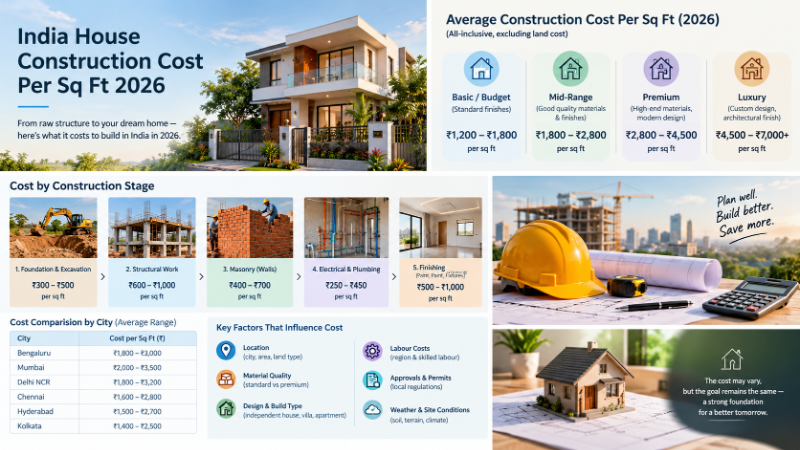
Current Construction Cost Ranges Across India (2026)
Tier-1 Cities: Premium Construction Costs
Tier-1 cities including Mumbai, Delhi, Bangalore, and Hyderabad command the highest construction costs in India. In Mumbai, construction costs range from ₹2,500 to ₹4,500 per sq ft for standard residential construction, with premium projects exceeding ₹6,000 per sq ft. Delhi follows closely with costs between ₹2,200 to ₹4,000 per sq ft, while Bangalore offers relatively competitive rates at ₹1,800 to ₹3,500 per sq ft.
Hyderabad has emerged as a cost-effective Tier-1 option with construction costs ranging from ₹1,600 to ₹3,200 per sq ft. These variations reflect differences in land values, regulatory compliance costs, and the availability of skilled labor. Premium finishes, advanced amenities, and sustainable building practices can push costs significantly higher in these metropolitan areas.
Tier-2 Cities: Balanced Construction Economics
Tier-2 cities like Pune, Ahmedabad, Jaipur, and Lucknow offer more balanced construction economics. Pune's construction costs typically range from ₹1,400 to ₹2,800 per sq ft, making it attractive for quality construction at reasonable rates. Ahmedabad, known for efficient construction practices, offers costs between ₹1,200 to ₹2,400 per sq ft.
Jaipur presents excellent value with construction costs from ₹1,000 to ₹2,200 per sq ft, while Lucknow offers even more economical options at ₹900 to ₹1,800 per sq ft. These cities are experiencing rapid urban development, which has improved infrastructure for construction activities and created competitive pricing among contractors and material suppliers.
Frequently asked
Tier-3 Cities and Towns: Budget-Friendly Options
Smaller cities and towns across India provide the most economical construction options. Cities like Indore, Nagpur, Vadodara, and Chandigarh offer construction costs ranging from ₹800 to ₹1,600 per sq ft. These areas benefit from lower land values, reduced regulatory complexities, and lower labor costs, though availability of specialized services may be limited.
In smaller towns, construction costs can be as low as ₹600 to ₹1,200 per sq ft for basic residential construction. However, these figures may not include advanced features or premium finishes commonly available in larger cities.
Breaking Down Construction Costs: Component-Wise Analysis
Material Costs (40-45% of Total Budget)
Materials constitute the largest portion of construction expenses. Cement prices in 2026 are expected to range from ₹350 to ₹450 per bag, with regional variations. Steel prices fluctuate between ₹55,000 to ₹75,000 per ton, influenced by global market conditions and import duties.
Concrete blocks cost approximately ₹4 to ₹7 per unit, while bricks range from ₹5 to ₹12 each depending on quality and location. Flooring materials vary significantly: ceramic tiles cost ₹40 to ₹150 per sq ft, while natural stone options range from ₹80 to ₹300 per sq ft. Paint, plumbing fixtures, electrical materials, and windows add another ₹200 to ₹500 per sq ft to material costs.
Labor Costs (30-35% of Total Budget)
Skilled labor remains one of the most significant cost components. In 2026, skilled workers in metropolitan areas command wages of ₹600 to ₹1,200 per day, while semi-skilled workers earn ₹400 to ₹700 daily. In smaller cities, these rates are approximately 20-30% lower.
Labor productivity varies based on project complexity, local expertise, and supervision quality. A skilled mason might complete 40-50 sq ft of brickwork daily, while specialized work like electrical installation or plumbing requires more time and higher expertise.
Land Preparation and Foundation (10-15% of Total Budget)
Foundation costs depend heavily on soil conditions and site preparation requirements. In areas with stable soil conditions, foundation costs range from ₹150 to ₹300 per sq ft. However, sites requiring deep piling or soil stabilization can see costs escalate to ₹400 to ₹600 per sq ft.
Site clearance, leveling, and drainage systems add ₹50 to ₹200 per sq ft depending on site conditions. Geological surveys and soil testing, increasingly mandatory in urban areas, cost between ₹15,000 to ₹50,000 per project.
Regulatory and Administrative Costs (5-10% of Total Budget)
Municipal approvals, building permits, and compliance certifications have become increasingly important. In Tier-1 cities, these costs can range from ₹50,000 to ₹3,00,000 depending on project size and complexity. Registration and legal documentation add another ₹30,000 to ₹1,50,000.
Environmental clearances, fire safety certifications, and structural audit fees contribute an additional ₹25,000 to ₹2,00,000 for larger projects. These costs are often underestimated but are essential for legal compliance.
Regional Cost Variations and Influencing Factors
Geographic and Climatic Factors
India's diverse geography significantly impacts construction costs. Coastal areas like Mumbai and Chennai face higher material transportation costs and require specialized construction techniques for humidity and salt corrosion. Hill stations and hilly terrain areas require reinforced foundations and specialized construction methods, increasing costs by 15-25%.
Northern plains experience extreme temperature variations, necessitating specific insulation and weather-resistant materials. Southern regions require different approaches to water management and ventilation. These regional requirements make standardized cost estimates challenging.
Infrastructure and Connectivity
Areas with well-developed infrastructure, including reliable power supply, water availability, and transportation networks, typically have lower construction costs due to better material availability and worker accessibility. Remote or poorly connected areas face premium costs due to logistics challenges, sometimes adding 10-20% to overall expenses.
Local Market Dynamics
The availability of construction materials and skilled labor varies significantly across regions. Cities with established construction industries, like Pune and Ahmedabad, benefit from competitive pricing and efficient supply chains. Emerging construction hubs may have higher costs due to limited supplier networks and labor availability.
Cost Optimization Strategies for 2026 Construction Projects
Material Selection and Sourcing
Strategic material selection can reduce costs by 10-15% without compromising quality. Consider locally-sourced materials that reduce transportation costs. Bulk purchasing and advance ordering can secure better prices, particularly for cement, steel, and tiles. Comparing prices across suppliers and negotiating for volume discounts is essential.
Choosing appropriate material grades for different applications is crucial. While premium materials are necessary for exposed areas and high-traffic zones, standard-grade materials work well for internal walls and less visible areas. This selective approach optimizes the cost-to-value ratio effectively.
Labor Efficiency and Project Management
Efficient project management can reduce labor costs by 8-12%. Implementing systematic work schedules, minimizing rework, and maintaining clear communication between contractors and workers significantly improves productivity. Using experienced project managers familiar with local conditions ensures smoother execution.
Adopting modular construction techniques and prefabrication where applicable reduces on-site labor requirements. Training workers on specific tasks improves efficiency and reduces material wastage. Regular site supervision prevents costly mistakes and delays.
Design Optimization
Thoughtful design choices significantly impact construction costs. Simple, rectangular floor plans reduce material waste and labor requirements compared to complex designs with multiple angles and curves. Minimizing the perimeter-to-area ratio reduces external wall construction costs.
Standardizing room sizes, window placements, and architectural elements simplifies construction and reduces costs. Planning utility placements efficiently reduces plumbing and electrical work complexity. Incorporating sustainable design principles often reduces long-term operational costs, offsetting higher initial construction expenses.
Timing and Seasonal Considerations
Construction costs fluctuate seasonally. Planning major construction during monsoon-off seasons (March-May and October-November) can sometimes offer better labor availability and material pricing. However, weather considerations may offset these benefits in certain regions.
Monitoring commodity prices and planning material procurement during favorable market conditions can yield savings. Advance contracting with suppliers for future deliveries sometimes secures better rates than spot purchases.
Quality Assurance Within Budget Constraints
Importance of Specifications and Standards
Clear, detailed specifications prevent cost overruns caused by misunderstandings or scope changes. Following Indian Standards (IS codes) ensures quality while preventing unnecessary premium specifications. Regular quality checks during construction prevent costly rework and ensure structural integrity.
Third-party inspections and testing, while adding initial costs of ₹50,000 to ₹2,00,000, prevent much larger expenses from structural failures or quality issues discovered post-completion.
Contractor Selection and Contracts
Selecting experienced contractors with proven track records in your region is crucial. Fixed-price contracts with clearly defined scope prevent unexpected cost escalations. Including penalty clauses for delays and performance standards protects your interests.
Verifying contractor credentials, past projects, and financial stability prevents project abandonment and quality issues. Obtaining multiple competitive bids ensures fair pricing while maintaining quality standards.
Finding Qualified Professionals on AECORD
Managing a construction project requires coordinating multiple professionals including architects, structural engineers, contractors, and material suppliers. AECORD provides a comprehensive platform connecting homeowners and developers with verified AECO professionals across India.
Through AECORD, you can access detailed profiles of contractors, engineers, and suppliers, complete with past project portfolios, client reviews, and pricing information. This transparency helps you make informed decisions and compare costs across different service providers. Whether you're in Mumbai, Bangalore, Delhi, or smaller cities, AECORD connects you with qualified professionals who understand local market conditions and regulatory requirements.
Future Outlook: Cost Trends for 2026 and Beyond
Expected Material Price Movements
Steel prices are expected to remain volatile, influenced by global trade dynamics and domestic policy. Cement prices may stabilize as production capacity increases, but transportation costs could impact final prices. Sustainability-focused materials may command premium prices but offer long-term value through durability and efficiency.
Labor Market Evolution
Increasing mechanization and prefabrication are gradually reducing labor-intensive work. However, skilled labor shortages persist in specialized areas, maintaining wage pressure. Improving skill development programs may gradually stabilize labor costs, though demographic shifts suggest continued wage growth in the medium term.
Regulatory and Sustainability Impacts
Stricter building codes and sustainability requirements will likely increase compliance costs. Green building certifications and energy efficiency standards, while adding 5-10% to initial costs, reduce operational expenses significantly over the building's lifetime.
Conclusion
Construction costs in India for 2026 vary significantly based on location, project specifications, and market conditions. Tier-1 cities command premium prices ranging from ₹1,600 to ₹4,500 per sq ft, while Tier-2 and Tier-3 cities offer more economical options. Understanding these variations and implementing cost optimization strategies without compromising quality is essential for successful project execution.
Whether you're planning a residential project in Mumbai, Bangalore, Pune, or any other Indian city, careful planning, competitive procurement, and professional project management are crucial. Connect with experienced contractors, engineers, and material suppliers through AECORD to access local expertise and ensure your construction project stays within budget while meeting quality standards. Start exploring verified professionals on AECORD today to transform your construction vision into reality.