

How to Calculate Building Materials for a House in India: A Complete Guide
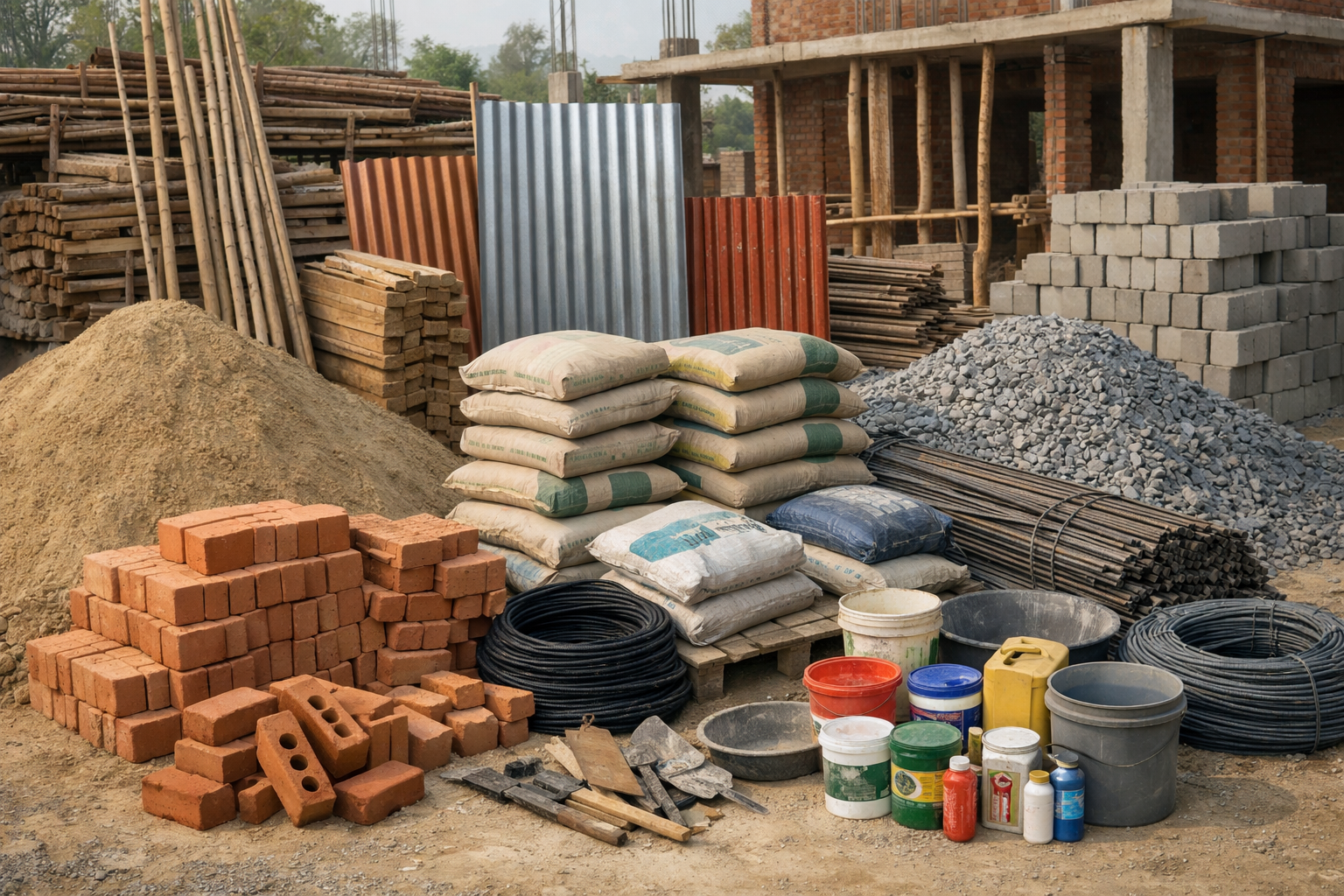
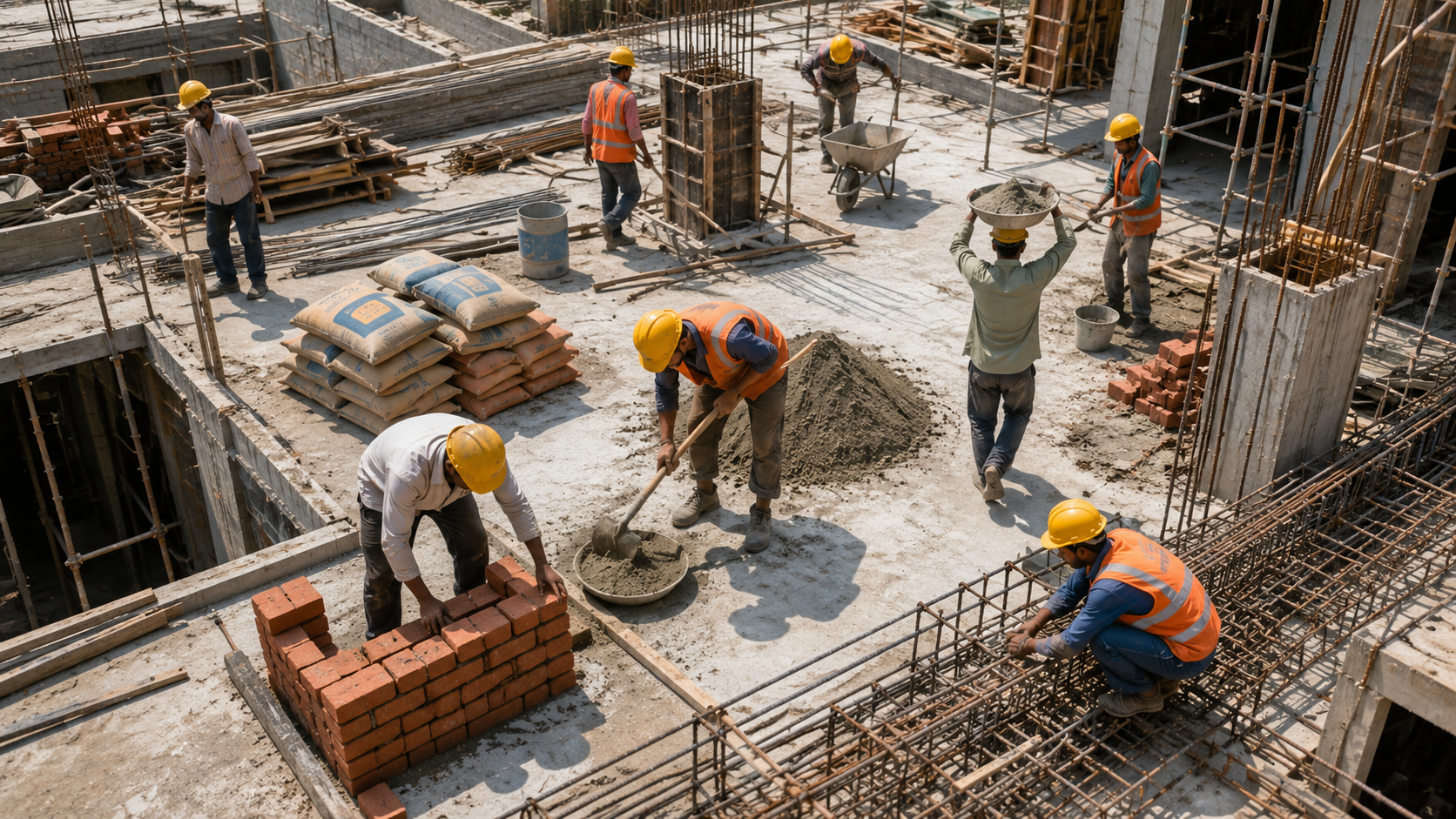
Building a house is one of the most significant investments most Indians will make in their lifetime. Whether you're constructing a modest 2BHK apartment in Bangalore or a sprawling villa in Mumbai, accurate material calculation is crucial for staying within budget and avoiding costly delays. Miscalculating materials can lead to either wasteful overspending or frustrating project halts when you run short of supplies.
This comprehensive guide will walk you through the systematic process of calculating building materials for your house in India, covering everything from concrete to paint, with practical examples and current market rates.
Build cost · Bengaluru, May 2026
Understanding the Basics of Material Calculation
Why Accurate Calculation Matters
Proper material estimation serves multiple purposes:
Budget Planning: Helps you allocate funds accurately. A typical 1000 sq ft house in India requires materials worth ₹8-12 lakhs depending on the quality and finish.
Procurement Efficiency: Reduces wastage, which typically accounts for 5-15% of total material costs if not managed properly.
Timeline Management: Ensures materials arrive when needed, preventing project delays.
Quality Control: Allows you to purchase the right grade of materials rather than compromising mid-project.
Key Factors Affecting Material Quantity
Before diving into calculations, understand these variables:
Built-up Area: The total covered area of your house (in square feet or square meters)
Construction Type: Load-bearing masonry, RCC frame, or steel frame construction
Number of Floors: Ground floor construction differs significantly from multi-story buildings
Finish Quality: Basic, standard, or premium finishes require different material quantities
Local Climate: Coastal areas need different waterproofing materials than inland regions
Regional Regulations: Building codes vary between states and municipalities
Frequently asked
Step-by-Step Material Calculation Process
Step 1: Determine Your Built-up Area
Start with your architectural plan. If you're planning a 1000 sq ft house, this is your base measurement. For a typical Indian home layout:
Living/Dining: 200-250 sq ft
Master Bedroom: 150-180 sq ft
Second Bedroom: 120-150 sq ft
Kitchen: 80-100 sq ft
Bathrooms: 40-60 sq ft (combined)
Corridors/Passage: 100-150 sq ft
Step 2: Calculate Concrete Requirements
For Foundation:
The foundation concrete ratio is typically 1:4:8 (cement:sand:aggregate). For a 1000 sq ft house with a depth of 1.5 feet:
Volume = 1000 sq ft × 1.5 ft = 1500 cubic feet = 42.5 cubic meters
Cement required: 42.5 × 0.30 = 12.75 bags (50 kg bags)
Sand required: 42.5 × 0.60 = 25.5 cubic meters
Aggregate required: 42.5 × 0.80 = 34 cubic meters
For Ground Floor Slab (RCC):
Typical RCC slab is 4-5 inches thick with 1:1.5:3 concrete ratio:
Volume = 1000 sq ft × 0.33 ft = 330 cubic feet = 9.3 cubic meters
Cement required: 9.3 × 0.35 = 3.26 bags
Sand required: 9.3 × 0.52 = 4.84 cubic meters
Aggregate required: 9.3 × 1.04 = 9.67 cubic meters
Steel reinforcement: 50-60 kg per cubic meter = 465-558 kg
Current Market Rates (as of 2024):
Cement (50 kg bag): ₹350-450 depending on location and brand
Sand (per cubic meter): ₹600-1200
Aggregate (per cubic meter): ₹800-1500
Steel (per kg): ₹60-75
Step 3: Calculate Brick and Masonry Materials
For a 1000 sq ft house with 9-foot ceiling height and standard 9-inch thick walls:
Wall Area Calculation:
Perimeter of house: approximately 120-140 linear feet (depends on layout)
Wall area = 130 linear feet × 9 feet = 1170 sq ft
Deduct openings (doors/windows): approximately 200 sq ft
Net wall area = 970 sq ft
Brick Requirement:
Standard Indian brick size: 9" × 4.5" × 3"
Bricks per square foot: 8-10 (depending on mortar joint thickness)
Total bricks needed: 970 × 9 = 8,730 bricks
Add 5-10% wastage: 9,100-9,600 bricks
Mortar Requirement:
Mortar ratio: 1:4 (cement:sand)
For 1000 sq ft masonry: approximately 3.5-4 cubic meters of mortar
Cement needed: 0.8-1 bag per cubic meter = 3.2-4 bags
Sand needed: 3.2-3.8 cubic meters
Current Market Rates:
Standard brick (per 1000): ₹3,500-5,500 depending on region
In Bangalore, bricks cost ₹4,200-4,800 per 1000
In Mumbai, expect 10-15% higher prices
In Delhi, prices range ₹3,800-4,500 per 1000
Step 4: Calculate Plastering Materials
Plastering is done on both interior and exterior surfaces. For a 1000 sq ft house:
Surface Area:
Interior wall area: 970 sq ft (calculated above)
Ceiling area: 1000 sq ft
Exterior wall area: 970 sq ft
Total plastering area: approximately 2,940 sq ft
Material Requirement (12mm thick plaster):
Plaster ratio: 1:4 (cement:sand)
Volume needed: 2,940 sq ft × 0.04 ft = 117.6 cubic feet = 3.33 cubic meters
Cement: 3.33 × 0.20 = 0.67 bags
Sand: 3.33 × 0.80 = 2.66 cubic meters
Current Costs:
Plastering labor: ₹20-40 per sq ft depending on finish quality
Materials typically cost ₹3-5 per sq ft
Step 5: Calculate Flooring Materials
For a 1000 sq ft house, you'll need different materials for different areas:
Ceramic Tiles (Kitchen, Bathrooms, Passages):
Area: approximately 400 sq ft
Standard tile size: 2' × 2' (covers 4 sq ft)
Tiles needed: 400 ÷ 4 = 100 tiles
Add 10% wastage: 110 tiles
Cost per tile: ₹50-150 depending on quality
Marble or Granite (Living/Dining):
Area: approximately 250 sq ft
Standard slab size: 2' × 3'
Slabs needed: 250 ÷ 6 = 42 slabs (with 10% wastage: 46 slabs)
Cost per slab: ₹200-400 depending on quality and type
Wooden Flooring (Bedrooms):
Area: approximately 300 sq ft
Standard plank dimensions: 6" × 3'
Planks needed: approximately 200-220 planks
Cost per sq ft: ₹150-400 depending on wood type
Tile Adhesive and Grout:
Adhesive: 5-6 kg per 100 sq ft of tiling
Grout: 3-4 kg per 100 sq ft
Cost: ₹500-800 per 20 kg bag
Step 6: Calculate Paint and Finishing Materials
For interior and exterior painting of a 1000 sq ft house:
Paint Quantity:
Coverage: 1 liter covers approximately 100-120 sq ft (for 2 coats)
Total area to paint: 2,940 sq ft (as calculated in plastering)
Paint needed: 2,940 ÷ 100 = 29.4 liters for 2 coats
Round up to: 30 liters (approximately 2 cans of 15 liters each)
Current Paint Costs (Premium brands):
Emulsion paint (interior): ₹400-600 per liter
Exterior paint: ₹500-800 per liter
Primer: ₹200-300 per liter
Putty: ₹150-250 per kg (need 2-3 kg per 100 sq ft)
Step 7: Calculate Doors, Windows, and Hardware
For a typical 1000 sq ft house:
Doors:
Main entrance: 1 door (3' × 7')
Bedrooms: 2 doors (2.5' × 7')
Kitchen: 1 door (2.5' × 7')
Bathrooms: 2 doors (2' × 7')
Total: 6 doors
Cost per door: ₹5,000-15,000 depending on material and quality
Windows:
Living/Dining: 2-3 windows (3' × 4')
Bedrooms: 2 windows per room (2.5' × 4')
Kitchen: 1 window (2' × 3')
Bathrooms: 1 window per bathroom (1.5' × 2')
Total: 8-9 windows
Cost per window: ₹3,000-10,000 depending on material (aluminum, UPVC, wood)
Hardware and Fittings:
Door handles, locks, hinges: ₹500-2,000 per door
Window handles and locks: ₹300-1,000 per window
Total hardware budget: ₹15,000-30,000
Step 8: Calculate Electrical and Plumbing Materials
Electrical Materials:
Copper wiring: 200-250 meters for a 1000 sq ft house
Cost per meter: ₹15-30 depending on gauge
Conduit pipes: 150-200 meters (₹10-20 per meter)
Switches and outlets: 15-20 units (₹100-300 per unit)
MCB and distribution board: ₹5,000-12,000
Total electrical budget: ₹40,000-80,000
Plumbing Materials:
PVC pipes: 150-200 meters (₹40-80 per meter)
Copper pipes: 30-50 meters for hot water (₹200-400 per meter)
Fittings and joints: ₹5,000-10,000
Taps and fixtures: ₹8,000-15,000
Water tank: ₹8,000-15,000 (1000-1500 liters)
Total plumbing budget: ₹50,000-90,000
Using AECORD for Material Procurement
Calculating materials manually can be time-consuming and error-prone. AECORD, India's leading B2B2C AECO marketplace, simplifies this process by connecting you with verified suppliers and manufacturers. Through AECORD, you can:
Compare prices from multiple suppliers across your city
Access bulk pricing for large material orders
Get instant quotes based on your specifications
Track material delivery and quality assurance
Access a marketplace of pre-vetted suppliers with ratings and reviews
Many contractors and homeowners in Bangalore, Mumbai, Delhi, and Hyderabad now use AECORD to streamline their procurement process, saving 10-15% on material costs through competitive bidding.
Creating a Master Material List
Once you've calculated all materials, create a consolidated list organized by category:
Example for 1000 sq ft house:
Material Category | Quantity | Unit | Estimated Cost |
Cement | 25-30 | Bags (50kg) | ₹9,000-13,500 |
Sand | 40-50 | Cubic meters | ₹24,000-60,000 |
Aggregate | 40-50 | Cubic meters | ₹32,000-75,000 |
Bricks | 9,000-10,000 | Pieces | ₹31,500-55,000 |
Steel Reinforcement | 500-600 | Kg | ₹30,000-45,000 |
Tiles (Ceramic) | 120 | Pieces | ₹6,000-18,000 |
Paint | 30 | Liters | ₹12,000-24,000 |
Doors | 6 | Pieces | ₹30,000-90,000 |
Windows | 8-9 | Pieces | ₹24,000-90,000 |
Common Mistakes to Avoid
1. Underestimating Wastage
Material wastage is inevitable in construction. Industry standards recommend adding:
Concrete: 2-3% wastage
Bricks: 5-10% wastage
Tiles: 10-15% wastage
Paint: 5-10% wastage
Wood: 10-15% wastage
2. Ignoring Quality Specifications
Cheaper materials may require more quantity or additional coats. For example, budget paint might need 3 coats instead of 2, increasing overall consumption.
3. Not Accounting for Regional Variations
Material availability and pricing vary significantly:
Coastal areas (Mumbai, Chennai) have higher costs due to transportation
Tier-2 cities often offer better prices than metros
Seasonal variations affect material costs, especially sand and aggregate
4. Forgetting Hidden Materials
Many homeowners overlook:
Waterproofing compounds (₹50-150 per liter)
Damp-proof course materials
Sealants and caulking compounds
Scaffolding and temporary construction materials
Budget Estimation Summary
For a typical 1000 sq ft house in India with standard finishes:
Structural materials (concrete, bricks, steel): ₹2.5-3.5 lakhs
Finishing materials (tiles, paint, doors, windows): ₹2-3 lakhs
Electrical and plumbing: ₹1-1.5 lakhs
Miscellaneous and contingency (10-15%): ₹0.5-1 lakh
Total material cost: ₹6-9 lakhs (excluding labor)
In metropolitan areas like Bangalore, Mumbai, and Delhi, expect 20-30% higher costs. In tier-2 cities like Pune, Ahmedabad, or Jaipur, costs may be 10-20% lower.
Seasonal Considerations
Material prices fluctuate based on seasons:
Monsoon (June-September): Sand and aggregate prices increase; cement prices may rise due to reduced production
Summer (March-May): Generally stable prices; good time to purchase
Winter (November-February): Often sees promotional discounts; good for purchasing in bulk
Digital Tools for Material Calculation
Several tools can help streamline calculations:
Building material calculators: Available online and as mobile apps
CAD software: Provides precise measurements from architectural drawings
AECORD platform: Offers integrated calculators and supplier quotes
Spreadsheet templates: Create customized tracking sheets for your project
Final Checklist Before Purchasing
Before placing orders for materials, ensure:
✓ All calculations are verified by a structural engineer or architect
✓ Quality specifications match your project requirements
✓ Supplier credentials and ratings are checked
✓ Delivery timeline aligns with construction schedule
✓ Payment terms and warranties are documented
✓ Storage space is available for materials
✓ Insurance coverage is in place for high-value items
Frequently Asked Questions
Q1: How much concrete is needed for a 1000 sq ft house?
For a typical 1000 sq ft house with a 1.5-foot deep foundation and 4-5 inch thick RCC slab, you'll need approximately 50-55 cubic meters of concrete. This includes foundation and ground floor slab. For multi-story buildings, multiply by the number of floors. The exact quantity depends on your structural design, so consult your engineer for precise calculations.
Q2: What's the average cost of building materials for a house in India?
For a 1000 sq ft house with standard finishes, budget ₹6-9 lakhs for materials (excluding labor). In metropolitan areas like Bangalore, Mumbai, and Delhi, expect ₹8-12 lakhs. In tier-2 cities, costs range from ₹5-7 lakhs. Premium finishes can push costs to ₹12-15 lakhs. Prices vary based on location, material quality, and market conditions.
Q3: How do I reduce material wastage during construction?
To minimize wastage: (1) Order materials with 5-10% buffer instead of excess, (2) Use precise measurements from architectural plans, (3) Hire experienced contractors familiar with waste reduction, (4) Store materials properly to prevent damage, (5) Plan cutting and fitting sequences to optimize usage, (6) Recycle and reuse materials where possible. Proper planning can reduce wastage from 15% to 5-8%, saving significant costs.
Q4: Should I buy all materials at once or in phases?
Phased purchasing is generally recommended for most homeowners. Buy foundational materials (cement, sand, aggregate, bricks) upfront as they're needed immediately. Purchase finishing materials (tiles, paint, doors) as you progress to those stages. This approach reduces storage costs, minimizes damage to materials, and allows you to adjust quantities based on actual consumption. However, buying in bulk can offer 10-15% discounts, so balance cost savings with storage constraints.
Q5: How can AECORD help with material procurement?
AECORD connects you with verified suppliers and manufacturers across India, allowing you to compare prices, specifications, and delivery timelines. The platform enables bulk purchasing at competitive rates, provides supplier ratings and reviews, and streamlines the procurement process. Many homeowners save 10-15% on material costs through AECORD's competitive bidding system. You can request quotes, track orders, and ensure quality assurance all through one platform.