How to Build a House in India: A Complete Step-by-Step Guide
Building a house in India is a significant undertaking that requires careful planning, regulatory compliance, and coordination with multiple stakeholders. Whether you're constructing a residential property in Bangalore, Delhi, Mumbai, or any other Indian city, understanding the process from conception to completion is essential. This comprehensive guide walks you through each stage of house construction in India, helping you navigate the complexities while managing costs effectively.
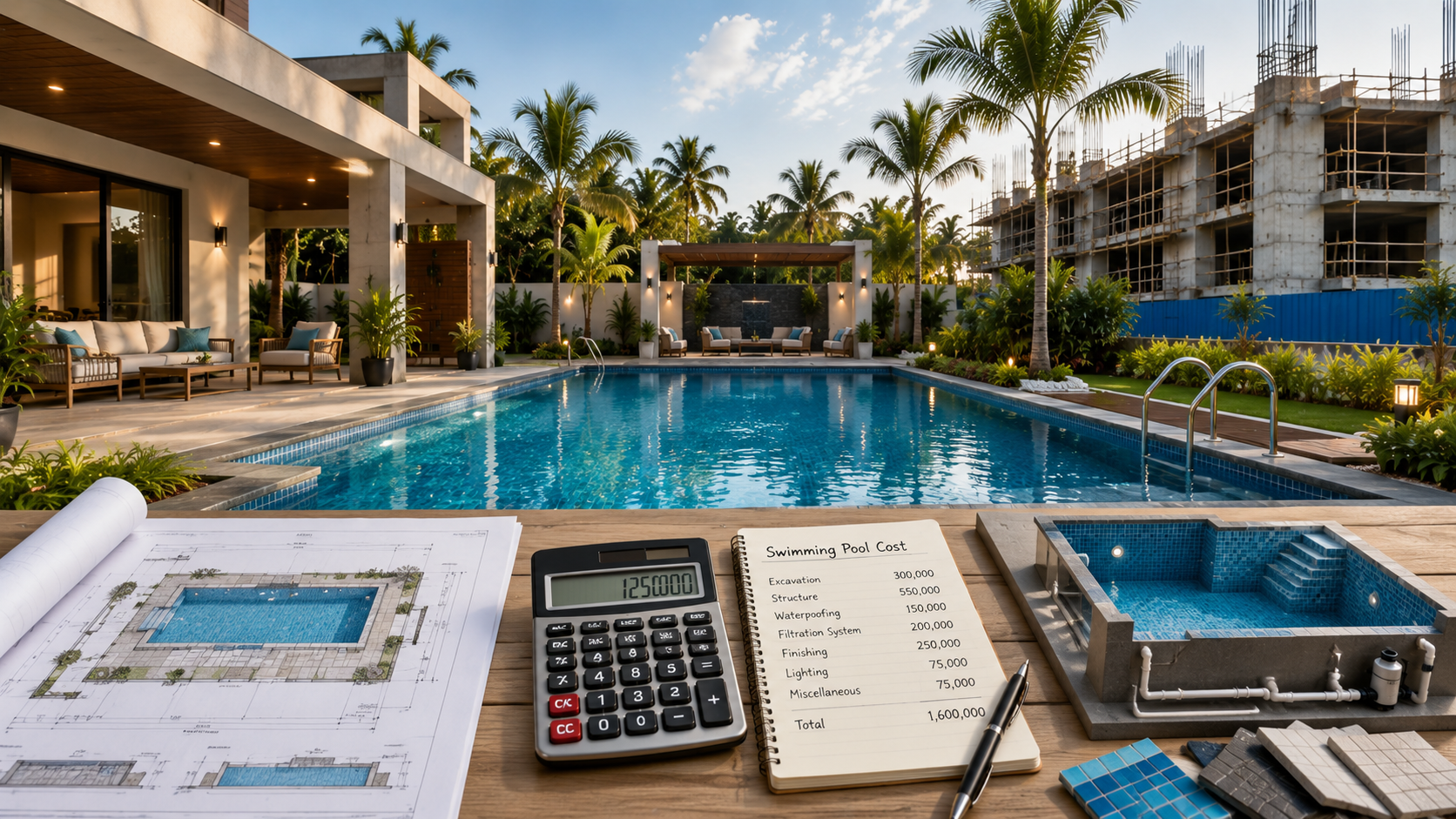
Build cost · Bengaluru, May 2026
Step 1: Planning and Site Selection
Identify Your Requirements and Budget
Before purchasing land or initiating construction, clearly define your needs. Consider the following factors:
Built-up area: Determine the total covered area you need (typically ranging from 600 sq ft to 3000+ sq ft for residential homes in India)
Number of bedrooms and bathrooms: Plan your space requirements based on family size
Location preference: Decide between metropolitan areas, tier-2 cities, or suburban locations
Budget allocation: In India, construction costs typically range from ₹800 to ₹2,500 per square foot depending on location and specifications
For a 1,500 sq ft house in a metropolitan area like Bangalore or Delhi, you should budget between ₹12 lakhs to ₹37.5 lakhs for construction alone, excluding land costs.
Select and Purchase Suitable Land
Land selection is crucial for your project's success. When evaluating land:
Verify ownership: Conduct a thorough title search through municipal records and revenue department
Check zoning regulations: Ensure the land is zoned for residential construction
Assess accessibility: Consider proximity to roads, public transport, schools, and hospitals
Evaluate soil quality: Conduct a soil test to determine bearing capacity (typically 1.5-2 kg/cm² for residential construction)
Review drainage and water availability: Check for groundwater levels and drainage patterns
Confirm no encumbrances: Ensure the property is free from legal disputes or mortgages
Land costs vary significantly across Indian cities. In tier-1 cities like Mumbai and Delhi, land can cost ₹5,000-₹20,000+ per square foot, while in tier-2 cities like Pune or Hyderabad, prices range from ₹1,500-₹5,000 per square foot.
Frequently asked
Step 2: Obtain Necessary Approvals and Permissions
Get Municipal Approval
Before starting construction, you must obtain approval from your local municipal corporation or gram panchayat. This process involves:
Submit building plans: Prepare architectural plans showing site layout, floor plans, elevations, and sections
Obtain NOC from relevant authorities: Get No Objection Certificates from fire department, water supply, and sewerage departments
Pay building permission fees: Municipal fees typically range from ₹5,000 to ₹50,000 depending on built-up area and location
Receive approval: Municipal approval usually takes 15-45 days after submission
Environmental and Other Clearances
Depending on your location, you may need:
Environmental clearance: Required if the property is within 10 km of protected areas or in environmentally sensitive zones
Water supply and sewerage NOC: Confirm availability and connection feasibility
Fire safety NOC: Ensure compliance with fire safety regulations
Electricity board approval: For connection planning and load requirements
Step 3: Design and Planning
Hire an Architect
Engaging a qualified architect is essential for creating functional designs that comply with building codes. Architect fees typically range from 3-8% of total construction cost, or ₹50,000-₹2,00,000+ for a residential project.
Your architect will prepare:
Conceptual designs and 3D visualizations
Detailed architectural drawings (plans, elevations, sections)
Structural design specifications
Material schedules and specifications
Municipal approval drawings
Structural Design and Engineering
A structural engineer will design the building's structural system, including:
Foundation design based on soil bearing capacity
RCC frame design and reinforcement details
Compliance with IS 456 (Indian Standard for Plain and Reinforced Concrete)
Wind and seismic design considerations based on location
Structural engineering fees typically cost ₹30,000-₹1,50,000 depending on project complexity.
Step 4: Prepare Detailed Project Cost Estimate
Break Down Costs by Category
Create a detailed budget covering all construction phases:
Land cost: Already determined during purchase
Design and approvals: ₹1,00,000-₹3,00,000
Foundation and structural work: 15-20% of total construction cost
Superstructure (walls, columns, beams): 25-30% of total construction cost
Roofing: 8-10% of total construction cost
Finishing (flooring, painting, fixtures): 20-25% of total construction cost
Electrical and plumbing: 10-15% of total construction cost
Contingency (10-15%): Buffer for unforeseen expenses
Step 5: Arrange Financing
Explore Funding Options
Several options are available for financing your home construction:
Home construction loans: Banks offer loans up to 80-90% of property value at interest rates of 7-9% per annum
Personal savings: Direct investment from your funds
Home equity loans: If you own existing property
Family loans: Borrowing from relatives
Hybrid approach: Combining multiple sources
Most banks disburse construction loans in stages, releasing funds as construction milestones are achieved, which helps manage cash flow effectively.
Step 6: Hire a Contractor or Construction Team
Select the Right Contractor
Choose a contractor based on:
Experience: At least 5-10 years in residential construction
Portfolio: Review completed projects of similar scale and quality
References: Speak with previous clients about their experience
Financial stability: Verify their ability to manage large projects
Certifications: Check for ISO certifications and professional memberships
Finalize Contract Terms
A detailed construction contract should include:
Scope of work and specifications
Project timeline and milestones
Payment schedule (typically 5-8 installments based on progress)
Quality standards and inspection procedures
Penalty clauses for delays
Warranty period (usually 5 years for structural defects)
Insurance and liability provisions
Contractor charges typically range from ₹600-₹2,000 per square foot depending on complexity and location.
Step 7: Commence Construction
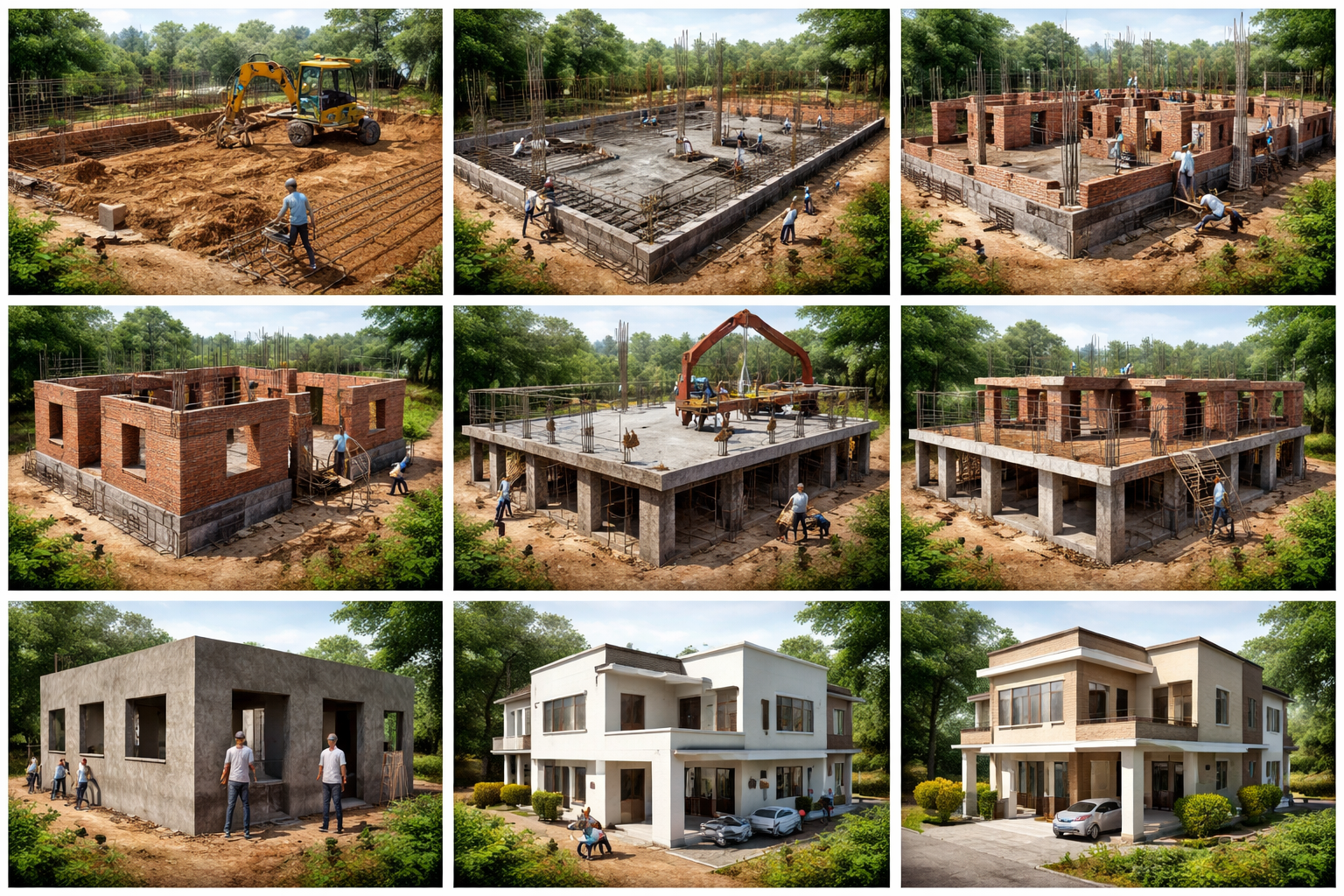
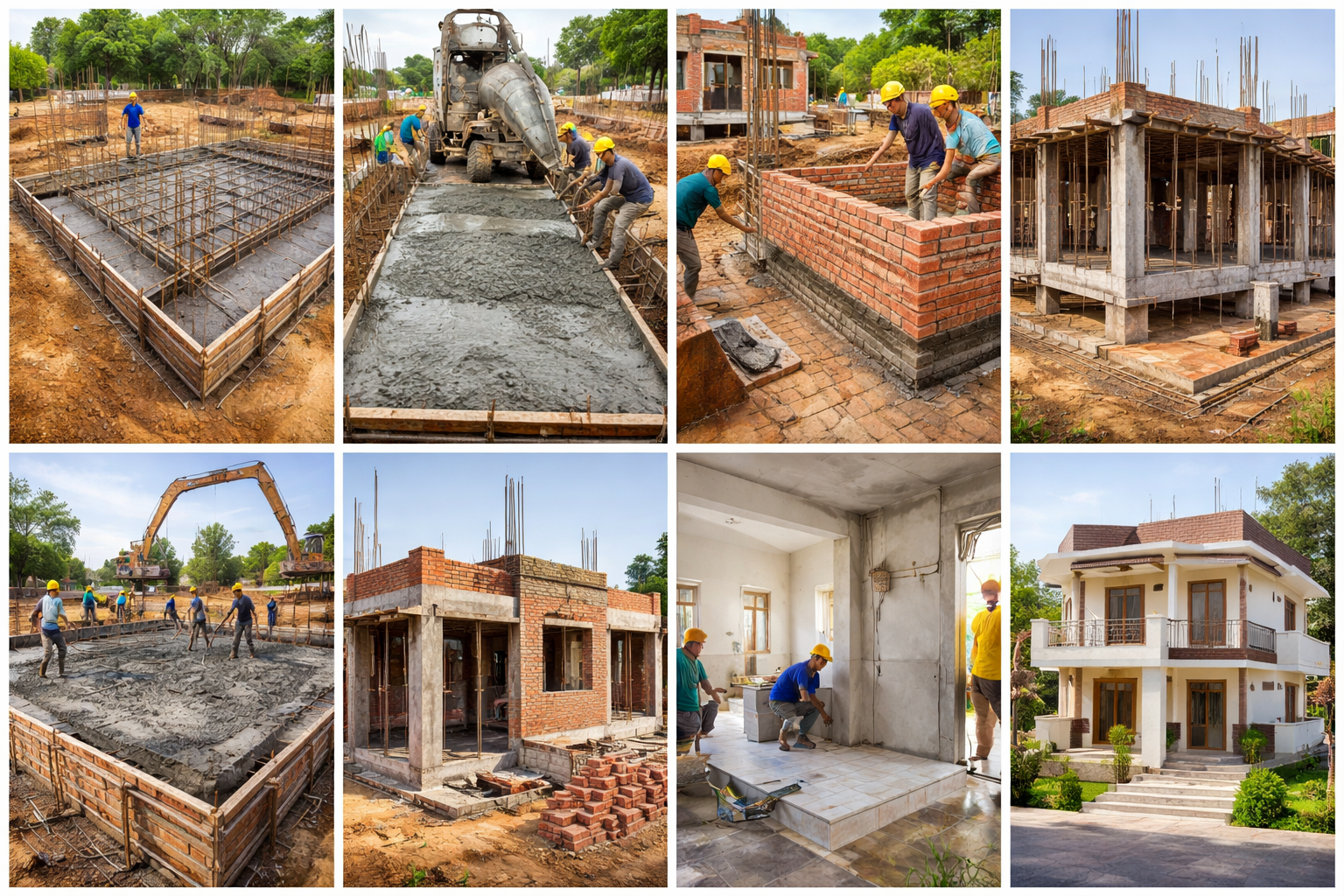
Foundation Work (Weeks 1-8)
Foundation is critical for structural stability. This phase includes:
Site preparation: Clearing, leveling, and marking the foundation layout
Excavation: Digging to the required depth (typically 1-2 meters for residential buildings)
Foundation concrete: Laying PCC (Plain Cement Concrete) and RCC (Reinforced Cement Concrete) footings
Plinth protection: Creating a moisture barrier above ground level
Foundation costs typically account for 15-20% of total construction expenditure.
Superstructure Work (Weeks 8-20)
This phase involves constructing the main building structure:
Columns and beams: Constructing the RCC frame
Slabs: Creating floor plates between levels
Brick masonry: Building walls between columns
Quality checks: Regular testing of concrete strength (cube tests)
Roof and Weatherproofing (Weeks 20-28)
Protecting the structure from weather elements:
Roof slab construction: Final floor slab or RCC roof
Waterproofing: Applying protective coatings to prevent water seepage
Parapet walls: Safety walls at roof edges
Step 8: MEP (Mechanical, Electrical, Plumbing) Installation
Electrical Work
Electrical installation includes:
Main distribution board (MDB) and sub-distribution boards
Wiring for lighting and power outlets
Earthing and lightning protection
Backup power system (inverter/generator)
Compliance with Indian Electricity Rules
Electrical work typically costs ₹80-₹150 per square foot.
Plumbing Installation
Plumbing work covers:
Water supply lines and distribution
Drainage and sewage systems
Bathroom and kitchen fixtures
Septic tank or connection to municipal sewerage
Water storage and pumping systems
Plumbing costs typically range from ₹60-₹120 per square foot.
HVAC and Ventilation
Mechanical systems include:
Ventilation ducts and fans
Air conditioning systems (if planned)
Gas connections (if applicable)
Fire safety systems
Step 9: Finishing and Interior Work
Internal Plastering and Painting
This phase includes:
Internal plaster: Smoothing and finishing internal walls (₹15-₹30 per sq ft)
Putty and primer: Surface preparation for painting
Painting: Interior and exterior paint finishes (₹20-₹50 per sq ft depending on paint quality)
Flooring Installation
Flooring options and costs vary significantly:
Ceramic tiles: ₹40-₹150 per sq ft
Vitrified tiles: ₹50-₹200 per sq ft
Marble: ₹100-₹300+ per sq ft
Wooden flooring: ₹150-₹500+ per sq ft
Concrete with polish: ₹30-₹80 per sq ft
Door and Window Installation
Doors and windows typically cost ₹100-₹300 per sq ft of opening depending on material (wood, aluminum, or composite) and quality.
Kitchen and Bathroom Fittings
Kitchen and bathroom costs vary based on choices:
Budget kitchen: ₹2,00,000-₹5,00,000
Mid-range kitchen: ₹5,00,000-₹10,00,000
Premium kitchen: ₹10,00,000+
Step 10: Final Inspections and Compliance
Municipal Final Inspection
Once construction is complete, the municipal corporation conducts a final inspection to verify:
Compliance with approved plans
Adherence to building codes and regulations
Quality of materials and workmanship
Completion of all structural and MEP work
Obtain Occupancy Certificate
After passing the final inspection, you receive an Occupancy Certificate (OC), which is essential for:
Legal occupation of the building
Obtaining utility connections
Property registration and sale
Insurance purposes
OC application fees typically range from ₹5,000-₹20,000 depending on municipal corporation.
Step 11: Registration and Legal Completion
Register Your Property
Property registration at the sub-registrar's office is mandatory. This involves:
Preparing sale deed or construction completion certificate
Paying stamp duty (typically 5-6% of property value in most Indian states)
Paying registration fees (typically 0.5-1% of property value)
Obtaining registered title deed
Utility Connections
After obtaining OC, connect essential utilities:
Electricity: Apply for permanent connection with electricity board
Water supply: Connect to municipal water supply or arrange private water source
Sewerage: Connect to municipal sewerage or install septic tank
Gas: If applicable, arrange LPG or piped natural gas connection
Internet: Arrange broadband connection with preferred provider
Timeline and Cost Summary
Expected Project Duration
A typical residential house construction in India takes:
Planning and approvals: 2-4 months
Foundation and structure: 4-6 months
MEP and finishing: 3-4 months
Final inspections and registration: 1-2 months
Total duration: 10-16 months for a standard residential house
Cost Breakdown Example
For a 1,500 sq ft house in a tier-2 city like Pune with a budget of ₹20 lakhs:
Land: ₹8,00,000 (₹5,333 per sq ft)
Design and approvals: ₹1,50,000
Construction: ₹9,50,000 (₹633 per sq ft)
MEP and finishing: ₹4,00,000
Registration and legal: ₹1,50,000 (stamp duty and registration)
Contingency: ₹1,00,000 (5% buffer)
Total: ₹26,50,000
Using AECORD for Construction Management
Managing a construction project involves coordinating with multiple vendors, contractors, and suppliers. AECORD's B2B2C marketplace simplifies this process by connecting you with verified construction professionals, material suppliers, and service providers in your area. Through AECORD, you can:
Find and compare quotes from multiple contractors and suppliers
Access verified vendor profiles and customer reviews
Manage procurement of construction materials efficiently
Track project progress and documentation
Connect with architects, engineers, and other construction professionals
Common Mistakes to Avoid
Inadequate planning: Rushing into construction without proper design and approvals
Underestimating costs: Not accounting for inflation, contingencies, and hidden expenses
Poor contractor selection: Choosing based only on lowest price rather than quality and reliability
Ignoring soil testing: Skipping soil investigation leading to foundation problems
Inadequate supervision: Not monitoring construction progress and quality
Delayed approvals: Failing to obtain necessary clearances on time
Scope creep: Making frequent design changes during construction, increasing costs
Poor documentation: Not maintaining records of payments, contracts, and approvals
Tips for Successful Construction
Maintain detailed records: Keep all contracts, invoices, and inspection reports organized
Regular site visits: Monitor construction progress at least once weekly
Quality checks: Conduct material testing and workmanship inspections regularly
Clear communication: Maintain open dialogue with contractor and designer
Staged payments: Release contractor payments only after milestone completion
Insurance coverage: Obtain appropriate insurance for the construction period
Environmental responsibility: Implement dust control and waste management measures
Safety compliance: Ensure contractor follows safety standards and protocols
Frequently Asked Questions
How much does it cost to build a house in India?
Construction costs in India range from ₹800 to ₹2,500 per square foot depending on location and specifications. For a 1,500 sq ft house, total costs (including land, design, construction, MEP, and finishing) typically range from ₹20 to ₹50 lakhs. Metropolitan areas like Mumbai and Delhi are significantly more expensive than tier-2 cities like Pune or Hyderabad.
How long does house construction take in India?
A typical residential house construction takes 10-16 months from planning to completion. This includes 2-4 months for planning and approvals, 4-6 months for foundation and structure, 3-4 months for MEP and finishing, and 1-2 months for final inspections and registration. Delays can occur due to weather, material shortages, or approval delays.
What are the essential approvals needed before starting construction?
Essential approvals include: (1) Municipal building permission from the local corporation or gram panchayat, (2) NOC from fire department, water supply, and sewerage departments, (3) Environmental clearance if required, (4) Electricity board approval for connection planning, and (5) Any special clearances based on location (heritage area, flood zone, etc.). The process typically takes 15-45 days after submission.
Should I hire a contractor or manage construction myself?
Hiring an experienced contractor is recommended for most homeowners unless you have construction expertise. Contractors manage labor, quality control, timelines, and compliance with regulations. Self-management requires significant time, knowledge, and coordination skills. Contractor costs (₹600-₹2,000 per sq ft) are offset by professional management, warranty provisions, and reduced risk of costly mistakes.
What should I look for when selecting construction materials?
Consider: (1) Quality and durability – choose materials that meet Indian Standards (IS codes), (2) Cost-effectiveness – balance quality with budget, (3) Climate suitability – materials should withstand local weather conditions, (4) Maintenance requirements – some materials require more upkeep, (5) Aesthetic appeal – ensure materials match your design preferences, (6) Supplier reputation – source from established, reliable suppliers, and (7) Warranty – prefer materials with manufacturer warranties.