

Executive Summary: Current Construction Cost Landscape (2026)
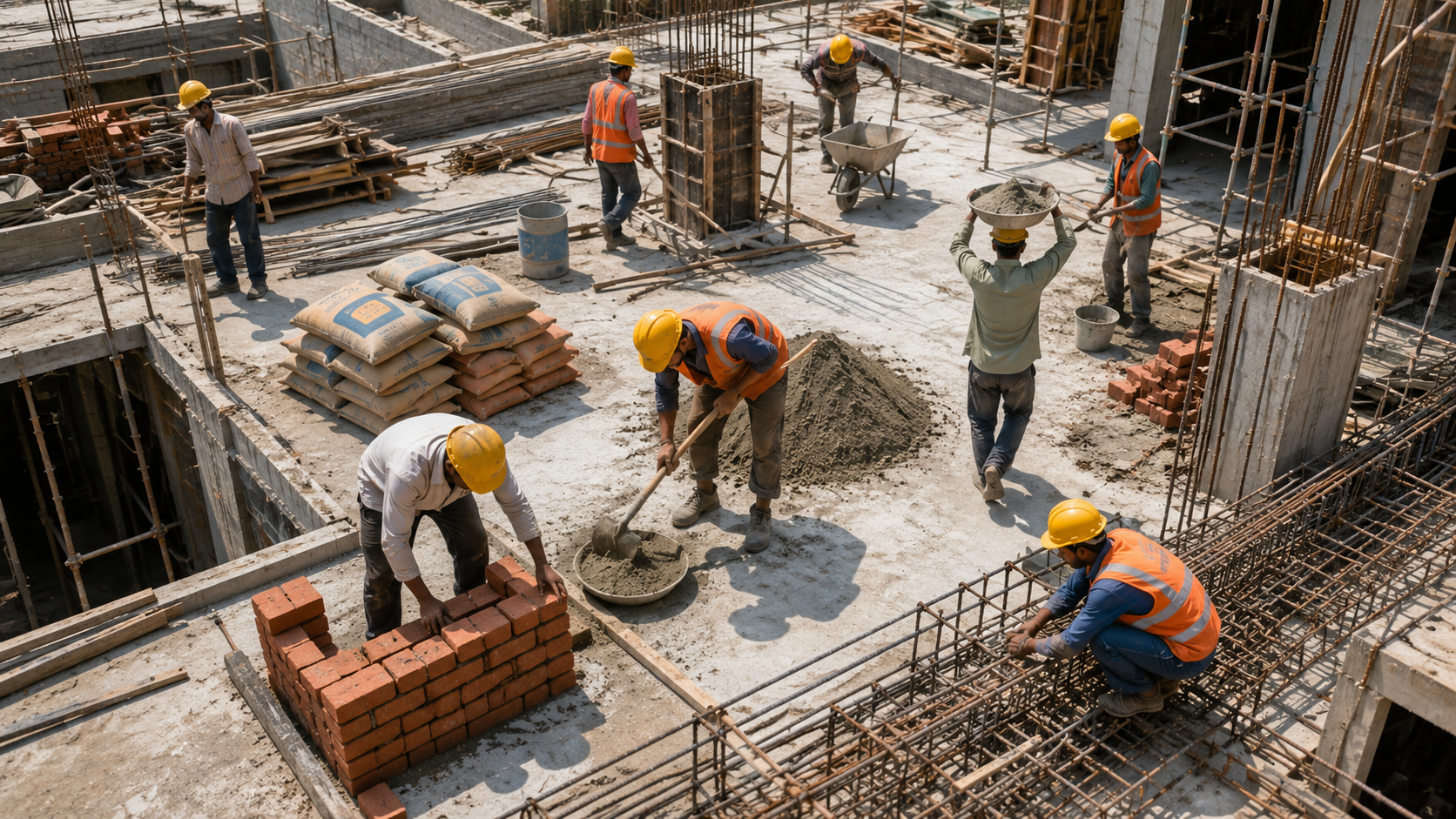
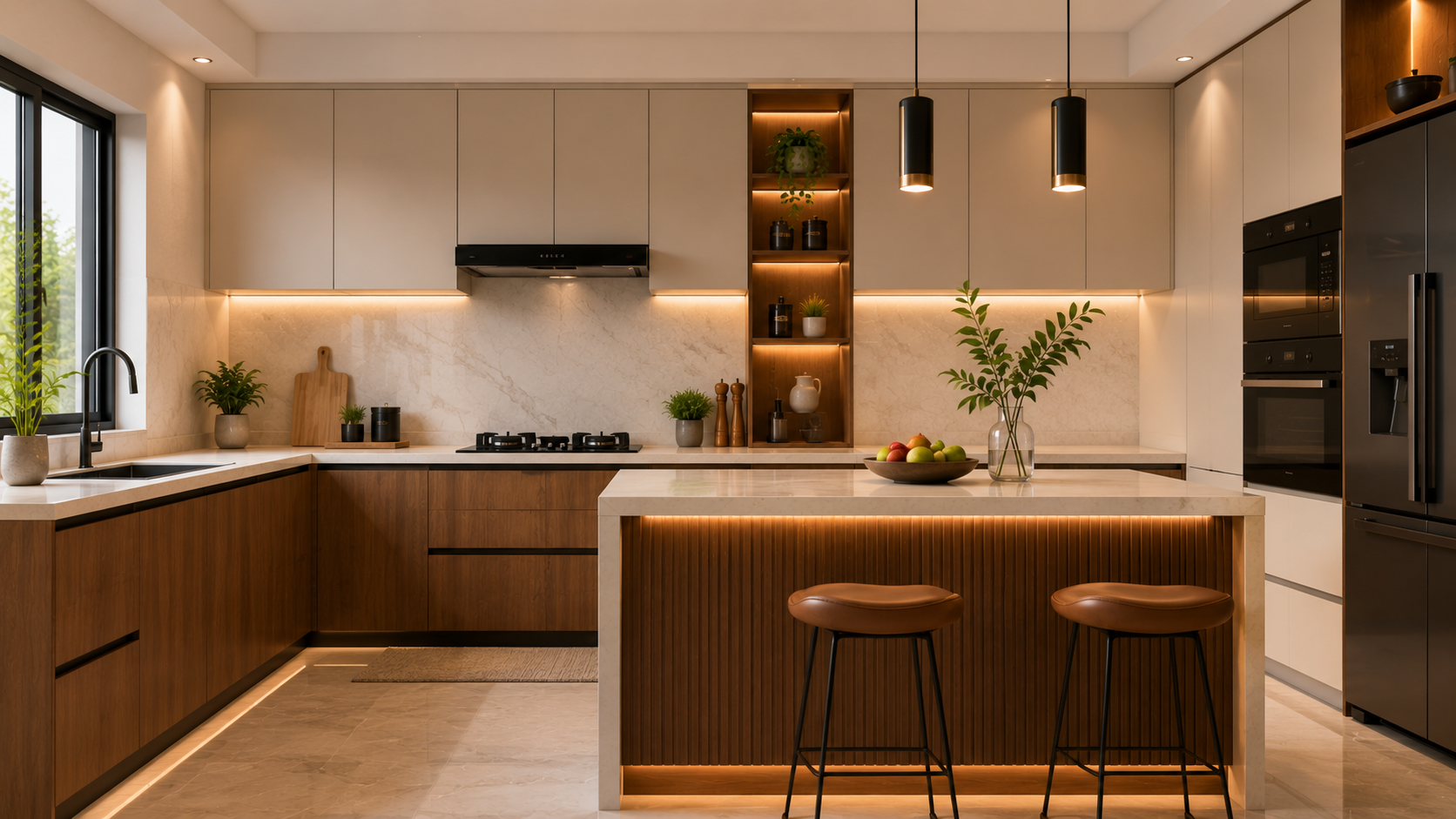
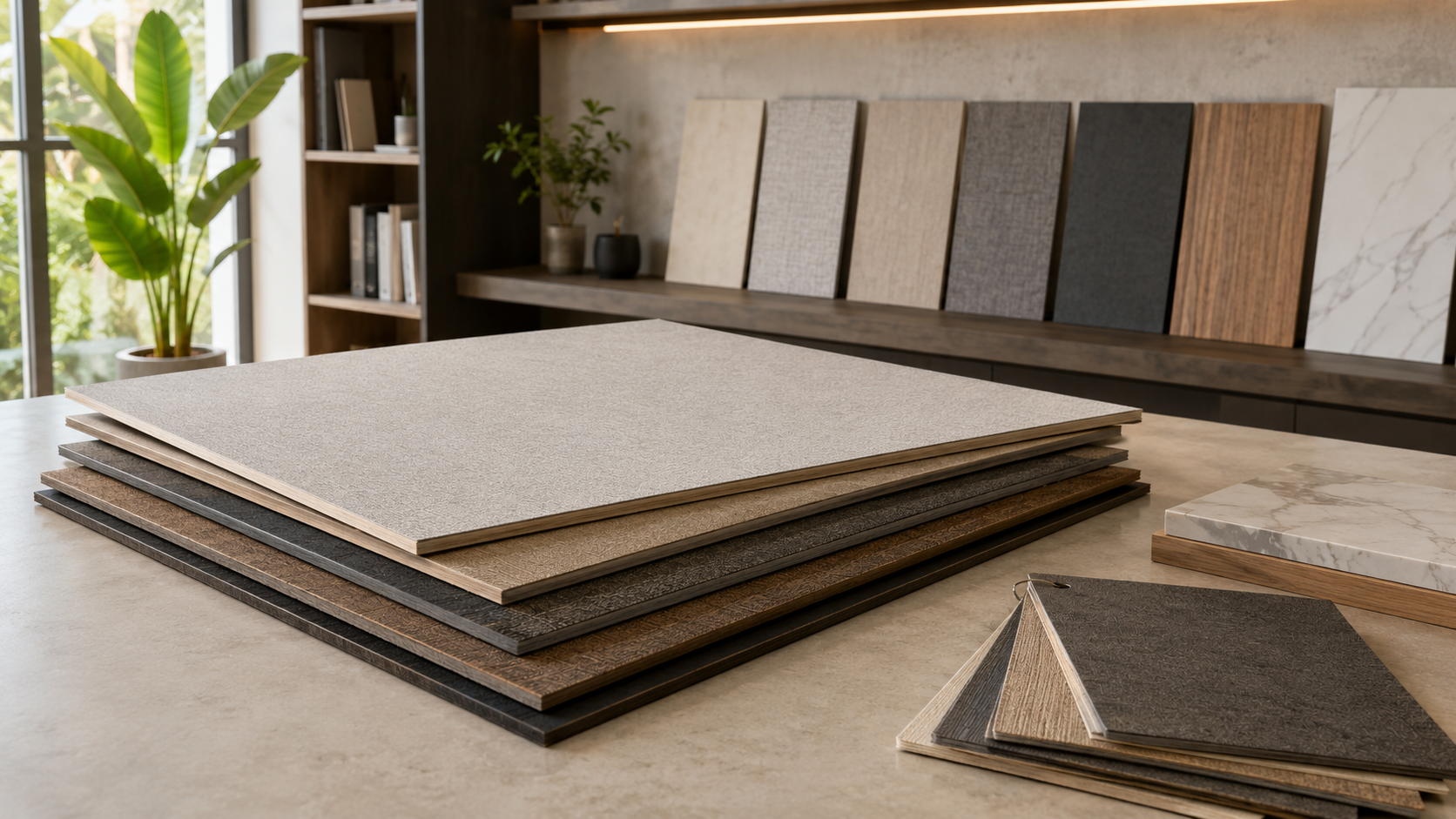
Building a house in India in 2026 requires managing fluctuating material markets, revised labor wages, and structural specifications. Average residential construction costs span from ₹1,500 to ₹4,500+ per square foot, heavily dictated by your choice of finish quality and city location.
This ultimate guide equips you with an exact mathematical breakdown, material consumption formulas (cement and steel per sq ft), city-wise price differences, and hidden expenses to prevent budget overruns.
Build cost · Bengaluru, May 2026
1. Quick Cost Estimation Matrix (By Size & Quality)
Use this baseline matrix to instantly calculate a ballpark budget based on your plot size and finish tiers:
Built-up Area | Basic Quality (₹1,500–₹1,800/sq ft) | Standard Quality (₹1,800–₹2,800/sq ft) | Premium / Luxury (₹2,800–₹4,500+/sq ft) |
1,000 Sq Ft | ₹15.0 Lakh – ₹18.0 Lakh | ₹18.0 Lakh – ₹28.0 Lakh | ₹28.0 Lakh – ₹45.0 Lakh+ |
1,200 Sq Ft | ₹18.0 Lakh – ₹21.6 Lakh | ₹21.6 Lakh – ₹33.6 Lakh | ₹33.6 Lakh – ₹54.0 Lakh+ |
1,500 Sq Ft | ₹22.5 Lakh – ₹27.0 Lakh | ₹27.0 Lakh – ₹42.0 Lakh | ₹42.0 Lakh – ₹67.5 Lakh+ |
2,000 Sq Ft | ₹30.0 Lakh – ₹36.0 Lakh | ₹36.0 Lakh – ₹56.0 Lakh | ₹56.0 Lakh – ₹90.0 Lakh+ |
2. Material Consumption Formula: How Much Cement & Steel Do You Need?
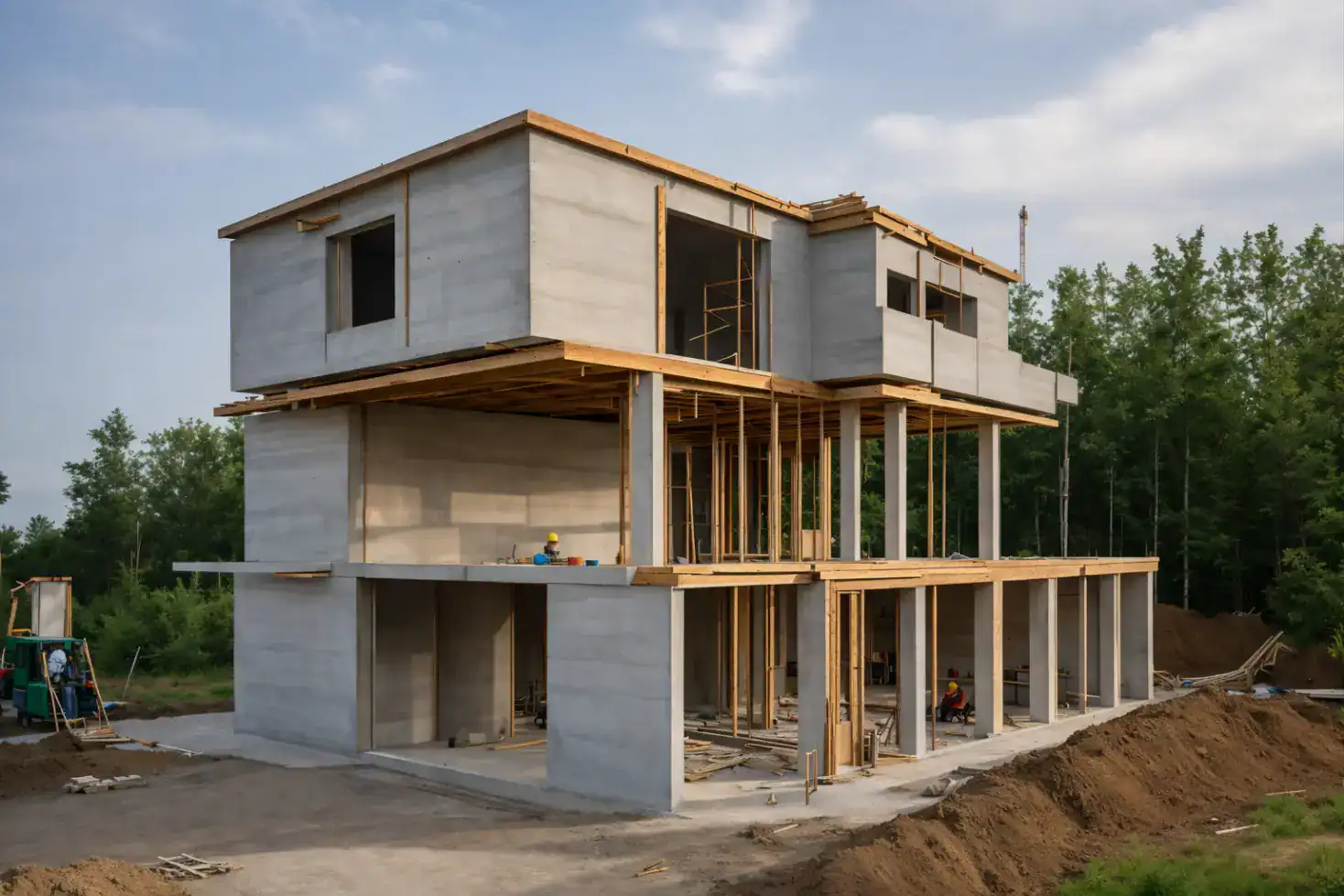
To rank #1, search algorithms and readers look for technical depth. Use these industry-standard thumb rules to calculate raw materials for an RCC framed residential building:
TMT Steel Requirement: Standard RCC construction requires 3.5 to 4.5 kg of TMT steel per sq ft of built-up area (Fe500D grade recommended for seismic resilience).
Example for 1,000 sq ft: $\approx 3,500 \text{ kg to } 4,500 \text{ kg}$ (3.5 to 4.5 tonnes).
Cement Requirement: A standard RCC structure consumes 0.4 to 0.48 bags of cement per sq ft (covering foundation, columns, beams, slab, brickwork, and plastering).
Example for 1,000 sq ft: $\approx 400 \text{ to } 480 \text{ bags}$ (50 kg packs).
Sand & Aggregate Ratios: Typically requires 1.2 to 1.5 cubic feet of sand per sq ft and roughly 0.8 cubic feet of coarse aggregates per sq ft.
3. Stage-by-Stage Cost Breakdown (Where Does Every Rupee Go?)
Understanding the percentage allocation of your construction budget prevents contractor disputes:
Foundation & Excavation (10% - 15%): Earthwork, PCC bed, anti-termite treatment, and deep foundation casting.
RCC Superstructure (25% - 35%): Columns, beams, roof slabs, shuttering, and structural concrete framing.
Wall Construction & Masonry (10% - 15%): Red bricks or AAC blocks with mortar joints.
Flooring & Finishing (10% - 15%): Tile/marble laying, wall putty, and interior/exterior painting.
Utilities — Electrical & Plumbing (8% - 12%): Concealed copper wiring, switchboards, drainage pipes, and CPVC water supply lines.
Frequently asked
4. City-Wise Cost Variations (2026 Market Rates)
Mumbai & Thane: ₹2,500 – ₹3,500+ per sq ft (Elevated logistics, premium labor wages, and city transit overheads).
Delhi-NCR: ₹2,000 – ₹3,500 per sq ft (Dependent on structural design complexity and material distance from primary manufacturing belts).
Bengaluru: ₹2,000 – ₹3,500 per sq ft (Driven by steady tech-corridor demand and standard Mivan/brick contractor models).
Hyderabad & Chennai: ₹1,900 – ₹3,200 per sq ft.
Tier-2 Cities (Lucknow, Patna, Jaipur): ₹1,500 – ₹2,200 per sq ft (Lower labor overheads and localized raw material availability).
5. Hidden Costs Most Homeowners Ignore (15% to 25% Overrun Risks)
Competitor articles ranking at the top explicitly address hidden costs to build complete user trust. Make sure to account for:
Statutory Approvals & Sanction Fees: Municipal building plan approvals, layout cesses, and water/electricity connection deposits.
Professional Fees: Structural engineers and architectural consultation charges ($\approx \text{₹}15 \text{ to } \text{₹}30$ per sq ft).
Site Infrastructure: Temporary electricity meters, borewell drilling, and boundary wall construction.
Frequently Asked Questions
How can I accurately calculate my house construction budget?
Multiply your total proposed built-up area (including all floors and balconies) by the current regional per-sq-ft rate for your desired quality tier, and add a mandatory 10% to 15% contingency reserve for material price fluctuations.
Is a turnkey contract better than a labor-only contract?
For most homeowners, turnkey (material + labor) contracts managed by verified professional builders offer better budget control, fixed timelines, and accountability, whereas labor-only contracts require daily material tracking and supervision.
How do material price fluctuations impact my build in 2026?
Core inputs like Fe-500 grade TMT steel (averaging ₹50,000 to ₹60,000 per ton) and 50 kg cement bags (₹340 to ₹430 per bag) experience seasonal shifts.Procuring materials in bulk or via transparent digital platforms helps mitigate sudden inflation spikes
Conclusion
Building a home in 2026 demands meticulous financial planning, technical awareness, and realistic budgeting. By monitoring per-sq-ft metrics, partnering with transparent contractors, and maintaining a solid contingency fund, you can successfully navigate your construction journey without unexpected compromises.