

The construction and real estate landscape in India is undergoing a fundamental shift. What was once considered "sustainable" is increasingly being viewed as merely a baseline expectation rather than a differentiator. Modern clients—whether they're corporate developers, institutional investors, or discerning homebuyers—are now demanding something more ambitious: regenerative design.
This evolution from sustainable to regenerative represents a critical mindset change that AECO professionals across India must understand and embrace. While sustainability focuses on minimizing harm, regeneration goes further by actively improving environmental and social systems. For architects, engineers, and contractors, this shift has profound implications for how projects are conceived, designed, and executed.
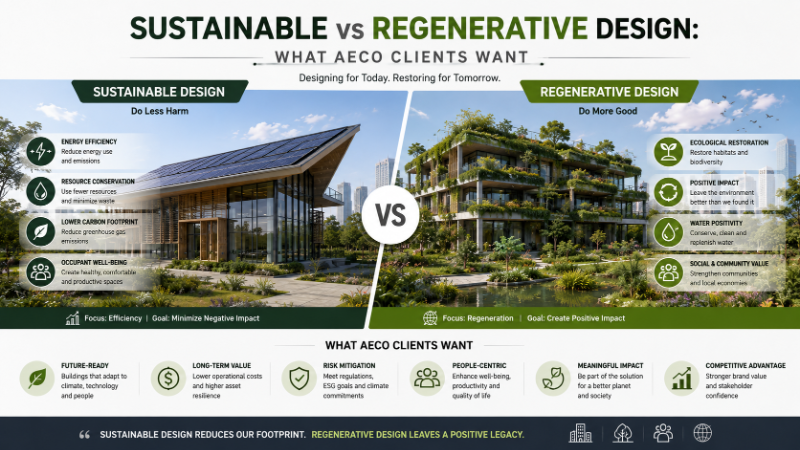
Understanding the Shift: Sustainable vs. Regenerative
To appreciate what modern clients want, we need to first clarify the distinction between these two approaches.
Build cost · Bengaluru, May 2026
What Sustainable Design Means
Sustainable design, which gained prominence in India over the last two decades, focuses on:
Reducing energy consumption through efficient HVAC systems and LED lighting
Minimizing water usage via rainwater harvesting and wastewater recycling
Using materials with lower embodied carbon
Achieving certifications like LEED, IGBC, or GRIHA
Meeting regulatory compliance for green building codes
In cities like Bangalore, Mumbai, Delhi, and Pune, sustainable buildings have become increasingly common. Major corporations now expect their office spaces to have green certifications. However, the market has matured beyond this baseline.
The Regenerative Approach
Regenerative design takes a fundamentally different stance. Rather than simply reducing negative impacts, it asks: How can this building and its operations actively improve the environment and community?
Key principles of regenerative design include:
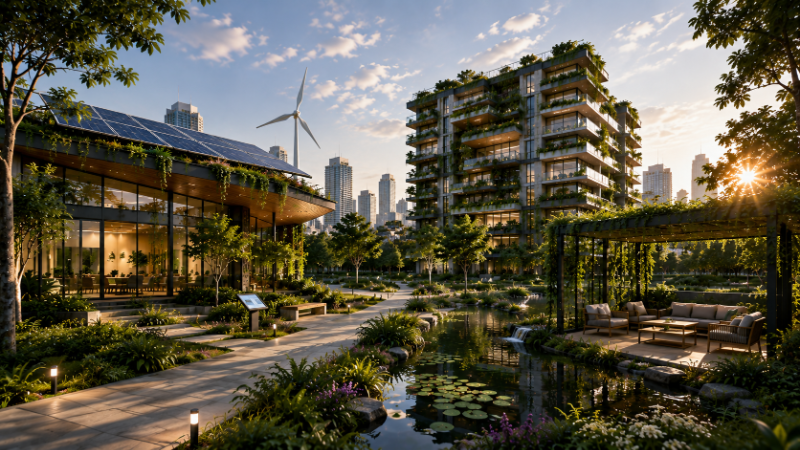
Net-positive environmental impact: Buildings that produce more energy than they consume, or restore more water than they use
Biodiversity enhancement: Creating habitats that support local flora and fauna, increasing ecological value beyond the pre-development state
Community regeneration: Projects that strengthen local economies, create meaningful employment, and enhance social cohesion
Circular material flows: Designing for disassembly, reuse, and regeneration rather than linear consumption
Health and wellness: Spaces designed to actively promote human wellbeing and connection to nature
Why Modern Clients Are Demanding This Shift
Frequently asked
Regulatory Pressure and Future-Proofing
India's building regulations are tightening. The Energy Conservation Building Code (ECBC) has been updated, and states like Maharashtra and Karnataka are implementing stricter environmental standards. Savvy clients understand that buildings designed only to today's minimum standards will face compliance challenges within a decade.
Regenerative design, by contrast, builds in substantial margins of safety and performance. A building designed to be net-positive in energy will easily meet future efficiency requirements, protecting the client's investment.
Investor and Stakeholder Expectations
ESG (Environmental, Social, and Governance) criteria are increasingly influencing investment decisions. Major institutional investors, including those funding large commercial and residential projects in India, now require clear regenerative commitments. This is particularly evident in:
Large mixed-use developments in Bangalore's tech corridors
Corporate campuses in Gurgaon and Noida
Premium residential projects in Mumbai and Pune
Hospitality and retail developments across major metros
Talent Attraction and Retention
In competitive labor markets, employees increasingly prefer to work for companies with strong environmental commitments. A regenerative office space in Bangalore or Mumbai becomes a tangible expression of corporate values, directly impacting recruitment and retention. This is particularly important for tech companies and professional services firms competing for top talent.
Market Differentiation and Premium Positioning
In saturated real estate markets, regenerative design offers genuine differentiation. Luxury residential projects in Mumbai's Bandra or Worli can command premium pricing by offering not just sustainable features, but demonstrable positive environmental and social impact. Similarly, commercial spaces that actively enhance employee wellbeing and productivity justify higher lease rates.
Risk Mitigation
Climate change impacts—flooding, heat waves, water scarcity—are increasingly affecting Indian cities. Regenerative design inherently builds resilience. A development that restores local water tables, manages stormwater on-site, and reduces heat island effects is better positioned to weather climate uncertainties than a merely sustainable one.
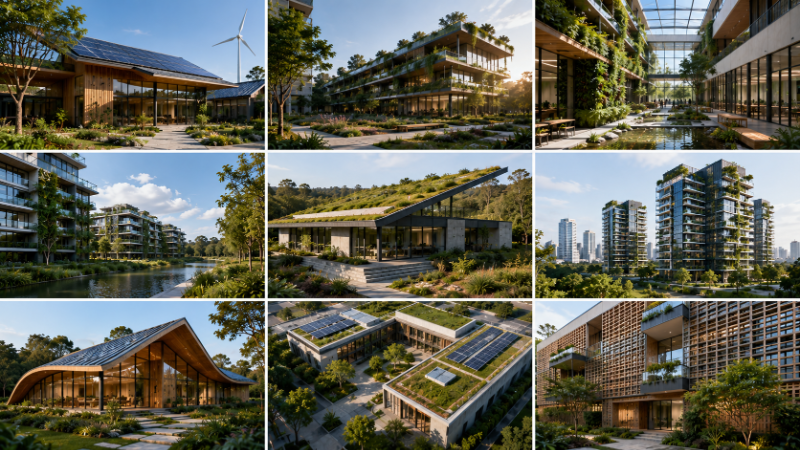
What Regenerative Design Looks Like in Practice
Energy: From Neutral to Positive
Modern clients want buildings that generate surplus energy. This goes beyond solar panels on roofs. Comprehensive regenerative energy strategies include:
Over-sized solar installations with battery storage
Wind turbines where applicable (increasingly feasible in coastal areas and elevated locations)
District-level renewable energy systems for large developments
Smart microgrids that optimize energy distribution across multiple buildings
Surplus energy sold back to the grid, creating revenue streams
A tech campus in Bangalore might design for 150% renewable energy generation, using the surplus to offset grid consumption and create a revenue model.
Water: From Efficient to Restorative
Rather than merely reducing water consumption, regenerative projects aim to restore hydrological systems. This includes:
Groundwater recharge systems that exceed extraction rates
Wetland creation or restoration on-site
Complete wastewater treatment enabling 100% recycling for non-potable uses
Stormwater harvesting that restores natural infiltration patterns
Contribution to local watershed restoration initiatives
In water-stressed cities like Delhi and Bangalore, this approach directly addresses regional challenges while securing the project's long-term water security.
Biodiversity: From Minimization to Enhancement
Regenerative projects actively increase local biodiversity. Strategies include:
Native plant landscaping that supports local pollinators and birds
Green roofs and vertical gardens designed as habitat corridors
Elimination of light pollution to protect nocturnal species
Partnerships with local conservation organizations
Measurable biodiversity metrics showing improvement over baseline
A residential development in Pune might incorporate native forest species in its landscaping, creating habitat that supports the region's endangered bird species.
Materials: Circular and Regenerative
Modern clients increasingly demand transparency in material sourcing and lifecycle impacts. Regenerative material strategies include:
Sourcing from suppliers with documented regenerative practices (e.g., timber from responsibly managed forests)
Designing for disassembly, allowing materials to be recovered and reused
Using locally-sourced materials to support regional economies
Specifying recycled content in concrete, steel, and other structural materials
Avoiding harmful substances and choosing materials that improve indoor environmental quality
Community and Social Impact
Regenerative projects recognize that true sustainability includes social dimensions. This means:
Employment generation with fair wages and skill development
Support for local suppliers and small businesses
Community spaces and programs that strengthen social connections
Accessibility and inclusivity in design
Transparent stakeholder engagement throughout the project lifecycle
How AECO Professionals Can Respond
For Architects
Architects must evolve their design philosophy. This means:
Developing expertise in regenerative design frameworks and certification systems
Building multidisciplinary teams that include ecologists, social scientists, and community representatives
Using advanced modeling tools to predict environmental performance
Designing for flexibility and adaptation, recognizing that regenerative systems often need to evolve
Professionals on AECORD can showcase regenerative projects and credentials to attract clients seeking this expertise.
For Engineers
Engineers play a critical role in making regenerative design feasible. Key competencies include:
Advanced MEP design for net-positive energy and water systems
Smart building technologies and IoT integration for real-time performance monitoring
Structural solutions that enable material reuse and disassembly
Climate resilience engineering for flood, heat, and drought management
For Contractors and Project Managers
Construction and project management must evolve to support regenerative goals:
Sustainable procurement practices that verify supplier credentials
Waste management systems designed for zero waste or positive waste (creating resources for others)
Worker welfare programs that model the social regeneration values of the project
Community engagement during construction, creating local employment and skill development
Developing Expertise and Credentials
AECO professionals should consider certifications and training in regenerative design frameworks such as:
Living Building Challenge
Regenerative Organic Certification
LEED for Regenerative Design (emerging)
International Well Building Institute credentials
Local frameworks adapted for Indian contexts
The Business Case for Regenerative Design
Cost Implications
A common misconception is that regenerative design significantly increases project costs. In reality:
Premium cost: Initial investment may be 5-15% higher than conventional construction
Operational savings: Energy and water cost reductions often recover this premium within 5-7 years
Market premium: Regenerative buildings command 10-20% higher lease rates or sale prices
Risk reduction: Avoided costs from climate impacts and regulatory penalties
Revenue generation: Surplus energy sales and other regenerative revenue streams
For a ₹100 crore commercial development in Mumbai, the additional regenerative investment of ₹10-15 crore is typically recovered within the first decade through operational savings and market premium.
Competitive Advantage
Developers and service providers who embrace regenerative design early gain significant advantages:
Differentiation in competitive markets
Attraction of premium clients and investors
Reduced regulatory and compliance risks
Enhanced brand reputation and market positioning
Operational cost advantages that improve long-term returns
Challenges and Realistic Expectations
Market Maturity
Not all Indian markets are equally ready for regenerative design. Large metros like Bangalore, Mumbai, Delhi, and Pune have sufficient demand and expertise, but smaller cities may require more education and demonstration projects.
Regulatory Framework
India's building codes are still evolving. While IGBC and GRIHA certifications support sustainability, specific regenerative frameworks require advocacy and policy development. Professionals should engage with regulatory bodies to shape emerging standards.
Supply Chain and Expertise
Implementing regenerative design requires specialized suppliers, materials, and expertise that are still developing in India. Building these supply chains and developing local expertise is an ongoing challenge.
The Future Trajectory
The shift from sustainable to regenerative is not a temporary trend. It reflects fundamental changes in how society values environmental and social impact. For AECO professionals in India, this transition represents both challenge and opportunity.
Clients will increasingly expect regenerative commitments. Those who develop expertise, build credibility through demonstration projects, and stay current with evolving frameworks will thrive. Those who remain focused solely on minimum compliance will find their services less competitive.
The good news is that India has tremendous potential for regenerative development. With abundant solar resources, significant biodiversity, and growing environmental consciousness, Indian cities can become global leaders in regenerative design.
Getting Started: Practical Next Steps
If you're an AECO professional looking to incorporate regenerative design into your practice:
Educate yourself: Invest in training and certifications in regenerative design frameworks
Build teams: Develop partnerships with complementary specialists—ecologists, social scientists, sustainability consultants
Start small: Pilot regenerative principles on smaller projects to build expertise and case studies
Engage clients: Help clients understand the business case for regenerative design
Network: Connect with other professionals advancing regenerative practice in India
Modern clients want more than sustainable buildings—they want projects that actively improve the world. By embracing regenerative design, AECO professionals can deliver exactly that while building thriving, competitive practices.
Ready to connect with architects, engineers, and contractors who are advancing regenerative design in India? Explore AECORD's network of AECO professionals committed to innovative, sustainable practice. Whether you're seeking expertise to elevate your projects or looking to showcase your regenerative credentials to forward-thinking clients, AECORD connects you with the professionals shaping the future of construction and design in India.
Frequently Asked Questions
What is the difference between sustainable and regenerative design?
Sustainable design focuses on minimizing harm through energy efficiency, water conservation, and green certifications like LEED or GRIHA. Regenerative design goes further by actively improving environmental and social systems—such as buildings that produce more energy than they consume or restore biodiversity beyond pre-development levels.
Why are AECO clients demanding regenerative design instead of sustainable design?
Modern clients view sustainability as a baseline expectation rather than a differentiator. Regenerative design future-proofs investments against tightening building codes, meets ESG criteria required by institutional investors, and demonstrates genuine commitment to environmental and community improvement.
What are the key principles of regenerative design?
Regenerative design includes net-positive environmental impact, biodiversity enhancement, community regeneration, circular material flows, and health and wellness features. These principles ensure buildings actively improve their surroundings rather than simply reducing negative impacts.
How does regenerative design protect a building investment?
By designing buildings to exceed current and anticipated future regulatory standards, regenerative design provides substantial safety margins. Buildings designed to be net-positive in energy or water will easily meet stricter codes expected within the next decade, protecting long-term asset value.
Which Indian cities are seeing demand for regenerative design projects?
Major cities including Bangalore, Mumbai, Delhi, Pune, Gurgaon, and Noida are experiencing increased demand for regenerative design, particularly in tech corridors, corporate campuses, and premium residential developments where institutional investors and ESG criteria influence project requirements.