

Building a duplex home in India is one of the most significant long-term investments you will undertake. As urban real estate values shift and material costs fluctuate across major metropolitan and Tier-2 hubs, accurate budgeting becomes paramount.
This comprehensive, data-driven guide provides an exhaustive breakdown of duplex house construction costs in India for 2025–2026. Utilizing current market benchmarks from industry bodies like IBEF and NAREDCO, alongside primary data from regional builder surveys, this guide covers everything from per-square-foot rates and raw material expenses to hidden costs and regional variances across Delhi, Mumbai, Bangalore, and Pune.
Whether you are planning a compact 1,000 sq. ft. urban duplex or a sprawling 3,000 sq. ft. luxury layout, this guide equips you with the actionable insights required to optimize your capital expenditure, prevent budget overruns, and maximize return on investment.
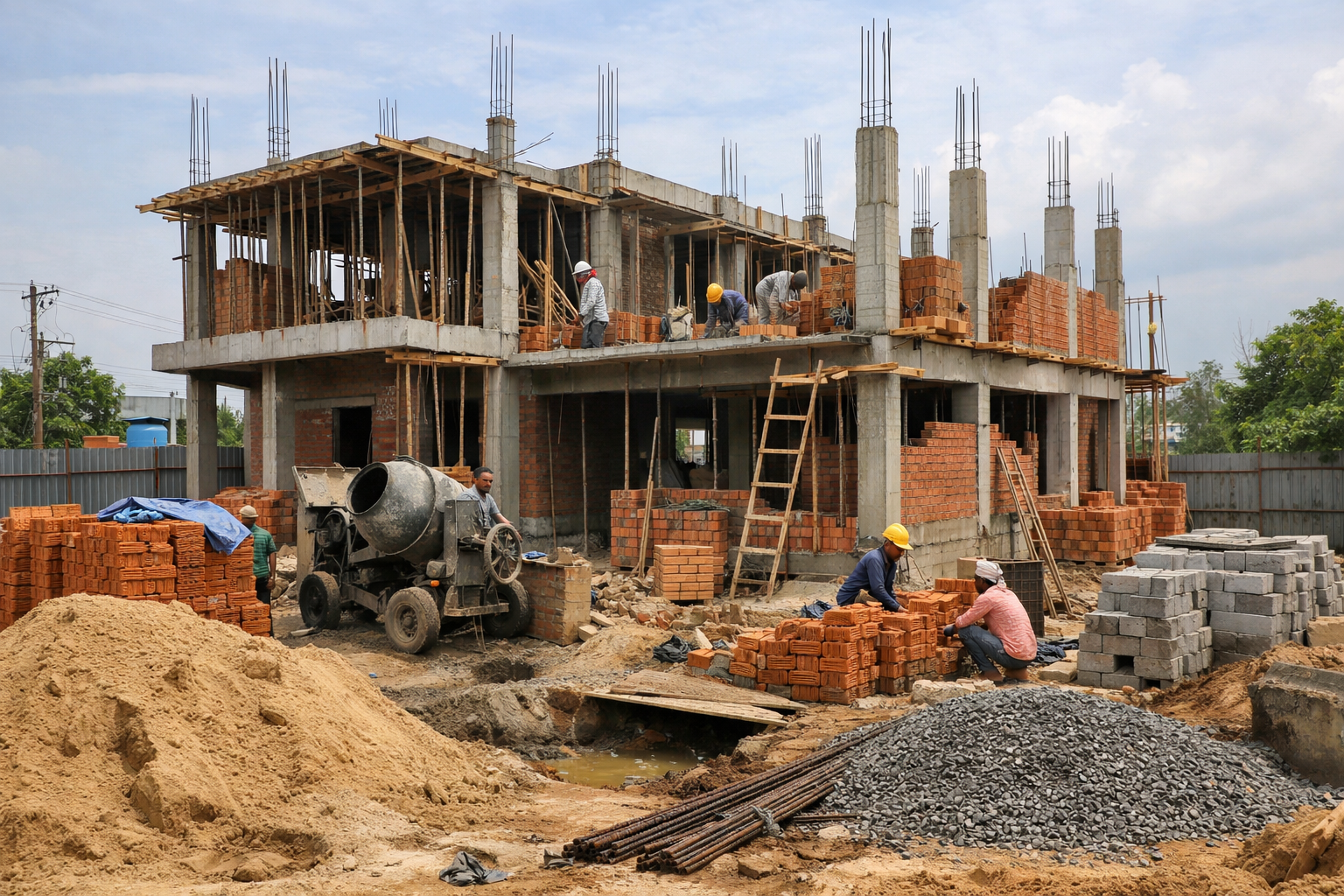
Breakdown of Duplex Construction Costs
Build cost · Bengaluru, May 2026
1. Understanding Duplex Construction Economics in 2025-2026
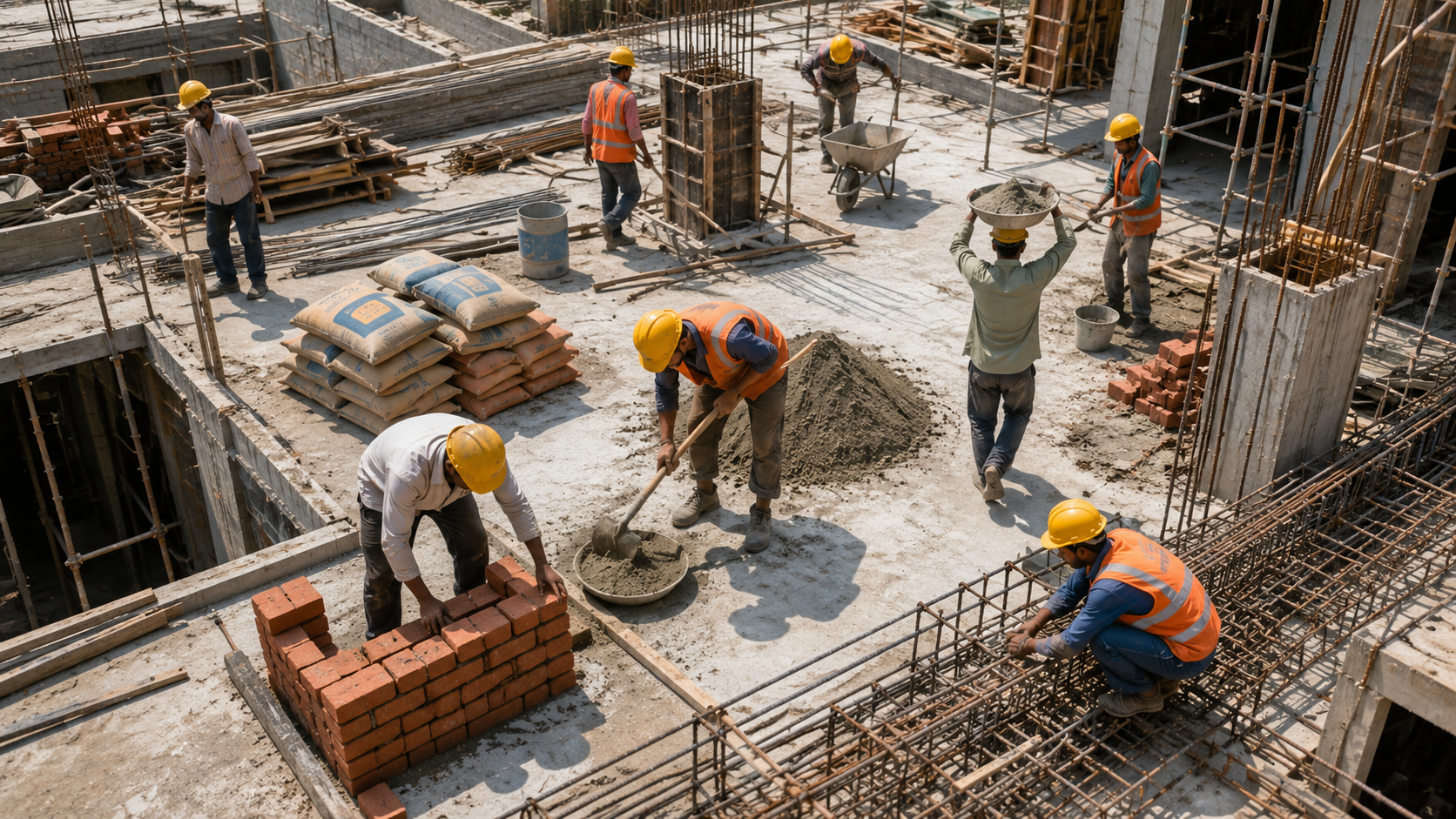
Construction inflation, fluctuating steel and cement tariffs, and evolving labor charges have redefined the baseline economics of residential building. Unlike single-floor independent houses, a duplex involves vertical integration, dual-slab casting, internal staircases, multi-level plumbing, and distinct structural load considerations.
Key Cost Drivers
Structural Engineering & Soil Testing: Multi-story configurations demand rigorous soil bearing capacity tests. Poor soil conditions require deep pile foundations, adding 5% to 8% to the structural shell cost.
Vertical Circulation: Designing internal or semi-external staircases (RCC, wooden, or steel-framed glass) involves specialized craftsmanship and higher finishing outlays.
HVAC and MEP Integration: Mechanical, Electrical, and Plumbing (MEP) layouts are more complex across two floors, requiring precise conduit planning to avoid structural hacking later.
2. Average Construction Cost Per Square Foot (2025-2026 Benchmarks)
Quality Tier | Specification Summary | Estimated Cost (Per Sq. Ft.) | Estimated Cost (2,000 Sq. Ft. Duplex) |
Basic Quality | Standard OPC/PPC cement, primary-grade TMT steel, local ceramic tiles, standard aluminum windows, basic sanitary fixtures. | INR 1,600 – INR 2,000 | INR 32 Lakhs – INR 40 Lakhs |
Standard Quality | Branded Grade-53 cement, ISI-marked Fe500D steel, vitrified tiles, branded wiring (Finolex/Polycab), Jaguar/Cera sanitaryware. | INR 2,100 – INR 2,800 | INR 42 Lakhs – INR 56 Lakhs |
Luxury Quality | Premium modular kitchens, Italian marble/engineered wood flooring, smart home automation, high-end glazing, premium bathroom suites (Grohe/Kohler). | INR 3,000 – INR 4,500+ | INR 60 Lakhs – INR 90+ Lakhs |
Frequently asked
3. City-Wise Cost Variations Across India
Construction rates vary significantly depending on local labor unions, transportation logistics for raw materials, and municipal approval fees. The following comparison highlights structural and finishing costs across four major metropolitan hubs:
[City Comparison Matrix — 2,000 Sq. Ft. Standard Duplex]
• Mumbai:      INR 2,500 – INR 3,500 / sq. ft. (Higher logistics & labor costs)
• Delhi NCR:   INR 2,200 – INR 3,000 / sq. ft. (Moderate material availability)
• Bangalore:   INR 2,000 – INR 2,700 / sq. ft. (Competitive contractor market)
• Pune:        INR 1,950 – INR 2,650 / sq. ft
City Breakdown Details
Mumbai: High material transit costs within city limits, stringent RMC (Ready Mix Concrete) pricing, and premium labor wages drive up baseline expenditure.
Delhi NCR: Dependent on regional brick kilns and localized steel stockists. Boundary walls, security, and subterranean water table management add subtle overheads.
Bangalore: High demand for skilled labor and turnkey engineering firms. Finishing materials are widely accessible through local wholesale hubs.
Pune: Rapid expansion in peripheral residential zones (Wakad, Hinjewadi, Hadapsar) has stabilized contractor pricing, making it one of the most cost-effective tier-1 tech cities for independent housing . Comprehensive Material Cost Breakdown
A standard residential construction project divides its total budget into three primary phases: Structural Work (Civil Shell), Finishing Work, and Architectural/Statutory Approvals.
[Typical Budget Distribution]
┌──────────────────────────────────────────────┐
│ Civil Structure (Materials + Labor): 50-55%  │
├──────────────────────────────────────────────┤
│ Interior & Exterior Finishes:       30-35%   │
├──────────────────────────────────────────────┤
│ Approvals, Architecture & Contingency: 15%   │
└──────────────────────────────────────────────┘
A. Raw Material Rates (Current Market Estimates)
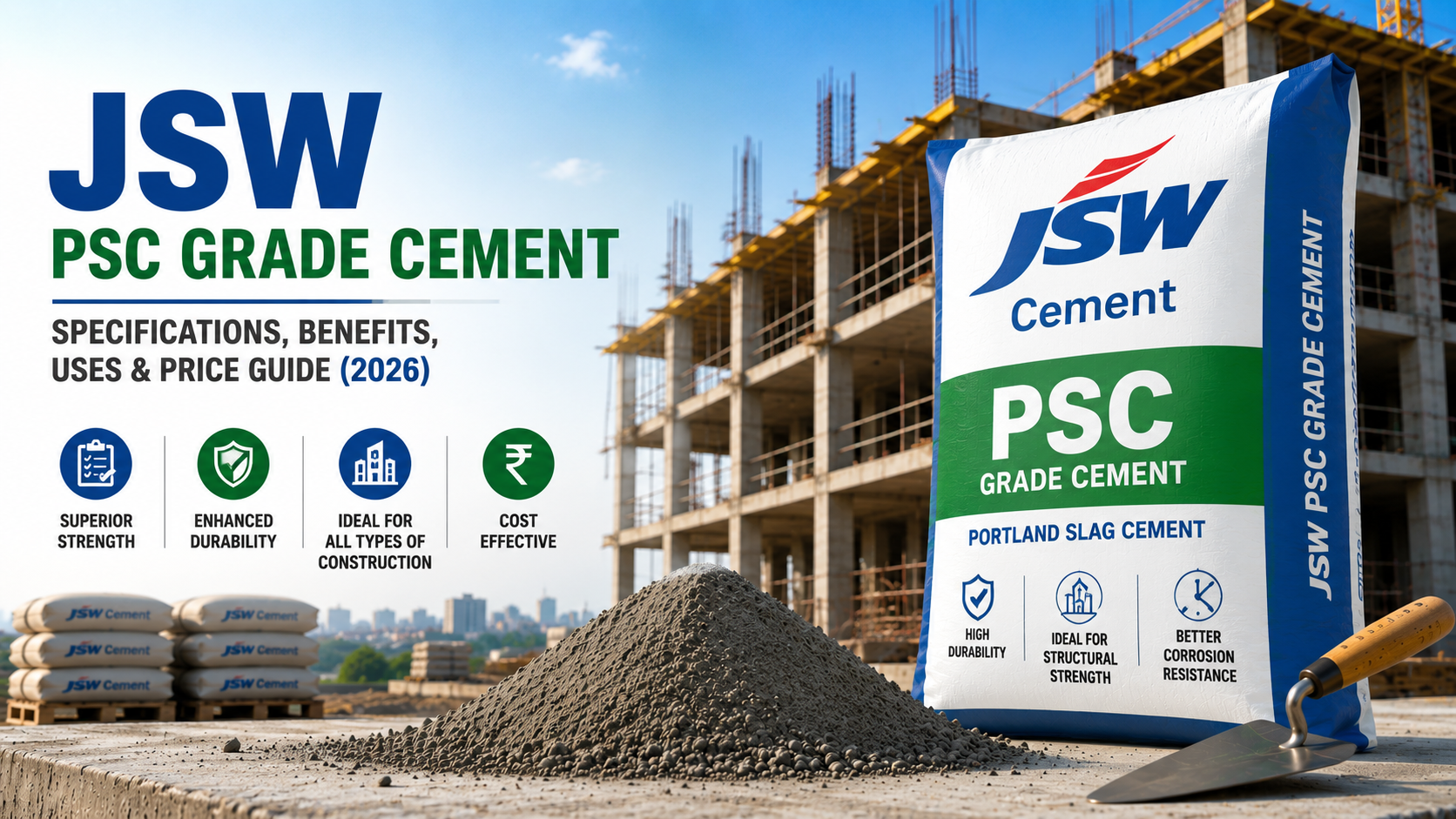
Cement (OPC/PPC 53 Grade): INR 360 – INR 420 per 50kg bag. (Accounts for ~15% of structural cost).
TMT Steel Rebars (Fe500D/Fe550): INR 58,000 – INR 67,000 per metric ton depending on brand (Tata Tiscon, Jindal Panther, Kamdhenu). Accounts for ~25% of structural cost.
Bricks / Blocks:
Red Clay Bricks: INR 8 – INR 11 per piece.
Fly Ash Bricks: INR 6 – INR 8 per piece.
AAC Blocks: INR 3,800 – INR 4,600 per cubic meter.
Aggregates (20mm & 40mm crushed stone): INR 45 – INR 60 per cubic foot.
River Sand / M-Sand: M-Sand (Zone-2 for concrete) costs INR 42 – INR 52 per cubic foot; Plastering sand ranges slightly higher.
5. Phase-Wise Cost Allocation for a 2,000 Sq. Ft. Duplex
To maintain rigid financial control, break down your capital allocation across standard execution milestones:
Pre-Construction & Approvals (INR 1.5L – INR 3L):
Architectural drawings, structural engineering, soil testing, and municipal corporation/gram panchayat building plan sanctions.
Foundation & Excavation (INR 3L – INR 5L):
Site clearing, earthwork excavation, PCC, footing casting, and plinth beam construction.
Superstructure & Framing (INR 12L – INR 18L):
Column and beam casting, ground floor slab, first-floor slab, internal staircase framing, and masonry work for external/internal walls.
Roofing, Waterproofing & Plastering (INR 4L – INR 7L):
Terrace waterproofing, internal/external wall plastering, and weather-proofing coatings.
Flooring, Tiling & Cladding (INR 5L – INR 9L):
Vitrified tile or marble laying, bathroom dado tiles, stair tread cladding, and balcony finishing.
Electrical & Plumbing Rough-In (INR 3L – INR 5L):
Concealed PVC piping, electrical conduit wiring, distribution boards, and sanitary drainage installation.
Doors, Windows & Joinery (INR 3L – INR 6L):
Main entrance teak wood door, flush internal doors, UPVC or aluminum double-glazed windows, and balcony railings.
Painting & Final Finishes (INR 2.5L – INR 5L):
Exterior weather-shield emulsion, interior primer, putty, and premium plastic paint coats.
6. Interactive Cost Estimator & Reference Table
Use this reference matrix to quickly estimate your total outlay based on built-up area and desired specification tier:
Built-Up Area | Basic Specification | Standard Specification | Luxury Specification |
1,200 Sq. Ft. | INR 21.6L – INR 24L | INR 26.4L – INR 33.6L | INR 36L – INR 54L |
1,800 Sq. Ft. | INR 32.4L – INR 36L | INR 39.6L – INR 50.4L | INR 54L – INR 81L |
2,500 Sq. Ft. | INR 45L – INR 50L | INR 55L – INR 70L | INR 75L – INR 1.12Cr |
3,000 Sq. Ft. | INR 54L – INR 60L | INR 66L – INR 84L | INR 90L – INR 1.35Cr |
7. Hidden Costs First-Time Builders Miss
Failing to account for peripheral expenses is the primary reason residential projects exceed budgets by 20% to 30%. Watch out for these hidden cost centers:
Temporary Power & Water Connections: Setting up a temporary commercial electricity meter and drilling a borewell or arranging water tankers during construction can easily consume INR 60,000 to INR 1,500,000.
Compound Wall & Gate: Boundary walls and heavy MS driveway gates are rarely included in standard turnkey contractor quotes. Budget an extra INR 1.5L to INR 3L depending on plot perimeter length.
Architectural Supervision & Project Management Fees: Hiring an independent architect or structural consultant for periodic site visits typically costs 5% to 10% of the total project cost.
GST and Municipal Cess: Construction materials attract GST (cement at 28%, steel at 18%), and local bodies levy development or betterment cesses during plan sanctioning.
Interiors & Modular Joinery: Standard construction contracts deliver a "lock-and-key" structure with bare bathrooms and kitchens. Fitted wardrobes, modular kitchen units, and loose furniture require a separate budget allocation (often equal to 30% of civil costs).
8. Real Builder Case Studies (2024-2025 Projects)
Real-world project execution validates these financial projections. Consider two recent residential executions managed by regional general contractors:
Case Study A: 2,150 Sq. Ft. Standard Duplex in Bangalore (North Periphery)
Plot Size: 30x40 feet
Total Expenditure: INR 52.8 Lakhs (All-inclusive including municipal approvals and borewell)
Execution Timeline: 9 Months
Key Takeaway: Utilizing M-Sand and AAC blocks reduced structural dead-load and masonry curing time by 15%, keeping labor wages strictly within the estimated threshold.
Case Study B: 2,800 Sq. Ft. Luxury Duplex in Pune (Baner)
Plot Size: 40x50 feet
Total Expenditure: INR 91.5 Lakhs (Including Italian marble flooring, VRF AC ducting prep, and automated gate)
Execution Timeline: 14 Months
Key Takeaway: Investing in premium exterior weather-coat systems and double-glazed UPVC fenestration successfully insulated the upper-level living areas against direct western heat glare, reducing long-term cooling operational costs.
10. Related Resources & Internal Links
To further refine your architectural planning and material selection, explore these related guides on AECORD:
Compare structural overheads directly using our Duplex vs Villa Construction Cost Comparisonguide.
Evaluate structural longevity with our detailed analysis on Best Materials for Budget Duplexconstruction.
Review structural framing economics via the Brick Wall Construction Cost in India Guide.