


CPVC Solvent Cement Medium 237 ml: Complete Guide for Indian Construction Professionals
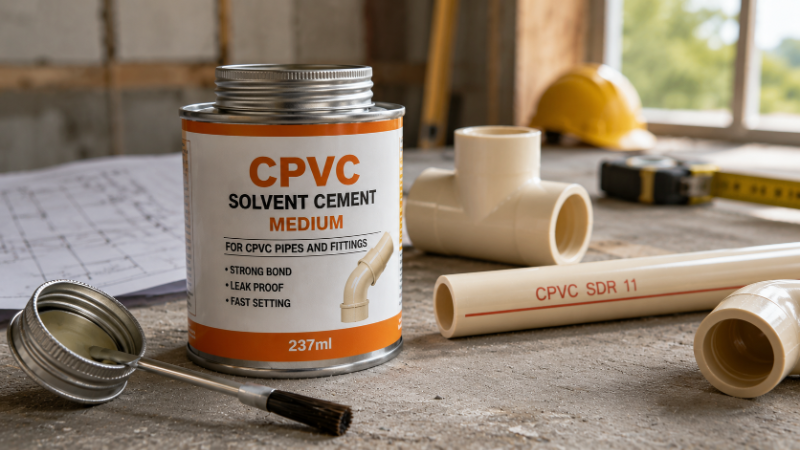
CPVC (Chlorinated Polyvinyl Chloride) solvent cement is an essential adhesive used in plumbing, HVAC, and industrial piping systems across India. The medium-grade formulation in a 237 ml container has become a standard choice for professionals working on residential, commercial, and industrial projects. This comprehensive guide explores everything you need to know about CPVC solvent cement medium 237 ml, including its applications, specifications, proper usage techniques, and where to source quality products in India.
Build cost · Bengaluru, May 2026
Understanding CPVC Solvent Cement: What You Need to Know
What is CPVC Solvent Cement?
CPVC solvent cement is a specialized adhesive designed to chemically bond CPVC pipes and fittings together. Unlike mechanical connections, solvent cement creates a permanent molecular bond between the pipe and fitting materials, resulting in leak-proof joints that withstand high temperatures and pressures. The medium viscosity formulation is specifically engineered for optimal penetration and bond strength in standard piping applications.
The 237 ml container size is particularly popular among Indian contractors because it provides an economical balance between cost and usability. A single container can typically complete approximately 40-50 standard joints, making it ideal for both small repair jobs and medium-sized installation projects.
Key Characteristics of Medium-Grade CPVC Cement
Medium-grade CPVC solvent cement offers several advantages over light and heavy formulations:
Optimal viscosity: Medium formulations flow smoothly into joint gaps without being too thin or too thick
Faster cure time: Typically sets in 2-4 hours at room temperature, allowing faster project progression
Better workability: Provides adequate working time while maintaining strong bonds
Versatility: Suitable for pipes ranging from 15mm to 100mm in diameter
Temperature resistance: Maintains integrity in hot water applications up to 82°C
Cost-effectiveness: Medium grade offers better value than premium formulations for general applications
Frequently asked
Applications of CPVC Solvent Cement in Indian Construction
Residential Plumbing Systems
In Indian homes, CPVC solvent cement is widely used for connecting hot and cold water supply lines. Cities like Bangalore, Mumbai, Delhi, and Hyderabad have seen increasing adoption of CPVC piping due to its superior corrosion resistance compared to galvanized iron pipes. The medium 237 ml size is perfect for residential projects because homeowners typically don't require large quantities, and the smaller container prevents waste.
Commercial Building Applications
Commercial establishments including offices, shopping malls, hospitals, and hotels in metropolitan areas rely on CPVC solvent cement for their plumbing infrastructure. The reliability of CPVC joints ensures minimal maintenance and downtime, which is critical for businesses. Medium-grade cement is particularly suitable for multi-story commercial buildings where consistent joint quality is essential.
Industrial and Process Piping
Industries in Pune, Ahmedabad, Surat, and Chennai utilize CPVC solvent cement for chemical transfer, cooling water systems, and industrial process piping. The chemical resistance of CPVC makes it ideal for handling various industrial fluids, and the medium viscosity cement ensures reliable bonding even in challenging industrial environments.
HVAC and Chilled Water Systems
With India's growing demand for air conditioning and refrigeration systems, CPVC piping has become standard in HVAC installations. The medium-grade solvent cement provides excellent bonds for chilled water lines operating at temperatures between 0°C and 50°C, making it essential for data centers, hospitals, and commercial complexes across India.
Technical Specifications and Standards
Compliance with Indian and International Standards
Quality CPVC solvent cement in India must comply with several important standards:
IS 9537: Indian Standard for CPVC pipes for water supply and sanitation
ASTM D2564: American Society for Testing and Materials standard for CPVC cement
NSF/ANSI 61: Certification for products contacting drinking water
ISO 1133: International standards for plastic pipe joining materials
When purchasing CPVC solvent cement medium 237 ml in India, always verify that products carry these certifications. Reputable manufacturers typically print certification numbers on packaging, providing assurance of quality and safety.
Chemical Composition and Properties
Medium-grade CPVC solvent cement typically contains:
CPVC resin (primary bonding agent): 15-25%
Tetrahydrofuran (THF): Primary solvent
Cyclohexanone: Secondary solvent
Acetone: Volatile component for viscosity control
Stabilizers and additives: For shelf life and performance
These components work synergistically to dissolve the CPVC pipe and fitting surfaces slightly, allowing them to fuse together chemically. The medium viscosity formulation ensures proper distribution of these chemicals for optimal bonding.
Proper Application Techniques for CPVC Solvent Cement
Pre-Application Preparation
Successful CPVC joint assembly begins with proper preparation:
Clean surfaces: Use a CPVC cleaner or fine-grit sandpaper to remove dirt, oxidation, and contamination from pipe and fitting surfaces
Dry components: Ensure pipes and fittings are completely dry before applying cement
Check fit: Test-fit the pipe into the fitting to ensure proper alignment and adequate gap
Measure depth: Mark the insertion depth on the pipe to ensure full seating
Prepare workspace: Work in well-ventilated areas with temperatures between 15°C and 30°C for optimal cement performance
Step-by-Step Application Process
Step 1: Apply Primer (if required) - Some Indian building codes recommend using CPVC primer on larger diameter pipes. Apply a thin, uniform coat to both the pipe exterior and fitting interior. Allow 30-60 seconds drying time.
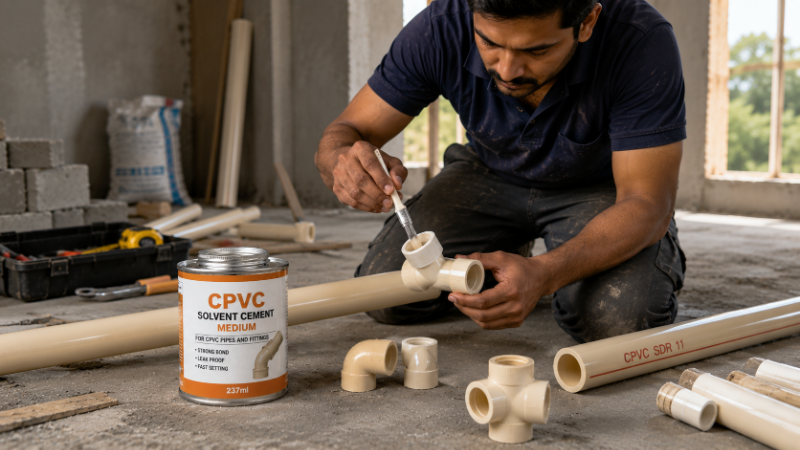
Step 2: Apply Solvent Cement - Using the applicator brush provided with the container, apply a generous but controlled amount of medium-grade CPVC cement to the exterior of the pipe. The layer should be thick enough to see a slight bead forming when the pipe enters the fitting.
Step 3: Insert Pipe into Fitting - Quickly but carefully insert the pipe into the fitting with a slight twisting motion. This distributes the cement evenly around the joint and helps eliminate air pockets.
Step 4: Hold Position - Maintain firm pressure for 10-15 seconds to ensure proper seating and cement distribution.
Step 5: Wipe Excess - Immediately wipe away excess cement with a clean cloth. This prevents cement from running into areas where it shouldn't be.
Step 6: Allow Cure Time - Do not disturb the joint for at least 2 hours. Full cure typically requires 24 hours before pressurizing the system.
Common Mistakes to Avoid
Many Indian contractors make preventable errors when using CPVC solvent cement:
Over-application: Excessive cement creates weak joints and messy work areas
Insufficient application: Too little cement results in incomplete bonding and potential leaks
Contaminated surfaces: Dust, water, or oil prevents proper cement adhesion
Rushed assembly: Inserting pipes too quickly or slowly affects bond quality
Premature pressurization: Testing systems before adequate cure time compromises joint integrity
Temperature extremes: Using cement in temperatures below 10°C or above 40°C reduces effectiveness
Safety Considerations and Handling Guidelines
Health and Safety Precautions
CPVC solvent cement contains volatile organic compounds (VOCs) that require careful handling:
Ventilation: Always work in well-ventilated areas or outdoors when possible
Personal protective equipment: Wear chemical-resistant gloves, safety glasses, and a respirator when working with cement for extended periods
Skin contact: If cement contacts skin, wash immediately with soap and water. Avoid rubbing eyes if contaminated
Inhalation: Prolonged inhalation of fumes can cause dizziness or headaches. Take regular breaks in fresh air
Storage: Keep containers tightly sealed in cool, dry locations away from heat sources and direct sunlight
Environmental Compliance in India
Indian environmental regulations increasingly scrutinize VOC emissions from construction materials. When selecting CPVC solvent cement, look for products labeled as low-VOC or eco-friendly formulations that comply with the National Building Code of India (NBC) and Ministry of Environment, Forest and Climate Change guidelines.
Cost Analysis and Market Pricing in India
Pricing for 237 ml CPVC Solvent Cement
As of 2024, CPVC solvent cement medium 237 ml typically costs between ₹150 to ₹350 in India, depending on brand, quality, and location:
Budget brands: ₹150-₹200 (often imported or regional brands)
Mid-range brands: ₹200-₹280 (established Indian and international manufacturers)
Premium brands: ₹280-₹350 (certified, high-performance formulations)
Prices vary significantly between cities. Metropolitan areas like Delhi, Mumbai, and Bangalore typically have more competitive pricing due to higher market volume, while smaller cities may see 10-15% premium pricing.
Cost-Benefit Analysis
While premium CPVC solvent cement costs more upfront, the investment often pays dividends:
Better bonding reduces joint failures and callbacks
Faster cure times accelerate project timelines
Superior chemical composition ensures longer service life
Reduced waste through better application control
Lower risk of system failures and water damage
Finding Quality CPVC Solvent Cement Products in India
Reputable Manufacturers and Brands
Several established manufacturers produce quality CPVC solvent cement in India:
Ashirvad (Asian Paints subsidiary) - widely available across India
Finolex - reliable Indian manufacturer with extensive distribution
Jain Irrigation - quality products for agricultural and industrial applications
Calicut Polymers - specialized CPVC cement manufacturer
International brands like Christy and Oatey - premium imported options
Where to Purchase
CPVC solvent cement medium 237 ml is available through multiple channels:
Hardware and plumbing supply stores in your city
Wholesale building material suppliers
Online platforms specializing in construction materials
Professional procurement platforms like AECORD, which connects you with verified suppliers across India
AECORD provides access to a curated network of construction material suppliers, allowing you to compare prices, verify certifications, and ensure you're purchasing authentic products from reliable vendors. Using AECORD helps construction professionals streamline their procurement process and build relationships with trusted suppliers.
Storage and Shelf Life Management
Proper Storage Conditions
To maximize the shelf life of CPVC solvent cement medium 237 ml:
Store in tightly sealed containers to prevent evaporation
Maintain temperatures between 5°C and 30°C
Keep away from direct sunlight and heat sources
Store in dry locations to prevent moisture absorption
Avoid storing near flammable materials or open flames
Keep out of reach of children and untrained personnel
Shelf Life and Viability Testing
Quality CPVC solvent cement typically maintains effectiveness for 12-18 months from the manufacturing date when stored properly. However, Indian climates with high humidity can reduce this period. Before using older stock, perform a simple viability test by applying cement to a scrap pipe and fitting to verify it still bonds effectively.
Troubleshooting Common CPVC Cement Issues
Joint Leaks After Assembly
Causes and solutions:
Insufficient cement application - reapply with correct amount
Contaminated surfaces - clean and reassemble with fresh cement
Inadequate cure time - wait full 24 hours before pressurizing
Improper insertion depth - ensure pipe seats fully in fitting
Cement Not Bonding Properly
Possible reasons:
Expired or degraded cement - replace with fresh product
Temperature too low - warm workspace to minimum 15°C
Contaminated pipes or fittings - use CPVC cleaner before assembly
Wrong cement type - verify you're using CPVC cement, not PVC cement
Excessive Fumes or Odor
If experiencing unusually strong fumes, discontinue use and check for:
Expired or degraded product
Inadequate ventilation - improve airflow immediately
Counterfeit or substandard product - verify authenticity
Conclusion and Next Steps
CPVC solvent cement medium 237 ml remains an indispensable product for construction professionals across India. Its optimal balance of performance, workability, and cost makes it ideal for residential, commercial, and industrial applications. By understanding proper application techniques, following safety guidelines, and sourcing quality products from reputable suppliers, you ensure reliable plumbing and HVAC systems that serve Indian buildings effectively.
Whether you're a contractor managing large-scale projects or a professional handling smaller installations, selecting the right CPVC solvent cement and applying it correctly directly impacts project success and system longevity. Take time to invest in quality products and proper training to maximize results.
Ready to find reliable CPVC solvent cement suppliers and other construction materials for your next project? Visit AECORD, India's leading B2B2C marketplace for AECO professionals. Connect with verified suppliers across India, compare products and pricing, and streamline your procurement process. AECORD makes it easier than ever to source quality materials and find the right professionals for your construction needs. Explore AECORD today and discover how we're transforming the way construction professionals source materials and services in India.