

Understanding Construction Costs in India: A Comprehensive 2026 Guide
Construction costs remain one of the most critical factors in project planning and budgeting across India. Whether you're planning a residential apartment, commercial office space, or industrial facility, understanding the cost per square foot (sq ft) is essential for accurate project estimation. In 2024, construction costs have evolved significantly across different regions and building types, influenced by material prices, labor availability, regulatory changes, and market demand.
This comprehensive guide breaks down construction costs by building type and region, providing you with the data and tools needed to estimate your project accurately.
Build cost · Bengaluru, May 2026
2026Construction Cost Per Square Foot by Building Type
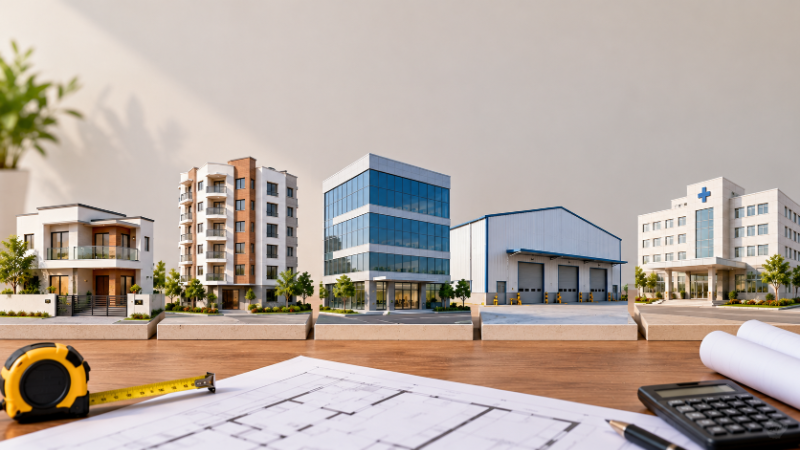
Residential Construction
Budget Residential (G+3 to G+5 structures):
Average cost: ₹800 - ₹1,200 per sq ft
Common in tier-2 and tier-3 cities
Includes basic finishes and standard materials
Typical construction period: 18-24 months
Mid-Range Residential (Apartments and villas):
Average cost: ₹1,500 - ₹2,500 per sq ft
Prevalent in metropolitan areas like Mumbai, Delhi, Bangalore
Includes good quality finishes and amenities
Better structural design and safety standards
Premium Residential (High-end apartments and luxury villas):
Average cost: ₹3,000 - ₹6,000+ per sq ft
Located in prime locations within major metros
Features advanced amenities and high-quality materials
Includes smart home technologies and sustainable features
Commercial Construction
Office Spaces:
Grade A office buildings: ₹2,000 - ₹4,000 per sq ft
Grade B office buildings: ₹1,200 - ₹2,000 per sq ft
Includes HVAC systems, fire safety, and IT infrastructure
Higher compliance requirements increase costs
Retail Spaces:
Average cost: ₹1,500 - ₹3,500 per sq ft
Varies significantly based on location and foot traffic
Ground floor retail commands premium pricing
Includes specialized lighting and display systems
Hospitality (Hotels and resorts):
Budget hotels: ₹2,000 - ₹3,500 per sq ft
Mid-range hotels: ₹3,500 - ₹6,000 per sq ft
Luxury hotels: ₹6,000 - ₹12,000+ per sq ft
Higher costs due to guest room specifications and F&B facilities
Frequently asked
Industrial and Warehousing
Industrial Manufacturing Facilities:
Average cost: ₹800 - ₹1,500 per sq ft
Depends on machinery requirements and utility infrastructure
Heavy-duty flooring and structural requirements
Typically located in industrial zones outside city centers
Warehousing and Logistics:
Average cost: ₹600 - ₹1,200 per sq ft
Lower finishes compared to other building types
Focus on structural strength and storage capacity
Growing demand in e-commerce hubs like Pune, Bangalore, NCR
Regional Variations in Construction Costs
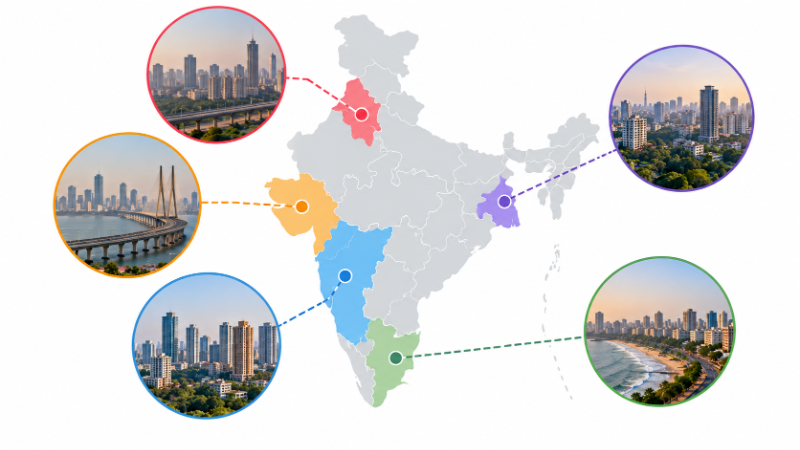
Metropolitan Regions
Mumbai: Construction costs remain among the highest in India, ranging from ₹2,000 - ₹5,000+ per sq ft for residential projects and ₹2,500 - ₹4,500 per sq ft for commercial spaces. The high land values and stringent building regulations contribute to elevated costs. Premium locations like South Mumbai and Bandra command even higher premiums.
Delhi-NCR: Average construction costs range from ₹1,500 - ₹3,500 per sq ft for residential and ₹1,800 - ₹3,800 per sq ft for commercial. The region has seen steady growth with emerging areas like Gurugram and Noida offering relatively lower costs compared to central Delhi.
Bangalore: Technology hub status has driven costs to ₹1,800 - ₹4,000 per sq ft for residential and ₹2,000 - ₹4,200 per sq ft for commercial. Areas like Whitefield and Koramangala command premium prices due to high demand.
Hyderabad: More affordable than major metros, with costs ranging from ₹1,200 - ₹3,000 per sq ft for residential and ₹1,400 - ₹3,200 per sq ft for commercial, making it attractive for developers.
Tier-2 Cities
Pune: Costs range from ₹1,200 - ₹2,800 per sq ft, offering good value compared to Mumbai while maintaining strong infrastructure and amenities.
Ahmedabad: Budget-friendly at ₹1,000 - ₹2,200 per sq ft, attracting significant commercial and residential development.
Jaipur: Among the most affordable major cities at ₹900 - ₹2,000 per sq ft, with growing infrastructure development.
Chandigarh: Planned city infrastructure supports costs of ₹1,100 - ₹2,500 per sq ft with good quality standards.
Tier-3 Cities and Emerging Markets
Cities like Lucknow, Indore, Nagpur, and Kochi offer construction costs between ₹700 - ₹1,500 per sq ft, making them attractive for budget-conscious developers. These regions are witnessing rapid infrastructure development and increasing investor interest.
Key Factors Influencing Construction Costs in 2024
Material Costs
Cement: Prices have stabilized around ₹6,500 - ₹7,500 per bag (50 kg) in 2024, though regional variations exist. Bulk purchases often attract discounts of 5-10%.
Steel: Rebar and structural steel prices fluctuate between ₹55,000 - ₹65,000 per metric ton. Steel typically accounts for 15-20% of total construction costs.
Concrete: Ready-mix concrete costs range from ₹4,500 - ₹6,500 per cubic meter, depending on grade and location.
Bricks: Common red bricks cost ₹6,000 - ₹8,000 per 1,000 units, while fly-ash bricks are slightly more expensive at ₹7,000 - ₹9,000 per 1,000 units.
Finishing Materials: Tiles, paints, fixtures, and fittings can vary significantly, typically accounting for 20-25% of total costs depending on quality specifications.
Labor Costs
Skilled labor costs have increased by 8-12% year-over-year in 2024. Skilled workers earn ₹600 - ₹1,200 per day, while semi-skilled workers earn ₹400 - ₹700 per day. Labor typically constitutes 25-30% of total construction costs in metropolitan areas and 20-25% in smaller cities.
Land and Regulatory Factors
Land acquisition costs vary dramatically by location. Regulatory compliance, including environmental clearances, building permits, and safety certifications, can add 3-7% to project costs. Recent updates to building codes and energy efficiency standards have also influenced pricing.
Transportation and Logistics
Material transportation costs have risen due to fuel prices and logistics challenges. Remote project locations can add 5-15% to overall costs due to increased transportation expenses.
Construction Cost Estimation Tips for 2026
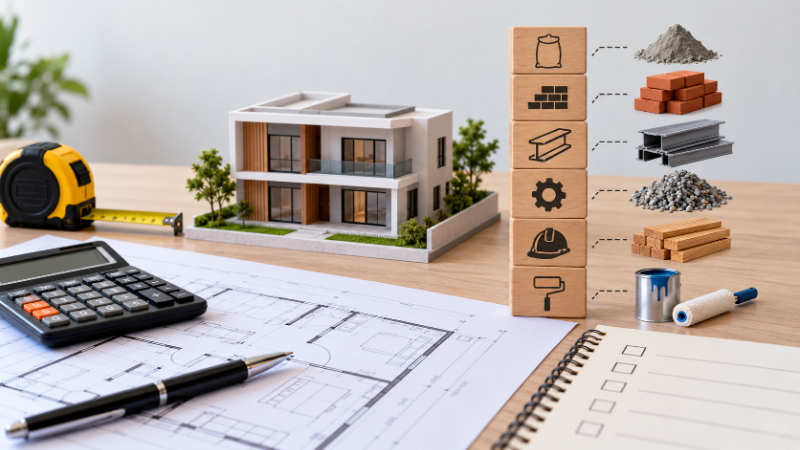
Detailed Breakdown Methodology
Create a comprehensive cost breakdown that includes:
Site preparation and excavation: 5-8% of total cost
Foundation and structural work: 25-30% of total cost
Superstructure (walls, columns, beams): 20-25% of total cost
Flooring and finishing: 15-20% of total cost
MEP (Mechanical, Electrical, Plumbing): 12-18% of total cost
External works and landscaping: 5-8% of total cost
Contingency Planning
Always include a contingency buffer of 10-15% for unforeseen circumstances. This accounts for price escalations, design changes, and unexpected site conditions. In 2024, with volatile material markets, maintaining adequate contingency is crucial.
Regional Price Adjustments
Use location multipliers when estimating costs for different regions. For example, if your base cost is ₹2,000 per sq ft for a standard residential project in a tier-2 city, apply a multiplier of 1.5-2.0 for metropolitan areas and 0.7-0.9 for tier-3 cities.
Seasonal Variations
Material prices fluctuate seasonally. Cement and steel prices tend to be lower during monsoon seasons (June-September) due to reduced demand. Planning procurement during these periods can yield 5-10% savings.
Vendor and Supplier Selection
Develop relationships with multiple suppliers to compare prices. Bulk purchasing agreements can reduce material costs by 8-15%. Ensure quality certifications and compliance with Indian Standards (IS) codes.
Technology and Sustainability Impact on Costs
Green building certifications like LEED and IGBC add 5-12% to construction costs but provide long-term operational savings. Energy-efficient systems, solar installations, and water harvesting infrastructure are increasingly becoming standard requirements in major cities.
Building Information Modeling (BIM) adoption helps reduce waste and rework, potentially saving 3-5% on material costs. While BIM implementation requires initial investment, it improves project coordination and cost management.
Comparing Quotes and Selecting Contractors
When evaluating contractor quotes, ensure they include:
Detailed scope of work with specifications
Material quality standards and certifications
Timeline and milestone-based payments
Warranty and defect liability period
Insurance and safety compliance measures
Don't always opt for the lowest quote. Consider contractor experience, past project quality, and financial stability. A slightly higher quote from a reputable contractor often delivers better value and fewer cost overruns.
Finding the Right Professionals on AECORD
Accurate cost estimation requires collaboration with experienced architects, structural engineers, and cost consultants. AECORD connects you with vetted AECO professionals across India who can provide accurate cost estimates and value engineering solutions for your specific project requirements.
Whether you need a cost consultant in Mumbai, a structural engineer in Bangalore, or a project manager in Delhi-NCR, AECORD's marketplace makes it easy to find and compare professionals with relevant experience in your building type and region. Many professionals on the platform provide free initial consultations to discuss your project scope and budget.
Conclusion
Construction costs in 2024 vary significantly based on building type, location, and project specifications. While metropolitan areas command premium prices, emerging tier-2 and tier-3 cities offer excellent value propositions. By understanding regional cost variations, material price trends, and labor costs, you can develop realistic budgets and timelines for your projects.
Key takeaways include maintaining a 10-15% contingency buffer, selecting contractors based on quality and experience rather than lowest price alone, and leveraging technology for better cost management. As you plan your construction project, connect with experienced professionals on AECORD to get accurate estimates, value engineering recommendations, and expert guidance tailored to your specific needs and location.
Ready to start your construction project? Explore AECORD today to find qualified architects, engineers, contractors, and cost consultants in your city. Get personalized estimates and expert guidance from India's most trusted AECO marketplace.
Frequently Asked Questions
What is the average construction cost per square foot in India in 2024?
Construction costs in India vary significantly by building type and location. Budget residential ranges from ₹800-₹1,200/sq ft, mid-range residential from ₹1,500-₹2,500/sq ft, while premium residential can exceed ₹6,000/sq ft. Commercial and industrial projects have different pricing structures based on their specific requirements.
How much does it cost to build a residential apartment in Mumbai vs Delhi?
Mumbai has higher construction costs, ranging from ₹2,000-₹5,000+/sq ft for residential projects due to high land values and stringent building regulations. Delhi-NCR offers more affordable options at ₹1,500-₹3,500/sq ft for residential construction, making it a more budget-friendly alternative for similar quality projects.
What factors influence construction costs in India?
Construction costs are influenced by material prices, labor availability, regulatory compliance requirements, market demand, location and land values, building type specifications, and regional variations. Additional factors include structural design complexity, amenities, safety standards, and sustainability features incorporated into the project.
How much does commercial office space construction cost?
Grade A office buildings cost ₹2,000-₹4,000/sq ft while Grade B buildings range from ₹1,200-₹2,000/sq ft. Costs include HVAC systems, fire safety, and IT infrastructure, with higher compliance requirements significantly impacting the final price depending on location and building standards.
What is the cheapest construction type in India?
Warehousing and logistics facilities are the most cost-effective at ₹600-₹1,200/sq ft, followed by industrial manufacturing facilities at ₹800-₹1,500/sq ft. These lower costs reflect minimal finishes, focus on structural strength, and typical locations in industrial zones outside city centers.