

Understanding Compound Wall Costs in India: A Comprehensive Guide
Compound walls are a fundamental aspect of property development in India, serving both aesthetic and security purposes. Whether you're building a residential complex in Bangalore, a commercial property in Delhi, or an industrial facility in Mumbai, understanding the cost dynamics of compound wall construction is essential for accurate budgeting. This guide breaks down the factors affecting compound wall costs, material options, and regional variations across India.
Build cost · Bengaluru, May 2026
Factors Affecting Compound Wall Costs
Height of the Wall
The height of your compound wall is one of the most significant cost determinants. Taller walls require more materials, additional structural reinforcement, and more labor. In India, compound wall heights typically range from 4 feet to 12 feet, depending on the property type and security requirements.
4-6 feet walls: Common for residential properties in metro cities like Pune and Hyderabad. These are economical and suitable for standard residential plots.
6-8 feet walls: The most popular choice across India, offering a balance between security and cost-effectiveness. Widely used in gated communities and residential complexes.
8-10 feet walls: Preferred for commercial properties, industrial facilities, and high-security residential areas. Costs increase significantly at this height.
10-12 feet walls: Reserved for premium properties, industrial compounds, and areas requiring enhanced security. These command premium pricing.
As a general rule, each additional foot of height increases the cost by approximately 12-15% due to additional materials, labor complexity, and structural requirements.
Length of the Wall
The total perimeter of your property directly impacts the total cost. A property requiring 500 linear meters of compound wall will obviously cost more than one needing 200 linear meters. However, longer walls sometimes benefit from economies of scale, with per-meter costs potentially decreasing slightly for larger projects.
Frequently asked
Material Selection
The choice of material is perhaps the most critical factor in determining compound wall costs. Different materials offer varying levels of durability, aesthetics, maintenance requirements, and price points. Let's explore the most common options available in the Indian market.
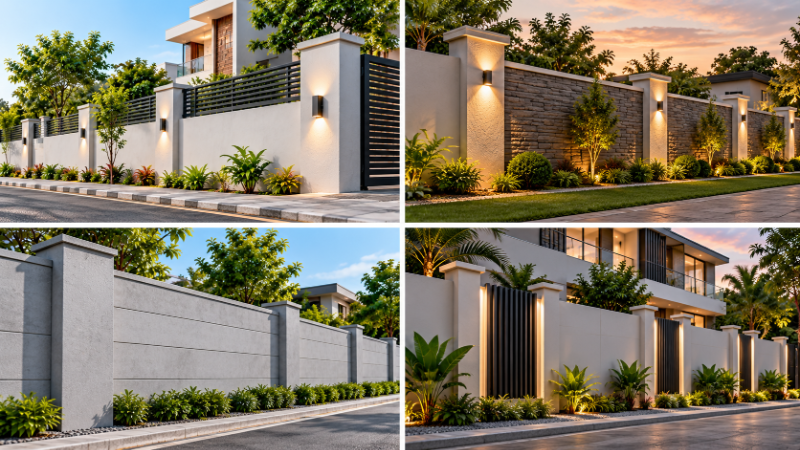
Compound Wall Material Options and Costs
Brick Compound Walls
Brick walls remain the most popular choice for residential properties across India. They offer a good balance of cost, durability, and aesthetic appeal.
Cost Breakdown (as of 2024):
6-foot brick wall: ₹800-1,200 per linear meter
8-foot brick wall: ₹1,000-1,500 per linear meter
10-foot brick wall: ₹1,200-1,800 per linear meter
For a typical 200-meter perimeter property with an 8-foot brick wall, you can expect costs ranging from ₹2,00,000 to ₹3,00,000. These costs include materials, labor, and basic finishing.
Advantages: Affordable, locally available, good insulation properties, and familiar to local contractors across cities like Chennai, Kolkata, and Jaipur.
Disadvantages: Requires regular maintenance, susceptible to weathering, needs periodic plastering and painting, and has a shorter lifespan compared to concrete alternatives.
Precast Concrete Compound Walls
Precast concrete walls have gained significant popularity in recent years, particularly in metropolitan areas like Bangalore, Pune, and Ahmedabad. These walls are manufactured off-site and assembled on location, offering superior quality control and faster construction.
Cost Breakdown (as of 2024):
6-foot precast wall: ₹1,200-1,800 per linear meter
8-foot precast wall: ₹1,500-2,300 per linear meter
10-foot precast wall: ₹1,800-2,800 per linear meter
For the same 200-meter perimeter property with an 8-foot precast wall, costs would range from ₹3,00,000 to ₹4,60,000. This represents a 50-75% increase over brick walls but offers substantial long-term benefits.
Advantages: Faster installation, superior durability, minimal maintenance, weather-resistant, consistent quality, and available in various designs. Ideal for large commercial projects and gated communities.
Disadvantages: Higher initial investment, requires specialized equipment for installation, limited design flexibility compared to brick, and transportation costs can be significant in remote areas.
Stone Compound Walls
Natural stone walls, particularly using locally sourced materials, are popular in regions like Rajasthan, Karnataka, and parts of Maharashtra. They offer premium aesthetics and excellent durability.
Cost Breakdown (as of 2024):
6-foot stone wall: ₹1,500-2,500 per linear meter
8-foot stone wall: ₹2,000-3,200 per linear meter
10-foot stone wall: ₹2,500-4,000 per linear meter
Stone walls for the same 200-meter property with 8-foot height would cost ₹4,00,000 to ₹6,40,000. The significant cost premium reflects the material's premium nature and labor-intensive installation process.
Advantages: Exceptional durability (50+ years), premium appearance, low maintenance, environmentally friendly, and increases property value. Particularly suitable for heritage properties and luxury residential complexes.
Disadvantages: Highest initial cost, requires skilled masons, slower construction timeline, and availability varies by region. Stone sourcing can be challenging in areas far from quarries.
Reinforced Concrete Block Walls
Concrete block walls offer a middle ground between brick and precast options, combining affordability with reasonable durability.
Cost Breakdown (as of 2024):
6-foot concrete block wall: ₹900-1,400 per linear meter
8-foot concrete block wall: ₹1,100-1,700 per linear meter
10-foot concrete block wall: ₹1,400-2,100 per linear meter
Advantages: More durable than brick, faster construction than traditional brick masonry, and moderate cost. Growing popularity in tier-2 cities across India.
Disadvantages: Requires plastering and painting, moderate maintenance needs, and less aesthetic appeal without finishing.
Regional Cost Variations Across India
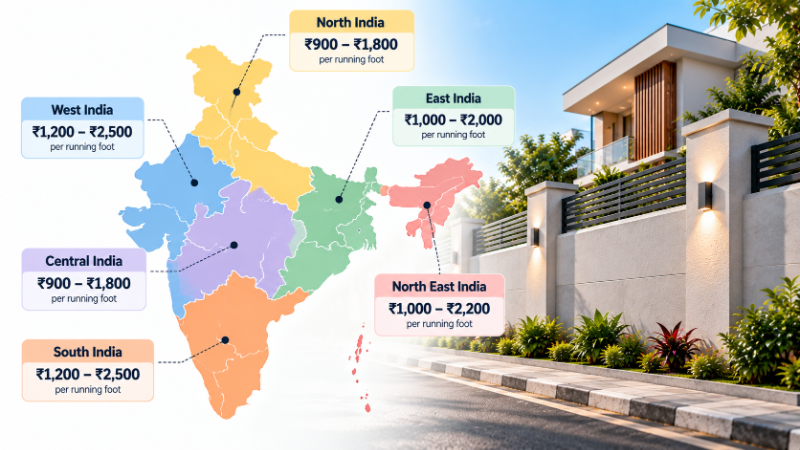
Compound wall costs vary significantly across different Indian cities and regions due to variations in material availability, labor costs, and local preferences.
Metro Cities
Delhi NCR: 8-foot brick walls cost ₹1,100-1,400 per meter; precast walls cost ₹1,800-2,400 per meter. Higher labor costs and material transportation expenses contribute to premium pricing.
Mumbai: Among the most expensive markets, with 8-foot brick walls at ₹1,200-1,500 per meter and precast at ₹2,000-2,600 per meter. Limited space and high real estate values drive up construction costs.
Bangalore: Moderate pricing with 8-foot brick walls at ₹950-1,250 per meter and precast at ₹1,600-2,100 per meter. Good availability of materials and competitive contractor market keeps costs reasonable.
Tier-2 Cities
Pune, Hyderabad, Chennai: These cities offer better value with 8-foot brick walls at ₹800-1,100 per meter and precast at ₹1,400-1,900 per meter. Lower labor costs and good material availability make these attractive options.
Jaipur, Lucknow, Kochi: Among the most affordable options, with 8-foot brick walls at ₹700-950 per meter and precast at ₹1,200-1,600 per meter. Lower operational costs benefit property developers significantly.
Additional Costs to Consider
Foundation and Base Preparation
A proper foundation is essential for wall longevity. Budget an additional ₹100-300 per linear meter for foundation work, including excavation, concrete base, and soil compaction. This cost varies based on soil conditions and site accessibility.
Gates and Entrance Points
Compound walls typically require gates for vehicle and pedestrian access. Budget separately for:
Main vehicle gate: ₹25,000-75,000
Pedestrian gates: ₹8,000-20,000 each
Gate pillars and reinforcement: ₹15,000-40,000
Finishing and Aesthetics
Finishing touches add to the overall cost but enhance durability and appearance:
Plastering: ₹50-100 per square meter
Painting: ₹30-80 per square meter
Coping stones: ₹150-400 per linear meter
Barbed wire or fencing: ₹50-200 per linear meter
Labor Costs
Labor typically accounts for 40-50% of total compound wall costs. Skilled masons in metro cities command ₹800-1,200 per day, while unskilled laborers cost ₹400-700 per day. Regional variations are significant, with tier-2 cities offering 20-30% lower labor costs.
Cost Estimation Examples
Residential Property - Bangalore
Specifications: 250-meter perimeter, 8-foot height, brick construction
Wall construction (250m × ₹1,100): ₹2,75,000
Foundation (250m × ₹150): ₹37,500
Main gate and pillars: ₹50,000
Plastering and painting: ₹35,000
Miscellaneous: ₹25,000
Total Estimated Cost: ₹4,22,500
Commercial Property - Mumbai
Specifications: 400-meter perimeter, 10-foot height, precast concrete
Wall construction (400m × ₹2,400): ₹9,60,000
Foundation (400m × ₹200): ₹80,000
Multiple gates and access points: ₹1,50,000
Finishing and coping: ₹80,000
Miscellaneous: ₹50,000
Total Estimated Cost: ₹12,20,000
Tips for Cost Optimization
Material Selection Strategy
Choose materials based on long-term value rather than initial cost alone. While brick walls are cheaper initially, precast walls often provide better ROI over 10-15 years due to minimal maintenance requirements.
Contractor Selection
Obtain quotes from multiple contractors in your region. Experienced contractors often complete projects faster, reducing overall labor costs. Verify credentials and past project references before finalizing agreements.
Seasonal Timing
Construction costs can vary seasonally. In monsoon season (June-September), labor costs may increase due to weather challenges. Off-season construction often results in 10-15% cost savings.
Bulk Material Purchases
For large properties, negotiate bulk discounts directly with material suppliers. This can result in 5-10% savings on material costs, particularly for brick and concrete blocks.
Regulatory and Compliance Considerations
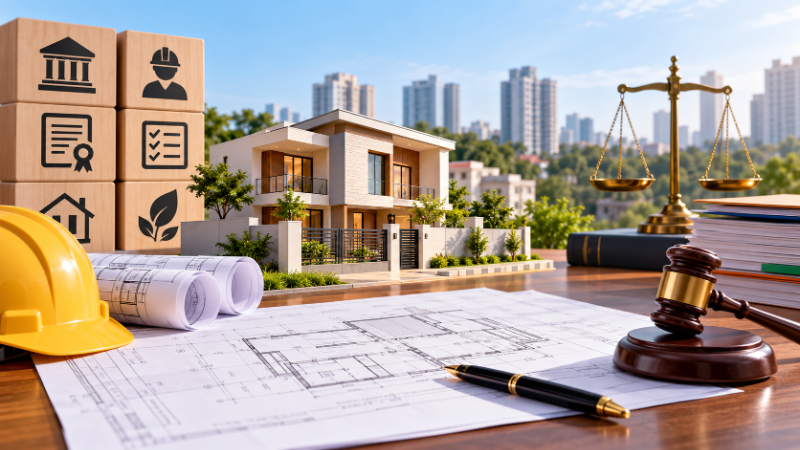
Before constructing a compound wall, verify local municipal regulations. Most Indian cities have specific guidelines regarding:
Maximum permissible height (typically 6-8 feet in residential areas)
Setback requirements from property boundaries
Environmental clearances for large-scale projects
Building permission requirements
Non-compliance can result in penalties and forced demolition, making regulatory adherence essential for cost-effective construction.
Maintenance and Long-Term Costs
Consider ongoing maintenance when evaluating total cost of ownership:
Brick walls: ₹50-100 per linear meter annually for plastering and painting
Precast walls: ₹10-20 per linear meter annually for minor repairs
Stone walls: ₹5-15 per linear meter annually for cleaning and sealing
Over a 20-year period, these maintenance costs can significantly impact the total cost of ownership.
Finding the Right Professionals
Constructing a compound wall requires coordination between architects, engineers, contractors, and material suppliers. When planning your compound wall project, consider leveraging platforms like AECORD, which connects you with verified professionals across the architecture, engineering, and construction sectors in India. AECORD makes it easy to find experienced contractors, structural engineers, and material suppliers who understand regional market dynamics and local regulations.
Whether you're in Bangalore, Delhi, Mumbai, or any other Indian city, AECORD provides access to professionals who can provide accurate cost estimates, quality execution, and timely project completion. The platform's verified professional network ensures you work with qualified experts who understand compound wall construction specifications and local compliance requirements.
Conclusion
Compound wall costs in India vary significantly based on material choice, height, length, and regional factors. Brick walls offer the most economical option at ₹800-1,500 per linear meter for 8-foot heights, while precast concrete provides superior durability at ₹1,500-2,300 per meter, and stone walls command premium pricing at ₹2,000-3,200 per meter. For a typical 250-meter residential property with 8-foot height, expect total costs ranging from ₹3,00,000 to ₹8,00,000 depending on material selection and location.
Careful planning, material selection based on long-term value, and working with experienced professionals ensures your compound wall investment delivers both security and aesthetic benefits while remaining within budget. Start your project planning today by connecting with verified AECO professionals on AECORD who can provide site-specific cost estimates and expert guidance for your compound wall construction.
Frequently Asked Questions
What is the cost of a compound wall per linear meter in India?
Compound wall costs in India vary based on material and height. Brick walls typically range from ₹800-1,200 per linear meter for 6-foot walls to ₹1,200-1,800 per linear meter for 10-foot walls as of 2024. Precast concrete and other materials may have different pricing depending on your location and specific requirements.
How much does wall height affect compound wall costs?
Wall height is a major cost factor, with each additional foot of height increasing costs by approximately 12-15%. This is due to additional materials, labor complexity, and structural reinforcement needed for taller walls. Heights typically range from 4-12 feet depending on property type and security needs.
What is the best material for compound walls in terms of cost and durability?
Brick walls are the most economical and popular choice for residential properties, offering good durability and aesthetic appeal at ₹800-1,800 per linear meter depending on height. Precast concrete walls cost more but require less maintenance and have longer lifespans, making them ideal for commercial properties and high-security areas.
How much will a 200-meter compound wall cost for my residential property?
For a typical 200-meter perimeter property with an 8-foot brick wall, you can expect total costs ranging from ₹2,00,000 to ₹3,00,000, including materials, labor, and basic finishing. The final cost depends on your chosen material, wall height, and local labor rates in your region.
Do longer compound walls cost less per meter due to economies of scale?
Yes, longer compound wall projects sometimes benefit from economies of scale, with per-meter costs potentially decreasing slightly for larger projects. However, the total project cost still increases proportionally with the total length of the wall required.