

Choosing the right flooring solution for your home or commercial space is one of the most important design and functional decisions you'll make. In India, where climate varies dramatically from region to region and spaces serve multiple purposes, understanding the nuances of carpet, flooring, and rug options is essential. Whether you're renovating a Mumbai apartment, designing a Bangalore office, or building a home in Delhi, this comprehensive guide will help you make informed decisions.
Understanding Your Climate and Space Requirements
India's diverse climate presents unique challenges for flooring selection. The humid coastal regions of Mumbai and Kolkata require moisture-resistant solutions, while the dry heat of Rajasthan demands different considerations. Before selecting any flooring material, assess your specific needs:
Humidity levels in your region
Foot traffic intensity in different areas
Maintenance capacity and budget
Aesthetic preferences and design style
Durability requirements for your lifestyle
For professional guidance on selecting appropriate flooring for your specific space, consider consulting with specialists available on AECORD, where you can connect with experienced architects and interior designers familiar with Indian building conditions.
Build cost · Bengaluru, May 2026
Ceramic and Vitrified Tiles: The Indian Standard
Why Tiles Dominate Indian Homes
Ceramic and vitrified tiles remain the most popular flooring choice across India, and for good reason. They're affordable, durable, and ideal for the Indian climate. Vitrified tiles, in particular, offer superior water resistance compared to ceramic tiles, making them suitable for kitchens, bathrooms, and even outdoor spaces.
Types and Price Points
The Indian tile market offers several options at varying price points:
Standard ceramic tiles: ₹15-40 per square foot (basic utility)
Vitrified tiles: ₹25-60 per square foot (superior quality)
Glazed vitrified tiles: ₹40-100+ per square foot (premium finishes)
Porcelain tiles: ₹60-150+ per square foot (luxury option)
Major Indian manufacturers like Kajaria, Somany, and Asian Granito dominate the market with reliable products. When selecting tiles, consider slip resistance (important for bathrooms and kitchens), thickness (8-10mm is standard), and whether you need anti-bacterial properties for healthcare or hospitality spaces.
Frequently asked
Installation and Maintenance
Proper installation is crucial. Tiles should be laid with appropriate cement mortar (typically 1:3 ratio) and sealed grout to prevent moisture seepage—particularly important in Indian climates where monsoon rains can cause damage. Regular sweeping and occasional mopping with mild detergent keep tiles looking new for decades.

Natural Stone Flooring: Marble, Granite, and Limestone
The Appeal of Natural Stone
Natural stone flooring adds elegance and permanence to Indian spaces. Marble has been a preferred choice for centuries in India, from ancient palaces to modern homes. Granite offers superior durability, while limestone provides a rustic, warm aesthetic.
Regional Availability and Costs
India produces excellent natural stone, which helps keep costs reasonable:
Marble: ₹40-200+ per square foot (depends on origin and quality)
Granite: ₹30-150 per square foot (highly durable)
Limestone: ₹25-80 per square foot (softer, requires sealing)
Rajasthan is famous for marble, Karnataka for granite, and Tamil Nadu for limestone. Local sourcing can reduce costs significantly compared to imported alternatives.
Challenges and Maintenance
Natural stone requires regular sealing (every 1-2 years for marble and limestone) to prevent staining and water absorption. Marble, while beautiful, is soft and prone to scratching—unsuitable for high-traffic commercial areas. Granite is more practical for kitchens and living areas, while marble works well for bedrooms and formal spaces.
Wooden Flooring: Elegance with Considerations
Wood Types Suitable for India
Hardwood flooring adds warmth to spaces, but traditional solid wood struggles in India's humid climate. Instead, consider:
Engineered wood: More stable than solid wood, better for Indian humidity
Laminate flooring: Budget-friendly alternative (₹20-60 per square foot)
Luxury vinyl plank (LVP): Waterproof and increasingly popular (₹30-80 per square foot)
Teak and sheesham are traditional Indian hardwoods that perform better in humid conditions, but solid wood flooring typically costs ₹100-300+ per square foot installed.
Climate Considerations
In coastal cities like Mumbai and Kochi, solid wood warps easily due to moisture fluctuations. Engineered wood or laminate is more practical. In drier regions like Delhi and Jaipur, solid hardwood performs adequately if properly sealed and maintained.
Carpeting: Comfort and Design Flexibility
When Carpet Makes Sense
While less common than tiles in Indian homes, carpet offers significant benefits in bedrooms, living rooms, and offices. It provides insulation, sound absorption, and design flexibility that hard flooring cannot match.
Carpet Types and Pricing
Synthetic carpets: ₹15-50 per square foot (durable, stain-resistant)
Wool blends: ₹40-100+ per square foot (luxury, natural feel)
Polypropylene: ₹10-30 per square foot (budget option, less durable)
Synthetic and polypropylene carpets are more practical for Indian climates as they resist moisture better than natural fibers. Wool, while luxurious, requires careful maintenance in humid regions.
Maintenance in Indian Conditions
Carpets in India require regular professional cleaning (quarterly recommended) due to dust and humidity. Stain-resistant treatments are highly recommended. Ensure proper underlayment to prevent moisture absorption from below, which can lead to mold and mildew—a common problem during monsoon seasons.
Rugs: Layering and Design Strategy
The Indian Rug Tradition
Rugs hold a special place in Indian interior design. From traditional Persian and Turkish designs to contemporary Indian creations, rugs add cultural richness and define spaces within open floor plans.
Types of Rugs Available in India
Hand-knotted rugs: ₹500-5000+ per square foot (investment pieces, last generations)
Machine-made rugs: ₹50-500 per square foot (practical, affordable)
Dhurries: ₹30-200 per square foot (traditional Indian cotton/wool, lightweight)
Contemporary designer rugs: ₹100-2000+ per square foot (trendy options)
Cities like Jaipur, Agra, and Varanasi are renowned for hand-knotted rugs. Machine-made alternatives from brands like Obeetee and Carpet Overseas provide quality at accessible prices.
Placement and Design Considerations
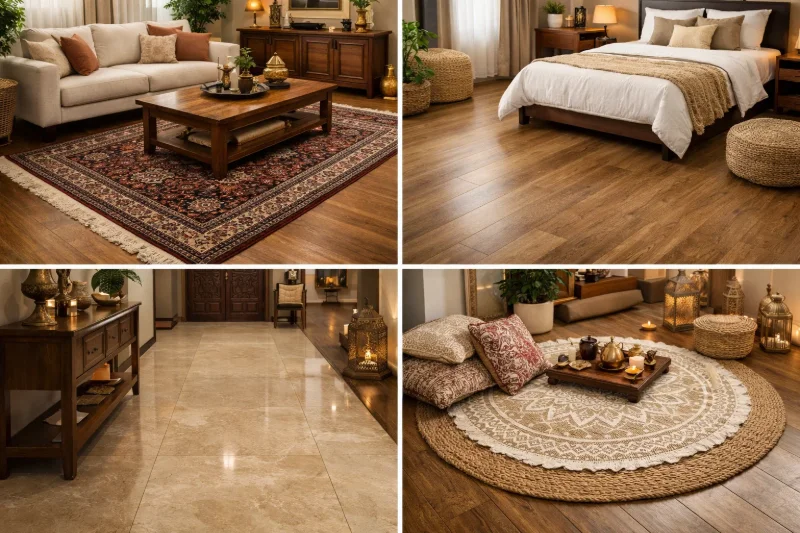
Rugs define spaces and add warmth. In living rooms, place rugs under seating areas with at least 18 inches extending beyond furniture. In bedrooms, place rugs on either side of the bed. Layer rugs thoughtfully—a smaller patterned rug over a larger neutral one creates visual interest.
Specialized Flooring Solutions for Commercial Spaces
Office and Retail Environments
Commercial spaces have different requirements. Polished concrete, epoxy flooring, and commercial-grade tiles are popular choices. Epoxy flooring (₹50-150 per square foot) offers durability, easy maintenance, and design flexibility for offices, showrooms, and retail spaces.
Healthcare and Hospitality
Hospitals and hotels require antimicrobial flooring. Specialized vinyl and ceramic tiles with antimicrobial properties are increasingly used. These cost 20-30% more than standard options but justify the investment through reduced maintenance and better hygiene standards.
Flooring Installation: What to Know
Preparation and Substrate
Proper substrate preparation is critical. Concrete should be sealed, leveled, and free from moisture. In India's monsoon regions, waterproofing is essential—a membrane layer under flooring prevents water damage. This adds ₹5-15 per square foot but is invaluable insurance.
Labor Costs in India
Installation costs vary by region and material:
Tile installation: ₹15-40 per square foot
Stone installation: ₹25-60 per square foot
Carpet installation: ₹10-30 per square foot
Wood/laminate installation: ₹20-50 per square foot
These costs are higher in metropolitan areas like Mumbai, Bangalore, and Delhi, and lower in tier-2 cities. Always hire experienced installers—poor installation leads to premature failure and costly repairs.
Budget Planning and Material Selection Strategy
Creating a Comprehensive Flooring Budget
For a typical 2000 square foot Indian home:
Budget option: Ceramic tiles throughout (₹40,000-60,000 total)
Mid-range option: Vitrified tiles with carpet in bedrooms (₹80,000-120,000)
Premium option: Mix of marble, engineered wood, and designer rugs (₹200,000-400,000+)
Remember to budget 10-15% extra for wastage and future repairs.
Mixing Materials Strategically
The most effective approach combines materials based on function:
Kitchens and bathrooms: Vitrified tiles or porcelain
Living and dining areas: Marble or premium tiles with rugs
Bedrooms: Wood, laminate, or carpet with area rugs
Outdoor spaces: Granite or outdoor-rated tiles
Maintenance and Longevity
Climate-Specific Care
Indian climates demand specific maintenance approaches. In monsoon regions, ensure proper drainage around buildings and use dehumidifiers in humid months. In dry regions, occasional damp mopping prevents dust accumulation.
Seasonal Considerations
During monsoon season (June-September in most of India), increase cleaning frequency and ensure proper ventilation. In winter, dry regions may need humidification to prevent wood and stone from drying excessively.
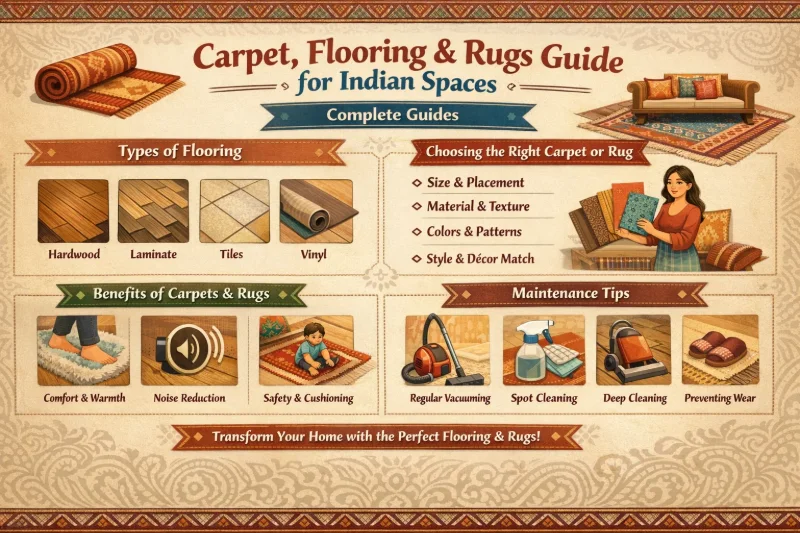
Sustainability and Eco-Friendly Options
Increasingly, Indian homeowners and businesses seek sustainable flooring. Options include:
Recycled content tiles: Environmentally responsible without compromising durability
Bamboo flooring: Renewable and harder than many hardwoods
Cork flooring: Sustainable, comfortable, and naturally antimicrobial
Reclaimed wood: Adds character while reducing waste
These options typically cost 20-40% more than conventional materials but offer long-term value and environmental benefits.
Making Your Final Decision
Selecting flooring requires balancing aesthetics, functionality, budget, and maintenance capacity. Start by assessing your climate, traffic patterns, and lifestyle. Visit showrooms to see samples in natural light. Request quotes from multiple installers and always check references.
For personalized recommendations tailored to your specific space and requirements, AECORD connects you with qualified architects, interior designers, and flooring specialists across India who understand local conditions and can provide expert guidance.
Conclusion
Your flooring choice significantly impacts your space's functionality, maintenance requirements, and long-term costs. Whether you opt for practical tiles, elegant stone, warm wood, comfortable carpet, or decorative rugs, understanding the Indian market's unique offerings helps you make decisions that balance style with practicality. Consider your climate, budget, and maintenance capacity, and don't hesitate to consult professionals who understand India's diverse building conditions. Start your flooring project confidently by connecting with experienced professionals on AECORD today.
Frequently Asked Questions
What is the best flooring material for humid regions in India like Mumbai?
Vitrified tiles and porcelain tiles are ideal for humid coastal regions due to their superior water resistance and moisture protection. Natural stone like granite sealed properly also works well, but vitrified tiles are more affordable and easier to maintain in high-humidity climates.
How much does flooring installation cost in India?
Costs vary by material: ceramic tiles range from ₹15-40 per sq ft, vitrified tiles ₹25-60 per sq ft, marble ₹40-200+ per sq ft, and granite ₹30-150 per sq ft. Installation costs depend on your region, complexity, and the specific material chosen.
What is the difference between ceramic and vitrified tiles?
Vitrified tiles have superior water resistance and durability compared to ceramic tiles, making them better suited for kitchens, bathrooms, and outdoor spaces in India's climate. Vitrified tiles are also denser and less porous, requiring less maintenance.
How should I maintain marble and granite flooring in India?
Natural stone floors should be sealed regularly to protect against moisture and stains, especially important during monsoon seasons. Regular sweeping and gentle mopping with pH-neutral cleaners keeps them looking new, though limestone requires more frequent sealing than granite.
What factors should I consider before choosing flooring for my Indian home?
Consider your region's humidity levels, foot traffic intensity, maintenance capacity, budget, aesthetic preferences, and durability requirements for your lifestyle. Professional architects familiar with Indian building conditions can provide personalized guidance for your specific space.