

Brick Wall Construction Cost in India: A Comprehensive Guide for 2026
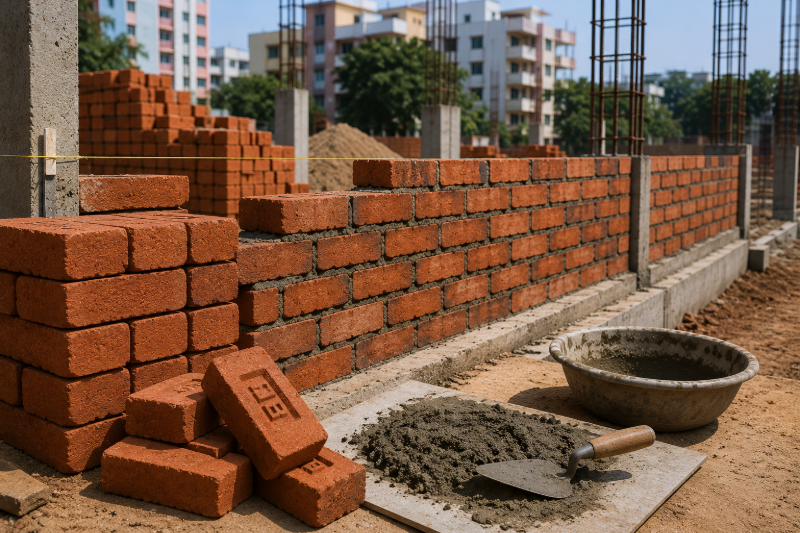
Brick wall construction remains a foundational pillar of residential, commercial, and industrial building projects across India. Offering exceptional structural durability, reliable thermal mass, and timeless aesthetic appeal, masonry work is a critical line item in any construction budget.
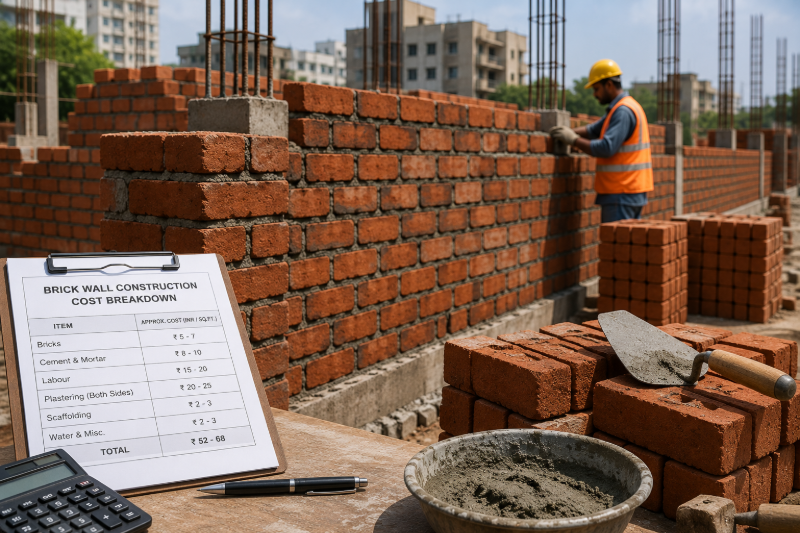
Whether you are planning a residential project in Bengaluru, a commercial development in Mumbai, or a multi-story structure in Delhi NCR, accurate financial forecasting is vital. In 2026, the typical cost to construct a brick wall in India ranges between ₹400 to ₹800 per square foot, heavily dependent on regional labor markets, brick quality, wall thickness, and mortar composition.
This fully updated, SEO-optimized guide provides an exhaustive financial framework, material breakdown, city-by-city rate charts, and actionable cost-efficiency strategies to help you navigate your project successfully.
1. Brick Wall Construction Cost Benchmarks (2026)
Project Scale / Wall Type | Average Cost Range (2026) | Key Specifications & Considerations |
Standard Brick Wall (Per Sq. Ft.) | ₹400 – ₹800 / sq. ft. | Comprehensive wall build including raw materials, mortar, and skilled mason labor. |
Single Brick Partition Wall (115mm) | ₹300 – ₹500 / sq. meter | Ideal for non-load-bearing internal room partitions and space-saving layouts. |
Double Brick Load-Bearing Wall (230mm) | ₹500 – ₹900 / sq. meter | Engineered for primary structural support, exterior perimeters, and multi-story safety. |
Premium & Reinforced Brickwork | ₹700 – ₹1,200+ / sq. meter | Reinforced with steel mesh or specialized bonding for earthquake zones or architectural facades. |
Build cost · Bengaluru, May 2026
2. Comprehensive Material vs. Labor Cost Breakdown
For any standard masonry project, expenditures are divided primarily between raw material procurement and skilled artisan labor.
General Budget Distribution Model
Raw Materials (Bricks, Cement, Sand, Water): 40% – 50%
Skilled & Unskilled Labor (Masons, Helpers, Mixers): 50% – 60%
A. Material Quantity & Pricing Estimates
Bricks: ₹4,000 to ₹12,000 per thousand units, depending on whether you select economy clay bricks, fly ash blocks, or first-class kiln-burnt bricks.
Cement: ₹350 to ₹450 per 50kg bag, adhering to high-strength OPC or PPC standards.
Sand: ₹30 to ₹60 per cubic foot. Sourcing clean river sand or approved manufactured sand (M-sand) is critical for mortar cohesion.
Water & Curing Additives: Essential for hydration cycles and structural curing (₹100 to ₹500 per 1,000 liters).
B. Labor Rates and Daily Wages
A skilled bricklayer in urban Indian markets typically charges between ₹500 to ₹1,500 per day based on experience and regional wage floors. An experienced mason can lay approximately 300 to 400 bricks per day under standard site conditions.
Frequently asked
3. City-Wise Cost Variations Across India
Geographical location directly impacts your final construction invoice due to variable labor wage structures, municipal regulations, and raw material transport logistics:
Tier-1 Metropolitan Hubs (Mumbai, Delhi, Bengaluru): ₹600 – ₹800 per sq. ft. (Driven by higher labor rates and transport costs).
Tier-2 Growth Centers (Pune, Hyderabad, Jaipur): ₹450 – ₹600 per sq. ft. (Balanced material supply and moderate labor overhead).
Tier-3 Towns & Eastern Markets (Indore, Lucknow, Kolkata): ₹350 – ₹550 per sq. ft. (Most economical regional pricing tiers).
4. Key Factors Influencing Brick Wall Construction Costs
Type and Quality of Bricks: Upgrading from local economy bricks to premium first-class clay bricks or eco-friendly fly ash blocks increases material outlays by 20% to 30%, but drastically improves load-bearing strength and thermal insulation.
Wall Thickness: Standardizing single-brick (115mm) partitions for non-load-bearing areas instead of double-brick (230mm) walls saves up to 40% on material volume.
Mortar Mix Ratios: Utilizing robust mix designs (such as a 1:4 cement-to-sand ratio for load-bearing zones versus a standard 1:6 ratio for general partitioning) dictates cement consumption and overall bonding strength.
Site Access and Height: Multi-story construction requiring complex scaffolding, or congested urban plots with difficult material unloading access, adds a 15% to 30% handling premium.
5. Site Conditions and Accessibility
Difficult site conditions increase construction costs:
Congested urban areas with limited access: 10-20% cost increase
Multi-story buildings requiring scaffolding: 15-30% additional expense
Remote locations with poor material transportation: 20-40% markup
Basement or underground construction: 25-50% premium due to waterproofing requirements
Cost Estimation: Practical Examples
Example 1: Residential Project in Bangalore
A 2,000 sq ft residential building with double brick walls (230mm thickness):
Wall area: 2,500 sq meters (accounting for window/door openings)
Bricks required: 1,125,000 units @ ₹8,000 per thousand = ₹9,00,000
Cement: 250 bags @ ₹400 = ₹1,00,000
Sand: 750 cubic feet @ ₹50 = ₹37,500
Labor: 2,500 sq meters @ ₹300 per sq meter = ₹7,50,000
Total: ₹17,87,500 (approximately ₹18 lakhs)
Example 2: Commercial Project in Mumbai
A 5,000 sq ft commercial space with reinforced brick walls and stringent quality requirements:
Wall area: 6,000 sq meters
Premium first-class bricks: 2,700,000 units @ ₹10,000 per thousand = ₹27,00,000
High-grade cement: 600 bags @ ₹450 = ₹2,70,000
River sand: 1,800 cubic feet @ ₹60 = ₹1,08,000
Skilled labor premium (Mumbai rates): 6,000 sq meters @ ₹400 per sq meter = ₹24,00,000
Total: ₹54,78,000 (approximately ₹55 lakhs)
Cost-Saving Strategies for Brick Wall Construction
1. Optimize Wall Design
Work with architects to minimize unnecessary wall thickness and complexity. Using single brick walls (115mm) for non-load-bearing partitions instead of double brick walls can reduce costs by 40-50% while maintaining functionality. Platforms like AECORD connect you with experienced architects who specialize in cost-effective designs.
2. Bulk Material Procurement
Purchasing materials in bulk directly from manufacturers can save 10-15% on brick costs. Negotiate with suppliers for volume discounts, and consider seasonal purchasing when prices are lower.
3. Efficient Labor Management
Hire experienced teams with proven productivity records. A skilled mason laying 400 bricks daily is more cost-effective than an inexperienced worker laying 200 bricks. Consider performance-based contracts that incentivize quality and speed.
4. Alternative Materials
Explore eco-friendly options like fly ash bricks or interlocking bricks that reduce mortar consumption by 30-40%, offsetting their higher unit cost. These materials also offer superior thermal and acoustic properties.
5. Quality Control
Implementing rigorous quality checks prevents costly rework. Regular inspections catch defects early, ensuring structural integrity and reducing long-term maintenance expenses.
Regional Price Variations Across India
Understanding regional variations helps in accurate budgeting:
North India (Delhi, Noida, Gurgaon): ₹500-₹700 per sq ft; higher labor costs due to urbanization
South India (Bangalore, Hyderabad, Chennai): ₹550-₹750 per sq ft; premium rates in tech hubs
West India (Mumbai, Pune, Ahmedabad): ₹600-₹800 per sq ft; highest costs due to land values
East India (Kolkata, Bhubaneswar): ₹400-₹550 per sq ft; comparatively affordable
Central India (Indore, Bhopal): ₹350-₹500 per sq ft; most economical option
Hidden Costs to Consider
Beyond material and labor, factor in these often-overlooked expenses:
Scaffolding and temporary structures: ₹50-₹150 per sq meter
Waste management: ₹20,000-₹50,000 per project
Quality testing and certifications: ₹10,000-₹30,000
Weather protection and curing materials: ₹15,000-₹40,000
Contingency buffer (10-15% of total cost): Essential for unexpected expenses
Regulatory Compliance and Standards
Compliance with Indian building codes (IS 1893, IS 2212) adds to costs but ensures safety:
Seismic zone compliance increases costs by 15-25% in earthquake-prone areas
Fire-resistant construction requirements add 10-20% to expenses
Environmental clearances and permits: ₹10,000-₹50,000 depending on location
Timeline and Its Cost Implications
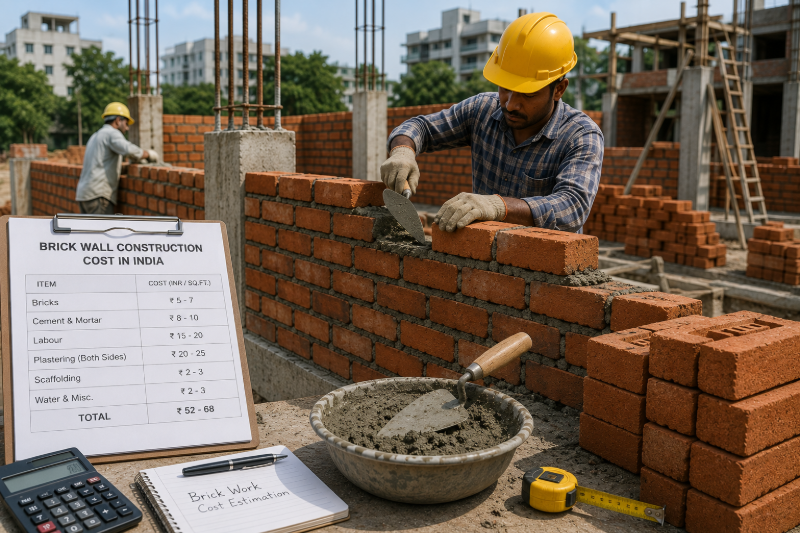
Construction duration affects overall costs. A well-planned project with adequate labor typically completes faster, reducing overhead expenses. Rushed timelines requiring overtime labor can increase costs by 20-30%. Conversely, extended timelines may increase material costs due to price inflation.
5. Smart Cost-Saving Strategies for Your Project
Procure Materials in Bulk: Coordinate with suppliers to purchase cement and bricks in large volumes, securing 10% to 15% bulk discounts.
Opt for Fly Ash or AAC Alternatives: Where permitted by your structural engineer, eco-friendly fly ash bricks reduce mortar consumption by 30% while offering superior thermal performance.
Connect with Vested Professionals: Avoid unexpected budget overruns by working with verified contractors and transparent pricing directories. You can compare competitive quotes, review project portfolios, and connect with verified construction experts through platforms like AECORD.