


Introduction: Why Up-to-Date Boundary Wall Pricing Matters
Constructing a compound or boundary wall is typically the very first physical milestone on any residential or commercial plot in India. It secures land boundaries, provides privacy, and establishes the baseline framework for future construction.However, with annual material and labor cost fluctuations, relying on outdated benchmarks leads to severe budget shortfalls.
This comprehensive guide delivers verified 2026 cost frameworks, regional city breakdowns, material comparisons (Brick vs. RCC vs. Precast), and engineering insights to help you optimize project expenditures.
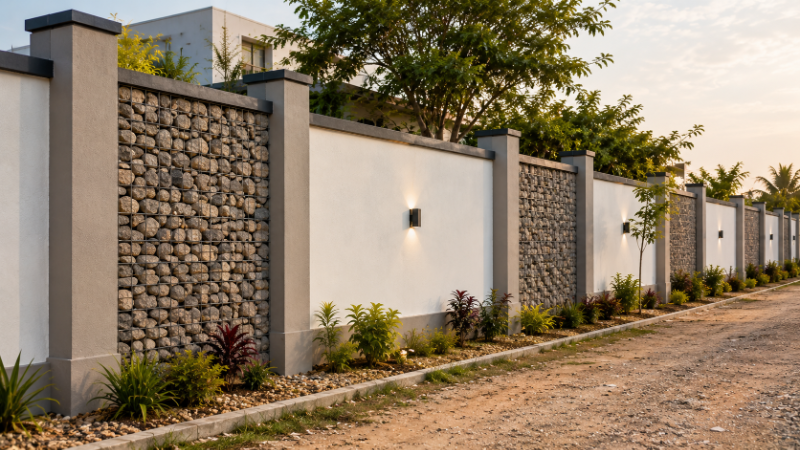
Build cost · Bengaluru, May 2026
1. Boundary Wall Cost Matrix: Running Foot vs. Square Foot
A common point of confusion for property owners is how boundary wall estimates are calculated.
Running Foot (RFT): Most contractors quote boundary walls per running foot based on the perimeter length (e.g., a 30x40 ft plot has a 140 RFT perimeter).This includes excavation, foundation, pillars, wall masonry, and basic plastering up to a standard height of 5 to 6 feet.
Square Foot (Sq. Ft.): Used when calculating surface area for specific masonry partitions or height extensions. Average Boundary Wall Cost (India 2026)
Wall Type & Thickness | Average Cost (Per Running Foot) | Equivalent Cost (Per Sq. Ft. Surface Area) | Primary Application |
4.5-inch Brick Wall (with RCC columns) | ₹800 – ₹1,100 | ₹130 – ₹180 | Standard residential boundary, low-security plots |
9-inch Brick Wall (Full masonry) | ₹1,200 – ₹1,500 | ₹200 – ₹280 | High-security or load-bearing compound walls |
Precast Concrete Wall | ₹1,200 – ₹2,500 | ₹90 – ₹150 | Fast-track industrial and large plot fencing |
RCC Solid Wall | ₹1,500 – ₹3,000 | ₹250 – ₹450 | Maximum security, multi-story urban properties |
2. Reinforced Concrete Boundary Walls
RCC (Reinforced Cement Concrete) boundary walls are increasingly popular in urban areas, especially in gated communities and commercial properties. These walls are durable, require minimal maintenance, and offer excellent security. The cost per square foot ranges from ₹350 to ₹600 per sq ft.
RCC wall cost breakdown:
Materials (cement, sand, aggregate, steel): ₹200-300 per sq ft
Labor costs: ₹100-200 per sq ft
Formwork and shuttering: ₹50-100 per sq ft
The advantage of RCC walls is their longevity (50+ years) and lower maintenance costs. In metropolitan areas like Delhi and Mumbai, RCC boundary walls have become the standard choice for residential complexes, with costs reaching ₹600-700 per sq ft for high-quality finishes.
3. Stone Masonry Boundary Walls
Stone masonry walls are popular in hilly regions and offer a premium aesthetic appeal. The cost per square foot ranges from ₹300 to ₹500 per sq ft, depending on stone availability and type.
Stone types and costs:
Local stone: ₹300-350 per sq ft (most economical)
Granite or marble: ₹450-550 per sq ft (premium option)
Ashlar stone: ₹350-450 per sq ft (semi-finished)
Stone masonry walls are particularly popular in cities like Jaipur, Udaipur, and Shimla, where local stone is readily available and affordable. However, transportation costs can significantly increase the price in regions far from quarries.
4. Concrete Block Boundary Walls
Concrete blocks (also known as cinder blocks or cement blocks) offer a cost-effective alternative to brick masonry. The cost per square foot ranges from ₹150 to ₹300 per sq ft.
Advantages of concrete block walls:
Faster construction (larger blocks cover more area)
Lower material costs
Suitable for both residential and commercial properties
Can be plastered and painted for aesthetic appeal
Concrete blocks typically cost ₹35-50 per block, making them an attractive option for budget-conscious property owners. In cities like Pune and Hyderabad, concrete block walls are increasingly popular for industrial and commercial boundary walls.
5. Precast Concrete Panel Boundary Walls
Precast concrete panels offer a modern, quick-installation solution for boundary walls. The cost per square foot ranges from ₹400 to ₹700 per sq ft.
Benefits of precast panels:
Rapid installation (reduces project timeline)
Consistent quality and finish
Customizable designs and colors
Lower long-term maintenance
While the initial cost is higher, precast panels are becoming increasingly popular in metropolitan areas where construction timelines are critical. Companies like those found on AECORD can connect you with precast manufacturers and installation specialists in your region.
Cost Breakdown: Material vs. Labor
Material Costs
Material costs typically account for 50-65% of the total boundary wall construction cost. Here's a typical breakdown for a brick masonry wall:
Bricks: ₹80-120 per sq ft
Cement: ₹40-60 per sq ft
Sand: ₹20-30 per sq ft
Water and miscellaneous: ₹10-20 per sq ft
Total material cost: ₹150-230 per sq ft
Material costs vary significantly across regions. For example, cement costs in remote areas can be 15-20% higher than in major cities due to transportation expenses. Sand availability near coastal areas like Goa and Kerala is better, resulting in lower costs compared to inland cities.
Labour Costs
Labor costs account for 30-40% of the total project cost and vary dramatically by location:
Metropolitan cities (Mumbai, Delhi, Bangalore): ₹400-700 per day for skilled masons
Tier-1 cities (Pune, Hyderabad, Chennai): ₹300-500 per day
Tier-2 cities (Indore, Lucknow, Nagpur): ₹200-350 per day
Small towns: ₹150-250 per day
A skilled mason can typically construct 8-12 sq ft of brick masonry per day, meaning labor cost per square foot ranges from ₹40-90 depending on the region.
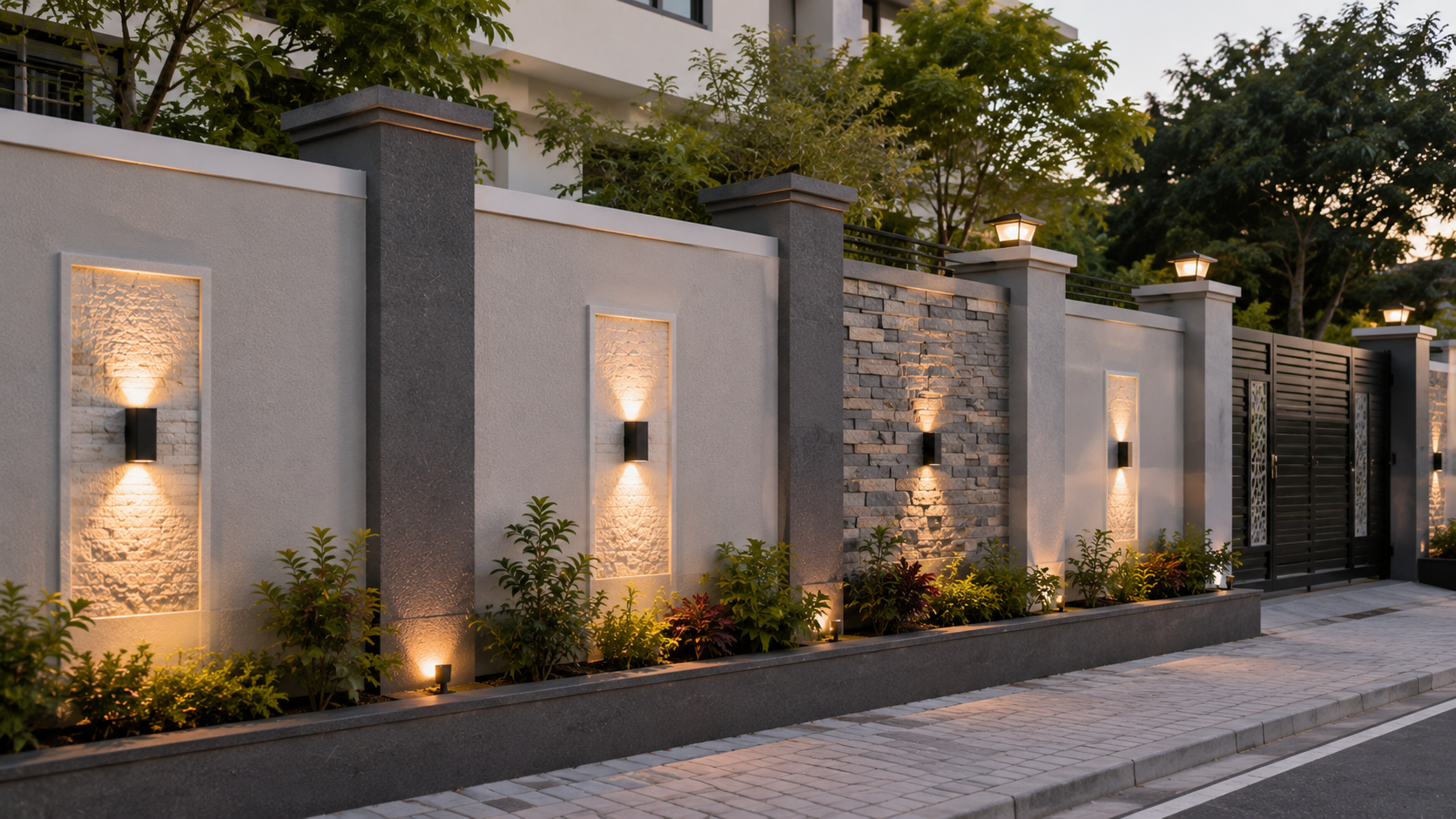
Regional Cost Variations in India
Metropolitan Areas
Mumbai: Boundary wall costs are among the highest in India, ranging from ₹400-800 per sq ft due to high land prices, labor costs, and strict building regulations. RCC walls are preferred, costing ₹600-750 per sq ft.
Delhi: Similar to Mumbai, Delhi's boundary wall costs range from ₹350-700 per sq ft. The National Capital Region has stringent building codes, which can increase costs by 10-15%.
Bangalore: As a tech hub with rapid development, Bangalore's boundary wall costs range from ₹300-650 per sq ft. The city has good material availability, which helps keep costs moderate.
Tier-1 Cities
Pune: With costs ranging from ₹250-500 per sq ft, Pune offers relatively affordable boundary wall construction. The city has good local material suppliers, which helps reduce costs.
Hyderabad: Boundary walls in Hyderabad cost ₹200-450 per sq ft, making it one of the more affordable metropolitan options. Local stone availability keeps costs down for stone masonry walls.
Chennai: With costs ranging from ₹250-500 per sq ft, Chennai's pricing is competitive. However, coastal humidity may require higher-quality materials for longevity.
Tier-2 Cities
Cities like Indore, Lucknow, Nagpur, Jaipur, and Ahmedabad offer boundary wall construction costs in the range of ₹150-350 per sq ft. These cities typically have lower labor costs and good local material availability, making them more budget-friendly options.
Factors That Increase Boundary Wall Costs
1. Height and Length
Taller walls require stronger foundations, more materials, and additional safety measures. A 4-foot wall costs significantly less per square foot than a 7-foot wall. Foundation depth typically increases by 1 foot for every 3-4 feet of height increase, adding ₹50-100 per sq ft to the total cost.
2. Design Complexity
Simple, straight walls are the most cost-effective. However, walls with curves, decorative elements, pillars, or gate structures can increase costs by 20-40%. Decorative coping, colored finishes, or architectural details add ₹50-150 per sq ft.
3. Site Conditions
Difficult site conditions significantly impact costs:
Sloped terrain: Adds 15-25% to construction costs
Poor soil conditions: May require deeper foundations, adding ₹100-200 per sq ft
Water logging: Requires drainage solutions, adding ₹50-100 per sq ft
Existing structures: Demolition and removal can add ₹20-50 per sq ft
4. Finishing and Aesthetics
The type of finish affects the final cost:
Plain plaster: ₹20-30 per sq ft
Colored plaster: ₹30-50 per sq ft
Tile cladding: ₹100-200 per sq ft
Stone veneer: ₹150-300 per sq ft
5. Local Regulations and Permits
Different municipalities have different requirements for boundary walls. Some areas require:
Municipal permissions and approvals
Specific height restrictions
Setback requirements from the road
Environmental clearances in sensitive areas
These regulatory requirements can add 5-10% to your project cost. It's essential to consult with local authorities or professionals on AECORD who understand regional building codes before finalizing your budget.
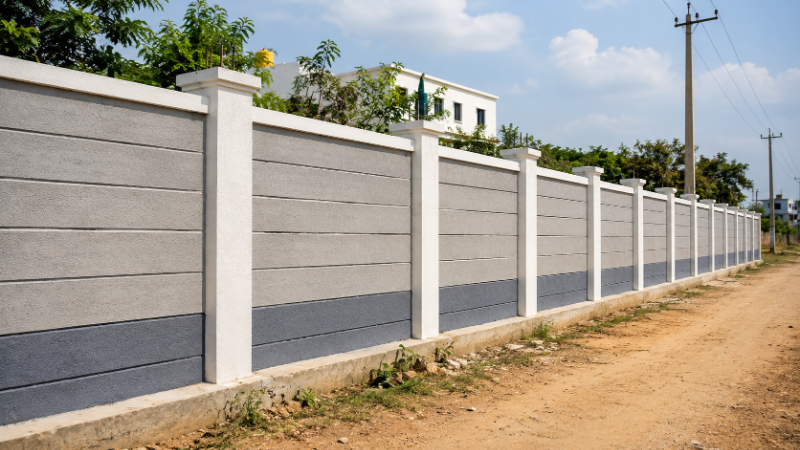
Ways to Reduce Boundary Wall Construction Costs
1. Choose Appropriate Materials
Select materials based on your budget and long-term requirements. Concrete blocks are economical for temporary or industrial boundaries, while RCC is better for residential properties where durability is important.
2. Optimize Wall Design
Simple, straight walls without decorative elements are more cost-effective. If aesthetics are important, consider adding finishing touches after the basic wall is complete, spreading costs over time.
3. Compare Quotes from Multiple Contractors
Get detailed quotes from at least 3-4 contractors. Compare not just the price but also the quality of materials, timeline, and warranty offered. AECORD's platform allows you to connect with vetted contractors and suppliers in your area, making it easier to compare options.
4. Bulk Material Purchases
If you're building multiple walls or structures, buying materials in bulk can reduce costs by 10-15%. Negotiate directly with suppliers or use platforms like AECORD to find wholesale suppliers.
5. Phased Construction
If budget is tight, consider constructing the boundary wall in phases. Complete the most visible sections first and expand over time.
6. Use Local Materials
Local materials are always cheaper due to lower transportation costs. Stone walls are cheaper in quarry areas, while brick walls are economical in regions with brick kilns.
Hidden Costs to Consider
Beyond the basic construction cost per square foot, budget for these additional expenses:
Foundation work: ₹50-100 per sq ft (often not included in quoted rates)
Drainage and waterproofing: ₹20-50 per sq ft
Gates and access points: ₹5,000-50,000 depending on size and type
Electrical work (for lighting): ₹5,000-20,000
Permits and approvals: ₹2,000-10,000
Contingency (10-15% of total cost): Budget for unexpected expenses
Maintenance Costs Over Time
Different wall types have different maintenance requirements:
Brick masonry: Requires repointing every 10-15 years (₹30-50 per sq ft)
RCC walls: Minimal maintenance, occasional painting (₹10-20 per sq ft every 5 years)
Stone masonry: Moderate maintenance, occasional sealing (₹20-40 per sq ft every 5-7 years)
Concrete blocks: Requires regular painting and maintenance (₹15-30 per sq ft every 3-4 years)
While RCC walls have higher initial costs, their lower maintenance requirements make them economical over the long term.
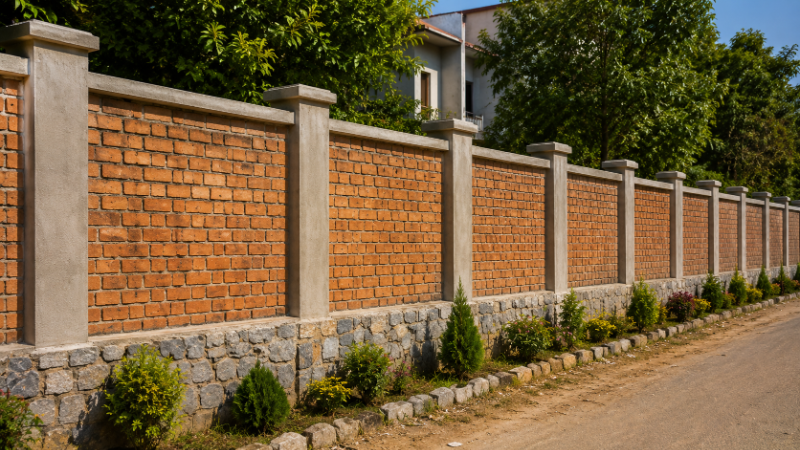
How to Get Accurate Cost Estimates
To get accurate boundary wall cost estimates:
1. Provide Detailed Site Information
Exact length and height of the wall
Site photographs and soil conditions
Terrain details (flat, sloped, etc.)
Access conditions for construction equipment
2. Specify Your Requirements
Material preference
Finish type and color
Gate requirements
Timeline for completion
3. Connect with Professionals on AECORD
AECORD's platform connects you with verified contractors, architects, and material suppliers in your region. You can upload your project details, receive multiple quotes, and compare options before making a decision. Using AECORD ensures you're working with professionals who understand local market rates and regulations.
Conclusion
Boundary wall costs in India vary significantly based on materials, location, and design complexity, ranging from ₹150 to ₹800 per square foot. Understanding these cost variations and the factors that influence pricing is crucial for effective project budgeting. Brick masonry walls offer a good balance of cost and durability, while RCC walls provide superior longevity despite higher initial investment.
To ensure you get the best value for your investment, obtain detailed quotes from multiple sources, consider long-term maintenance costs, and choose materials appropriate for your region's climate and your specific needs. Whether you're building a residential, commercial, or industrial boundary wall, careful planning and informed decision-making will help you achieve your goals within budget.
Ready to start your boundary wall project? Connect with experienced contractors, architects, and material suppliers on AECORD, India's trusted B2B2C marketplace for AECO professionals. Get competitive quotes, compare options, and find the right partners for your project today.
