

Over the past few years, architects and designers across India have noticed a significant shift in client requests. Walk into any design consultation in Bangalore, Mumbai, or Delhi, and you're likely to hear the term "biophilic design" mentioned at least once. But what's driving this sudden surge in demand? And more importantly, what does biophilic design actually mean for your projects?
Biophilic design—the practice of incorporating natural elements into built environments—has moved from a niche architectural philosophy to mainstream client expectation. This transformation isn't accidental. It's rooted in solid science, emerging research on human wellness, and a growing awareness of mental health in urban India.
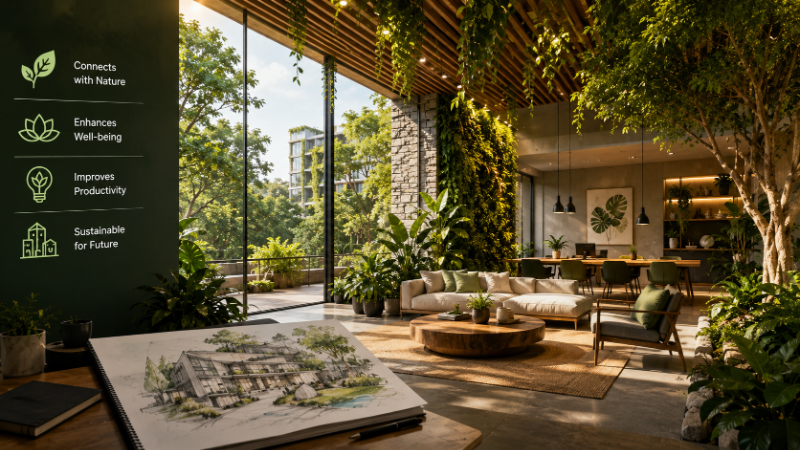
Understanding Biophilic Design: More Than Just Plants
Before diving into why clients are requesting it, let's establish what biophilic design actually is. The term "biophilia" was popularized by biologist E.O. Wilson, who argued that humans have an inherent desire to connect with nature and other living systems. Biophilic design translates this concept into architectural and interior spaces by weaving natural elements, patterns, and processes into the built environment.
However, biophilic design isn't simply about placing potted plants in an office corner. It's a comprehensive approach that includes:
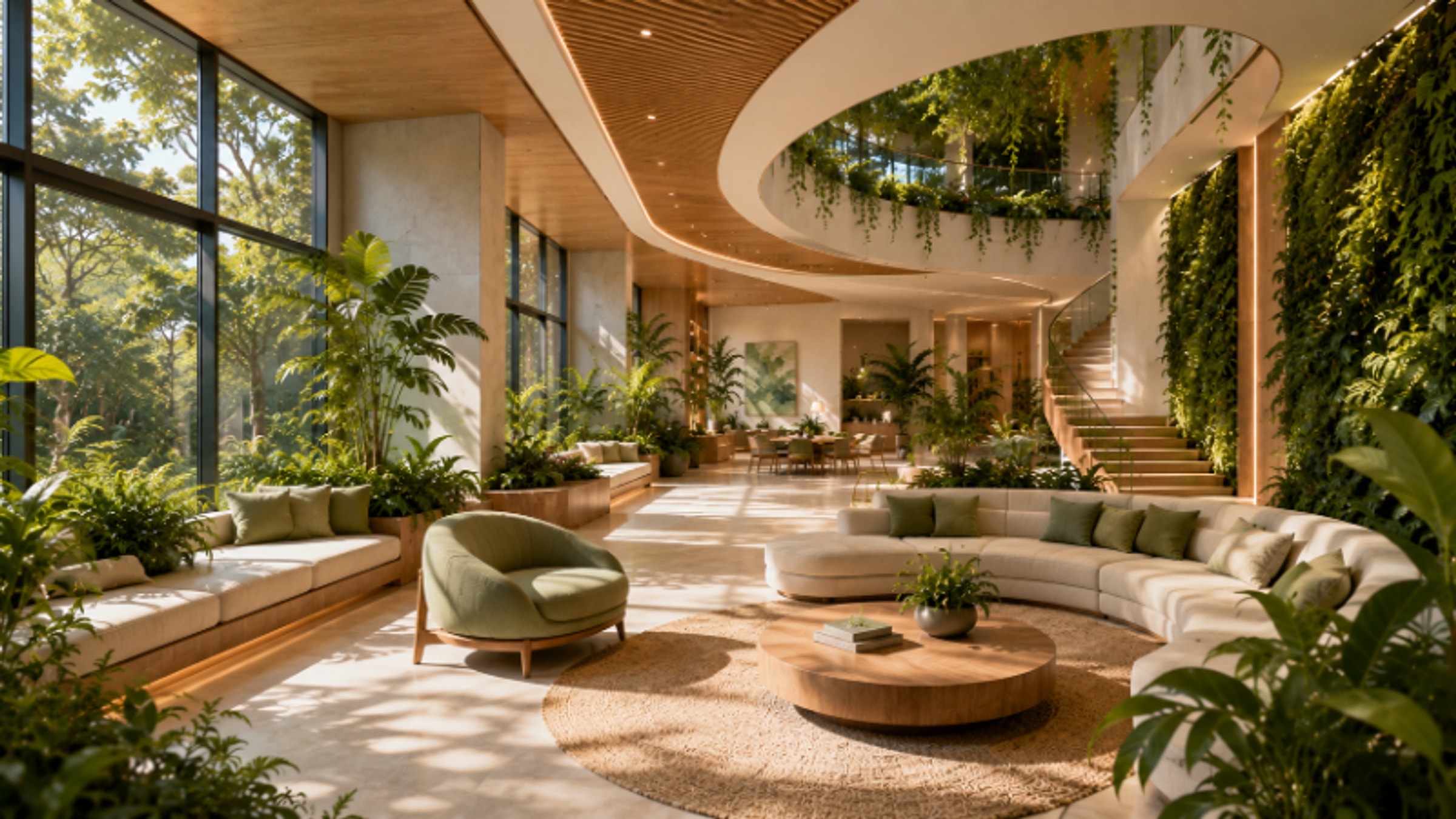
Direct nature contact—living plants, water features, natural light, and views of greenery
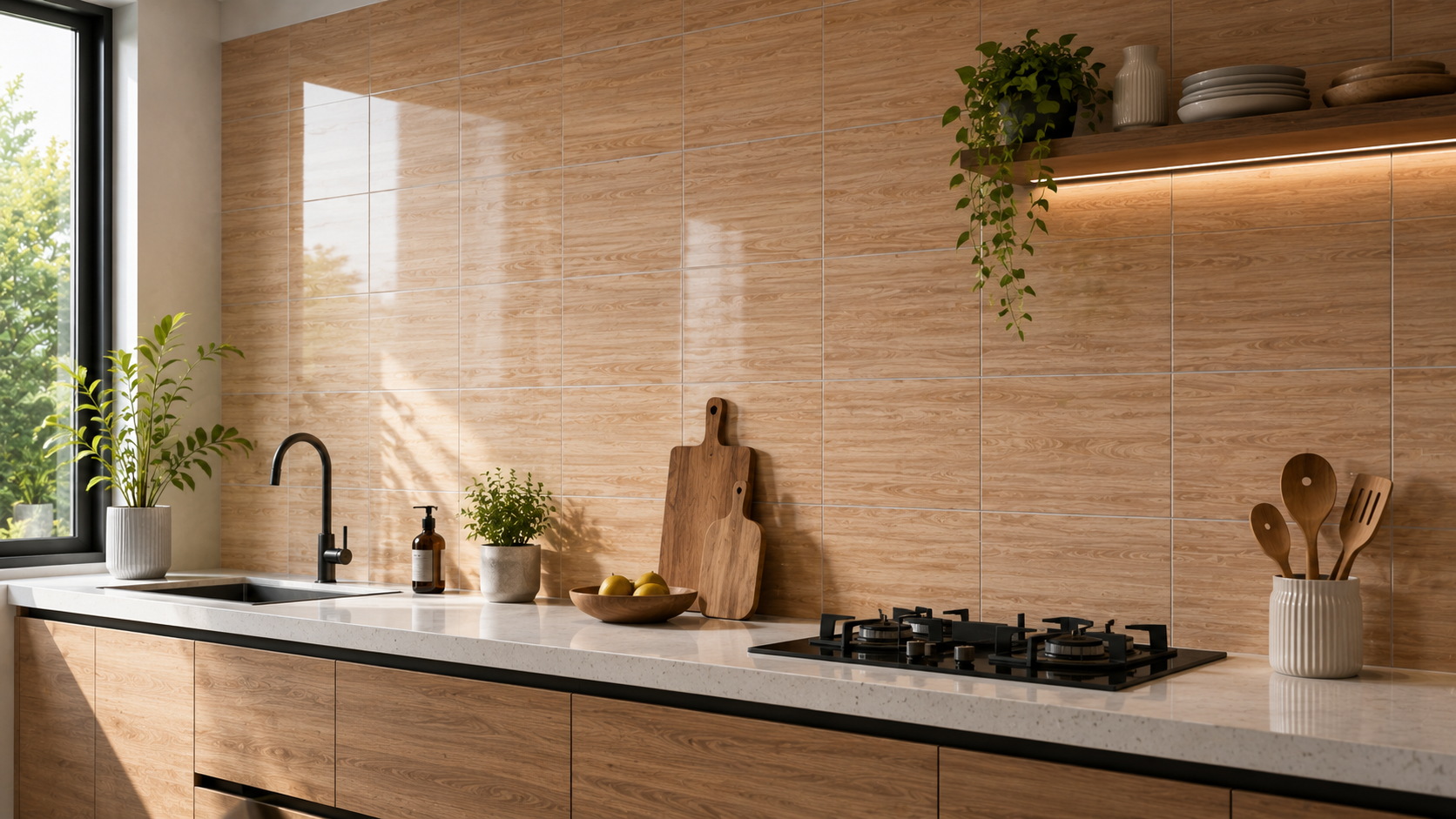
Indirect nature contact—natural materials like wood and stone, nature-inspired patterns, and images of natural landscapes
Space and place qualities—prospect and refuge, complexity, and sense of enclosure
Natural analogues—biomimetic design that mimics natural structures and processes
For professionals working on projects across Indian cities—from residential complexes in Pune to commercial spaces in Hyderabad—understanding these distinctions is crucial. Clients aren't just asking for "green walls"; they're seeking holistic environments that make them feel connected to nature.
Build cost · Bengaluru, May 2026
The Science Behind the Demand
Mental Health and Stress Reduction
The primary driver behind the biophilic design boom is research demonstrating its impact on mental health. A landmark study published in the journal Frontiers in Psychology found that even brief exposure to natural elements significantly reduces cortisol levels—the body's primary stress hormone. For urban professionals in India's major metros, this research carries particular weight.
Consider the reality of working life in cities like Bangalore or Mumbai. Long commutes, crowded offices, and limited green space create chronic stress. When clients invest in office redesigns or new residential projects, they're increasingly viewing biophilic elements as essential infrastructure for employee and resident wellbeing, not luxury additions.
Data from the Indian Institute of Technology (IIT) Bombay's studies on urban wellness showed that workspaces incorporating natural light and plant life reported a 37% increase in employee productivity and a 25% reduction in reported stress levels. These aren't abstract benefits—they translate directly to business outcomes that justify investment.
Cognitive Function and Creativity
Beyond stress reduction, biophilic environments enhance cognitive performance. Research from the University of Michigan demonstrated that a 20-minute walk in nature improves memory retention by 20%. While you can't replicate a forest walk in an office building, strategic biophilic design elements create measurable improvements in focus and creative thinking.
This explains why tech companies in Bangalore's startup ecosystem and multinational corporations in Gurugram are increasingly incorporating biophilic principles. They recognize that nature-integrated workspaces directly impact innovation and problem-solving—core competitive advantages in knowledge-intensive industries.
Frequently asked
Improved Air Quality and Physical Health
Beyond psychology, biophilic design offers tangible physical health benefits. Living plants act as natural air purifiers, removing volatile organic compounds (VOCs) and increasing oxygen levels. In Indian cities where air quality remains a persistent challenge—Delhi's winter AQI regularly exceeds 300—this practical benefit resonates strongly with clients.
A study by NASA identified specific plants that effectively purify indoor air, including peace lilies, snake plants, and spider plants. These aren't exotic specimens; they're readily available across India at costs ranging from ₹500 to ₹2,000 per plant, making them accessible for projects of any scale.
Why Indian Clients Are Demanding It Now
Post-Pandemic Consciousness
The COVID-19 pandemic fundamentally shifted how Indians think about their living and working spaces. Extended lockdowns forced people to confront the quality of their home environments. Those with access to balconies, terraces, or indoor plants reported better mental health outcomes. This lived experience has translated into concrete demand for biophilic features in new projects.
For a closely related breakdown, see our guide on GRIHA Certification Process India.
Real estate developers in Delhi, Mumbai, and Bangalore have noted that residential projects emphasizing gardens, green terraces, and indoor plant systems command 15-20% price premiums compared to conventional developments. This market signal is impossible to ignore.
Rising Environmental Consciousness
India's growing middle class increasingly prioritizes sustainability. Biophilic design aligns with broader environmental values—it's not just about personal wellbeing but also about reducing ecological footprint through better material choices, passive design strategies, and habitat creation.
Clients in Hyderabad, Pune, and Bangalore—cities with significant corporate and startup presence—frequently request LEED or IGBC (Indian Green Building Council) certifications. Biophilic design principles support these certifications while creating spaces that feel genuinely connected to nature rather than merely "green-washed."
Corporate Wellness Programs
Large Indian corporations have embraced wellness as a competitive advantage in talent acquisition and retention. When companies compete for skilled professionals, offering a biophilically designed workplace becomes a recruiting tool. This is particularly evident in Bangalore's IT sector and Mumbai's financial services industry, where talent scarcity is acute.
Practical Implementation Across Indian Projects
Residential Projects
For residential developments, biophilic design might include:
Vertical gardens on building facades—popular in Mumbai and Delhi apartments where ground-level green space is limited
Shared courtyards with native plantings that reduce heat island effect while providing community gathering spaces
Balcony gardens with planter systems designed for easy maintenance
Natural materials in common areas—exposed stone, wooden elements, natural fiber furnishings
Water features like fountains or small ponds in landscaping
Costs for implementing biophilic features in residential projects typically range from ₹5,000 to ₹15,000 per unit for basic features (plants, natural materials) to ₹50,000+ per unit for comprehensive integration including green walls and sophisticated water systems.
Commercial and Office Spaces
Office projects benefit from biophilic design through:
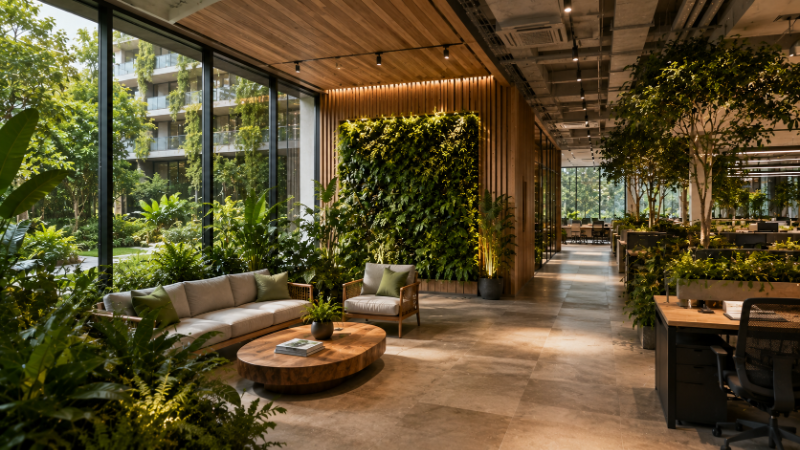
Living walls in break areas and reception spaces—creating visual interest while improving air quality
Maximized natural light through strategic window placement and skylights
Indoor plant systems integrated into workstations and meeting areas
Biomorphic forms in architectural elements that echo natural patterns
Outdoor terraces with native plantings for employee breaks
Commercial projects in Bangalore's tech parks and Gurugram's corporate centers increasingly allocate 8-12% of construction budgets to biophilic elements, viewing them as essential rather than optional.
Healthcare and Educational Facilities
Hospitals and schools present particularly compelling use cases. Healthcare facilities incorporating biophilic design report faster patient recovery times and reduced anxiety. Educational institutions see improved student focus and attendance.
A hospital in Pune implementing a comprehensive biophilic redesign—including patient room views of gardens, healing gardens, and natural materials throughout—documented a 19% reduction in patient length of stay and 23% reduction in pain medication usage.
Design Considerations Specific to India
Climate Adaptation
India's diverse climate zones require localized approaches. In hot, dry regions like Rajasthan and Gujarat, biophilic design emphasizes water features and shade structures alongside drought-resistant native plants. In humid zones like Kerala and coastal Maharashtra, designs must account for moisture management and mold prevention.
Using native plant species appropriate to each region ensures sustainability and lower maintenance costs. A Bangalore-based office using native Deccan plants requires far less water and care than one featuring tropical species unsuited to the local climate.
Maintenance and Durability
Biophilic elements require ongoing maintenance. Living walls in Mumbai's humid climate need different care protocols than those in Delhi's dry climate. Clients must understand that biophilic design isn't a one-time installation but an evolving ecosystem requiring regular attention.
Smart design anticipates maintenance needs through:
Irrigation systems with smart sensors
Modular plant systems for easy replacement
Professional maintenance contracts
Selection of hardy, low-maintenance species
Budget Realities
While biophilic design can be expensive, it doesn't have to be. A modest project might incorporate natural materials, maximize daylight, and include simple potted plants for ₹3,000-5,000 per square meter. A comprehensive approach with living walls, sophisticated irrigation, and architectural integration might reach ₹15,000-25,000 per square meter.
The key is honest conversations with clients about budget-to-benefit ratios. Sometimes, strategic placement of high-impact elements delivers better results than spreading resources thinly across a space.
Challenges and Realistic Expectations
Not every biophilic design succeeds. Common pitfalls include:
Over-specification—designing spaces that look beautiful in renderings but prove difficult to maintain in reality
Species selection errors—choosing plants unsuited to local climate or maintenance capacity
Neglecting maintenance contracts—clients underestimating ongoing care requirements
Treating biophilia as aesthetic—adding plants without addressing fundamental design principles like light, air quality, and spatial experience
Successful biophilic design requires collaboration between architects, landscape designers, and maintenance professionals from the project's inception.
The Future of Biophilic Design in India
As awareness grows and costs decrease through market maturation, biophilic design will likely become standard rather than premium. Regulatory frameworks may eventually require biophilic elements in commercial buildings, similar to green space mandates in some Indian cities.
For professionals working with AECORD or other platforms connecting architects with clients, understanding biophilic design principles is increasingly essential. Clients will expect you to speak knowledgeably about nature integration, and your ability to implement it effectively will differentiate your practice.
Getting Started with Biophilic Design
If you're new to biophilic design, start with education. Study successful projects in Indian contexts. Visit biophilically designed spaces in your city. Understand your local climate, available plant species, and maintenance infrastructure.
When consulting with clients, ask about their relationship with nature, their wellness priorities, and their maintenance capacity. These conversations reveal whether biophilic design is genuinely aligned with their needs or simply a trendy request.
Connect with landscape specialists and horticultural experts who understand Indian conditions. Many platforms, including AECORD, help architects find specialists with expertise in biophilic implementation across different regions and project types.
Finally, remember that biophilic design is fundamentally about creating spaces where humans and nature coexist meaningfully. When done well, it transforms not just the appearance of spaces but how people experience them—reducing stress, enhancing creativity, and fostering genuine connection to the living world.
Conclusion
The sudden surge in client demand for biophilic design isn't a passing trend. It's rooted in peer-reviewed science, lived experience from the pandemic, and growing awareness of the connection between environment and wellbeing. For architects and designers across India, understanding and implementing biophilic principles isn't optional—it's becoming fundamental to professional practice.
Whether you're designing a corporate office in Bangalore, a residential complex in Mumbai, or a healthcare facility in Delhi, biophilic principles offer proven benefits that clients increasingly expect. By understanding the science, adapting approaches to Indian contexts, and maintaining realistic expectations about implementation and maintenance, you can create spaces that genuinely improve human experience.
Ready to explore biophilic design for your next project? Connect with experienced architects, landscape designers, and specialists on AECORD who understand how to implement these principles effectively across India's diverse climates and project types. Our platform makes it easy to find the right professionals who can transform your vision of nature-integrated spaces into reality.
Frequently Asked Questions
What is biophilic design and why is it different from just adding plants?
Biophilic design is a comprehensive approach to incorporating natural elements into built environments, going far beyond potted plants. It includes direct nature contact (living plants, water features, natural light), indirect contact (natural materials, nature-inspired patterns), spatial qualities, and biomimetic design that mimics natural structures—creating holistic environments that connect people to nature.
How does biophilic design improve employee productivity and mental health?
Research from IIT Bombay shows that workspaces with natural light and plant life report 37% higher employee productivity and 25% lower stress levels. Studies also demonstrate that exposure to natural elements reduces cortisol (stress hormone) levels, making biophilic design a practical investment in workforce wellbeing rather than a luxury addition.
What are the main components of biophilic design in architecture?
Biophilic design includes four key components: direct nature contact (plants, water, natural light), indirect nature contact (wood, stone, nature patterns), space and place qualities (prospect, refuge, complexity), and natural analogues (biomimetic structures). Together, these elements create environments that foster human connection to nature.
Why are Indian clients suddenly demanding biophilic design in their projects?
Indian clients are requesting biophilic design due to growing awareness of mental health benefits, scientific research on stress reduction, and the reality of chronic stress from urban living in metros like Bangalore and Mumbai. Clients now view biophilic elements as essential infrastructure for wellbeing and productivity, not optional luxury features.
How does biophilic design enhance cognitive function and creativity?
Research shows that exposure to natural elements improves memory retention by 20% and enhances focus and creative thinking. This is why tech companies and corporations increasingly incorporate biophilic principles—they recognize measurable improvements in employee cognitive performance and innovation that justify the investment.