

Understanding Cement Quality and Standards in India
Cement is one of the most critical components of any residential construction project in India. The quality of cement directly impacts the structural integrity, durability, and longevity of your home. With numerous brands available in the Indian market, selecting the right cement can be overwhelming for homeowners and builders alike.
In India, cement is regulated by the Bureau of Indian Standards (BIS), which sets stringent quality parameters through IS 269-2015 (Ordinary Portland Cement) and IS 8112-2013 (Portland Pozzolana Cement). These standards ensure that every bag of cement meets minimum strength requirements, durability criteria, and chemical composition specifications. Understanding these standards is crucial before making your cement purchase decision.
The choice of cement affects not just the initial construction cost but also the long-term maintenance expenses of your property. Poor quality cement can lead to structural weakening, cracks, water seepage, and reduced building lifespan. This comprehensive guide will help you navigate through India's top cement brands and make an informed decision for your residential project.
Build cost · Bengaluru, May 2026
Top 10 Cement Brands in India for House Construction
1. UltraTech Cement
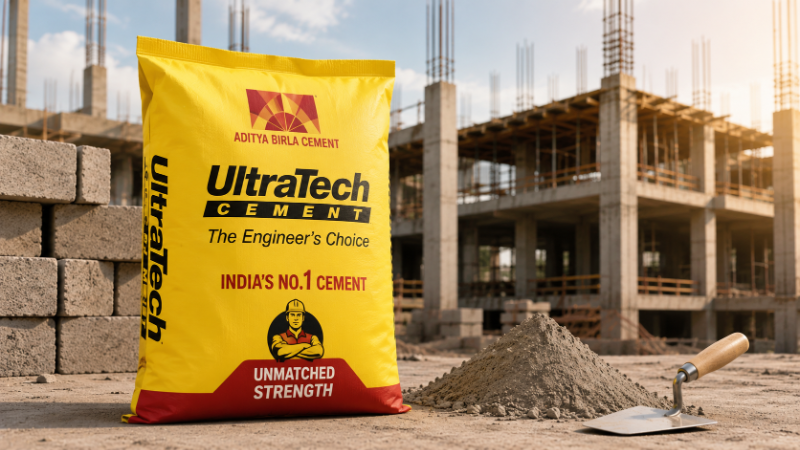
Market Position: India's largest cement manufacturer by volume
UltraTech Cement dominates the Indian cement market with its consistent quality and wide availability across all regions. Their products include UltraTech Grade OPC 53 and PPC (Portland Pozzolana Cement), both suitable for residential construction.
Key Features:
Compressive strength: 53 MPa at 28 days (for OPC 53)
Price range: ₹370-420 per 50 kg bag (varies by region)
Available in most Indian cities including Delhi, Mumbai, Bangalore, and Kolkata
Excellent water resistance properties
Reduced heat of hydration in PPC variant
UltraTech's consistent performance makes it a reliable choice for residential projects. Their distribution network ensures availability even in remote areas.
2. Ambuja Cement
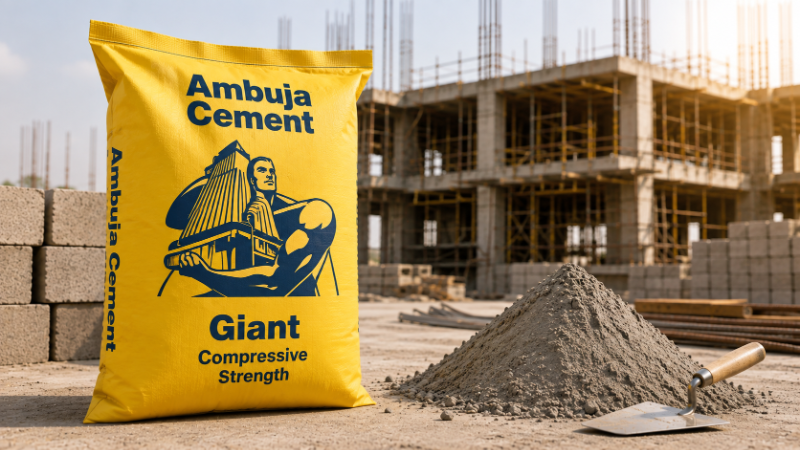
Market Position: Second-largest cement producer in India
Ambuja Cement is known for its quality consistency and innovation in cement technology. Their ACC brand partnership has strengthened their market presence significantly.
Key Features:
Compressive strength: 53 MPa (OPC 53) and 43 MPa (OPC 43)
Price range: ₹365-415 per 50 kg bag
Superior durability in coastal and high-rainfall regions
Lower carbon footprint compared to traditional cement
Excellent flowability for better workability
Ambuja is particularly recommended for regions with high moisture exposure, such as coastal areas in Mumbai, Chennai, and Kochi.
Frequently asked
3. ACC Cement
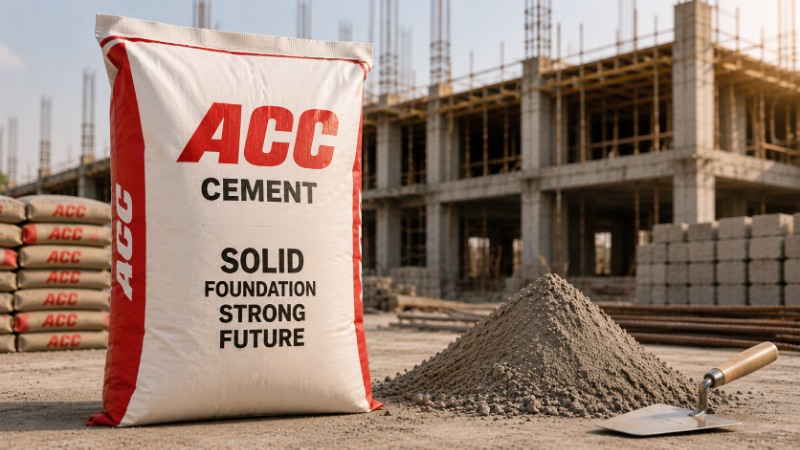
Market Position: Established player with strong brand recall
ACC (Associated Cement Companies) has been serving the Indian construction industry for over seven decades. Their reputation for quality is well-established among architects and builders.
Key Features:
Compressive strength: 53 MPa (OPC 53)
Price range: ₹380-430 per 50 kg bag
Excellent performance in high-temperature environments
Superior adhesive properties
Widely used in premium residential projects
ACC cement is often the preferred choice for high-end residential developments in metropolitan areas like Bangalore, Hyderabad, and Pune.
4. Dalmia Cement
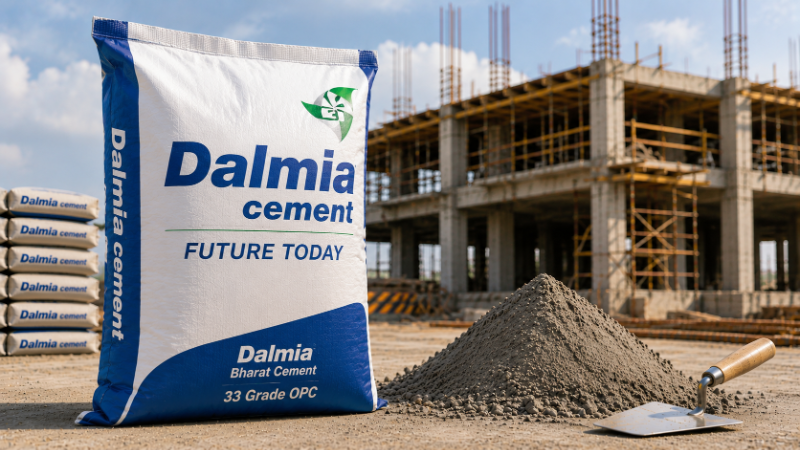
Market Position: Growing player with competitive pricing
Dalmia Cement has expanded rapidly across India and offers competitive pricing without compromising on quality. They have a strong presence in South and East India.
Key Features:
Compressive strength: 53 MPa (OPC 53)
Price range: ₹345-390 per 50 kg bag
Cost-effective option for budget-conscious projects
Good strength development at early stages
Suitable for all types of residential construction
Dalmia is an excellent choice if you're looking for quality cement at competitive prices for mid-range residential projects.
5. Shree Cement
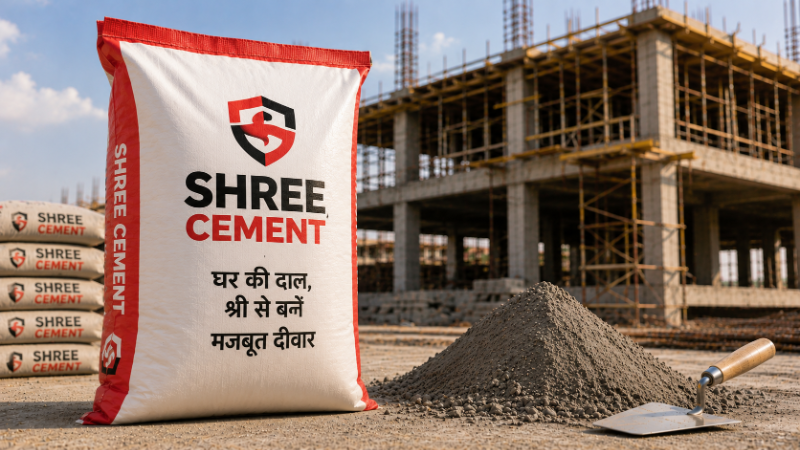
Market Position: Premium quality manufacturer
Shree Cement is known for producing high-quality cement with excellent strength development. They have a strong presence in North India, particularly in Rajasthan, Uttar Pradesh, and Delhi.
Key Features:
Compressive strength: 53 MPa (OPC 53)
Price range: ₹355-405 per 50 kg bag
Superior early strength development
Excellent durability in varied climatic conditions
Lower water requirement for mixing
Shree Cement is particularly popular in North India and is often recommended for projects requiring faster construction timelines.
6. India Cement
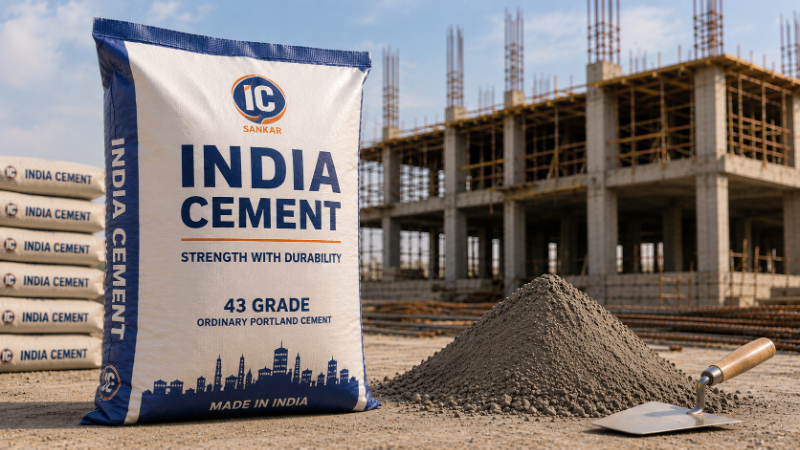
Market Position: Established South Indian manufacturer
India Cement has a strong foothold in South India and is known for consistent quality. They're particularly popular in Tamil Nadu, Andhra Pradesh, and Telangana.
Key Features:
Compressive strength: 53 MPa (OPC 53)
Price range: ₹350-400 per 50 kg bag
Excellent performance in tropical climates
Good water retention properties
Suitable for both residential and commercial projects
For residential projects in South India, India Cement is a reliable and locally-trusted option.
7. Binani Cement
Market Position: Quality-focused manufacturer
Binani Cement emphasizes quality control and has invested in modern manufacturing facilities. They're known for consistency in strength development.
Key Features:
Compressive strength: 53 MPa (OPC 53)
Price range: ₹360-410 per 50 kg bag
Excellent consistency in quality
Good performance in monsoon-prone areas
Suitable for all weather conditions
Binani is a solid choice for residential projects where consistent quality is paramount.
8. JK Cement
Market Position: Established North Indian player
JK Cement has a strong presence in North India and is known for innovative cement solutions. They offer specialized products for different construction requirements.
Key Features:
Compressive strength: 53 MPa (OPC 53)
Price range: ₹365-415 per 50 kg bag
Good early strength development
Excellent workability
Wide product range for different applications
JK Cement is popular for residential projects in states like Rajasthan, Uttar Pradesh, and Haryana.
9. Heidelberg Cement (IndianCement)
Market Position: Global manufacturer with Indian operations
Heidelberg Cement brings international quality standards to the Indian market through its IndianCement brand. They focus on sustainability and quality.
Key Features:
Compressive strength: 53 MPa (OPC 53)
Price range: ₹375-425 per 50 kg bag
International quality standards
Eco-friendly manufacturing processes
Premium quality for high-end projects
For premium residential projects where international quality standards are required, Heidelberg Cement is an excellent choice.
10. Birla Cement
Market Position: Established manufacturer with strong brand presence
Birla Cement, part of the Aditya Birla Group, offers reliable cement products with consistent quality across India.
Key Features:
Compressive strength: 53 MPa (OPC 53)
Price range: ₹370-420 per 50 kg bag
Good strength development
Excellent durability
Wide availability across India
Birla Cement is a trusted choice for residential projects across all major Indian cities.
Comparing Cement Types for Residential Construction
OPC 53 (Ordinary Portland Cement Grade 53)
OPC 53 is the most commonly used cement for residential construction in India. It provides higher early strength and is suitable for most applications including RCC structures, plastering, and flooring.
Advantages:
High early strength development
Suitable for general-purpose construction
Good durability
Widely available across India
Disadvantages:
Higher heat of hydration (not ideal for massive structures)
Slightly higher cost compared to OPC 43
OPC 43 (Ordinary Portland Cement Grade 43)
OPC 43 is suitable for general-purpose construction where high early strength is not critical. It's more economical and generates less heat during hydration.
Advantages:
Cost-effective option
Lower heat of hydration
Suitable for large structures
Good long-term strength
Disadvantages:
Slower early strength development
May require longer curing time
PPC (Portland Pozzolana Cement)
PPC is an excellent choice for residential construction, especially in coastal areas and regions with high moisture. It contains pozzolanic materials that enhance durability.
Advantages:
Superior water resistance
Better durability in harsh environments
Lower heat of hydration
Eco-friendly option
Cost-effective in many regions
Disadvantages:
Slower early strength development
Requires proper curing
Factors to Consider When Selecting Cement
Geographic Location and Climate
Your location plays a crucial role in cement selection. For coastal areas like Mumbai, Goa, and Chennai where salt spray and high moisture are concerns, PPC cement is recommended. For inland areas with moderate climate, OPC 53 is suitable. For regions with heavy rainfall like Kerala and Northeast India, water-resistant PPC is ideal.
Project Type and Structure
For load-bearing walls and RCC structures, OPC 53 is recommended. For masonry work and plastering, OPC 43 or PPC is suitable. For large structures that generate significant heat during hydration, PPC is a better choice.
Budget Considerations
While cement costs between ₹345-430 per 50 kg bag, the difference is marginal compared to the overall construction cost. It's better to invest in quality cement from reputable brands rather than saving a few rupees on inferior quality.
BIS Certification
Always ensure that the cement you purchase carries BIS certification. Check the bag for the BIS mark and verify that it meets IS 269-2015 or IS 8112-2013 standards.
Brand Reputation and Availability
Choose brands with strong reputation and wide availability in your region. This ensures consistent supply and easy access for future repairs or additions.
Quality Checks Before Purchase
Before purchasing cement, perform these simple quality checks:
Check the manufacturing date: Cement loses strength over time. Avoid cement manufactured more than 3 months ago.
Verify BIS certification: Look for the BIS mark on the bag.
Check the weight: A 50 kg bag should weigh exactly 50 kg.
Inspect the bag: Look for any tears or damage that might indicate moisture exposure.
Feel the texture: Cement should feel fine and free-flowing, not lumpy.
Check the price: Prices significantly lower than market rates may indicate counterfeit products.
Cost Analysis and Budget Planning
For a typical 1000 sq ft residential house construction in India, you would need approximately 2000-2500 bags of cement (depending on design and soil conditions). At an average cost of ₹385 per bag, the total cement expenditure would be approximately ₹7.7-9.6 lakhs.
While this seems significant, remember that cement typically accounts for only 8-12% of the total construction cost. Compromising on cement quality to save a few thousand rupees is not advisable, as it can lead to structural issues and costly repairs later.
Storage and Handling Tips
Proper storage is crucial to maintain cement quality:
Store cement in a dry place away from moisture
Keep bags off the ground on wooden pallets
Cover the stack with waterproof material
Ensure proper ventilation to prevent moisture accumulation
Use cement on a first-in-first-out basis
Avoid storing cement for more than 3 months
Expert Recommendations for Different Scenarios
For Budget-Conscious Projects
Choose Dalmia Cement or Shree Cement OPC 43. These brands offer good quality at competitive prices without compromising structural integrity.
For Coastal Residential Projects
Opt for PPC from Ambuja Cement or ACC Cement. The superior water resistance properties justify the slightly higher cost.
For High-End Residential Projects
Select UltraTech OPC 53 or Heidelberg Cement for premium quality and consistent performance. These brands are preferred by architects and builders for luxury residential developments.
For Rapid Construction Timelines
Choose Shree Cement or JK Cement OPC 53 for faster early strength development, allowing quicker progression to subsequent construction phases.
Finding Quality Contractors and Suppliers on AECORD
Selecting the right cement is only half the battle; ensuring proper application is equally important. On AECORD, you can connect with experienced contractors, engineers, and suppliers who understand local cement quality standards and can recommend the best options for your specific project requirements.
Whether you're building a residential property in Delhi, Bangalore, Mumbai, or any other Indian city, AECORD provides access to vetted professionals who have hands-on experience with various cement brands and can guide you through the selection and application process. You can also find reliable cement suppliers through the platform who can ensure timely delivery and authentic products.
Conclusion
Selecting the best cement for your house construction is a decision that impacts your home's longevity and structural integrity. While India offers numerous quality cement brands, UltraTech, Ambuja, ACC, and Shree Cement stand out for their consistent quality and wide availability.
Consider your location's climate, project type, budget, and timeline when making your final decision. Always verify BIS certification and check for manufacturing dates. Remember that the small premium you pay for quality cement is an investment in your home's future.
For personalized recommendations based on your specific project location and requirements, connect with experienced architects and contractors on AECORD. These professionals can provide insights into regional cement preferences, local supplier reliability, and best practices for cement storage and application in your area.
Ready to start your residential construction project with confidence? Find verified cement suppliers, contractors, and engineers on AECORD today and ensure your home is built on the strongest foundation possible.
Frequently Asked Questions
What are the BIS standards for cement used in house construction in India?
In India, cement is regulated by the Bureau of Indian Standards (BIS) through IS 269-2015 for Ordinary Portland Cement (OPC) and IS 8112-2013 for Portland Pozzolana Cement (PPC). These standards ensure that cement meets minimum strength requirements, durability criteria, and chemical composition specifications for safe residential construction.
Which is the best cement brand for house construction in India?
UltraTech Cement is India's largest cement manufacturer and is highly recommended for residential construction due to its consistent quality, wide availability, and excellent water resistance properties. Other top choices include Ambuja Cement and ACC Cement, depending on your region and specific construction needs.
What is the difference between OPC 53 and PPC cement for home construction?
OPC 53 (Ordinary Portland Cement) offers higher compressive strength of 53 MPa at 28 days and is ideal for rapid construction, while PPC (Portland Pozzolana Cement) has reduced heat of hydration and better durability in moisture-prone areas. PPC is particularly recommended for coastal regions and areas with high rainfall.
How much does cement cost per bag in India for house construction?
The price of cement in India typically ranges from ₹365-430 per 50 kg bag depending on the brand and region. UltraTech costs ₹370-420, Ambuja ranges from ₹365-415, and ACC is priced between ₹380-430 per bag, with variations based on local market conditions.
Why is cement quality important for house construction?
High-quality cement ensures structural integrity, durability, and longevity of your home. Poor quality cement can lead to structural weakening, cracks, water seepage, and significantly reduced building lifespan, making it crucial to choose BIS-certified brands for residential projects.