

Bathroom wall tiles are more than just a functional element—they're a design statement that can transform your bathroom from ordinary to extraordinary. Whether you're renovating a small apartment in Mumbai or building a luxury home in Bangalore, choosing the right wall tiles can dramatically impact the aesthetic and functionality of your bathroom space.
In India's diverse climate and architectural landscape, bathroom tiles must balance style with practicality. With humidity levels varying across regions and water exposure being a constant concern, selecting the right design is crucial. This comprehensive guide will help you navigate the numerous options available and create a bathroom space that's both beautiful and durable.
Understanding Bathroom Wall Tile Basics
Before diving into design ideas, it's essential to understand the fundamentals of bathroom wall tiles. Unlike floor tiles, wall tiles don't need to bear weight, which means they can be lighter and more decorative. However, they must still resist moisture and humidity effectively.
Build cost · Bengaluru, May 2026
Types of Bathroom Wall Tiles
The Indian market offers several tile options, each with distinct characteristics:
Ceramic Tiles: The most affordable option, ranging from ₹50 to ₹300 per square foot. They're water-resistant and come in endless designs, making them popular for Indian bathrooms.
Porcelain Tiles: More durable than ceramic, costing ₹150 to ₹500 per square foot. They're virtually non-porous and ideal for humid climates like Kolkata or coastal cities.
Glass Tiles: Premium option at ₹300 to ₹800 per square foot. They create a luxurious feel and are excellent for contemporary designs.
Natural Stone Tiles: Including marble, slate, and granite, ranging from ₹200 to ₹1000+ per square foot. These add elegance but require regular maintenance.
Subway Tiles: Versatile rectangular tiles that have become increasingly popular in Indian homes, available at ₹80 to ₹400 per square foot.
Contemporary Tile Design Ideas
Minimalist Monochromatic Designs
Minimalism continues to dominate modern bathroom design across Indian cities. A monochromatic color scheme using white, gray, or soft beige tiles creates a clean, spa-like atmosphere. This approach works particularly well in compact bathrooms common in urban areas like Delhi and Pune.
Consider using large-format tiles (60x120 cm) in a single color to minimize grout lines and create a seamless appearance. This reduces visual clutter and makes small spaces feel larger. Pair these with minimal fixtures and accessories for a truly contemporary look.
Frequently asked
Geometric Patterns
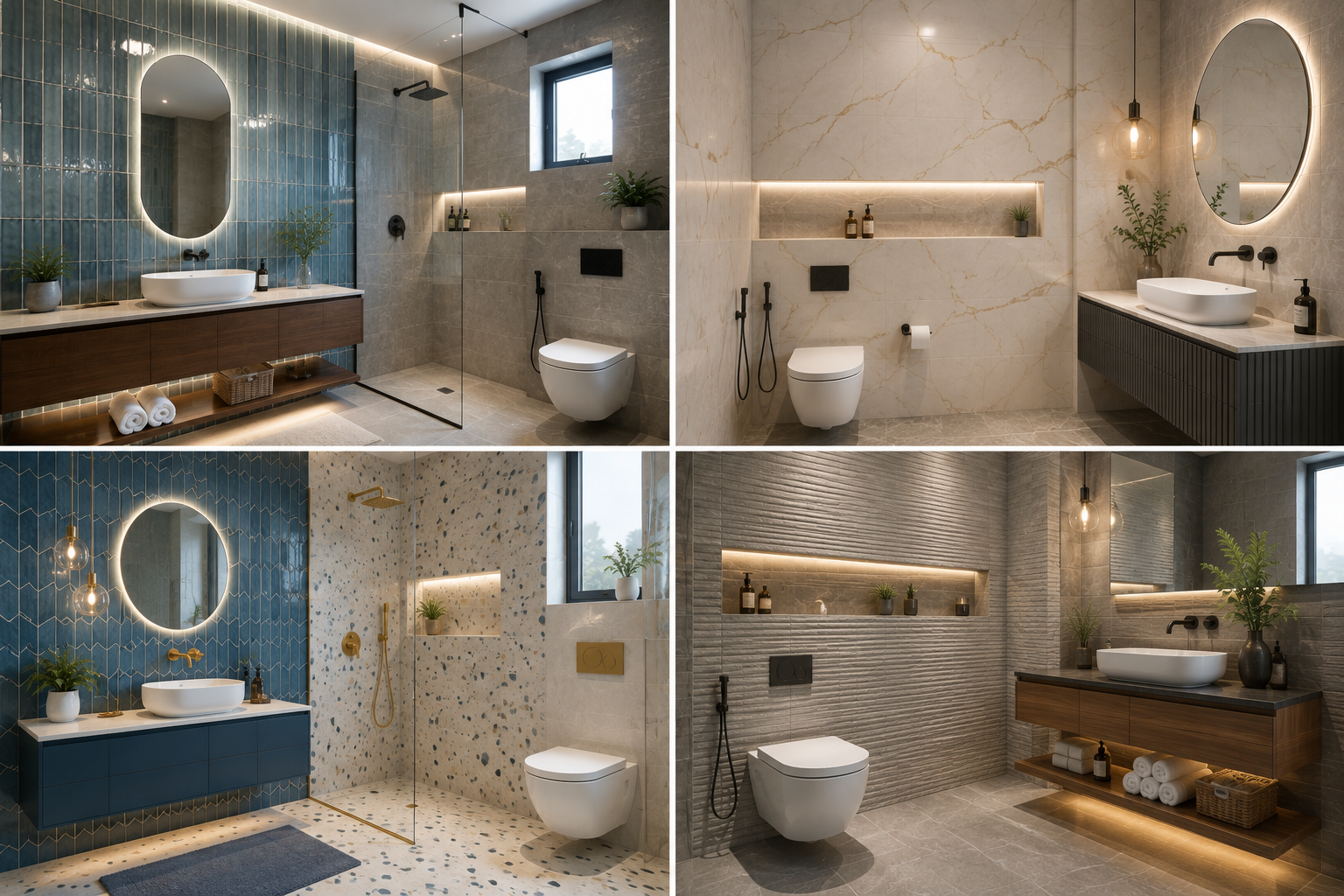
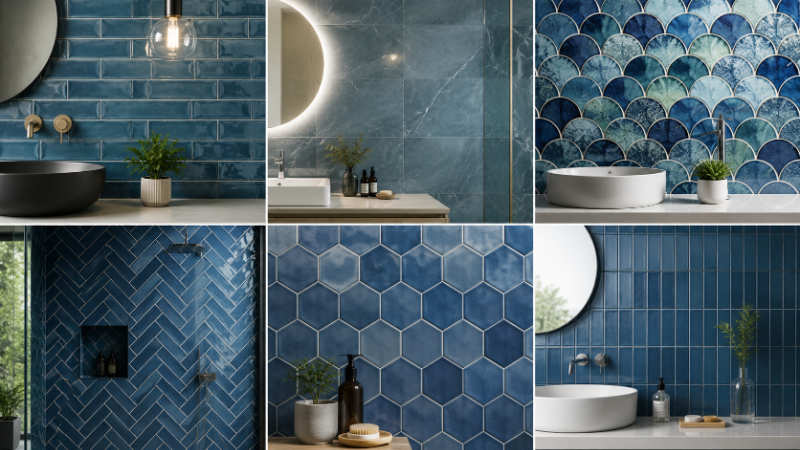
Geometric tile patterns have gained significant traction in Indian bathroom design. Hexagonal tiles, chevron patterns, and interlocking geometric designs add visual interest without overwhelming the space. These patterns work beautifully as accent walls or partial coverage designs.
In Hyderabad and Bangalore, many homeowners are combining geometric tiles with neutral backgrounds. For example, a wall of blue and white geometric tiles paired with plain white surrounding walls creates a focal point that's both modern and sophisticated.
Subway Tile Arrangements
The classic subway tile—a 10x20 cm rectangular tile—remains timeless. However, modern applications go beyond the traditional straight pattern. Consider these variations:
Herringbone Pattern: Creates dynamic movement and visual interest
Stacked Bond: Offers a contemporary, grid-like appearance
Running Bond: A traditional offset pattern that's versatile and forgiving
Vertical Stack: Makes walls appear taller, ideal for bathrooms with low ceilings
Color Palettes for Indian Bathrooms
Cool Tones
Blue and green tiles evoke a sense of calm and are particularly suitable for humid Indian climates. Light blues work well in coastal cities like Goa, while deeper teals create luxury in urban homes. These colors also hide water marks and mineral deposits better than light neutrals.
Gray tiles have become increasingly popular as a neutral alternative to white. They're forgiving in terms of maintenance and work with virtually any design style, from traditional to ultra-modern.
Warm Tones
Warm earth tones—terracotta, ochre, and sand colors—connect to India's architectural heritage. These colors work beautifully in homes with traditional design elements and are particularly popular in Jaipur, Udaipur, and other heritage cities.
Cream and beige tiles create a warm, inviting atmosphere while maintaining a clean aesthetic. These colors are practical for Indian bathrooms as they hide dust and water spots effectively.
Bold and Dark Colors
Dark tiles—charcoal, navy, or black—create dramatic, sophisticated spaces. While they may show water spots more easily, they're incredibly stylish and work well with white grout or contrasting light fixtures. Dark tiles are gaining popularity in metropolitan areas where homeowners want to make bold design statements.
Specialty and Textured Tile Options
Textured and 3D Tiles
Three-dimensional tiles add depth and tactile interest to bathroom walls. Rippled, wave-patterned, or embossed tiles create visual movement and can transform a plain wall into an art installation. These are particularly effective as accent walls above the sink or around the bathtub area.
However, textured tiles require careful cleaning to prevent water and soap residue from accumulating in crevices. They're best used in areas with good ventilation.
Mosaic and Mixed Media
Mosaic tiles—small pieces of ceramic, glass, or stone arranged in patterns—add artistic flair. In Indian homes, traditional mosaic designs inspired by Mughal architecture are experiencing a revival. These can be custom-designed to reflect personal style or cultural preferences.
Mixed media approaches, combining different tile types and finishes, create visual richness. For example, pairing glossy subway tiles with matte geometric accents adds sophistication.
Marble and Stone Tiles
Natural stone tiles, particularly marble, exude luxury and are popular in upscale Indian homes. Indian marble varieties like Makrana marble from Rajasthan offer beautiful white and gray options. However, marble requires sealing and regular maintenance to prevent staining and water damage.
Slate tiles provide a more rustic, earthy aesthetic and are more durable than marble. They're excellent for creating textured, non-slip surfaces in bathrooms.
Design Strategies for Different Bathroom Sizes
Small Bathrooms
In compact Indian urban bathrooms, tile selection is crucial for maximizing perceived space:
Use large-format tiles to reduce visual fragmentation from grout lines
Choose light colors to reflect light and create an airy feel
Consider vertical tile orientation to draw eyes upward and add height
Avoid busy patterns that can make small spaces feel cramped
Use a single color scheme rather than multiple colors to maintain cohesion
Large Bathrooms
Larger bathrooms allow for more creative expression:
Incorporate accent walls with bold patterns or colors
Mix different tile sizes and types for visual interest
Create distinct zones with different tile treatments
Use darker colors that would overwhelm small spaces
Experiment with complex patterns and textures
Practical Considerations for Indian Climates
Humidity and Moisture Management
India's varying climates present different challenges. Coastal cities like Mumbai and Chennai experience high humidity year-round, while Delhi's humidity is seasonal. Porcelain tiles are superior for humid climates due to their low porosity (less than 0.5%), preventing mold and mildew growth.
Ensure proper ventilation through exhaust fans or windows. Tiles with anti-bacterial glazing are increasingly popular in Indian bathrooms for health and hygiene reasons.
Maintenance and Durability
Indian water quality varies significantly by region. Hard water in cities like Delhi and Bangalore can leave mineral deposits on tiles. Glossy tiles hide spots less effectively than matte finishes, but they're easier to clean. Consider using water-resistant grout and sealants rated for Indian conditions.
Tiles with micro-textures or matte finishes are more forgiving regarding water spots and fingerprints, making them practical for busy households.
Installation and Grout Considerations
Grout Color Selection
Grout color significantly impacts the final appearance. Light grout (white or cream) emphasizes individual tiles and is popular for subway tile installations. Dark grout (charcoal or black) minimizes the visibility of grout lines and creates a seamless appearance, particularly effective with large-format tiles.
Contrasting grout—such as white grout with dark tiles—creates bold geometric patterns and is increasingly popular in contemporary Indian homes.
Tile Layout Patterns
The layout pattern affects both aesthetics and installation difficulty:
Straight Layout: Most economical and easiest to install
Offset/Running Bond: More forgiving of imperfect walls, hides irregularities
Herringbone: Creates dynamic movement but requires more cuts and expertise
Diagonal: Makes spaces feel larger but requires more cuts and waste
Trending Designs in 2024
Terrazzo and Aggregate Tiles
Terrazzo-style tiles, featuring chips of marble or stone in a cement base, are trending in Indian bathrooms. They offer the luxury look of natural stone with better durability and easier maintenance. Prices range from ₹150 to ₹400 per square foot.
Sustainability and Eco-Friendly Options
Environmentally conscious homeowners are increasingly choosing recycled glass tiles or sustainably sourced natural stone. These options support India's green building movement while adding unique character to bathrooms.
Vintage and Retro Styles
Vintage-inspired tiles with patterns reminiscent of 1970s or 1980s design are experiencing a nostalgic revival. These work particularly well in heritage homes or as accent walls in contemporary spaces.
Budget-Friendly Design Tips
Creating a beautiful bathroom doesn't require a massive budget. Consider these cost-effective strategies:
Accent Walls: Use premium tiles only on one wall and more affordable options elsewhere
Tile Combinations: Mix expensive decorative tiles with budget-friendly solid tiles
Partial Coverage: Tile only the splash zone and use paint on upper walls
Local Materials: Choose locally produced tiles to reduce costs and transportation impact
Larger Formats: Fewer large tiles mean less grout and faster installation, reducing labor costs
Working with Professionals
Designing and installing bathroom tiles correctly is crucial for longevity and aesthetics. When selecting contractors or designers in India, look for professionals experienced with local climate conditions and building codes. Platforms like AECORD connect you with vetted architects, designers, and contractors across major Indian cities who specialize in bathroom renovations.
A qualified professional can help you navigate choices, optimize layouts for your space, and ensure proper installation. They'll understand regional variations in tile availability and can source materials efficiently. Whether you're in Kolkata, Pune, Ahmedabad, or any other Indian city, finding the right expert makes the difference between a mediocre and exceptional bathroom.
Conclusion
Bathroom wall tiles offer endless possibilities for creating spaces that reflect your style while meeting practical needs. Whether you prefer minimalist monochromatic designs, bold geometric patterns, or luxurious natural stone, the key is choosing tiles that work with India's climate and your lifestyle.
Start by considering your bathroom size, climate conditions, and maintenance preferences. Then explore design options that excite you. Remember that tiles are a long-term investment—choose quality materials and professional installation for results that last.
Ready to transform your bathroom? Explore design inspiration, gather samples, and consult with experienced professionals. On AECORD, you can find interior designers, architects, and tile specialists throughout India who can bring your bathroom vision to life. Browse profiles, review portfolios, and connect with experts who understand your local market and can deliver exceptional results tailored to your space and budget.
Frequently Asked Questions
What's the best type of bathroom wall tile for humid climates in India?
Porcelain tiles are ideal for humid climates like Kolkata or coastal cities because they're virtually non-porous and highly durable, costing ₹150 to ₹500 per square foot. They resist moisture and humidity far better than ceramic tiles, making them a practical choice for water-exposed bathroom environments.
How do large-format tiles make small bathrooms look bigger?
Large-format tiles (60x120 cm) minimize grout lines and create a seamless appearance that reduces visual clutter, making compact spaces feel larger and more open. This is particularly effective in minimalist monochromatic designs common in urban Indian bathrooms.
What are the most affordable bathroom wall tile options in India?
Ceramic tiles are the most budget-friendly option, ranging from ₹50 to ₹300 per square foot, while still offering water-resistance and endless design choices. They're the most popular choice for Indian bathrooms due to their affordability and variety of styles.
Which tile patterns are trending in modern Indian bathroom design?
Geometric patterns like hexagonal tiles and chevron designs, along with subway tiles in herringbone or stacked bond arrangements, are currently trending in Indian bathrooms. These patterns add visual interest while maintaining a modern, sophisticated aesthetic.
Do bathroom wall tiles need to be as durable as floor tiles?
No, bathroom wall tiles don't need to bear weight like floor tiles, so they can be lighter and more decorative. However, they must still effectively resist moisture and humidity to prevent damage and mold growth in wet bathroom environments.