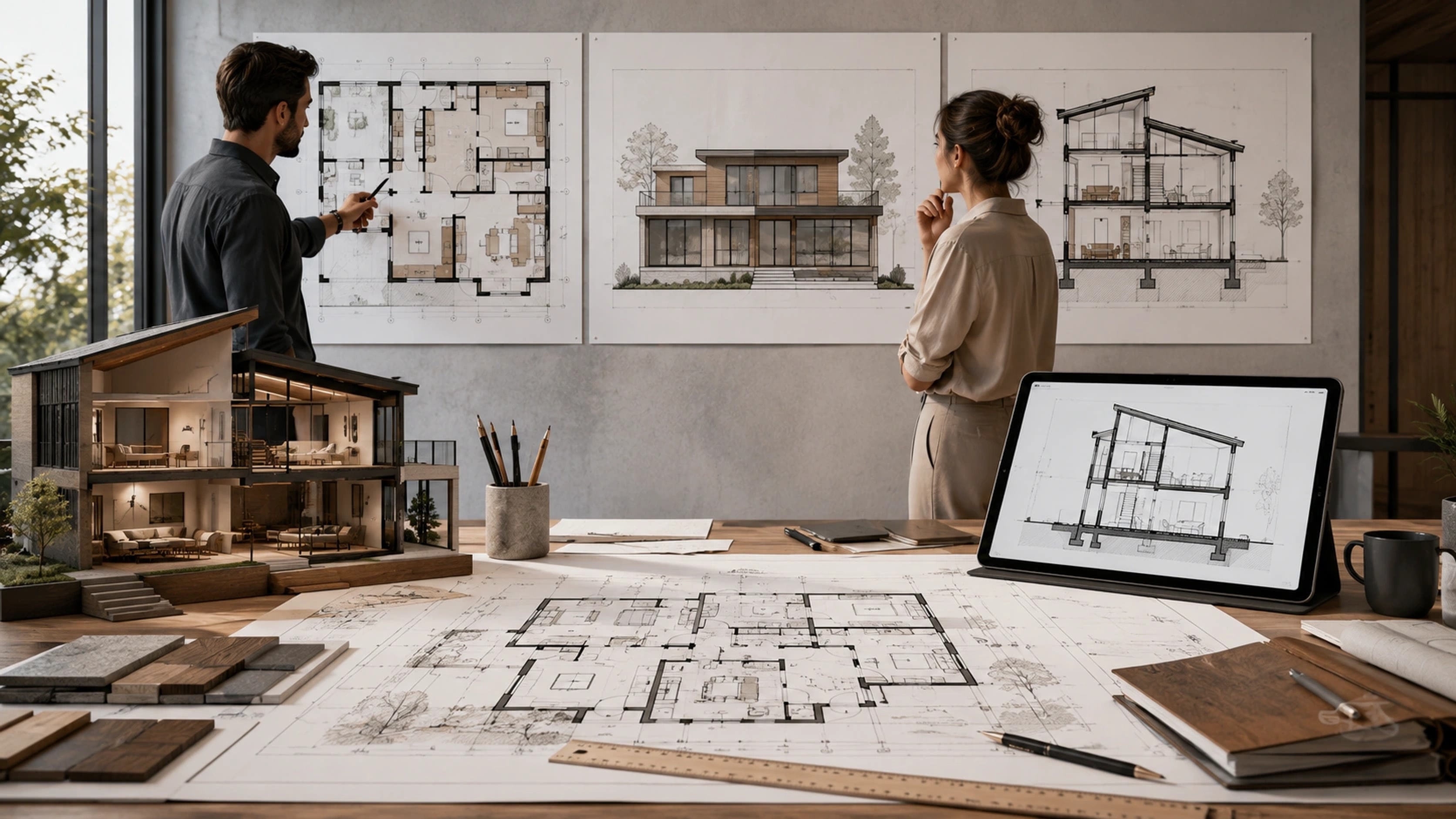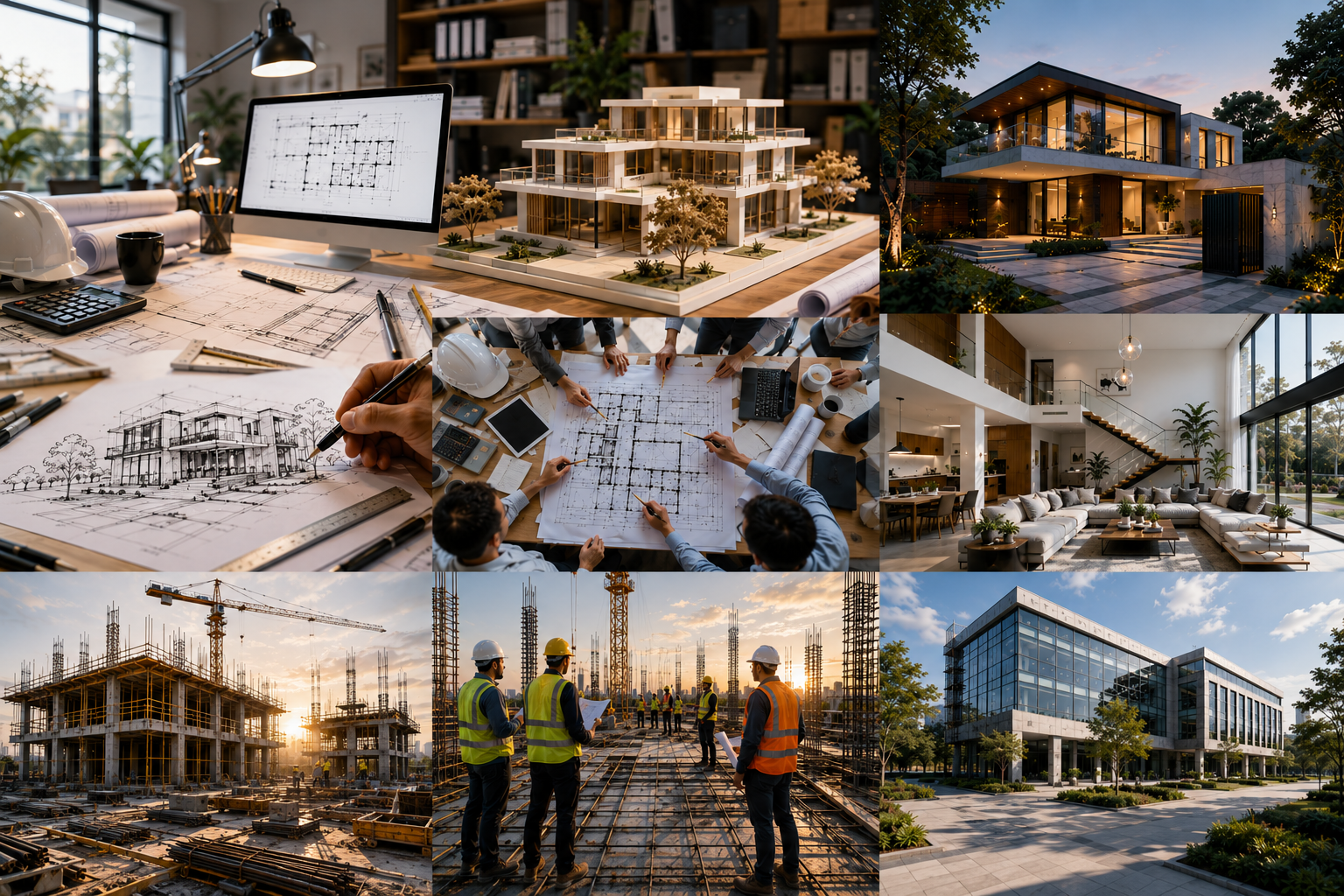


Artificial intelligence is rapidly transforming the architecture and design industry, and Indian architects and designers are at a critical juncture. The question isn't whether AI will impact architecture—it already is. The real question is whether professionals in India's booming construction sector will embrace it as an opportunity to enhance their capabilities or resist it as a threat to their livelihoods. The answer, as with most transformative technologies, lies somewhere in between.
Understanding AI's Role in Architecture Today
Artificial intelligence in architecture isn't about robots replacing architects. Rather, it's about augmenting human creativity and expertise with computational power. From generative design tools that can produce hundreds of design variations in minutes to AI-powered project management systems that optimize timelines and budgets, the technology is already reshaping how architecture firms in India operate. /blog/smarter-project-execution-with-ai-tools-that-help-architects-and-designers-work-efficiently
The Indian architecture sector, valued at approximately ₹2.5 trillion and growing at 7-8% annually, is increasingly adopting AI-driven solutions. Cities like Bangalore, Mumbai, Delhi, and Hyderabad are seeing a surge in architecture firms integrating AI tools into their workflows. This adoption is driven by the need to deliver projects faster, more cost-effectively, and with greater precision—demands that clients and developers are increasingly making.
Build cost · Bengaluru, May 2026
The Opportunity: How AI Enhances Architectural Practice
Accelerating the Design Process
One of the most immediate benefits of AI in architecture is speed. Generative design algorithms can analyze thousands of design parameters simultaneously and produce multiple solutions that meet specific criteria. For a residential complex in Bangalore or a commercial project in Gurugram, architects can use AI to explore design variations considering factors like natural light, ventilation, structural efficiency, and cost—all in a fraction of the time traditional methods would require.
This doesn't eliminate the architect's role; it enhances it. Instead of spending weeks on initial concepts, architects can focus their creative energy on refining and optimizing the best solutions. The result is higher-quality designs delivered faster, which translates to competitive advantages in India's fast-paced construction market.
Improving Project Management and Cost Control
AI-powered project management tools are helping architecture firms in India maintain tighter control over budgets and timelines. Machine learning algorithms can analyze historical project data to predict potential delays, cost overruns, and resource bottlenecks. For projects in cities like Pune or Hyderabad, where labor costs and material availability can be unpredictable, this predictive capability is invaluable.
These tools can also optimize resource allocation, ensuring that architects, engineers, and support staff are deployed efficiently across multiple projects. The result is improved profitability without compromising on quality—a critical factor for architecture firms operating in India's competitive landscape.

Frequently asked
Enhanced Compliance and Regulatory Navigation
India's building codes and regulations vary significantly across states and municipalities. The National Building Code (NBC) is comprehensive, but local variations in cities like Chennai, Kolkata, and Delhi can be complex. AI tools can be trained on these regulations to automatically check designs for compliance, flagging potential issues before they become costly problems during the approval process.
This capability is particularly valuable for firms working across multiple Indian cities, where staying abreast of all regulatory requirements is a significant administrative burden. By automating compliance checks, architects can focus on design excellence while reducing the risk of costly revisions during the approval phase.
Sustainability and Energy Optimization
With India's growing focus on sustainable architecture and green building standards like LEED and IGBC (Indian Green Optimisation Council), AI tools that optimize building performance are increasingly valuable. Machine learning algorithms can simulate energy consumption, analyze thermal comfort, and optimize HVAC systems based on local climate conditions.
For projects in hot climates like Delhi or Mumbai, or cooler hill stations, AI can help architects design buildings that minimize energy consumption while maintaining comfort. This not only reduces operational costs for building owners but also aligns with India's commitment to reducing carbon emissions—a growing priority for developers and institutional clients.
The Threat: Valid Concerns in the Indian Context
Job Displacement and Skill Devaluation
The most immediate concern for architects in India is job displacement. If AI can automate routine design tasks, what happens to junior architects and junior designers who traditionally develop their skills through these tasks? In a country where architecture is a popular career choice with thousands of graduates entering the field annually from institutions across India, this is a legitimate concern.
However, history suggests that technological disruption typically creates new opportunities even as it eliminates others. The introduction of CAD software in the 1990s was similarly feared, yet it ultimately created more jobs by enabling architects to take on more complex projects and expanding the scope of what was possible.
Quality and Creativity Concerns
Some architects worry that over-reliance on AI will lead to homogenized, uninspired designs. If multiple firms are using the same AI tools with similar parameters, will all buildings start to look the same? This is a valid concern, but it assumes a misunderstanding of how AI should be used in architecture.
AI is most effective when used as a tool to explore possibilities, not as a replacement for human judgment and creativity. The architect's role shifts from executing routine tasks to curating, refining, and making the critical aesthetic and functional decisions that distinguish excellent architecture from merely adequate design.
Data Privacy and Security Issues
For Indian architecture firms using cloud-based AI tools, data security is a significant concern. Project designs, client information, and proprietary methodologies represent valuable intellectual property. The regulatory landscape in India, including considerations around data localization and the Digital Personal Data Protection Act, adds complexity.
Firms must carefully evaluate AI tools and ensure they have robust data protection measures in place, particularly when working with sensitive projects or government clients.
The Realistic Path Forward: Threat and Opportunity Coexist
Embracing Change While Managing Transition
The most successful architecture firms in India will be those that view AI not as a binary choice between threat and opportunity, but as a tool that requires thoughtful integration. This means:
Investing in training: Architects and designers need to understand how to work effectively with AI tools. This isn't about becoming data scientists; it's about understanding what AI can and cannot do, and how to use it as part of a comprehensive design process.
Redefining roles: As routine tasks become automated, the value of architects shifts toward strategic thinking, client relationships, creative direction, and project leadership—skills that are inherently human and difficult to automate.
Maintaining human-centered design: The best architectural solutions consider human experience, cultural context, and local conditions. AI can optimize for efficiency, but architects must ensure designs also optimize for livability, beauty, and cultural appropriateness.
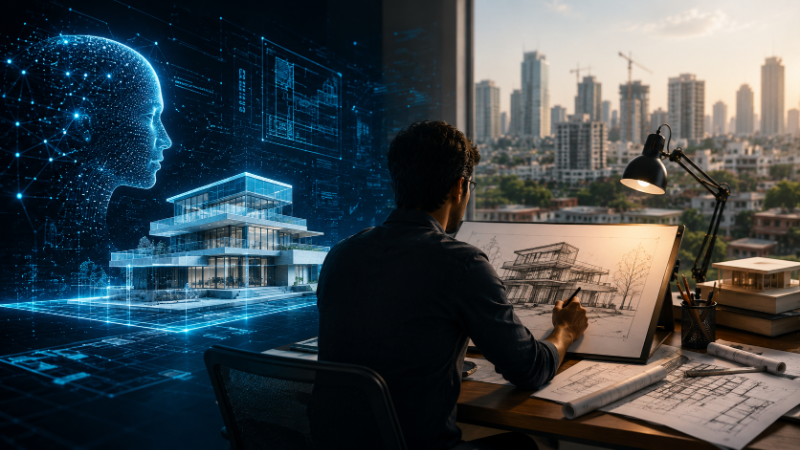
The Skills That Will Remain in Demand
Certain architectural skills are unlikely to be fully automated in the foreseeable future:
Client relationships and communication: Understanding client needs, managing expectations, and presenting solutions persuasively remain fundamentally human activities.
Contextual and cultural sensitivity: Designing buildings that respect local culture, climate, and urban context requires human judgment and empathy.
Complex problem-solving: Projects with competing constraints, unique challenges, and innovative requirements benefit from human creativity and experience.
Project leadership: Managing teams, making critical decisions under uncertainty, and navigating the political and social dimensions of construction projects remain human domains.
Practical Steps for Indian Architects to Thrive in an AI-Augmented Future
Develop AI Literacy
Architects don't need to become AI experts, but they should understand the capabilities and limitations of available tools. This includes exploring platforms that offer generative design, AI-powered visualization, and project analytics. Many of these tools offer trial periods—use them to understand what's possible.
Focus on Specialization
As AI handles routine tasks, architects who develop deep expertise in specific areas—sustainable design, heritage conservation, urban planning, specialized building types—will remain highly valuable. In Indian cities, there's growing demand for architects who understand local regulations, climate conditions, and cultural requirements in depth.
Build Complementary Skills
Architects who combine design expertise with skills in data analysis, project management, or client communication will be particularly valuable. These complementary skills make architects more versatile and harder to replace.
Collaborate Rather Than Compete with AI
Rather than viewing AI as competition, view it as a collaborator. Use AI to handle the computational heavy lifting—analyzing thousands of design variations, checking compliance, optimizing energy performance—while you focus on the creative and strategic aspects of design.
The Industry Perspective: What's Actually Happening
Leading architecture firms across India are already integrating AI into their practices. Firms in Mumbai, Delhi, and Bangalore are using AI-powered design tools to accelerate project delivery, reduce errors, and improve client satisfaction. The firms that are succeeding aren't replacing architects with AI; they're using AI to make their architects more productive and their designs more sophisticated.
This trend will likely accelerate. As AI tools become more accessible and affordable, even mid-sized and smaller architecture practices will adopt them. The question for individual architects isn't whether to engage with AI, but how to do so in a way that enhances their value proposition.
Finding the Right Expertise for Your AI Transition
If you're an architecture firm in India looking to integrate AI into your practice, or if you're searching for architects who are already skilled in AI-augmented design, AECORD can connect you with the right professionals. AECORD's platform brings together architecture, engineering, and construction professionals across India who are embracing new technologies while maintaining the highest standards of design and practice.
Whether you're in Bangalore, Mumbai, Delhi, Pune, or any other Indian city, you can find architects and designers who understand both traditional architectural excellence and modern AI-powered workflows. AECORD makes it easy to identify professionals who have the skills and mindset to navigate the evolving landscape of architecture in India.
Conclusion: The Future Is Collaborative
AI in architecture is neither a threat to be feared nor a panacea to be blindly embraced. It's a tool that, when used thoughtfully, can enhance architectural practice, improve project outcomes, and create new opportunities for talented professionals.
For architects in India, the message is clear: engage with AI, develop the skills to use it effectively, and maintain the human-centered values that make architecture meaningful. The firms and professionals that thrive in the coming years will be those that view AI as a collaborator in the creative process, not a replacement for human expertise.
The future of architecture in India is bright, and it will be shaped by professionals who embrace change while staying true to the principles that make great architecture possible. If you're ready to take the next step in your architectural career or find professionals who are, AECORD is here to help you navigate this exciting transition.
Ready to connect with forward-thinking architecture and design professionals in India? Explore AECORD today and discover how the right expertise can help you thrive in an AI-augmented future.
Frequently Asked Questions
Will AI replace architects in India?
No, AI in architecture is about augmenting human creativity with computational power, not replacing architects. AI tools handle design variations and routine tasks, allowing architects to focus on creative refinement and strategic decision-making rather than eliminating their role.
How can Indian architects use AI to speed up project delivery?
Generative design algorithms powered by AI can analyze thousands of design parameters simultaneously and produce multiple solutions in minutes—work that traditionally takes weeks. This allows architects to explore more options quickly and focus their creative energy on optimizing the best solutions.
What are the main benefits of AI in architecture project management?
AI-powered project management tools help Indian firms predict delays, cost overruns, and resource bottlenecks using historical project data. They also optimize resource allocation across multiple projects, improving profitability while maintaining quality standards.
How does AI help with building code compliance in India?
AI tools can be trained on India's National Building Code and local municipal regulations to automatically check designs for compliance across different states and cities. This reduces the administrative burden and minimizes costly revisions during the approval process.
Is the Indian architecture sector already adopting AI?
Yes, India's ₹2.5 trillion architecture sector is increasingly integrating AI tools, with firms in major cities like Bangalore, Mumbai, Delhi, and Hyderabad leading adoption. This growth is driven by client demands for faster delivery, cost-effectiveness, and greater precision.