

Understanding Acoustic Design and Its Importance in Homes
Noise pollution has become an increasingly significant concern for urban dwellers across India, particularly in metropolitan areas like Mumbai, Bangalore, Delhi, and Hyderabad. Whether you're dealing with traffic sounds, neighbor noise, or the challenges of open-plan living, acoustic design offers practical solutions to create peaceful, comfortable living spaces. Acoustic design is the science of controlling sound within a space—absorbing, blocking, and managing noise to create an environment conducive to relaxation, focus, and well-being.
For apartment dwellers and those living in open-plan homes, poor acoustics can significantly impact quality of life, affecting sleep, productivity, and mental health. The good news is that with thoughtful planning and the right materials, you can substantially reduce unwanted noise without requiring major structural changes. This comprehensive guide explores practical acoustic design strategies tailored to Indian homes and living conditions.
Build cost · Bengaluru, May 2026
The Science Behind Sound and Noise Control
How Sound Travels Through Spaces
Sound travels in waves through air and solid materials. Understanding how sound moves through your home is the first step toward effective noise control. Sound can travel directly through the air, reflect off hard surfaces, or transmit through structural elements like walls, floors, and ceilings. In apartments, sound from neighboring units travels through shared walls, while in open-plan homes, sound bounces freely between rooms without natural barriers.
There are three primary methods to control sound: absorption (converting sound energy into heat), blocking (preventing sound from passing through), and damping (reducing vibration). Effective acoustic design typically combines all three approaches.
Decibel Levels and Comfort Standards
Understanding sound intensity helps you set realistic goals. Normal conversation measures around 60 decibels (dB), while traffic noise in Indian cities typically ranges from 70-85 dB. For comfortable living spaces, experts recommend maintaining indoor noise levels below 50 dB during the day and 40 dB at night. Most people find levels above 55 dB disruptive to sleep and concentration.
Frequently asked
Sound-Absorbing Materials for Indian Homes
Acoustic Panels and Wall Treatments
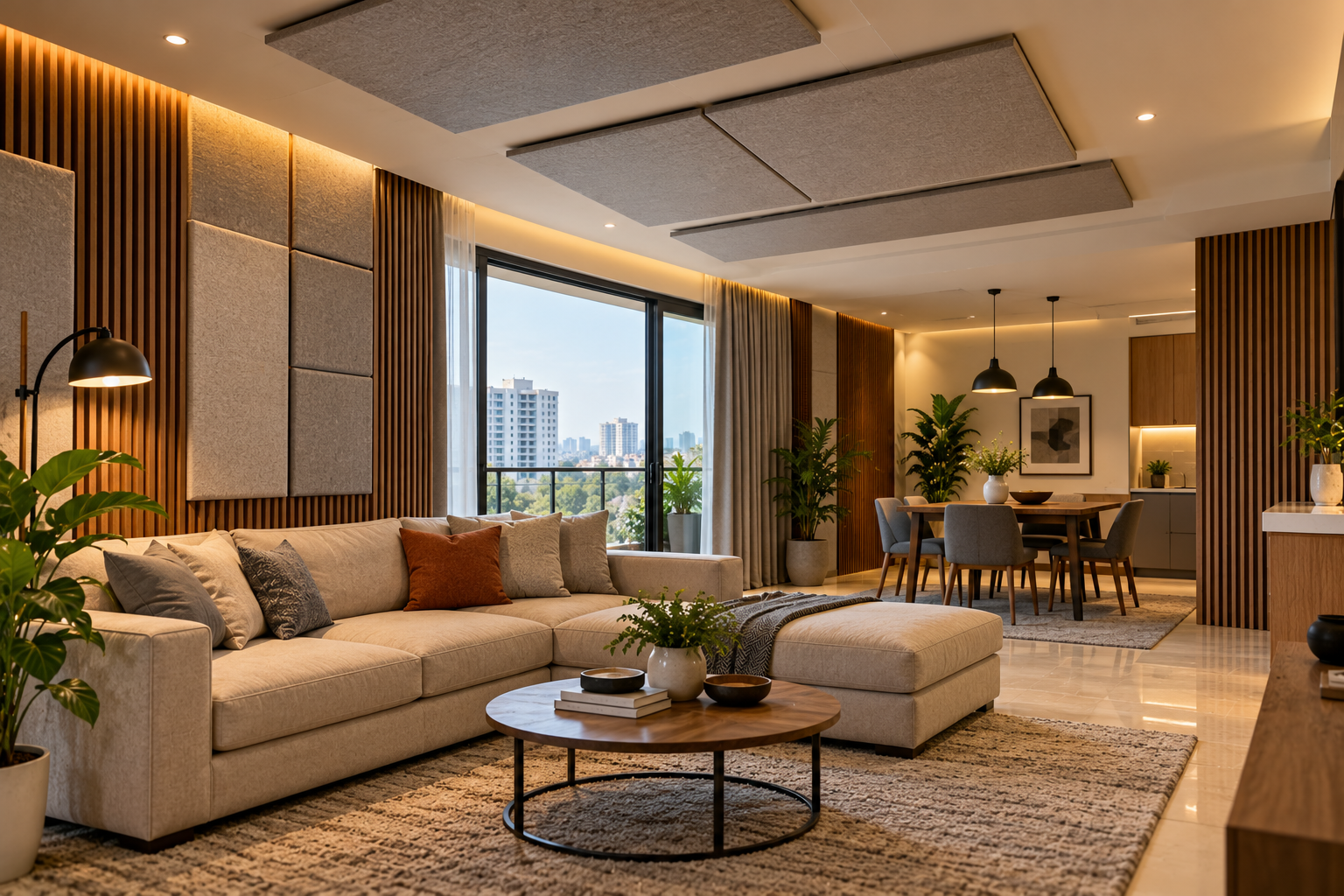
Acoustic panels are among the most effective and aesthetically pleasing solutions for noise reduction. These panels absorb sound energy rather than reflecting it, reducing reverberation and echo in rooms. In India, quality acoustic panels typically cost between ₹800 to ₹3,000 per square meter, depending on material and brand.
Common acoustic panel materials include:
Fiberglass panels: Excellent sound absorption, affordable, and widely available across Indian markets
Mineral wool panels: Fire-resistant, durable, and suitable for high-humidity environments common in Indian climates
Melamine foam: Lightweight, easy to install, and available in various colors and designs
Fabric-wrapped panels: Combine sound absorption with interior design flexibility, perfect for living rooms and bedrooms
Strategic placement is crucial. Install acoustic panels on walls opposite sound sources, in corners where sound tends to accumulate, and behind entertainment systems. For apartments, focus on shared walls with neighbors—this is where most noise intrusion occurs.
Carpets, Rugs, and Soft Furnishings
Hard flooring common in Indian homes—such as ceramic tiles, marble, and concrete—reflects sound and amplifies noise. Introducing soft furnishings dramatically improves acoustics. A quality carpet or area rug can absorb up to 10-15% of sound energy. Thick wool rugs are particularly effective, while synthetic options offer budget-friendly alternatives starting at ₹500-1,000 per square meter.
Beyond flooring, incorporate soft furnishings throughout your space:
Heavy curtains and drapes (₹200-800 per meter)
Upholstered furniture
Wall hangings and tapestries
Cushions and throws
These elements not only absorb sound but also add warmth and comfort to your living environment.
Structural Solutions for Noise Isolation
Wall Construction and Soundproofing
For serious noise issues, particularly in apartments with thin walls, structural soundproofing becomes necessary. The most effective approach is creating a decoupled wall system—essentially building a secondary wall that vibrates independently from the primary wall, preventing sound transmission.
Decoupled Wall System:
Install resilient channels or metal studs on existing walls (₹150-300 per linear meter)
Add sound-dampening material like acoustic mineral wool (₹400-800 per square meter)
Install drywall or acoustic board (₹200-500 per square meter)
Seal all gaps with acoustic caulk (₹100-200 per cartridge)
This system can reduce sound transmission by 10-15 dB, making a significant difference in perceived noise levels. For apartments in Bangalore, Mumbai, or Delhi where shared walls are common, this investment typically costs ₹2,500-5,000 per square meter but provides substantial long-term benefits.
Door and Window Sealing
Sound leaks through gaps around doors and windows as easily as through walls. Addressing these weak points is often more cost-effective than major structural work. Install acoustic door seals (₹300-800 per door) that compress when the door closes, blocking sound transmission. For windows, consider:
Weatherstripping and acoustic caulk (₹100-300 per window)
Heavy thermal curtains that also dampen sound (₹200-600 per meter)
Laminated glass windows if replacing existing windows (₹500-1,200 per square meter)
Laminated glass, with its interlayer of vinyl, provides excellent sound insulation—particularly valuable for apartments on busy streets in Indian cities where traffic noise is persistent.
Acoustic Solutions for Open-Plan Living
Spatial Planning and Layout Strategies
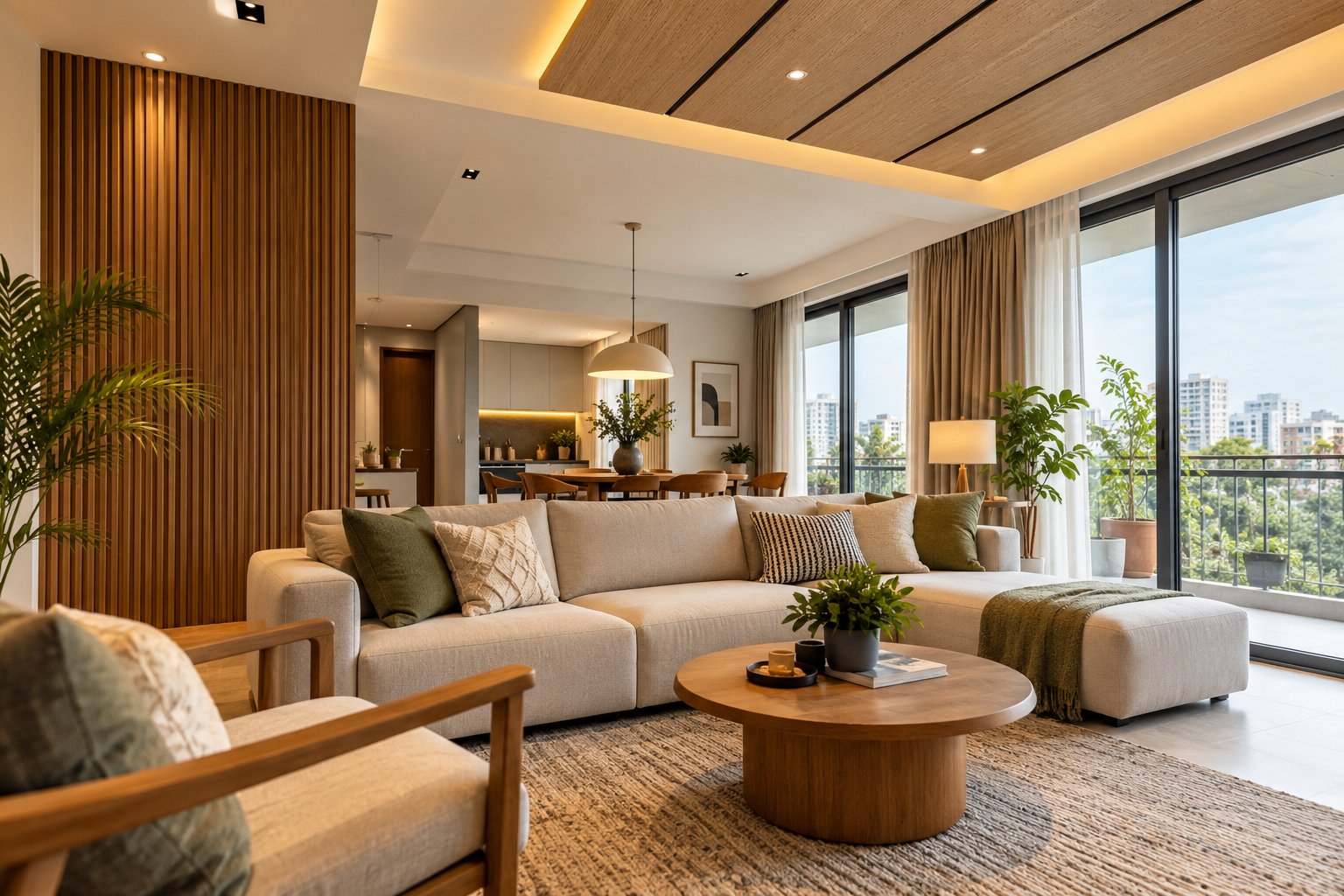
Open-plan homes present unique acoustic challenges because sound travels freely without natural barriers. Strategic layout planning can significantly improve acoustics without compromising the open feel:
Zone definition: Use furniture arrangement, level changes, and partial walls to create acoustic zones. A bookshelf or low partition can reduce sound transmission between living and dining areas
Activity separation: Position quiet activities (reading, sleeping) away from noise-generating activities (entertainment systems, kitchen appliances)
Material transitions: Use different flooring materials to define spaces and absorb sound—carpet in living areas, tiles in kitchens
Vertical elements: Tall bookshelves, room dividers, and wall-mounted storage break up sound paths and add visual interest
Partial Walls and Acoustic Dividers
Rather than full walls, consider partial acoustic dividers that provide sound control while maintaining visual openness. Options include:
Acoustic sliding panels: Flexible solutions that can be adjusted based on needs (₹5,000-15,000 per panel)
Fabric screens: Lightweight, portable, and effective for temporary sound reduction (₹2,000-8,000 per screen)
Bookshelf walls: Combine storage with sound absorption—books are excellent sound absorbers (₹10,000-30,000 depending on size)
Green walls: Living plant walls provide both aesthetic appeal and acoustic benefits (₹3,000-10,000 per square meter)
Ceiling Treatments and Overhead Noise Control
Addressing Noise from Above
In apartments, noise from upstairs neighbors often proves more challenging than wall-transmitted sound. Ceiling treatments require careful consideration, particularly in rental properties. Options include:
Acoustic ceiling tiles: If you own the property, replacing the ceiling with acoustic tiles (₹300-800 per square meter) dramatically improves sound insulation
Suspended ceiling systems: Create an air gap that absorbs sound (₹1,500-4,000 per square meter)
Acoustic insulation batts: For new construction or renovations, install mineral wool between joists (₹200-500 per square meter)
Temporary solutions: Fabric-wrapped panels mounted on ceilings provide some absorption without permanent changes (₹1,000-3,000 per panel)
HVAC and Mechanical System Noise Management
Reducing Appliance and System Noise
Modern homes contain numerous noise sources—air conditioning units, water pumps, refrigerators, washing machines, and ventilation systems. Managing mechanical noise improves overall acoustic comfort:
Vibration isolation: Mount appliances on rubber pads or springs to prevent vibration transmission to floors and walls (₹500-2,000 per unit)
Ductwork insulation: Wrap AC ducts with acoustic insulation to reduce system noise (₹100-300 per linear meter)
Equipment placement: Position noisy appliances away from living and sleeping areas
Maintenance: Regular servicing of AC units and water pumps reduces noise levels significantly
Practical Implementation Strategy
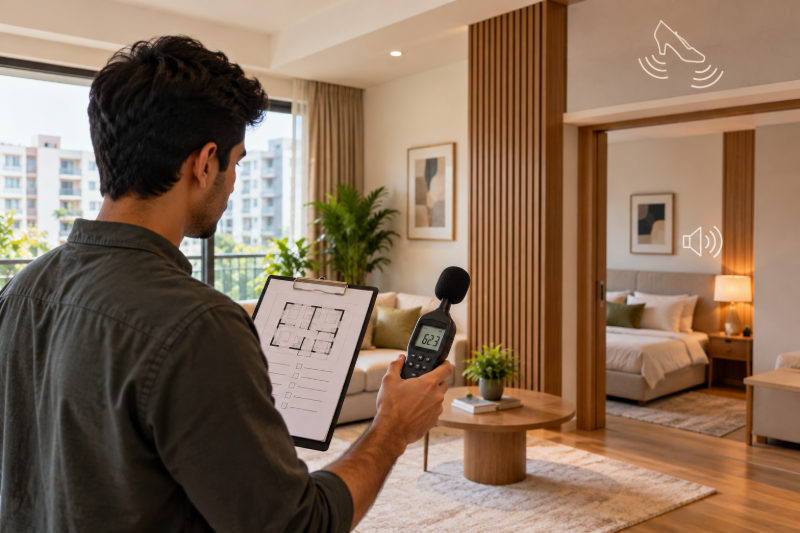
Assessing Your Acoustic Needs
Before investing in acoustic solutions, identify your primary noise sources. Is it external traffic, neighbor noise, or internal echoing? Different sources require different solutions. In Mumbai and coastal cities, humidity affects material performance—choose moisture-resistant options. In Delhi and northern cities, temperature fluctuations matter—select materials that expand and contract minimally.
Phased Implementation Approach
Most homeowners benefit from a phased approach rather than attempting everything simultaneously:
Phase 1 (Budget: ₹10,000-25,000): Soft furnishings, rugs, curtains, and acoustic panels for primary noise sources
Phase 2 (Budget: ₹25,000-50,000): Door and window sealing, additional acoustic treatments, partial dividers for open-plan spaces
Phase 3 (Budget: ₹50,000+): Structural solutions like decoupled walls, ceiling treatments, or window replacement
Maintenance and Long-Term Acoustic Performance
Acoustic materials require minimal maintenance but benefit from regular care. Vacuum acoustic panels and soft furnishings monthly to prevent dust accumulation, which reduces sound absorption. Check door and window seals annually, replacing weatherstripping as needed. In humid climates, ensure proper ventilation to prevent mold growth on porous materials.
Conclusion: Creating Your Acoustic Sanctuary
Effective acoustic design transforms apartments and open-plan homes into peaceful, comfortable sanctuaries. By combining sound-absorbing materials, strategic layout planning, and targeted structural solutions, you can significantly reduce unwanted noise without extensive renovation. The key is understanding your specific acoustic challenges and implementing solutions that match your budget and lifestyle.
Whether you're dealing with traffic noise in Bangalore, neighbor disturbance in Mumbai, or the acoustic challenges of open-plan living in Delhi, practical solutions exist. Start with affordable soft furnishings and acoustic panels, then progress to structural improvements as needed.
Ready to transform your home's acoustics? Finding the right acoustic design professional is crucial for optimal results. Explore AECORD, India's leading B2B2C marketplace for architecture and construction professionals, where you can connect with experienced acoustic designers, interior architects, and construction experts across major Indian cities. Whether you need consultation, design services, or implementation, AECORD connects you with vetted professionals who understand the unique acoustic challenges of Indian homes. Browse acoustic design specialists on AECORD today and take the first step toward a quieter, more comfortable living space.