

Understanding 8mm Bison Laminated Cement Bonded Particle Board: A Complete Guide for Indian Construction Professionals
In the Indian construction and interior design industry, selecting the right building materials can make a significant difference in project outcomes, durability, and cost-effectiveness. One material that has gained considerable traction among architects, engineers, and contractors is the 8mm thickness Bison laminated cement bonded particle board in ivory finish (361688). This comprehensive guide will help you understand its properties, applications, advantages, and how to source it effectively through platforms like AECORD.
Build cost · Bengaluru, May 2026
What is Bison Cement Bonded Particle Board?
Composition and Manufacturing Process
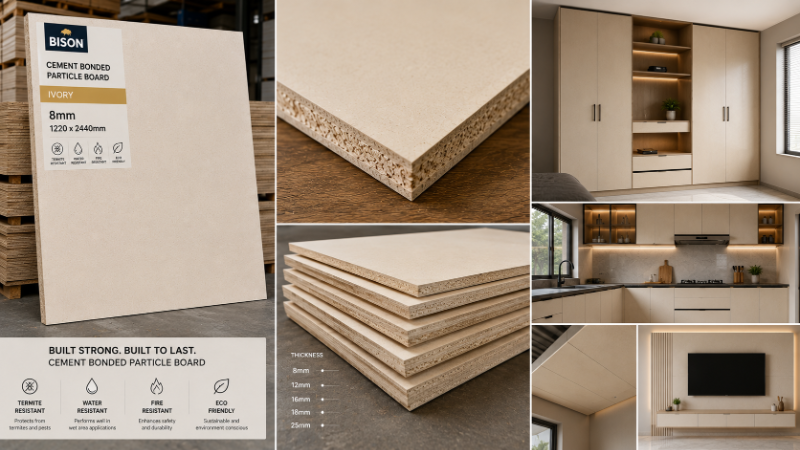
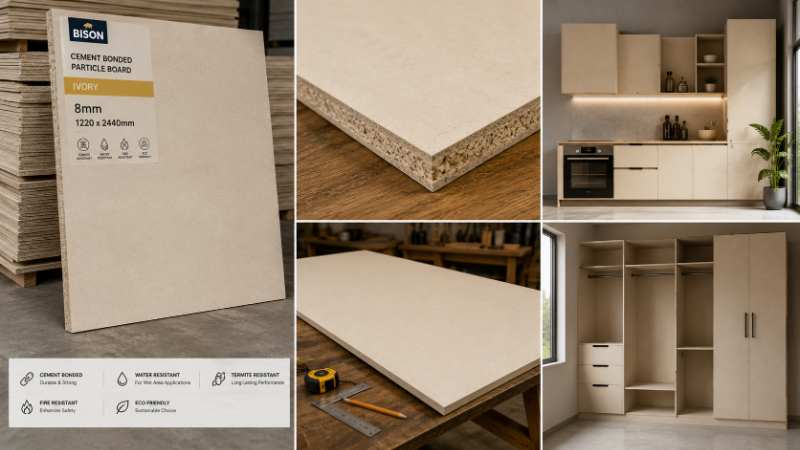
Bison cement bonded particle board is an engineered composite material manufactured by combining wood particles with Portland cement and other additives. The 8mm thickness variant with dimensions of 1220mm x 2440mm is specifically designed for applications requiring moderate structural support with excellent moisture resistance.
The manufacturing process involves:
Mixing wood particles with Portland cement binder
Adding water and chemical additives for enhanced performance
Pressing the mixture under high pressure and temperature
Applying the ivory laminate finish for aesthetic appeal and additional protection
Quality testing for strength, moisture resistance, and dimensional stability
This process creates a dense, homogeneous board that outperforms traditional particle boards in terms of durability and performance characteristics.
Key Specifications of the 8mm Variant
The specific variant (361688) with 8mm thickness and dimensions of 1220mm x 2440mm offers:
Thickness: 8mm (ideal for non-structural applications and lightweight partitions)
Standard Dimensions: 1220mm x 2440mm (approximately 2.97 square meters per sheet)
Finish: Ivory laminate with a smooth, washable surface
Density: Approximately 1.1-1.2 g/cm³
Moisture Resistance: Excellent, even in high-humidity environments
Frequently asked
Physical and Performance Properties
Strength and Durability Characteristics
The cement bonding in this particle board provides superior strength compared to conventional adhesive-bonded boards. The 8mm thickness delivers adequate structural performance for most interior applications without excessive weight.
Compressive Strength: Typically ranges from 3.5-4.5 MPa, making it suitable for applications with moderate load requirements. This is significantly higher than standard particle boards, which usually range from 1.5-2.5 MPa.
Bending Strength: The modulus of rupture is approximately 2.0-2.5 MPa, providing good rigidity for shelving, partition panels, and cabinet backing.
Dimensional Stability: The cement matrix ensures minimal expansion or contraction, even when exposed to temperature and humidity fluctuations common in Indian climates—from coastal regions to dry interior areas.
Moisture and Environmental Resistance
One of the standout features of cement bonded particle board is its exceptional resistance to moisture. Unlike traditional MDF or particle board, this material:
Does not swell or warp when exposed to water or high humidity
Resists fungal growth and termite damage naturally
Maintains structural integrity in wet areas like bathrooms and kitchens
Can be used in outdoor applications with proper protective coatings
Complies with Indian building codes for moisture-resistant materials
This makes it particularly valuable in Indian cities with high humidity levels like Mumbai, Kolkata, Bangalore, and Chennai, where moisture-related damage is a common concern.
Fire Resistance and Safety
The cement bonded composition provides inherent fire resistance. The material has a low flame spread rating and does not readily ignite, making it suitable for applications where fire safety is a concern. This aligns well with Indian building regulations and fire safety codes, particularly important for commercial projects and high-rise residential buildings.
Applications in Indian Construction and Interiors
Residential Applications
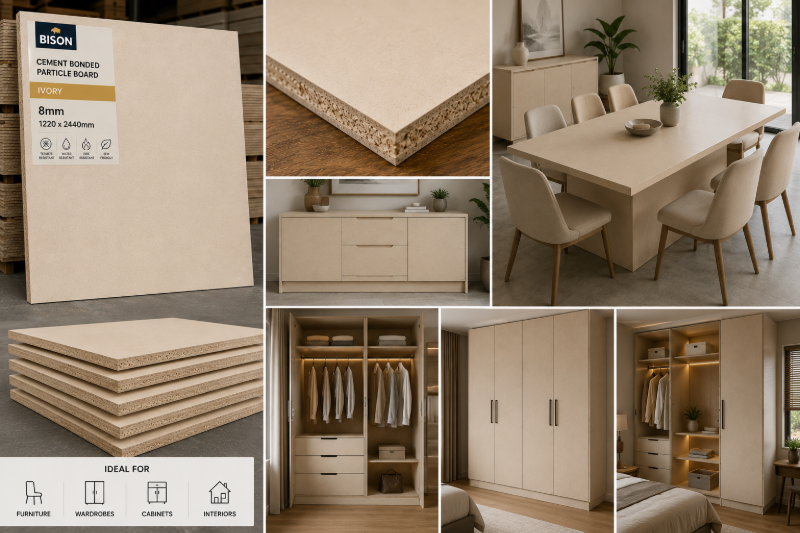
In residential projects across India, the 8mm Bison laminated particle board is ideal for:
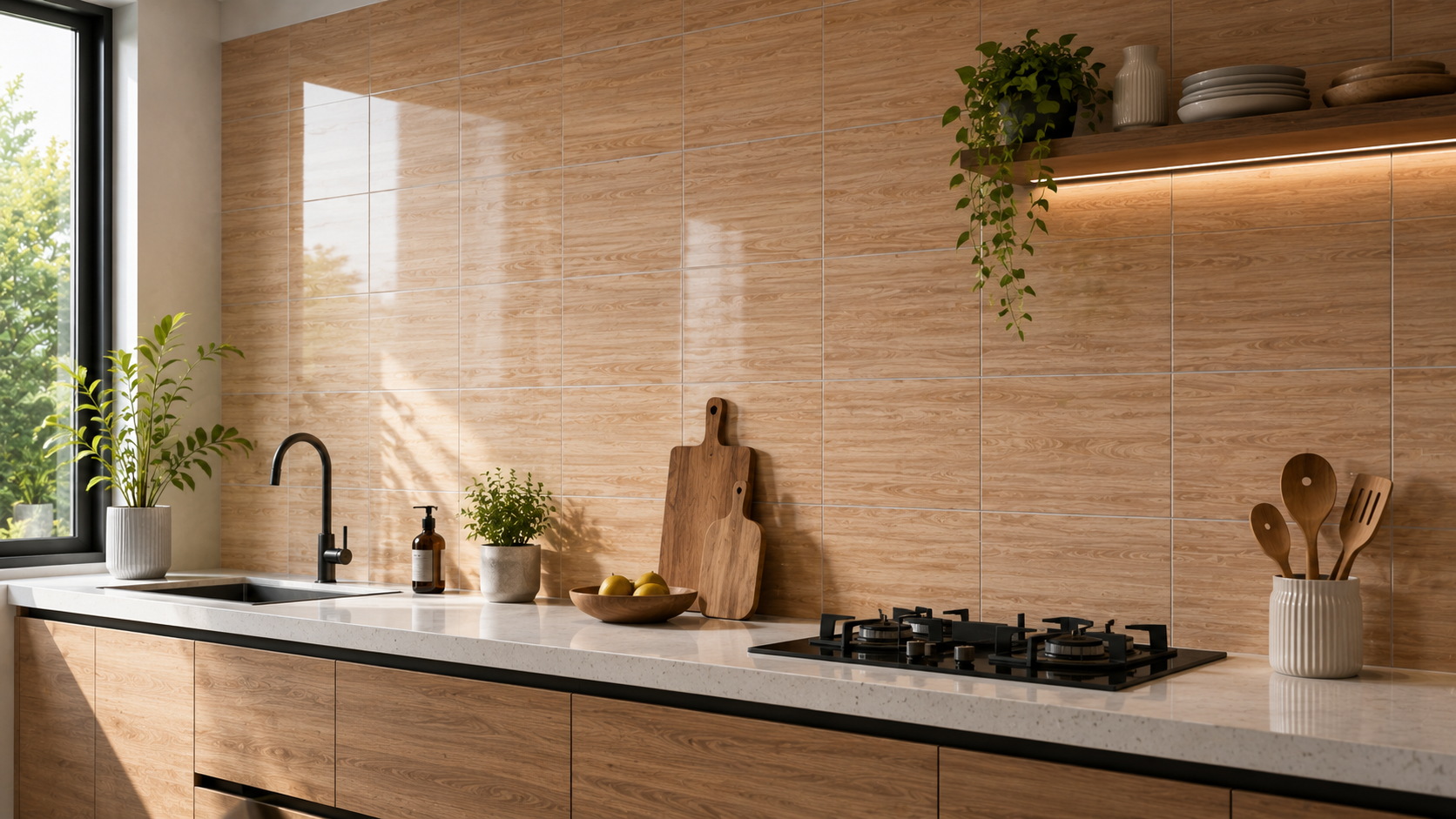
Kitchen Backsplashes: The ivory finish is elegant and the moisture resistance protects against splashing and steam
Bathroom Partitions: Withstands humid bathroom environments without degradation
Wardrobe Backing: Provides durable backing for custom wardrobe systems
Wall Cladding: Creates attractive interior finishes in living areas and bedrooms
Shelving Units: Supports books, decorative items, and household goods effectively
Commercial and Institutional Projects
For offices, hospitals, schools, and retail spaces, this material offers:
Durable partition systems that resist daily wear and tear
Hygienic surfaces suitable for healthcare facilities (easy to clean and disinfect)
Cost-effective solutions for temporary or permanent installations
Professional appearance that suits corporate environments
Acoustic properties when combined with appropriate backing materials
Industrial and Specialized Uses
The material also finds application in:
Food processing facilities (moisture and hygiene resistant)
Chemical storage areas (resistant to many common chemicals)
Agricultural buildings and storage structures
Temporary site offices and construction facilities
Signage and display applications
Cost Analysis and Economic Considerations for Indian Markets
Pricing in INR
The cost of 8mm Bison laminated cement bonded particle board (361688) in India typically ranges from ₹1,200 to ₹1,800 per sheet, depending on several factors:
Location: Prices in metropolitan areas like Delhi, Mumbai, and Bangalore may be 10-15% higher than in tier-2 cities
Order Quantity: Bulk purchases can reduce per-unit costs by 15-25%
Supplier Type: Direct manufacturers offer better rates than retail distributors
Delivery Distance: Transportation costs vary significantly across regions
Market Conditions: Prices fluctuate based on raw material costs and demand
For a typical residential project requiring 100 sheets (approximately 297 square meters), the material cost would range from ₹1.2 to ₹1.8 lakhs, making it a competitive option compared to alternatives like marine plywood or premium MDF.
Cost-Benefit Analysis
While the initial cost may be slightly higher than conventional particle board, the long-term value proposition is compelling:
Durability: Lasts 15-20 years in typical indoor applications versus 8-10 years for standard particle board
Maintenance: Requires minimal maintenance and cleaning
Repair Costs: Lower repair and replacement expenses due to superior moisture and damage resistance
Project Timeline: Faster installation reduces labor costs
Resale Value: Properties with quality finishes maintain better resale value
Installation and Handling Guidelines
Storage and Preparation
Proper handling ensures optimal performance:
Store in a dry, well-ventilated area away from direct moisture exposure
Keep boards flat and supported on level surfaces
Maintain ambient temperature between 15-25°C and humidity between 40-60% before installation
Inspect sheets for any damage before installation begins
Allow boards to acclimatize for 24-48 hours in the installation environment
Cutting and Fabrication
The 8mm thickness is easy to work with using standard tools:
Use fine-toothed saws for clean cuts
Circular saws or table saws work well for straight cuts
Jigsaws can handle curved cuts effectively
Wear appropriate PPE including dust masks due to cement dust generation
Pre-drill holes for fasteners to prevent splitting
Fastening and Adhesives
Recommended fastening methods include:
Stainless steel or galvanized screws (to prevent rust)
Cement-compatible adhesives for panel bonding
Spacing of fasteners: 150-200mm for structural applications, 300mm for non-structural
Avoid nails as they can cause splitting in cement-bonded materials
Comparison with Alternative Materials
Versus Marine Plywood
While marine plywood is popular in India, cement bonded particle board offers:
Superior moisture resistance without lamination requirements
Better fire resistance properties
Lower cost (typically 30-40% cheaper)
More uniform quality and consistency
Better dimensional stability
Marine plywood maintains advantages in structural applications requiring higher bending strength and in specialized projects requiring specific certifications.
Versus Standard MDF
Compared to Medium Density Fiberboard:
Cement bonded board is significantly more moisture resistant
Better performance in humid and wet environments
Superior durability and longer lifespan
More resistant to biological degradation
Slightly higher cost but better long-term value
MDF remains preferable for applications requiring fine finishing, painting, or where moisture exposure is minimal.
Environmental and Sustainability Considerations
The cement bonded particle board manufacturing process offers environmental benefits:
Waste Utilization: Uses wood particles and sawdust from timber processing, reducing waste
Recyclability: Can be recycled or repurposed at end-of-life
Durability: Long lifespan reduces replacement frequency and resource consumption
Energy Efficiency: Manufacturing requires less energy compared to some alternatives
Non-Toxic: Cement bonding eliminates formaldehyde and other volatile organic compounds (VOCs) found in some adhesive-based boards
For environmentally conscious projects in India, this material represents a sustainable choice that aligns with green building standards like LEED and IGBC certifications.
Quality Standards and Certifications
When sourcing cement bonded particle board in India, ensure compliance with:
IS 12823: Indian Standard for cement bonded particle boards
ISO 8654: International standard for cement-bonded particle boards
ASTM Standards: For moisture, strength, and durability testing
Fire Safety Codes: Compliance with National Building Code of India (NBC) requirements
Always request third-party test certificates from suppliers to verify material quality and performance specifications.
Finding Quality Suppliers and Professionals on AECORD
The Indian AECO industry has numerous suppliers and installation professionals specializing in cement bonded particle boards. AECORD, India's comprehensive B2B2C marketplace for architecture, engineering, construction, and operations professionals, connects you with verified suppliers across major cities including Delhi, Mumbai, Bangalore, Hyderabad, and Chennai.
Through AECORD, you can:
Compare quotes from multiple suppliers in your region
Verify credentials and past project experience
Access professional installation contractors
Review material specifications and certifications
Connect with architects and engineers experienced with these materials
Practical Tips for Project Implementation
Budgeting and Planning
Calculate exact material requirements to avoid waste and additional costs
Factor in 5-10% wastage for cutting and installation errors
Get quotes from at least three suppliers for comparison
Negotiate bulk discounts for larger projects
Plan installation during dry seasons to minimize moisture-related issues
Project Timeline Considerations
Allow 2-3 weeks for material sourcing and delivery
Installation typically requires 1-2 weeks depending on project scope
Finishing and sealing may require additional 1-2 weeks
Account for weather delays, particularly during monsoon seasons in coastal regions
Quality Assurance
Inspect all delivered sheets for damage and defects
Verify dimensions and thickness before installation
Conduct mock-ups in visible areas before full installation
Document all installations with photographs for warranty purposes
Maintain maintenance schedules as recommended by manufacturers
Conclusion and Next Steps
The 8mm Bison laminated cement bonded particle board (361688) represents an excellent choice for Indian construction and interior design projects. Its combination of moisture resistance, durability, fire safety, and cost-effectiveness makes it suitable for diverse applications from residential homes to commercial facilities.
Whether you're an architect specifying materials, an engineer designing systems, or a contractor managing installations, understanding the properties and applications of this material will enhance your project outcomes.
Ready to source quality cement bonded particle boards for your next project? Visit AECORD today to connect with verified suppliers, contractors, and design professionals across India. Browse detailed product specifications, compare pricing, and access professional services—all on one comprehensive platform designed specifically for AECO professionals. Find the right materials and expertise for your project success.
```