Mud architecture has experienced a remarkable renaissance in contemporary India, proving that traditional construction methods are not merely relics of the past but sophisticated responses to environmental challenges. As sustainability becomes increasingly critical in the construction industry, architects and builders are rediscovering the profound wisdom embedded in vernacular building practices. These climate-responsive mud houses demonstrate how ancient techniques can be seamlessly integrated with modern design principles to create comfortable, durable, and environmentally responsible living spaces.
Understanding Vernacular Mud Construction in India
Vernacular architecture represents the authentic building traditions of specific regions, developed over centuries through careful observation of local climate patterns, available materials, and cultural practices. In India, mud construction has been a cornerstone of building practices across diverse regions—from the Thar Desert of Rajasthan to the tropical zones of Kerala, and from the arid regions of Gujarat to the monsoon-affected areas of Maharashtra.
For more on this, read our detailed guide to GRIHA Certification Process India: Complete Guide.
The fundamental appeal of mud construction lies in its inherent climate-responsiveness. Mud, or adobe, possesses remarkable thermal properties that naturally regulate indoor temperatures. The high thermal mass of mud walls absorbs heat during the day and releases it gradually during cooler nights, maintaining comfortable indoor conditions with minimal mechanical intervention. In hot, dry climates like Jaisalmer or Jodhpur, this property can reduce indoor temperatures by 5-8 degrees Celsius compared to conventional concrete structures.
Beyond thermal regulation, mud construction offers exceptional breathability, allowing moisture vapor to pass through walls naturally. This characteristic prevents moisture accumulation, reducing the risk of dampness-related issues and promoting healthier indoor air quality. For regions experiencing high humidity or monsoon rains—such as Goa, Kerala, or coastal Tamil Nadu—this breathability is particularly valuable.
Build cost · Bengaluru, May 2026
Five Remarkable Mud Houses Showcasing Climate-Responsive Design
1. The Aravalli Retreat in Rajasthan: Desert Climate Mastery
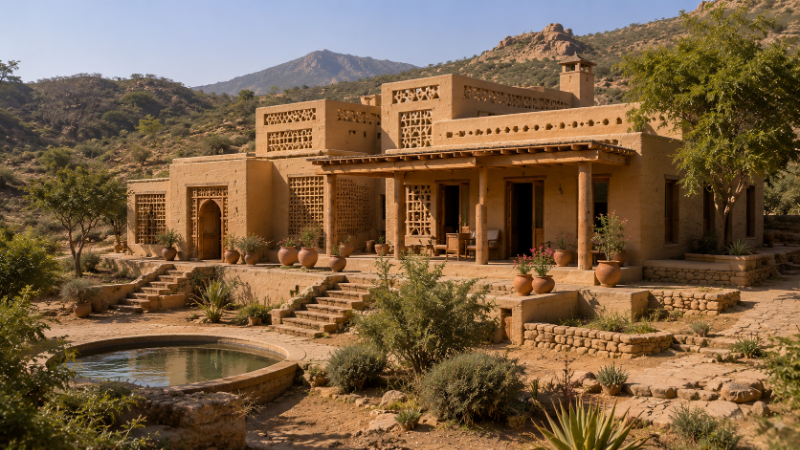
Located in the foothills of the Aravalli Mountains near Udaipur, this residential project exemplifies how mud construction can address the extreme temperature fluctuations of desert regions. The architects designed thick mud walls (approximately 600mm) that create a substantial thermal buffer, maintaining interior temperatures between 20-28°C even when external temperatures swing from 45°C during the day to 15°C at night.
The design incorporates traditional Rajasthani architectural elements, including deep verandas and jali screens that provide passive shading while allowing natural ventilation. The orientation of the building maximizes northern exposure during summer while capturing beneficial southern sunlight during winter months. Water management was addressed through a sophisticated system of underground cisterns constructed from mud and stone, which collect monsoon runoff and maintain cool microclimates around the structure.
Construction costs for this project were approximately 35-40% lower than comparable conventional construction in the region, demonstrating the economic advantages of vernacular methods. The project also created employment for local artisans skilled in traditional mud construction techniques.
2. The Kerala Sustainable Compound: Tropical Humidity Response
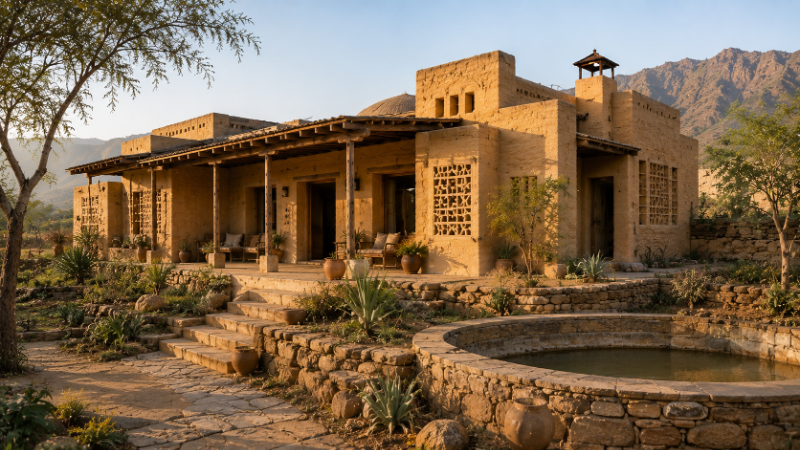
This multi-unit residential compound in Kottayam, Kerala, showcases how mud construction addresses the unique challenges of tropical climates with high humidity and heavy monsoon rainfall. The architects elevated the structures on stone plinths to prevent water ingress while using stabilized mud blocks (mixed with 5-8% cement) for the main walls.
The design features expansive overhanging roofs extending 1.5-2 meters beyond the walls, providing protection from direct rainfall while maintaining cross-ventilation through open corridors. Vertical gardens integrated into the mud walls create evaporative cooling effects, reducing ambient temperatures and improving air quality. The compound includes a central water harvesting system that directs monsoon runoff through bioswales and underground tanks, reducing flooding risks common in Kerala's low-lying areas.
This project demonstrates that mud construction, when properly designed for high-rainfall regions, can match or exceed the durability of conventional materials. The stabilized mud blocks maintain structural integrity while retaining the breathability advantages of traditional mud, making them ideal for the challenging Kerala climate.
Frequently asked
3. The Deccan Plateau Farmhouse: Monsoon-Adaptive Architecture
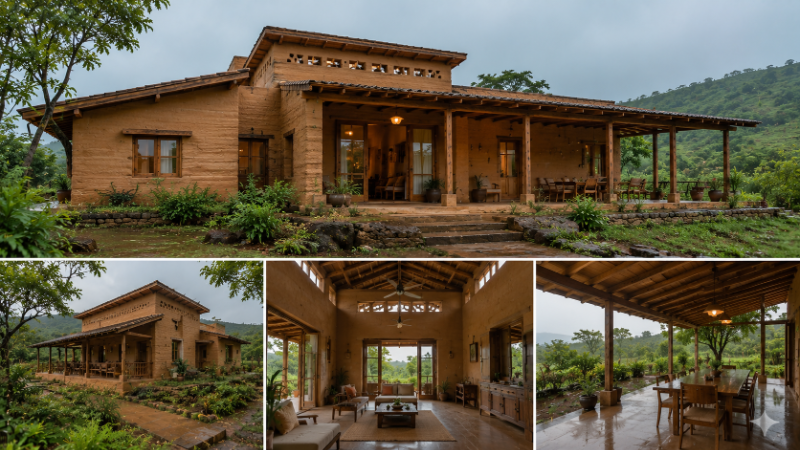
Situated near Pune in Maharashtra, this farmhouse showcases intelligent design strategies for regions experiencing intense monsoon followed by dry summers. The structure employs rammed earth construction—a technique where mud is compacted in layers within formwork—creating monolithic walls of exceptional strength and durability.
The design incorporates sloped terraces that direct water away from the structure while creating functional outdoor spaces. Interior spaces feature high ceilings (3.5-4 meters) that promote natural convection, allowing hot air to rise and escape through strategically placed roof vents. The mud walls, combined with lime plaster finishes, create a naturally alkaline environment that resists mold growth—a critical advantage in monsoon-affected regions.
The farmhouse demonstrates that mud construction can achieve modern comfort standards while remaining faithful to vernacular principles. Climate control is maintained through passive strategies alone, eliminating the need for air conditioning during most of the year and reducing annual energy costs by approximately 60% compared to conventional construction.
4. The Thar Desert Community Housing: Scalable Vernacular Solutions
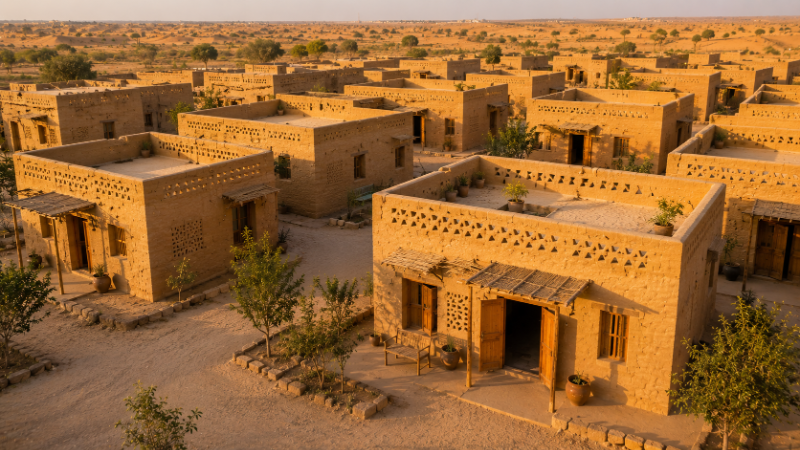
This innovative community housing project in Jaisalmer represents a significant achievement in applying traditional mud construction at scale. The development comprises 50 residential units designed to house migrant workers and local families, all constructed using locally-sourced mud and minimal cement additives.
Each unit features a compact footprint optimized for thermal efficiency, with living spaces arranged around a central courtyard that provides natural lighting, ventilation, and social gathering space. The courtyards function as passive cooling zones, with the mud walls absorbing heat during the day and releasing it at night, creating comfortable outdoor spaces even during peak summer months.
The project employed over 200 local workers, many of whom were trained in modern mud construction techniques while preserving traditional knowledge. Construction costs averaged ₹1,800-2,200 per square foot, significantly lower than conventional housing in the region. The project has proven exceptionally durable, with minimal maintenance required beyond annual lime plaster refreshing.
5. The Western Ghats Eco-Retreat: Forest-Integrated Design
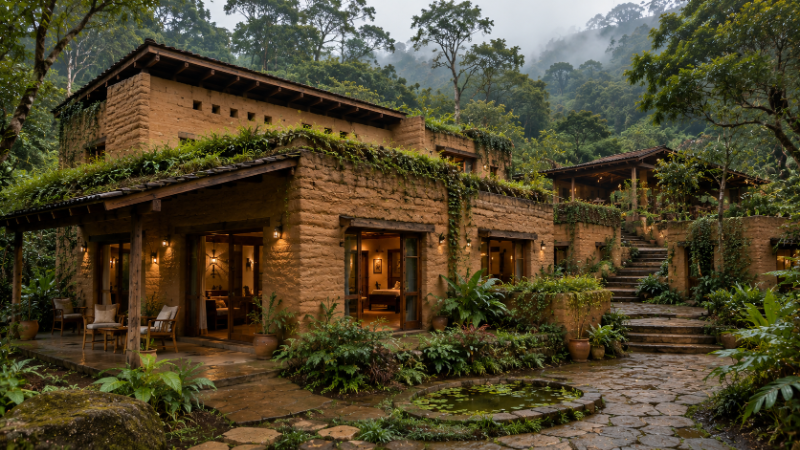
Located in the lush Western Ghats region of Karnataka, this boutique retreat demonstrates how mud construction can integrate seamlessly with forest ecosystems. The architects designed the structure using adobe blocks produced on-site from locally-excavated earth, minimizing transportation impacts and supporting the local economy.
The design emphasizes transparency between interior and exterior spaces, with large openings that frame views of the surrounding forest while maintaining thermal comfort through strategic shading. The thick mud walls (700mm) provide thermal stability in the temperate forest climate, while the breathable construction prevents moisture accumulation in the high-humidity environment.
The retreat incorporates extensive green roofing and living walls that extend the ecological benefits of mud construction. Rainwater harvesting systems integrated into the design collect over 500,000 liters annually, supporting both the building's operational needs and the surrounding landscape. This project demonstrates that mud construction can support luxury hospitality while maintaining environmental responsibility.
Key Advantages of Climate-Responsive Mud Construction
Thermal Comfort and Energy Efficiency
Mud's high thermal mass provides natural temperature regulation, reducing reliance on mechanical heating and cooling systems. In hot-dry climates, mud structures can maintain indoor temperatures 5-8°C cooler than conventional buildings. In monsoon regions, the breathability of mud prevents temperature and humidity fluctuations that create discomfort.
Moisture Management
Unlike concrete, which traps moisture and can lead to dampness problems, mud walls naturally regulate humidity. The material absorbs excess moisture during humid periods and releases it during dry periods, maintaining optimal indoor humidity levels (40-60%) without mechanical intervention.
Indoor Air Quality
Mud construction promotes superior indoor air quality through natural breathability and the absence of off-gassing from synthetic materials. The alkaline nature of lime plasters applied to mud walls naturally inhibits mold and bacterial growth, creating healthier living environments.
Economic Advantages
Construction costs for mud buildings typically range 25-40% lower than conventional construction, depending on regional labor availability and local building regulations. Operational costs are further reduced through minimal energy requirements for climate control.
Environmental Sustainability
Mud construction dramatically reduces embodied carbon compared to cement-heavy construction methods. The material is abundant, locally-available, and requires minimal processing. At end-of-life, mud structures can be demolished and the material returned to the earth without environmental contamination.
Modern Innovations in Mud Construction
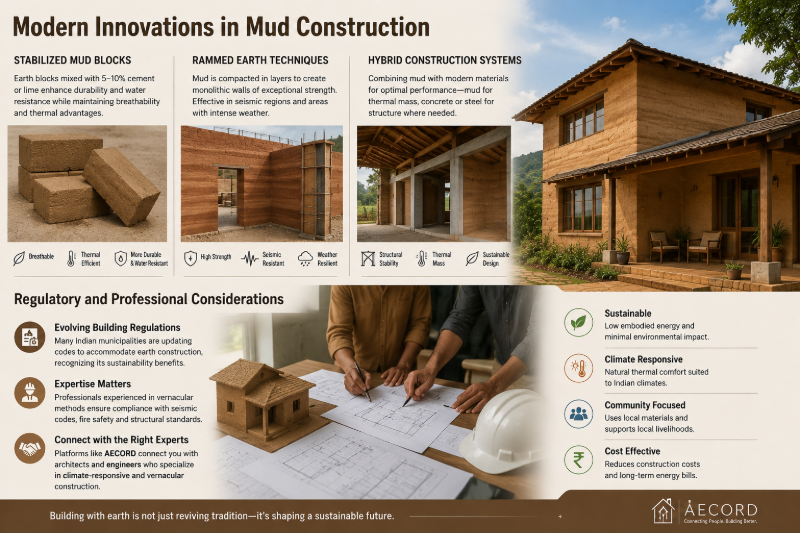
Stabilized Mud Blocks
Contemporary mud construction often incorporates stabilized mud blocks—earth blocks mixed with 5-10% cement or lime to enhance durability and water resistance. These blocks maintain the breathability and thermal advantages of traditional mud while improving structural performance, particularly in high-rainfall regions.
Rammed Earth Techniques
Rammed earth construction, where mud is compacted in layers, creates monolithic walls of exceptional strength. This technique has proven particularly effective in seismic regions and areas experiencing intense weather events.
Hybrid Construction Systems
Progressive architects are combining mud construction with modern materials strategically. For example, using mud walls for thermal mass while incorporating reinforced concrete for structural elements in seismic zones, or using mud infill in timber-frame structures.
Regulatory and Professional Considerations
While mud construction has ancient roots in India, navigating contemporary building codes and regulations requires expertise. Many Indian municipalities are gradually updating building regulations to accommodate earth construction, recognizing its sustainability benefits. However, approval processes can vary significantly between cities.
Architects and engineers specializing in vernacular construction methods understand how to design mud buildings that comply with current seismic codes, fire safety regulations, and structural requirements. When planning a mud construction project, consulting with professionals experienced in both traditional techniques and modern standards is essential.
Platforms like AECORD connect builders and homeowners with architects and engineers who specialize in climate-responsive and vernacular construction methods. Whether you're planning a residential project in Rajasthan or a sustainable retreat in Kerala, finding the right professionals with expertise in mud construction is crucial for project success.
Challenges and Practical Considerations
Water Management
Mud construction requires careful water management strategies, including adequate roof overhangs, proper foundation elevation, and appropriate plaster finishes. Projects in high-rainfall regions must incorporate robust drainage systems and regular maintenance protocols.
Structural Design
While mud has been used successfully for millennia, designing mud structures to meet modern seismic codes requires specialized knowledge. Low-rise construction (typically up to 3-4 stories) is most suitable for mud in seismic zones without additional reinforcement.
Skilled Labor
Traditional mud construction skills are increasingly rare in urban areas, though rural regions maintain stronger craft traditions. Training programs and knowledge transfer initiatives are critical for sustaining these techniques.
Maintenance Requirements
Mud buildings require regular maintenance, particularly lime plaster recoating every 3-5 years. This ongoing maintenance, while manageable, differs from the minimal upkeep of concrete structures.
The Future of Vernacular Construction in India
As climate change intensifies and sustainability concerns grow, mud construction is experiencing renewed appreciation among architects, developers, and environmentally-conscious homeowners. The success of projects like those highlighted above demonstrates that vernacular methods are not backward-looking nostalgia but forward-thinking solutions to contemporary challenges.
Several factors support this renaissance: increasing recognition of embodied carbon in building materials, rising energy costs making thermal efficiency critical, growing interest in healthy indoor environments, and regulatory frameworks increasingly accommodating sustainable construction methods.
India's diverse climate zones—from the Thar Desert to tropical coasts—provide ideal laboratories for developing region-specific mud construction approaches. As more architects gain expertise in these methods and building codes evolve to support them, mud construction is poised to become mainstream in India's sustainable building movement.
Getting Started with Your Mud Construction Project
If you're considering a mud construction project, whether a residential home, agricultural structure, or commercial building, several steps are essential. First, assess your site's climate, soil conditions, and local building regulations. Next, consult with architects experienced in vernacular methods who understand both traditional techniques and modern requirements.
Engage with local communities and artisans who may possess traditional knowledge valuable to your project. Develop comprehensive water management and maintenance plans specific to your region's climate. Finally, budget for the specialized expertise required to design and supervise mud construction that meets contemporary standards.
Finding the right professionals is crucial for successful mud construction projects. AECORD provides a comprehensive platform where you can connect with architects, structural engineers, and construction specialists experienced in climate-responsive building methods. Whether you need expertise in desert climates, monsoon regions, or temperate zones, AECORD's network includes professionals who understand how to apply vernacular wisdom to modern projects.
Mud construction represents a powerful convergence of environmental responsibility, economic efficiency, and human comfort. The five projects highlighted in this article demonstrate that these ancient techniques, thoughtfully adapted to contemporary contexts, create buildings that are not only beautiful and durable but genuinely responsive to their environmental contexts. As India continues developing sustainably, vernacular construction methods deserve a prominent place in our architectural future.
Ready to explore mud construction for your next project? Visit AECORD today to find experienced architects and engineers specializing in climate-responsive, vernacular building methods. Your sustainable dream home is just a connection away.
Frequently Asked Questions
How much can mud houses reduce indoor temperatures compared to concrete buildings?
Mud houses can reduce indoor temperatures by 5-8 degrees Celsius compared to conventional concrete structures, particularly in hot, dry climates like Jaisalmer or Jodhpur. This natural temperature regulation occurs because mud's high thermal mass absorbs heat during the day and releases it gradually at night, maintaining comfortable conditions with minimal mechanical intervention.
What makes mud construction climate-responsive for different Indian regions?
Mud construction is climate-responsive because it possesses natural thermal properties and exceptional breathability that allow moisture vapor to pass through walls. These characteristics prevent dampness, reduce the need for air conditioning, and adapt to various climates—from desert heat in Rajasthan to high humidity in Kerala and monsoon-affected areas.
How much cheaper is mud construction compared to conventional building methods?
Mud construction costs approximately 35-40% less than comparable conventional construction in regions like Rajasthan. The cost savings come from using locally available materials, traditional techniques that require less equipment, and employment of local artisans skilled in vernacular building methods.
Are mud houses durable and suitable for monsoon regions?
Yes, mud houses are durable in monsoon regions when properly designed with elevated stone plinths to prevent water ingress and stabilized mud blocks mixed with cement. The natural breathability of mud walls prevents moisture accumulation and dampness-related issues, making them particularly valuable for high-humidity areas like Goa, Kerala, and coastal Tamil Nadu.
Can vernacular mud construction be combined with modern design principles?
Yes, contemporary architects are successfully integrating traditional mud construction with modern design principles to create comfortable, durable, and environmentally responsible living spaces. Examples include incorporating traditional elements like deep verandas and jali screens with modern building techniques and sophisticated water management systems.