

Understanding Cement Bonded Particle Board: A Comprehensive Guide for Indian Construction Professionals
Cement bonded particle board (CBPB) has emerged as one of the most versatile and durable building materials in the Indian construction industry. Among the various specifications available, the 18 mm thickness panel measuring 1220 mm x 2440 mm has become particularly popular for both residential and commercial applications. This article explores everything you need to know about this material, its applications, benefits, and how to source quality products through platforms like AECORD.
Build cost · Bengaluru, May 2026
What is Cement Bonded Particle Board?
Cement bonded particle board is an engineered composite material manufactured by combining wood particles, cement, and additives. Unlike traditional plywood or MDF, CBPB offers superior durability and resistance to moisture, making it an ideal choice for Indian climates with varying humidity levels and seasonal rainfall.
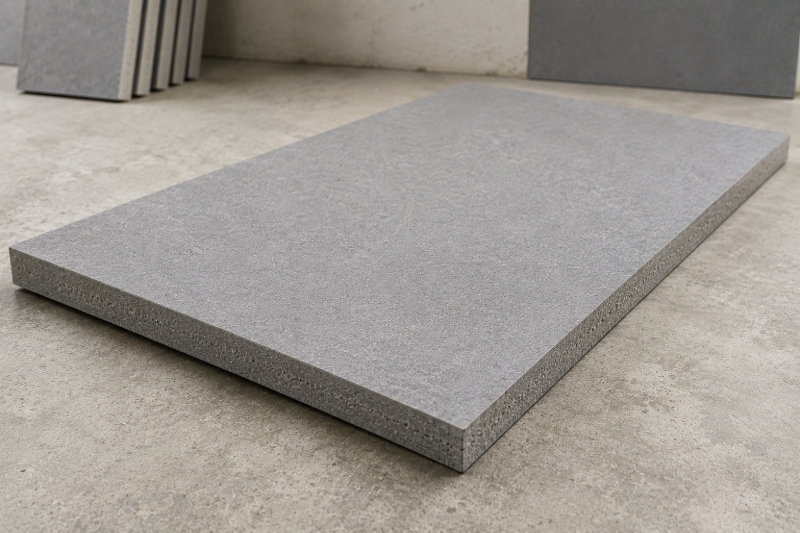
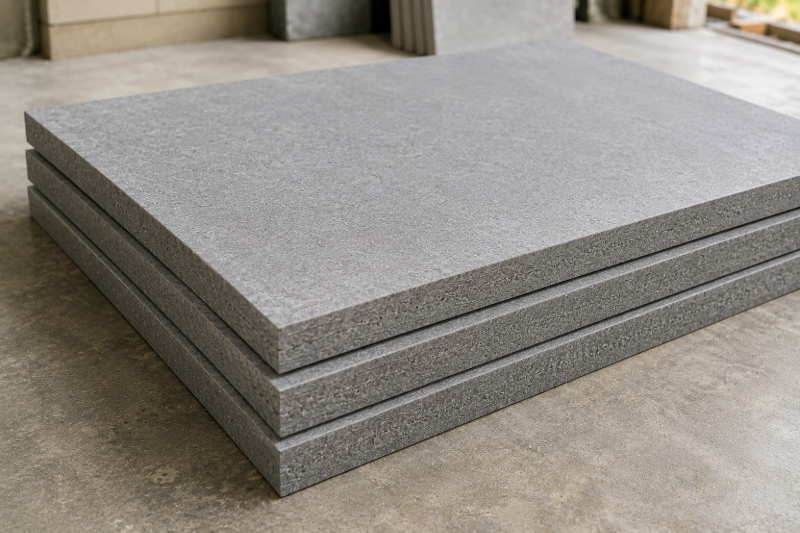
The 18 mm thickness variant with dimensions of 1220 mm x 2440 mm is a standard industrial size that provides optimal balance between structural strength and ease of handling. This specification is commonly referred to as the grey variant, indicating its natural cement-based coloring before any finishing is applied.
Key Properties of 18 mm CBPB Panels
Understanding the technical properties of cement bonded particle board is crucial for architects, engineers, and contractors working on construction projects across India:
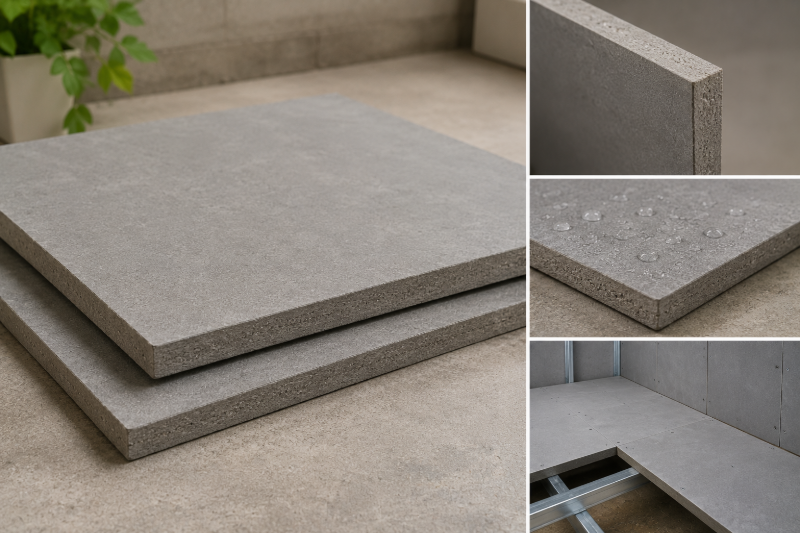
Moisture Resistance: CBPB exhibits exceptional resistance to moisture absorption, making it suitable for wet areas such as bathrooms, kitchens, and exterior applications in cities like Mumbai, Bangalore, and Kolkata where humidity levels are consistently high.
Fire Resistance: The cement matrix provides inherent fire-resistant properties, meeting Indian Standards (IS) requirements for fire safety in building materials.
Dimensional Stability: The 1220 mm x 2440 mm panels maintain their shape and size even under fluctuating temperature and humidity conditions, crucial for Indian climates.
Structural Strength: At 18 mm thickness, these panels provide substantial load-bearing capacity suitable for walls, ceilings, and partition systems.
Durability: CBPB panels can last 20+ years with minimal degradation, offering excellent value for money in the Indian market.
Applications of 18 mm Cement Bonded Particle Board in Indian Construction
Frequently asked
Residential Construction
In residential projects across Indian cities like Delhi, Pune, and Hyderabad, 18 mm CBPB panels are increasingly used for:
Interior partition walls in apartments and villas
Bathroom and kitchen wall cladding
False ceiling systems in moisture-prone areas
Balcony and terrace applications
Storage solutions and built-in cabinetry
The grey color of the natural CBPB panels provides a neutral base that can be easily finished with paint, tiles, or other decorative materials, offering flexibility in interior design.
Commercial and Industrial Applications
Commercial projects benefit significantly from CBPB's durability and cost-effectiveness:
Office partition systems and modular workspaces
Retail store interiors and display systems
Hospital and healthcare facility wall systems
Industrial storage facilities and warehouses
Data center infrastructure
In metropolitan areas like Bangalore's IT corridors and Mumbai's commercial hubs, CBPB panels have become the preferred choice for rapid construction and renovation projects.
Agricultural and Rural Applications
Beyond urban centers, CBPB panels are increasingly used in agricultural structures, animal housing, and rural construction projects where moisture resistance and durability are paramount.
Cost Analysis: 18 mm CBPB Panels in the Indian Market
Pricing Structure
The cost of 18 mm x 1220 mm x 2440 mm cement bonded particle board in India typically ranges from ₹2,500 to ₹4,500 per panel, depending on several factors:
Manufacturing Quality: Premium brands may cost 20-30% more but offer superior durability and consistency.
Regional Variations: Prices in metropolitan areas like Delhi and Mumbai may be 10-15% higher than in tier-2 cities due to transportation and distribution costs.
Volume Discounts: Bulk purchases for large construction projects can yield discounts of 15-25%.
Seasonal Fluctuations: Prices may vary during monsoon seasons due to supply chain disruptions.
Cost Comparison with Alternatives
When compared to other building materials commonly used in India:
vs. Plywood: CBPB is typically 20-30% cheaper while offering superior moisture resistance.
vs. Brick and Mortar: CBPB partitions cost less and can be installed faster, reducing labor costs by 30-40%.
vs. Gypsum Board: While gypsum is cheaper initially, CBPB's durability makes it more cost-effective over 10+ years.
Installation and Handling Guidelines
Pre-Installation Considerations
Before installing 18 mm CBPB panels, professionals should:
Inspect panels for any damage during transport and storage
Acclimate panels to the installation environment for 48 hours
Ensure proper ventilation at the installation site
Verify that structural supports can handle the panel weight (approximately 35-40 kg per panel)
Installation Methods
CBPB panels can be installed using multiple methods depending on the application:
Dry Screw Fixing: Most common method using stainless steel screws at 150-200 mm intervals, ideal for partition walls.
Adhesive Bonding: Using cement-based adhesives for permanent installations, particularly in wet areas.
Mechanical Fastening: Combination of screws and adhesives for maximum stability in high-traffic areas.
Finishing Options
The grey surface of natural CBPB panels can be finished with:
Cement-based paint or acrylic latex paints
Ceramic or porcelain tiles using appropriate adhesives
Decorative laminates and veneers
Wallpaper and fabric coverings
Natural stone cladding
Compliance with Indian Standards
Quality cement bonded particle board should comply with IS 4886:2017, the Indian Standard for cement bonded particle boards. Key requirements include:
Moisture content between 8-12%
Modulus of rupture (strength) minimum 6 MPa
Internal bond strength minimum 0.4 MPa
Water absorption limits as per specifications
Dimensional tolerance ±2 mm for 1220 mm x 2440 mm panels
When sourcing materials through AECORD, ensure that suppliers provide certification of compliance with these standards, guaranteeing quality and durability for your projects.
Environmental and Sustainability Aspects
Eco-Friendly Manufacturing
Modern CBPB manufacturing in India increasingly focuses on sustainability:
Use of wood waste and agricultural residues reduces deforestation pressure
Cement-based binders are more environmentally friendly than synthetic adhesives
Lower volatile organic compound (VOC) emissions compared to plywood
Recyclability and reusability at end of life
Carbon Footprint Considerations
CBPB panels have a moderate carbon footprint, comparable to or lower than many alternative materials. For projects prioritizing sustainability across Indian cities, CBPB offers a balanced solution between performance and environmental responsibility.
Advantages and Disadvantages
Key Advantages
Moisture Resistant: Ideal for India's diverse climate zones from coastal areas to humid interiors.
Cost-Effective: Competitive pricing with excellent durability-to-cost ratio.
Easy Installation: Lightweight compared to brick, reducing installation time and labor costs.
Versatile Applications: Suitable for residential, commercial, and industrial projects.
Fire Safe: Meets Indian fire safety standards without additional treatments.
Long Lifespan: 20-30 years of reliable service with minimal maintenance.
Limitations to Consider
Weight: Heavier than plywood, requiring adequate structural support and proper handling equipment.
Cutting and Machining: Requires specialized tools; improper cutting can cause edge damage.
Aesthetic Finishing: Grey surface requires finishing, adding to project timeline and cost.
Limited Availability: In some tier-2 and tier-3 Indian cities, availability may be limited compared to plywood.
Sourcing Quality CBPB Panels Through AECORD
Finding reliable suppliers of 18 mm cement bonded particle board panels is crucial for project success. AECORD, India's leading B2B2C marketplace for AECO professionals, connects architects, engineers, and contractors with verified suppliers of quality building materials.
Benefits of sourcing through AECORD include:
Access to verified suppliers across India with quality certifications
Transparent pricing and bulk discount options
Reliable delivery networks to major Indian cities
Professional support for technical specifications and compliance requirements
Easy comparison of products and suppliers
Best Practices for Project Implementation
Planning Phase
Calculate exact panel requirements with 5-10% wastage allowance
Verify structural capacity and load calculations
Plan installation sequence to minimize disruption
Source materials from verified suppliers well in advance
Execution Phase
Train installation teams on proper handling and fixing techniques
Maintain quality control through regular inspections
Follow manufacturer guidelines and Indian Standards strictly
Ensure proper ventilation during installation and finishing
Post-Installation Care
Allow adequate curing time before applying finishes
Maintain proper humidity levels in the building
Inspect joints and fastening points periodically
Address any water leaks immediately to prevent damage
Future Trends in CBPB Usage in India
The Indian construction industry is witnessing increased adoption of CBPB panels due to:
Growing focus on rapid construction and prefabrication
Increased awareness of moisture-resistant materials in climate-conscious design
Rising labor costs making faster installation methods attractive
Sustainability initiatives promoting materials with lower environmental impact
Development of improved variants with enhanced properties
Conclusion
The 18 mm x 1220 mm x 2440 mm cement bonded particle board represents a practical, cost-effective, and durable solution for diverse construction applications across India. Whether you're working on residential projects in Bangalore, commercial developments in Delhi, or industrial facilities in Mumbai, CBPB panels offer reliable performance and excellent value.
Understanding the material's properties, compliance requirements, and proper installation techniques ensures successful project outcomes. By sourcing quality materials from verified suppliers and following best practices, construction professionals can leverage CBPB's advantages to deliver superior projects within budget and timeline constraints.
Ready to source quality cement bonded particle board panels for your next project? Visit AECORD today to connect with verified suppliers across India. Browse specifications, compare prices, and find the perfect materials for your construction needs. Our platform makes it easy to find professionals and suppliers who understand the unique requirements of the Indian AECO industry. Start exploring now and take your project to the next level!
Frequently Asked Questions
What is cement bonded particle board and how is it different from plywood?
Cement bonded particle board (CBPB) is an engineered composite made from wood particles, cement, and additives that offers superior moisture and fire resistance compared to traditional plywood or MDF. Unlike plywood, CBPB is specifically designed for high-humidity environments and provides better durability in Indian climates with varying humidity levels and seasonal rainfall.
What are the main advantages of 18mm CBPB panels for construction?
18mm CBPB panels offer exceptional moisture resistance for wet areas, inherent fire-resistant properties meeting Indian Standards, excellent dimensional stability in fluctuating temperatures, substantial load-bearing capacity, and a lifespan of 20+ years with minimal degradation. This makes them ideal for bathrooms, kitchens, and exterior applications across Indian cities.
What are the common applications of 1220x2440mm CBPB panels?
These standard-sized panels are used for interior partition walls, bathroom and kitchen wall cladding, false ceiling systems, office partitions, retail store interiors, hospital wall systems, and industrial storage facilities. The 18mm thickness provides optimal balance between structural strength and ease of handling for both residential and commercial projects.
Why is CBPB suitable for Indian climates?
CBPB exhibits exceptional resistance to moisture absorption and maintains dimensional stability even under fluctuating temperature and humidity conditions, making it ideal for high-humidity cities like Mumbai, Bangalore, and Kolkata. Its cement-based composition provides natural resistance to the seasonal rainfall and varying humidity levels common across India.
How long do cement bonded particle board panels last?
18mm CBPB panels can last 20+ years or more with minimal degradation, offering excellent long-term value for money in construction projects. Their durability combined with resistance to moisture, fire, and dimensional changes ensures reliable performance throughout their lifespan in Indian construction applications.