


Understanding Bison Cement Bonded Particle Board: A Comprehensive Guide for Indian Construction Professionals
Cement bonded particle board (CBPB) has become an essential material in modern construction across India, offering durability, moisture resistance, and cost-effectiveness that traditional materials often cannot match. Among the various options available in the market, Bison cement bonded particle board in 16mm thickness with dimensions of 1220mm x 2440mm has emerged as a popular choice for architects, contractors, and builders throughout the country. This comprehensive guide explores everything you need to know about this versatile building material.
Build cost · Bengaluru, May 2026
What is Cement Bonded Particle Board?
Cement bonded particle board is a composite material manufactured by mixing wood particles with Portland cement and water. Unlike traditional plywood or MDF boards, CBPB offers superior moisture resistance and durability, making it ideal for applications in India's diverse climate conditions—from humid coastal regions to dry continental areas.
Composition and Manufacturing Process
The manufacturing of cement bonded particle board involves several critical steps. Wood particles are first sorted and dried to achieve optimal moisture content. These particles are then mixed with Portland cement, water, and various additives that enhance bonding and performance characteristics. The mixture is formed into boards and subjected to high pressure and temperature to create a dense, durable composite material.
The Bison brand specifically has built a reputation for maintaining strict quality controls during manufacturing, resulting in boards that meet international standards while being competitively priced for the Indian market.
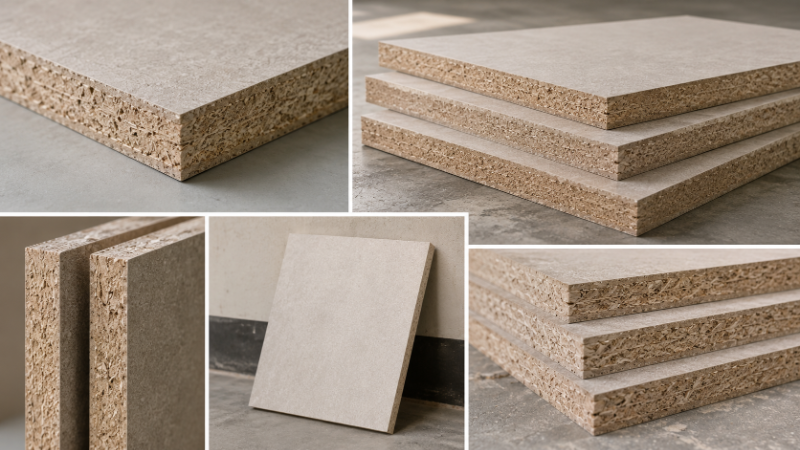
Key Properties of 16mm Bison Cement Bonded Particle Board
The 16mm thickness variant offers an optimal balance between strength, weight, and cost-effectiveness. This thickness is particularly suitable for:
Interior and exterior wall cladding in residential and commercial projects
Flooring applications in areas with moisture exposure
Soffit and fascia boards for building exteriors
Ceiling panels in wet areas like kitchens and bathrooms
Temporary structures and formwork in construction sites
Technical Specifications and Dimensions
The standard dimensions of 1220mm x 2440mm represent a practical size for most construction applications in India. This size is equivalent to 4 feet x 8 feet, which aligns with common construction standards and makes handling and installation more manageable compared to larger sheets.
Understanding the 16mm Thickness Advantage
The 16mm thickness provides several advantages for construction professionals:
Structural strength: Sufficient load-bearing capacity for most applications without requiring additional support structures
Reduced material cost: Compared to 18mm or 20mm variants, 16mm boards offer cost savings without compromising performance
Ease of installation: Lighter weight compared to thicker variants, reducing labor costs and installation time
Flexibility: Can be used in both load-bearing and non-load-bearing applications
Acoustic properties: Adequate thickness for sound dampening in interior applications
Why Choose Bison Cement Bonded Particle Board for Indian Projects?
Climate Resilience
India's diverse climate presents unique challenges for building materials. From the heavy monsoons in Kerala and coastal Maharashtra to the dry heat of Rajasthan and Gujarat, construction materials must withstand extreme conditions. Bison cement bonded particle board excels in these environments due to its inherent moisture resistance and dimensional stability. Unlike wooden boards that warp and swell, CBPB maintains its shape and integrity across varying humidity levels.
Cost-Effectiveness
In the Indian market, where cost considerations are paramount for most projects, Bison CBPB offers excellent value for money. A 16mm x 1220mm x 2440mm board typically costs between ₹2,500 to ₹4,500, depending on location and supplier. When compared to alternatives like marine plywood or cement-based boards from other manufacturers, Bison provides competitive pricing without sacrificing quality.
Fire and Pest Resistance
The cement-bonded composition provides natural resistance to fire, termites, and other pests—critical concerns in Indian construction. This eliminates the need for expensive chemical treatments and provides long-term protection for your structures.
Applications of 16mm Bison Cement Bonded Particle Board in India
Residential Construction
In residential projects across cities like Bangalore, Pune, Mumbai, and Delhi, 16mm Bison CBPB is increasingly used for:
Kitchen and bathroom wall cladding
Wardrobe backing and internal partitions
Ceiling panels in utility areas
Under-floor support in moisture-prone areas
Commercial and Industrial Applications
Commercial projects benefit significantly from CBPB's durability and low maintenance requirements. Applications include:
Office partition systems
Warehouse flooring and wall panels
Cold storage facility construction
Industrial building exteriors
Temporary site offices and storage structures
Infrastructure and Public Projects
Government and public sector projects across India increasingly specify cement bonded particle board for applications requiring durability and minimal maintenance. Railway stations, airports, and public buildings utilize these boards for their long service life and cost-effectiveness over the building's lifecycle.
Installation and Handling Guidelines
Preparation and Storage
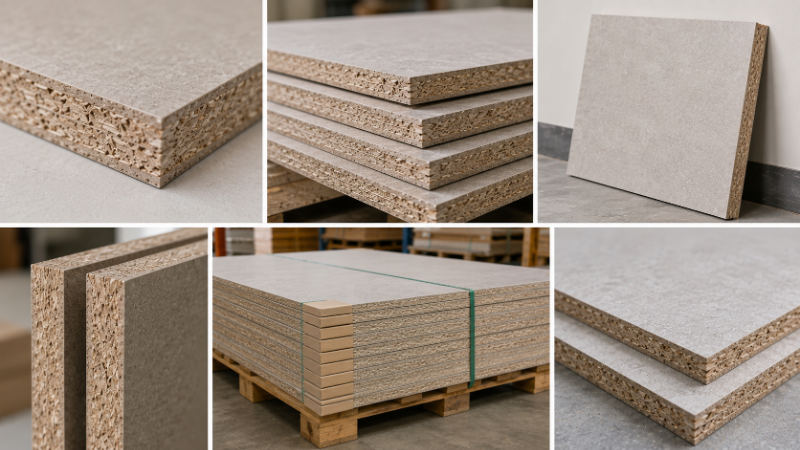
Proper handling of Bison cement bonded particle board begins before installation. Boards should be stored in a dry location, preferably under cover, to prevent exposure to direct rainfall. In India's monsoon regions, this is particularly important. Stack boards flat on a level surface, avoiding prolonged vertical storage which can cause warping.
Cutting and Fitting
The 1220mm x 2440mm dimensions allow for efficient cutting and fitting in most applications. Use carbide-tipped saw blades for clean cuts. When cutting, wear appropriate safety equipment including dust masks, as cement particles can be harmful if inhaled. The boards can be cut with standard woodworking tools, though professionals recommend using power saws for efficiency and precision.
Fastening and Installation
Cement bonded particle board requires appropriate fasteners. Use:
Stainless steel or galvanized screws to prevent rust and corrosion
Cement board nails specifically designed for CBPB applications
Adhesives: Cement-based or epoxy adhesives provide superior bonding
Spacing for fasteners should typically be 150-200mm apart along edges and 300mm in field areas. This ensures proper support and prevents buckling or sagging.
Cost Considerations and Budget Planning
Material Costs in India
When budgeting for a project using 16mm Bison cement bonded particle board, consider:
Board cost: ₹2,500-₹4,500 per sheet (1220mm x 2440mm)
Fasteners and adhesives: ₹200-₹400 per sheet
Labor charges: ₹100-₹200 per square meter depending on location and application complexity
Finishing materials: ₹150-₹500 per square meter for painting, tiling, or other finishes
Long-Term Value
While initial costs are important, the total cost of ownership over 15-20 years makes CBPB an economical choice. Minimal maintenance, no repainting required, and resistance to moisture damage result in significant savings compared to conventional materials.
Comparison with Alternative Materials
Versus Plywood
While plywood is traditional, Bison cement bonded particle board offers superior moisture resistance and lower cost. Plywood requires regular maintenance and is susceptible to termite damage, making CBPB a more practical choice for Indian climates.
Versus Gypsum Board
Gypsum boards are lighter but lack the moisture and impact resistance of CBPB. In wet areas, gypsum boards deteriorate quickly, whereas CBPB maintains structural integrity even in high-moisture environments.
Versus Concrete and Brick
For non-structural applications, CBPB offers faster installation and lower costs compared to traditional concrete or brick construction, while providing comparable durability.
Quality Standards and Certifications
Bison cement bonded particle board meets various international standards including IS 12823 (Indian Standard for cement bonded particle boards). When sourcing materials, verify that suppliers provide:
Batch testing certificates
Moisture content verification (typically 8-12%)
Density specifications (usually 1.1-1.3 g/cm³)
Flexural strength data
Water absorption test results
Environmental and Sustainability Aspects
Cement bonded particle board is increasingly recognized as a sustainable building material. The manufacturing process utilizes wood particles that might otherwise be waste products from sawmills, promoting circular economy principles. Additionally, the durability of CBPB means fewer replacements over a building's lifetime, reducing overall environmental impact.
Challenges and Solutions
Brittleness
CBPB can be brittle if not handled carefully. Solution: Use proper handling equipment and avoid dropping boards or subjecting them to impact.
Dust During Cutting
Cement dust generated during cutting can pose health risks. Solution: Always use dust collection systems and wear appropriate respiratory protection.
Fastener Holding
Improper fastening can lead to screw pullout. Solution: Use appropriate fastener spacing and select fasteners specifically designed for cement board applications.
Finding Quality Suppliers on AECORD
When sourcing Bison cement bonded particle board for your projects, quality and reliability matter significantly. AECORD, India's leading B2B2C marketplace for AECO professionals, connects you with verified suppliers and manufacturers across the country. Whether you're based in Bangalore, Chennai, Hyderabad, or any other Indian city, AECORD makes it easy to find reliable suppliers of cement bonded particle boards at competitive prices.
The platform allows you to compare specifications, pricing, and supplier credentials in one place, ensuring you make informed decisions for your projects. Many AECORD suppliers offer bulk discounts and delivery services, which is particularly valuable for large construction projects.
Best Practices for Project Success
Planning and Specification
Clearly specify the 16mm thickness and exact dimensions in your project documentation. Include details about fastening methods, finishes, and any special requirements specific to your application.
Quality Inspection
Upon delivery, inspect boards for:
Surface defects or damage
Dimensional accuracy
Moisture content (use a moisture meter)
Proper packaging and protection
Worker Training
Ensure your installation team understands proper handling, cutting, and fastening techniques. This reduces waste and improves installation quality.
Future Trends in Cement Bonded Particle Board
The Indian construction industry is witnessing increased adoption of CBPB for sustainable building practices. Manufacturers are developing enhanced variants with improved acoustic properties, fire ratings, and aesthetic finishes. The 16mm thickness standard is likely to remain popular due to its versatility and cost-effectiveness.
Conclusion
Bison cement bonded particle board in 16mm thickness with 1220mm x 2440mm dimensions represents an excellent choice for construction professionals throughout India. Its combination of durability, moisture resistance, cost-effectiveness, and ease of installation makes it suitable for diverse applications—from residential kitchens and bathrooms to commercial office spaces and industrial facilities.
Whether you're planning a residential renovation in Pune, a commercial project in Mumbai, or an industrial facility in Ahmedabad, this material offers reliable performance across India's varied climates. The investment in quality CBPB pays dividends through reduced maintenance costs and extended service life.
To source high-quality Bison cement bonded particle board and connect with experienced installers and contractors, explore the extensive network of verified suppliers on AECORD. The platform simplifies procurement, ensures quality standards, and helps you build stronger projects with confidence.
Ready to source your cement bonded particle board materials? Visit AECORD today to connect with trusted suppliers, compare quotes, and find experienced professionals for your next construction project across India.
