

Understanding Cement Bonded Particle Board: A Comprehensive Guide for Indian Construction Professionals
Cement bonded particle board (CBPB) has emerged as one of the most versatile and durable building materials in the Indian construction industry. The 12 mm thickness variant in standard dimensions of 1220 mm x 2440 mm has become particularly popular among architects, engineers, and contractors across the country. Whether you're working on residential projects in Bangalore, commercial developments in Mumbai, or industrial applications in Delhi, understanding the properties and applications of this material is essential for making informed decisions.
Build cost · Bengaluru, May 2026
What is Cement Bonded Particle Board?
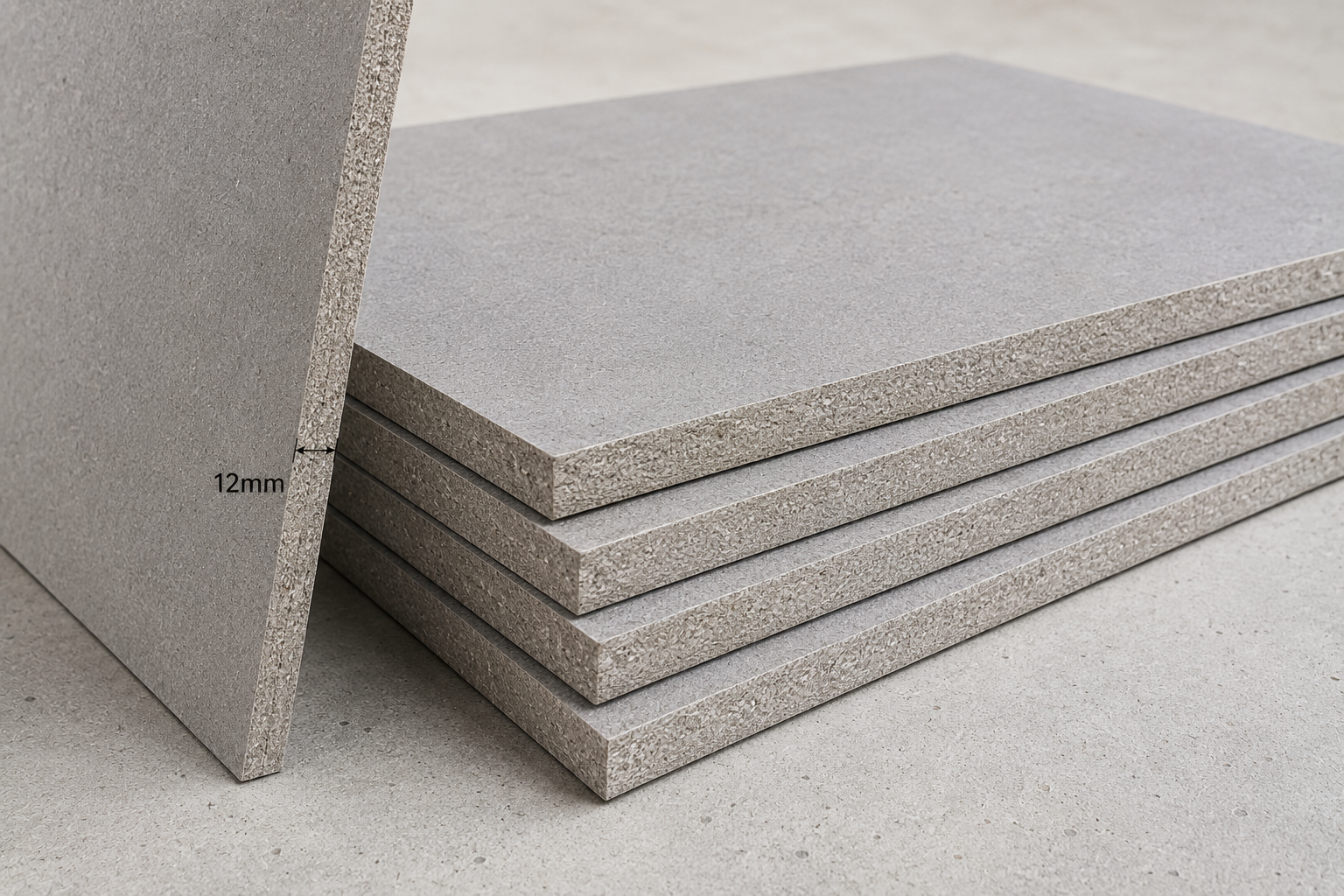
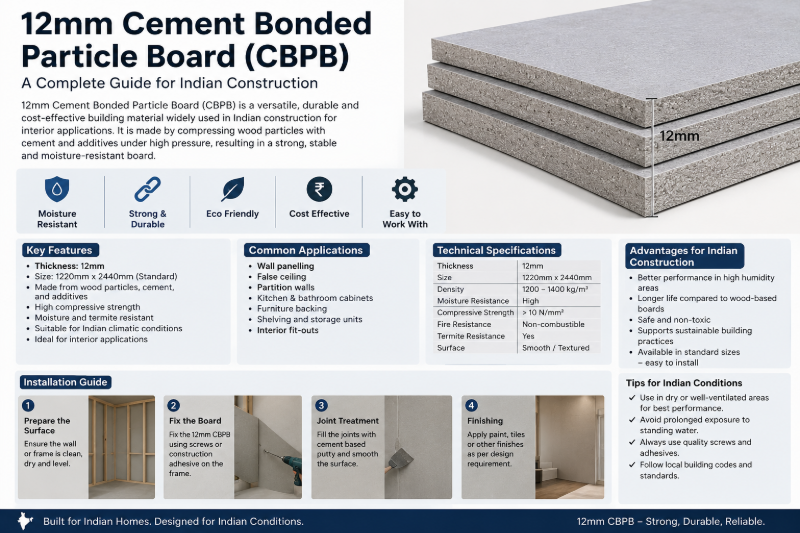
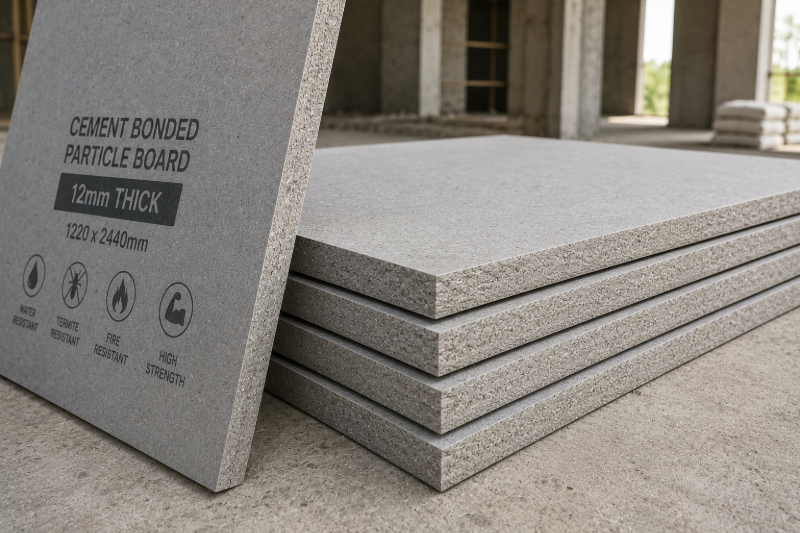
Cement bonded particle board is a composite material manufactured by bonding wood particles together with portland cement and water. Unlike traditional plywood or MDF boards that rely on synthetic adhesives, CBPB uses cement as the primary binder, making it inherently fire-resistant, moisture-resistant, and durable. The grey color you'll find in products like the Bison panel variant indicates the natural cement composition without additional coatings or treatments.
The 12 mm thickness is a sweet spot in construction applications—thick enough to provide structural integrity while remaining manageable for installation. The standard dimensions of 1220 mm x 2440 mm (approximately 4 feet x 8 feet) align with international construction standards, making it compatible with various framing systems used across Indian construction sites.
Key Properties and Specifications of 12 mm CBPB
Dimensional Stability
One of the standout characteristics of cement bonded particle board is its exceptional dimensional stability. Unlike plywood, which can expand and contract significantly with humidity changes—a critical concern in India's varied climate zones—CBPB maintains consistent dimensions across monsoon seasons and dry periods. This stability is particularly valuable in coastal cities like Chennai and Kochi where humidity fluctuations are extreme.
The 12 mm thickness provides excellent rigidity without excessive weight, making it suitable for both wall and ceiling applications. The 1220 mm x 2440 mm format minimizes the number of joints required in installation, reducing potential weak points in your construction.
Frequently asked
Fire Resistance
CBPB boards are classified as non-combustible materials, meeting Indian Standards IS 3975 and IS 12600. This makes them ideal for:
Fire-rated wall assemblies in commercial buildings
Industrial facilities where fire safety is paramount
High-rise residential complexes in major metros like Hyderabad and Pune
Healthcare facilities and educational institutions
The cement matrix naturally resists fire, unlike wood-based alternatives that can contribute to fire spread. This compliance with Indian building codes can reduce insurance premiums and improve safety ratings for your projects.
Moisture and Durability Performance
In a country where water exposure is inevitable—from monsoons in Kerala to groundwater seepage in Delhi—CBPB's moisture resistance is invaluable. The cement bonding prevents water absorption that would cause swelling or delamination. The 12 mm thickness provides sufficient depth to withstand moisture penetration while maintaining structural integrity.
This durability translates to:
Lower maintenance costs over the building's lifecycle
Extended service life (25+ years in most applications)
Better performance in wet areas like bathrooms and kitchens
Resistance to termites and other wood-boring insects
Applications of 12 mm CBPB in Indian Construction
Residential Construction
In residential projects across Indian cities, 12 mm CBPB serves multiple functions. It's commonly used for:
Internal wall partitions: Lightweight yet durable, allowing flexible floor plans
Bathroom and kitchen enclosures: Handling moisture exposure without deterioration
Ceiling applications: Providing fire protection and acoustic benefits
Backing boards for tiles: Creating a stable base for ceramic or porcelain installations
In apartment complexes in Bangalore and Hyderabad, CBPB has become the preferred choice over traditional gypsum boards for wet areas, reducing water damage complaints and maintenance issues.
Commercial and Industrial Applications
Commercial projects benefit from CBPB's combination of fire resistance, durability, and cost-effectiveness. Applications include:
Office partition systems
Warehouse and industrial facility walls
Cold storage and food processing facility linings
Data centers requiring fire-rated enclosures
Manufacturing facilities where chemical exposure is a concern
The grey color of standard CBPB also provides a professional appearance for industrial settings without requiring additional finishing.
Agricultural and Rural Applications
Beyond urban construction, CBPB is increasingly used in agricultural buildings, dairy facilities, and rural housing projects. Its resistance to ammonia and other agricultural chemicals makes it suitable for livestock facilities, while its durability handles the harsh conditions of rural environments.
Installation Considerations for 12 mm CBPB
Structural Support Requirements
The 12 mm thickness requires proper framing support. Standard installation guidelines recommend:
Stud spacing of maximum 600 mm center-to-center for wall applications
Joist spacing of maximum 600 mm for ceiling installations
Proper fastening with corrosion-resistant screws or nails spaced 200 mm apart at edges and 300 mm in field areas
When working with contractors and engineers on AECORD, ensure they're familiar with these specifications to avoid installation failures.
Cutting and Finishing
CBPB can be cut with standard woodworking tools, though cement dulls blades faster than wood. For precision cuts:
Use carbide-tipped saw blades
Wear appropriate personal protective equipment (dust masks)
Plan cuts to minimize waste given the standard 1220 mm x 2440 mm sheet size
Allow proper ventilation during cutting operations
The grey surface accepts paint, plaster, and tile adhesive directly, reducing finishing costs compared to other substrates.
Fastening Guidelines
Proper fastening is critical for CBPB performance:
Use stainless steel or galvanized fasteners to prevent corrosion
Avoid over-tightening, which can cause surface crushing
Space fasteners according to load requirements
For wet areas, consider stainless steel fasteners exclusively
Cost Analysis: 12 mm CBPB in the Indian Market
Pricing for 12 mm cement bonded particle board varies across Indian regions based on transportation, local demand, and manufacturer. As of current market rates:
Standard CBPB sheets (1220 x 2440 mm): ₹2,500 to ₹4,500 per sheet depending on quality and location
Premium brands like Bison: ₹3,500 to ₹5,000 per sheet
Installation costs: ₹100 to ₹200 per square meter for labor
While CBPB costs more than plywood initially, the lifecycle cost is often lower due to reduced maintenance, longer service life, and lower replacement rates. In a 20-year building lifecycle, CBPB typically costs 15-25% less than alternatives when accounting for maintenance and replacement.
Cost Comparison with Alternatives
When evaluating building materials for your project:
vs. Plywood: CBPB costs 10-20% more but lasts significantly longer in wet environments
vs. Gypsum board: CBPB is 5-10% more expensive but provides superior fire and moisture performance
vs. MDF: CBPB is more durable and fire-resistant, justifying the premium
Quality Standards and Certifications
When sourcing 12 mm CBPB for your Indian construction projects, verify compliance with relevant standards:
IS 3975: Indian Standard for cement bonded particle boards
IS 12600: Fire safety requirements for building materials
ISO 8654: International standard for CBPB specifications
BIS certification: Bureau of Indian Standards mark indicating third-party testing
Products like Bison panels typically come with comprehensive testing documentation confirming strength, moisture resistance, and fire performance. Request these certificates from suppliers to ensure you're getting genuine, quality material.
Environmental and Health Considerations
Sustainability Profile
CBPB manufacturing uses recycled wood particles and waste wood, making it an environmentally responsible choice. The cement binding process doesn't require formaldehyde or other volatile organic compounds (VOCs), improving indoor air quality compared to plywood or MDF.
Health and Safety During Installation
While CBPB is safe once installed, installation workers should observe:
Dust masks when cutting or sanding (cement dust inhalation risk)
Eye protection during cutting operations
Proper ventilation in enclosed spaces
Gloves to prevent skin irritation from cement
Finding Expert Professionals for Your CBPB Projects
Successfully implementing 12 mm cement bonded particle board requires expertise in material selection, installation, and finishing. On AECORD, you can connect with experienced architects, structural engineers, and contractors across Indian cities who specialize in CBPB applications.
When selecting professionals on AECORD for your project, look for those with:
Proven experience with CBPB in similar project types
Understanding of Indian building codes and standards
References from completed projects in your region
Knowledge of local climate considerations (monsoon areas, high-humidity regions, etc.)
Whether you're planning a residential renovation in Delhi, a commercial fit-out in Mumbai, or an industrial facility in Pune, AECORD connects you with vetted professionals who understand the nuances of working with cement bonded particle board in the Indian construction context.
Best Practices for CBPB Implementation
Pre-Installation Planning
Before ordering materials:
Calculate exact sheet requirements accounting for waste (typically 5-10%)
Plan layout to minimize cutting and joints
Verify framing is square and properly spaced
Arrange delivery to coincide with installation schedule
Storage and Handling
Proper storage extends material life:
Store sheets flat on level ground with spacers for air circulation
Protect from direct rain exposure during storage
Keep in dry conditions before installation
Handle carefully to avoid edge damage
Quality Assurance
During and after installation:
Inspect sheets for damage before installation
Verify proper fastener spacing and depth
Check for gaps between sheets (typically 3-5 mm for expansion)
Ensure proper finishing and sealing in wet areas
Conclusion: Why 12 mm CBPB is Essential for Modern Indian Construction
The 12 mm thickness cement bonded particle board in standard 1220 mm x 2440 mm dimensions represents a mature, reliable building material solution for Indian construction professionals. Its combination of fire resistance, moisture durability, dimensional stability, and cost-effectiveness makes it ideal for diverse applications from residential to industrial.
As India's construction industry continues to evolve with stricter building codes, climate challenges, and sustainability requirements, CBPB stands out as a material that meets today's demands while providing long-term value. Whether you're specifying materials for a high-rise in Bangalore, a commercial complex in Hyderabad, or an industrial facility in Pune, understanding and properly implementing 12 mm CBPB can significantly improve project outcomes.
Ready to find the right professionals for your CBPB project? Visit AECORD today to connect with experienced architects, engineers, and contractors across India who specialize in cement bonded particle board applications. Browse profiles, review completed projects, and get competitive quotes from vetted professionals in your city. Your next successful construction project is just a few clicks away on AECORD—India's trusted B2B2C marketplace for AECO professionals.
Frequently Asked Questions
What is cement bonded particle board (CBPB) and how is it different from plywood?
CBPB is a composite material made by bonding wood particles together with portland cement and water, unlike plywood which uses synthetic adhesives. This cement-based composition makes CBPB inherently fire-resistant, moisture-resistant, and more dimensionally stable across India's varying climate zones, particularly during monsoon seasons.
Why is 12mm CBPB thickness preferred for Indian construction projects?
The 12mm thickness provides an optimal balance between structural integrity and workability, while the standard 1220mm x 2440mm dimensions align with international construction standards and minimize joints during installation. This thickness is thick enough for both wall and ceiling applications yet remains manageable for contractors.
Is cement bonded particle board fire-resistant and compliant with Indian building codes?
Yes, CBPB is classified as a non-combustible material meeting Indian Standards IS 3975 and IS 12600. The cement matrix naturally resists fire spread, making it ideal for fire-rated wall assemblies, high-rise buildings, and healthcare facilities while potentially reducing insurance premiums.
How does CBPB perform in moisture-prone areas like bathrooms and kitchens?
CBPB's cement bonding prevents water absorption and swelling that affects wood-based alternatives, making it excellent for wet areas. The 12mm thickness provides sufficient depth to withstand moisture penetration while maintaining structural integrity and resisting termites.
What is the typical lifespan and maintenance requirement for 12mm CBPB in Indian construction?
CBPB typically offers a service life of 25+ years with minimal maintenance due to its resistance to moisture, termites, and dimensional changes. This durability translates to lower lifecycle costs compared to traditional plywood, especially in India's challenging climate conditions.