

Windows are far more than functional openings in a home—they are architectural statements that define the character of a space, control natural light, and establish a connection between interior and exterior environments. In India, where climate varies dramatically from tropical Kerala to the arid deserts of Rajasthan, window treatments have evolved into sophisticated design solutions that balance aesthetics with practicality. This article explores twelve remarkable Indian homes that showcase innovative and inspiring window treatments, demonstrating how thoughtful design can transform ordinary windows into extraordinary focal points.
The Evolution of Window Treatments in Indian Architecture
Traditional Indian architecture has long understood the importance of managing sunlight and heat through intelligent window design. From the intricate jali screens of Mughal palaces to the wooden shutters of colonial bungalows, Indian homes have a rich heritage of window solutions. Modern Indian architects and designers are now building upon this legacy, combining traditional craftsmanship with contemporary materials and techniques.
The significance of window treatments extends beyond aesthetics. In cities like Delhi, where summer temperatures can exceed 45°C, and in Mumbai, where monsoon rains demand weather-resistant solutions, window treatments serve critical functional purposes. They regulate indoor temperature, reduce energy consumption, provide privacy, and create visual interest. When searching for professionals who understand these nuances, platforms like AECORD connect homeowners with architects and designers experienced in creating climate-appropriate solutions.
Build cost · Bengaluru, May 2026
1. The Jali-Inspired Modern Home in Jaipur
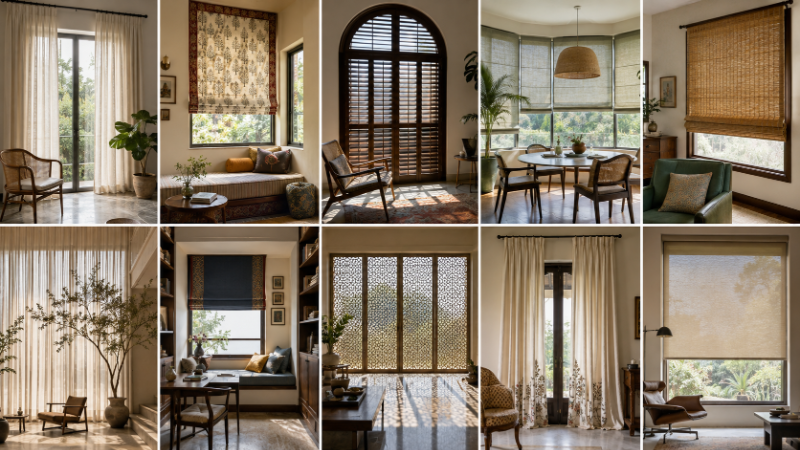
A stunning residence in Jaipur's Bani Park demonstrates how traditional jali patterns can be reinterpreted for contemporary living. The architects incorporated laser-cut metal screens that echo classic geometric patterns while allowing controlled light diffusion. These screens reduce heat gain by up to 40% compared to standard windows, a crucial advantage in Rajasthan's intense climate.
The design uses powder-coated aluminum frames in matte black, creating sharp contrast against the cream-colored exterior walls. The jali screens serve multiple purposes: they provide privacy from street-level views, create dramatic shadow patterns on interior walls that change throughout the day, and facilitate natural ventilation. The cost of such custom jali screens typically ranges from ₹800 to ₹1,500 per square foot, depending on complexity and material choices.
2. Minimalist Glass Integration in Bangalore
A contemporary villa in Bangalore's Koramangala showcases the opposite approach—maximizing transparency while managing solar gain. Floor-to-ceiling glass walls are paired with motorized roller blinds featuring solar-control fabric that blocks 95% of UV rays while maintaining visibility. The fabric, available in neutral tones, costs approximately ₹400-600 per square meter.
This home demonstrates how technology can enhance traditional window treatment functions. The motorized system can be programmed to close automatically during peak heat hours (11 AM to 4 PM), reducing air conditioning costs by nearly 30%. The blinds integrate with the home's smart home system, allowing control via smartphone or voice commands. This represents a growing trend among affluent Indian homeowners who seek convenience alongside sustainability.
3. Heritage Wooden Shutters in Ahmedabad
A restored heritage mansion in Ahmedabad's Paldi area features intricately carved wooden shutters that are original to the structure, dating back to the 1920s. Rather than replacing these architectural treasures, the owners worked with conservation architects to restore and enhance their functionality. The shutters, crafted from teak wood, feature hand-carved geometric and floral patterns characteristic of the period.
The restoration cost approximately ₹2,50,000 for all windows, but the investment preserves authentic architectural heritage while maintaining the home's thermal efficiency. The wooden shutters naturally insulate the space, reducing heat transfer by approximately 25% compared to modern single-pane glass. This case study demonstrates how respecting a home's historical context can align with practical performance goals.
Frequently asked
4. Tropical Louver System in Kochi
A contemporary residence in Kochi's Mararikulam area employs adjustable wooden louver systems specifically designed for Kerala's humid, tropical climate. These horizontal slats, crafted from weather-resistant teak and bamboo composites, can be manually adjusted to control light and ventilation while preventing rainwater from entering during the monsoon season.
The louver system costs between ₹1,200 and ₹2,000 per square foot, with installation requiring approximately 2-3 weeks. The primary advantage is their superior moisture resistance—unlike traditional curtains or blinds that deteriorate in humid conditions, these louvers maintain their integrity for 15-20 years with minimal maintenance. The design also promotes natural cross-ventilation, reducing dependence on air conditioning during the cooler months.
5. Industrial Chic in Mumbai's SoBo
A loft apartment in Mumbai's South Bombay features oversized steel-framed windows characteristic of converted warehouse spaces. Rather than obscuring these architectural features, the owners installed minimalist roller shades in charcoal gray, which disappear when raised and provide complete blackout when lowered. The shades cost approximately ₹350 per square meter.
The industrial aesthetic is enhanced by keeping window frames exposed and unadorned. Large plants positioned near windows create a natural filtering effect, reducing glare while adding biophilic elements to the urban space. This approach costs significantly less than traditional treatments—approximately ₹50,000-75,000 for the entire apartment—while creating a sophisticated, gallery-like atmosphere.
6. Smart Glass in Gurugram
A luxury residence in Gurugram's DLF Phase-5 incorporates electrochromic smart glass that changes opacity with the flip of a switch. This technology, imported primarily from Europe and the United States, represents the cutting edge of window innovation. The glass can shift from transparent to opaque within seconds, eliminating the need for traditional window coverings.
While smart glass costs approximately ₹3,000-5,000 per square foot—significantly more than conventional solutions—it offers unparalleled control over privacy and light. The technology also provides superior thermal insulation, reducing energy consumption by up to 45%. For homeowners seeking a futuristic aesthetic without visible hardware, smart glass represents an increasingly viable option as prices gradually decrease in the Indian market.
7. Fabric Drapes in a Delhi Farmhouse
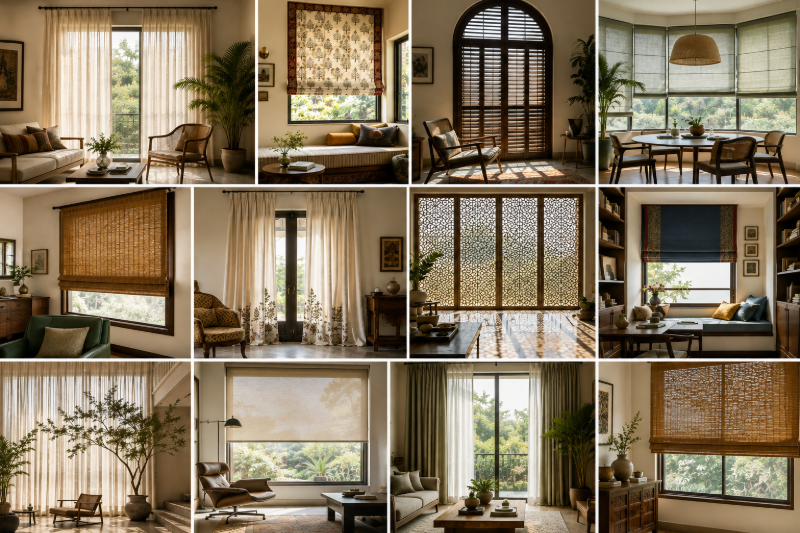
A sprawling farmhouse in Delhi's outer regions showcases how luxurious fabric treatments can define interior spaces. Custom linen drapes in warm ivory tones frame expansive windows overlooking manicured gardens. The drapes, crafted from Belgian linen, cost approximately ₹800-1,200 per meter of fabric, with professional tailoring adding another ₹200-300 per meter.
The key to success in Delhi's climate is selecting high-quality, naturally breathable fabrics that resist dust accumulation. Linen, cotton blends, and specially treated wool perform well in Delhi's dry climate and intense summers. The drapes are paired with motorized roller blinds underneath for practical light control, creating a layered approach that balances luxury with functionality. Total investment for this treatment across the home was approximately ₹8-10 lakhs.
8. Bamboo Blinds in Goa
A beachfront villa in North Goa employs natural bamboo roller blinds that complement the home's coastal aesthetic while providing practical protection against salt spray and intense sunlight. Bamboo blinds, priced at ₹300-500 per square meter, offer excellent durability in coastal environments where metal blinds would corrode and fabric treatments would deteriorate rapidly.
The natural texture of bamboo creates warm, organic interiors that harmonize with the Goan landscape. The blinds can be partially lowered to filter light while maintaining views of the Arabian Sea, a critical consideration for vacation properties. Maintenance involves occasional dusting and periodic treatment with natural oils to preserve the bamboo's appearance—a simple process that extends the lifespan to 10-15 years.
9. Silk Curtains in a Hyderabad Palace
A restored palace in Hyderabad's Banjara Hills features sumptuous silk curtains in jewel tones—emerald, sapphire, and ruby—that echo the opulence of Nizami heritage. The silk, sourced from Bangalore's renowned textile producers, costs approximately ₹1,500-2,500 per meter. The curtains are lined with blackout fabric and feature hand-stitched details including tassels and braids.
This approach prioritizes aesthetic grandeur and cultural continuity over practical efficiency. However, the silk is treated with protective coatings that resist dust and fading, extending its lifespan. The investment—approximately ₹12-15 lakhs for the entire palace—reflects the homeowner's commitment to preserving Hyderabad's architectural heritage while creating spaces of unparalleled elegance.
10. Sliding Glass Doors in Pune
A modern villa in Pune's Koregaon Park features expansive sliding glass doors that open onto landscaped courtyards. Rather than traditional window treatments, the design employs motorized exterior roller shutters in aluminum that provide security and thermal control without compromising interior aesthetics. These shutters, costing ₹1,000-1,500 per square meter, can be raised during pleasant weather and lowered during extreme heat or for security purposes.
This approach is particularly effective in Pune's climate, where temperatures fluctuate significantly between seasons. The exterior shutters protect glass surfaces from damage during occasional hailstorms while reducing cooling loads during summer. The system integrates with the home's security infrastructure, providing both physical and psychological benefits.
11. Stained Glass Artistry in Kolkata
A Victorian-era mansion in Kolkata's Alipore features original stained glass windows that have been meticulously restored. The colored glass panels, depicting traditional Bengali motifs and floral patterns, transform natural light into a spectrum of colors throughout the day. Restoration of such historical stained glass costs approximately ₹5,000-10,000 per square foot, depending on damage extent and complexity.
While stained glass doesn't provide practical light control, it offers unmatched artistic value and historical authenticity. The windows are protected with polycarbonate sheets on the exterior, safeguarding the delicate glass from weather and pollution while maintaining visibility of the original craftsmanship from inside. This hybrid approach preserves heritage while ensuring longevity.
12. Modular Window Screens in Chandigarh
A contemporary home in Chandigarh's Sector-25 employs modular window screens that can be reconfigured based on seasonal needs. Crafted from powder-coated steel, these screens feature interchangeable panels in various densities—from fully open mesh to completely solid. The system costs approximately ₹1,500-2,000 per square meter and offers remarkable flexibility.
During summer, residents install dense panels to minimize heat gain; during winter, they switch to open mesh to maximize solar heating. This modular approach aligns with Chandigarh's extreme temperature variations, where summer highs exceed 40°C and winter lows drop below 5°C. The system requires minimal maintenance and can be easily updated or replaced without structural modifications.
Key Considerations for Selecting Window Treatments in India
Climate Adaptation
India's diverse climates demand region-specific solutions. Coastal areas require corrosion-resistant materials; arid regions benefit from heat-reflective treatments; tropical zones need moisture-resistant options. Understanding your local climate is the first step in selecting appropriate window treatments.
Budget Planning
Window treatment costs vary dramatically based on material selection and customization. Basic roller blinds start at ₹200-300 per square meter, while custom solutions can exceed ₹5,000 per square meter. Establishing a realistic budget helps narrow options while ensuring quality outcomes.
Professional Consultation
Working with experienced architects and interior designers ensures that window treatments align with your home's architectural style and functional requirements. Platforms like AECORD provide access to vetted professionals who understand Indian market conditions, material availability, and regional building codes.
Integration with Home Systems
Modern window treatments increasingly integrate with smart home systems, security infrastructure, and climate control. Planning for such integration during the design phase prevents costly retrofitting later.
The Future of Window Treatments in Indian Homes
As India's real estate market continues evolving, window treatment solutions are becoming increasingly sophisticated. Sustainable materials, smart technology, and heritage preservation are converging to create solutions that are simultaneously beautiful, functional, and responsible.
The homes showcased in this article demonstrate that exceptional window treatments don't require excessive budgets—they require thoughtful design that respects climate, context, and individual lifestyle. Whether you're restoring a heritage property or designing a contemporary residence, the principles remain consistent: understand your environment, select appropriate materials, and prioritize both aesthetics and functionality.
Finding the Right Professionals for Your Window Treatment Project
Designing and implementing effective window treatments requires expertise in materials science, architectural principles, and local building practices. If you're planning a window treatment project for your Indian home, AECORD connects you with experienced architects, interior designers, and contractors who specialize in creating solutions tailored to your specific needs and regional context.
Whether you're inspired by the jali screens of Jaipur, the minimalist glass of Bangalore, or the heritage shutters of Ahmedabad, finding the right professional partner ensures your window treatment project succeeds. Visit AECORD today to explore portfolios, compare expertise, and connect with professionals who understand the nuances of designing beautiful, functional windows for Indian homes.
Frequently Asked Questions
What are jali screens and how do they help with temperature control in Indian homes?
Jali screens are traditional geometric lattice patterns that can be reinterpreted using modern materials like laser-cut metal. They reduce heat gain by up to 40% compared to standard windows while providing privacy and creating decorative shadow patterns, making them ideal for India's hot climates like Rajasthan.
How much do custom laser-cut jali screens cost in India?
Custom laser-cut jali screens typically cost between ₹800 to ₹1,500 per square foot, depending on the complexity of the geometric patterns and the materials used, such as powder-coated aluminum frames.
Can motorized blinds with solar-control fabric reduce air conditioning costs?
Yes, motorized roller blinds with solar-control fabric can reduce air conditioning costs by nearly 30% when programmed to close during peak heat hours (11 AM to 4 PM). These blinds block 95% of UV rays and can be integrated with smart home systems for automated control.
What is the cost of solar-control fabric for motorized blinds in India?
Solar-control fabric for motorized blinds costs approximately ₹400-600 per square meter in India and comes in neutral tones that maintain visibility while blocking harmful UV radiation.
Should heritage wooden shutters in old Indian homes be replaced or restored?
Heritage wooden shutters should be restored rather than replaced, as they are architectural treasures. Working with conservation architects to restore and enhance their functionality preserves the home's historical character while maintaining their practical benefits for light and temperature control.