

Understanding 10mm Bison Laminated Cement Bonded Particle Board: A Complete Guide for Indian Construction Professionals
In the construction and interior design landscape of India, selecting the right building materials is crucial for project success, durability, and cost-effectiveness. One material that has gained significant traction among architects, engineers, and contractors is cement bonded particle board (CBPB), particularly the 10mm thickness variant in standard 1220mm x 2440mm dimensions. The Bison brand laminated cement bonded particle board in beige finish (specification 361694) represents a reliable choice for numerous applications across residential, commercial, and industrial projects in India.
This comprehensive guide will help you understand the properties, applications, advantages, and practical considerations for using this specific product in your construction projects.
Build cost · Bengaluru, May 2026
What is Cement Bonded Particle Board?
Material Composition and Manufacturing Process
Cement bonded particle board is an engineered wood product manufactured by combining wood particles with Portland cement and water. Unlike traditional plywood or MDF boards, CBPB offers superior durability and moisture resistance, making it ideal for the Indian climate with its varied humidity levels and seasonal changes.
The manufacturing process involves:
Wood particle preparation: Raw wood particles are sorted and graded for consistent quality
Cement mixing: Portland cement is blended with the wood particles and water to create a homogeneous mixture
Pressing and curing: The mixture is pressed into sheets and cured under controlled conditions to achieve optimal strength
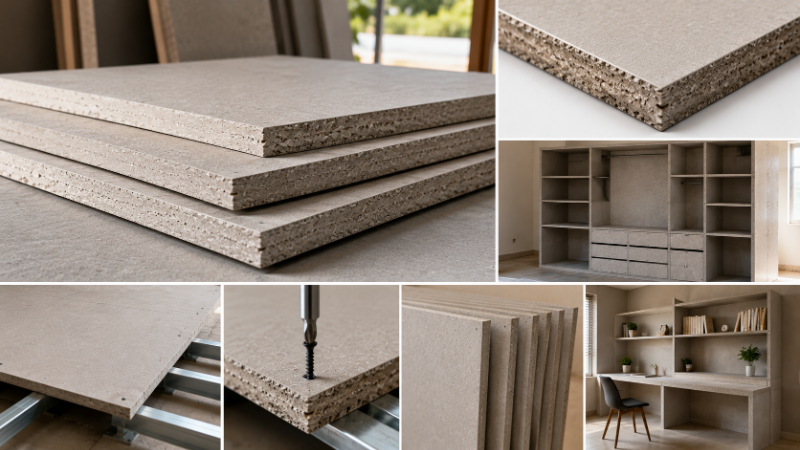
Lamination: The surface is laminated with a protective beige finish to enhance aesthetics and durability
The 10mm thickness specification provides an excellent balance between structural strength and material cost, making it a popular choice for mid-range construction projects across Indian cities like Bangalore, Mumbai, Delhi, and Hyderabad.
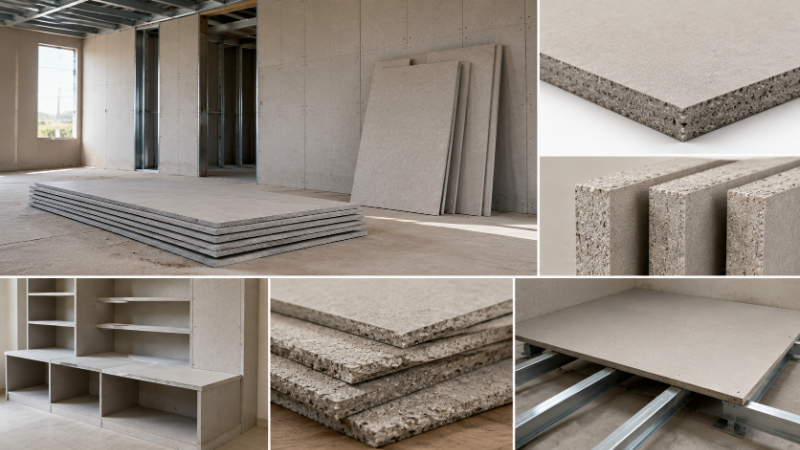
Standard Dimensions: 1220mm x 2440mm
The 1220mm x 2440mm dimension is the international standard size, equivalent to 4 feet x 8 feet. This size offers several practical advantages for construction professionals:
Optimal coverage area of approximately 2.98 square meters per sheet
Easy handling and transportation compared to larger formats
Minimal wastage when cutting for standard applications
Compatible with most construction equipment and machinery in India|
Frequently asked
Key Properties of 10mm Bison Laminated Cement Bonded Particle Board
Moisture and Water Resistance
One of the most significant advantages of cement bonded particle board is its exceptional moisture resistance. Unlike conventional plywood, CBPB doesn't swell or warp when exposed to humidity or water. This property makes it particularly valuable in Indian construction, where monsoon seasons and high humidity levels can damage conventional materials.
The beige laminated finish adds an additional protective layer, preventing water penetration and extending the material's lifespan. Testing shows that CBPB maintains its structural integrity even when exposed to water for extended periods, making it suitable for:
Bathrooms and wet areas
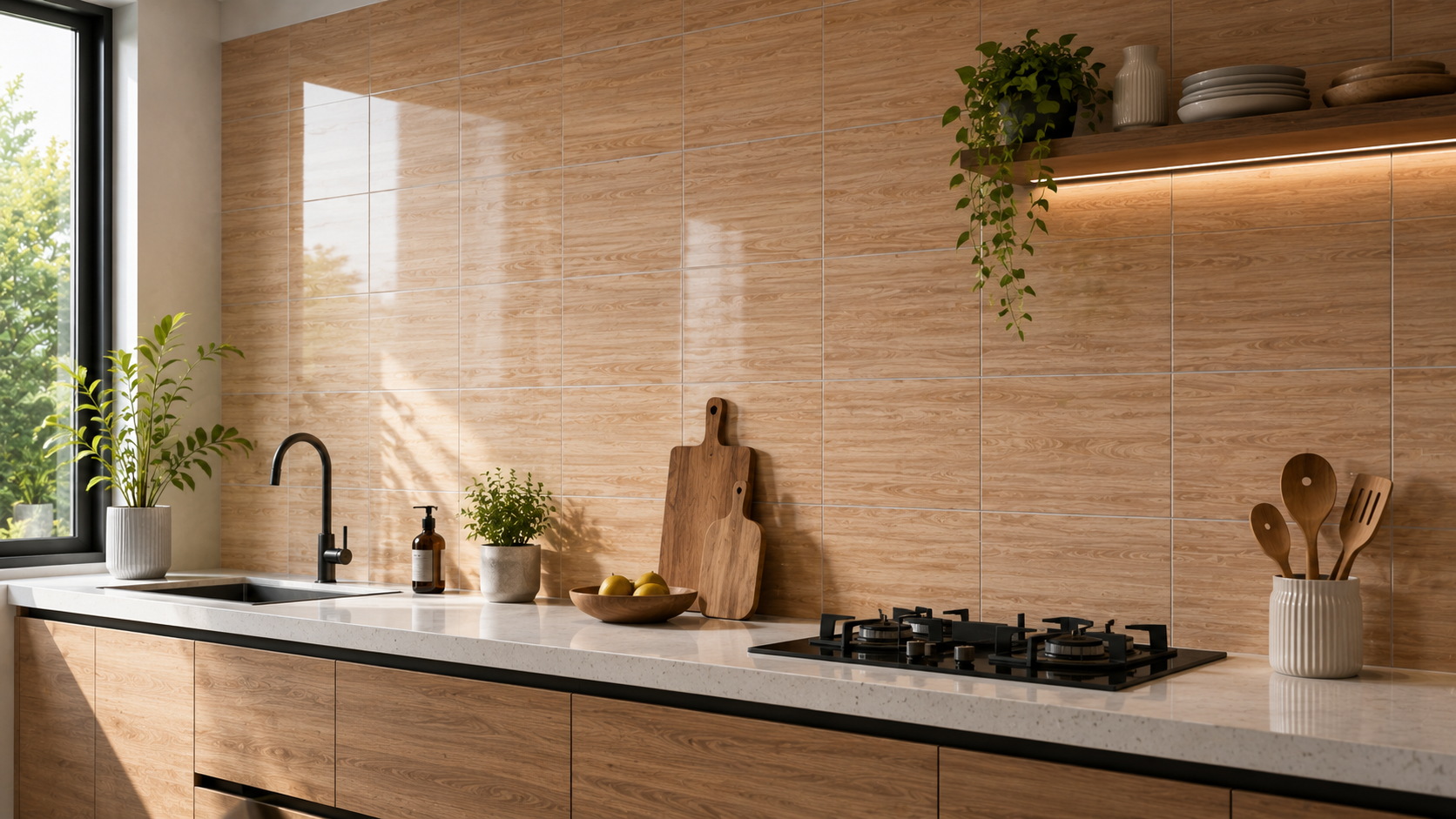
Kitchen backsplashes and wall cladding
Exterior wall applications
Basement construction
Fire Resistance
Cement bonded particle board offers superior fire resistance compared to traditional wood-based panels. The cement matrix is non-combustible, and the material typically achieves Class A or B fire ratings depending on the finish. This makes it compliant with Indian building codes and safety regulations, particularly important for commercial and multi-story residential projects in major Indian metros.
Dimensional Stability
The 10mm thickness provides excellent dimensional stability, meaning the board resists expansion and contraction caused by temperature and humidity fluctuations. This stability is critical in India's diverse climate zones—from the humid coastal regions of Kerala and Maharashtra to the dry climates of Rajasthan.
Strength and Durability
At 10mm thickness, this board offers adequate strength for various applications while remaining cost-effective. The cement bonding creates a dense, durable material that resists:
Termite and insect damage (unlike traditional wood)
Fungal growth and mold
Mechanical wear and impact
Chemical degradation
Applications in Indian Construction Projects
Interior Wall Cladding and Partitioning
The beige laminated finish makes this board aesthetically suitable for interior applications. Many architects in Bangalore and Mumbai specify cement bonded particle board for creating durable interior partitions, wall cladding, and accent walls. The 10mm thickness is ideal for non-load-bearing partition walls and can be easily fastened to wooden or steel frames.
Exterior Facade Systems
In commercial projects across Delhi, Pune, and Hyderabad, architects increasingly use cement bonded particle board for external facade cladding. The material's moisture resistance and durability make it suitable for long-term outdoor exposure. When properly installed with appropriate ventilation and drainage systems, it provides excellent protection against weathering.
Flooring Applications
The structural strength of 10mm CBPB makes it suitable for underlayment in flooring systems. It can serve as a stable base for ceramic tiles, wooden flooring, or vinyl in both residential and commercial spaces. Its resistance to moisture makes it particularly valuable for applications in kitchens and bathrooms.
Acoustic and Insulation Panels
The density and composition of cement bonded particle board provide moderate acoustic absorption properties. It's increasingly used in commercial office spaces, educational institutions, and healthcare facilities across Indian cities for creating sound-dampening wall and ceiling systems.
Furniture and Cabinetry
Interior designers and furniture manufacturers in India recognize the value of CBPB for creating durable, moisture-resistant cabinetry. The beige finish is versatile and can be painted or laminated further to match various interior design schemes.
Technical Specifications and Performance Standards
Density and Weight
Cement bonded particle board typically has a density of 1200-1400 kg/m³, making it heavier than conventional plywood. A single 1220mm x 2440mm sheet at 10mm thickness weighs approximately 36-42 kg, which is important for structural calculations and handling requirements on construction sites.
Compressive Strength
The 10mm thickness provides compressive strength suitable for most non-load-bearing applications. For load-bearing applications, engineers typically recommend using multiple layers or thicker variants.
Thermal Properties
CBPB offers moderate thermal insulation properties, with a thermal conductivity coefficient that varies based on specific composition. This contributes to improved building energy efficiency, particularly valuable in India's hot climate zones.
Compliance with Indian Standards
Quality cement bonded particle boards like the Bison brand typically comply with Indian Standards such as IS 2380 and ISO 9933 for cement bonded particle boards, ensuring consistent quality and performance across batches.
Cost Considerations for Indian Projects
Material Cost
In the Indian market, 10mm thick cement bonded particle board in standard dimensions typically costs between ₹3,500 to ₹5,500 per sheet, depending on brand, finish quality, and regional availability. Bison brand products, being established in the market, offer good value for money with consistent quality.
When comparing costs:
Marine plywood: ₹4,500-₹7,000 per sheet (higher cost, less suitable for certain applications)
Cement bonded particle board: ₹3,500-₹5,500 per sheet (better moisture resistance, cost-effective)
Standard plywood: ₹2,500-₹4,000 per sheet (lower cost, but poor moisture resistance)
Installation and Labor Costs
Installation costs vary significantly across Indian regions. In metropolitan areas like Bangalore, Mumbai, and Delhi, skilled labor for board installation typically costs ₹50-₹100 per square meter. The board's ease of cutting and fastening makes it relatively economical to install compared to some alternatives.
Long-term Value
While the initial material cost may be slightly higher than conventional plywood, the superior durability and moisture resistance of CBPB result in better long-term value. Projects requiring minimal maintenance and repairs over 15-20 years will benefit from this material choice.
Installation Best Practices
Preparation and Planning
Before installation, ensure that:
The substrate is clean, dry, and level
Proper ventilation is planned, especially for exterior applications
Structural calculations are completed for load-bearing scenarios
All necessary tools and fasteners are available on-site
Cutting and Shaping
Cement bonded particle board can be cut using standard woodworking tools, though it's denser than conventional plywood. Use:
Carbide-tipped saw blades for clean cuts
Proper dust collection equipment for worker safety
Appropriate personal protective equipment (PPE)
Fastening Methods
The 10mm thickness accommodates various fastening methods:
Mechanical fasteners: Stainless steel or galvanized screws (minimum 50mm length for 10mm board)
Adhesives: Cement-based or epoxy adhesives for permanent bonding
Combination methods: Both fasteners and adhesives for maximum durability
Finishing Options
The beige laminated finish provides a neutral base that can be:
Left as-is for industrial or minimalist aesthetics
Painted with appropriate exterior or interior paints
Laminated with decorative finishes for enhanced aesthetics
Sealed with protective coatings for extended durability
Comparison with Alternative Materials
Versus Marine Plywood
While marine plywood offers good moisture resistance, cement bonded particle board provides superior performance in wet conditions at a lower cost. CBPB also resists termite and fungal damage better than plywood.
Versus MDF and HDF
MDF and HDF boards are more affordable but significantly less moisture-resistant. In India's climate, they deteriorate quickly in humid environments, making CBPB a better long-term choice for most applications.
Versus Solid Wood
While solid wood offers aesthetic appeal, it requires regular maintenance and is susceptible to environmental damage. CBPB provides a more stable, low-maintenance alternative for structural applications.
Environmental and Health Considerations
Sustainability
Modern cement bonded particle boards are manufactured with sustainable practices, often using recycled wood particles and certified sources. This makes them an environmentally responsible choice for conscious builders and designers in India.
Indoor Air Quality
Unlike some engineered wood products, CBPB doesn't emit formaldehyde or other volatile organic compounds (VOCs), making it safe for residential applications and compliant with indoor air quality standards.
Recyclability
At the end of its lifespan, cement bonded particle board can be recycled or repurposed, contributing to circular economy principles in Indian construction.
Maintenance and Longevity
Regular Maintenance
The low-maintenance nature of CBPB is one of its key advantages. Periodic cleaning with mild detergent and water is typically sufficient. For exterior applications, occasional inspection for damage and sealant reapplication may be necessary.
Expected Lifespan
With proper installation and maintenance, cement bonded particle board can last 20-30 years or more, significantly outlasting conventional plywood in most Indian climates.
Repair and Replacement
Individual sheets can be easily replaced if damaged, making future maintenance and upgrades straightforward and cost-effective.
Finding Quality Products and Professional Guidance
When sourcing cement bonded particle board for your Indian construction project, it's essential to work with reliable suppliers and experienced installation professionals. AECORD connects you with verified architecture, engineering, and construction professionals across India who have expertise in material selection and installation.
Whether you're planning a residential renovation in Bangalore, a commercial project in Mumbai, or an industrial facility in Hyderabad, AECORD's marketplace helps you find specialists who understand the specific requirements of cement bonded particle board applications in your region.
Quality assurance is paramount—ensure that your supplier provides:
Proper certification and compliance documentation
Consistent product quality across batches
Technical support and guidance
Warranty information and after-sales service
Conclusion
The 10mm thickness Bison laminated cement bonded particle board in 1220mm x 2440mm dimensions represents an excellent choice for diverse construction applications across India. Its superior moisture resistance, fire performance, dimensional stability, and durability make it particularly valuable in India's varied climate zones.
Whether you're working on interior cladding, exterior facades, flooring underlayment, or specialized applications, this material offers a practical balance between performance, cost-effectiveness, and ease of installation. The beige laminated finish provides versatility for both aesthetic and functional requirements.
By understanding the material's properties, applications, installation requirements, and maintenance needs, construction professionals can make informed decisions that result in durable, high-quality projects that stand the test of time in India's challenging environmental conditions.
For your next project requiring cement bonded particle board or related construction materials, consider connecting with experienced professionals on AECORD who can provide expert guidance on material selection, specification, and installation tailored to your specific project requirements and regional considerations.
Frequently Asked Questions
What is cement bonded particle board and how is it different from plywood?
Cement bonded particle board (CBPB) is an engineered material made by combining wood particles with Portland cement and water, offering superior moisture and fire resistance compared to traditional plywood. Unlike plywood, CBPB doesn't swell or warp when exposed to humidity, making it ideal for Indian climates with high moisture levels and monsoon seasons.
What are the ideal applications for 10mm Bison cement bonded particle board?
10mm CBPB is suitable for bathrooms, wet areas, kitchen backsplashes, exterior wall cladding, and basement construction due to its exceptional moisture resistance. Its balanced thickness and standard 1220x2440mm dimensions make it ideal for mid-range residential, commercial, and industrial projects across India.
How much coverage does one sheet of 1220x2440mm cement bonded particle board provide?
Each sheet of 1220x2440mm (4 feet x 8 feet) cement bonded particle board provides approximately 2.98 square meters of coverage. This standard international size offers optimal coverage while minimizing wastage and being compatible with most construction equipment in India.
Is cement bonded particle board fire resistant?
Yes, cement bonded particle board offers superior fire resistance compared to traditional wood-based panels and typically achieves Class A or B fire ratings. The non-combustible cement matrix makes it compliant with Indian building codes and safety regulations.
Why is the beige laminated finish important on cement bonded particle board?
The beige laminated finish provides an additional protective layer that prevents water penetration, enhances aesthetics, and extends the material's lifespan. This finish is particularly important in India's varied climate conditions to maintain structural integrity and durability.