

Building a house is one of the most significant investments you'll make in your lifetime. In India, where construction costs have risen by 8-12% annually over the past few years, avoiding costly mistakes during the building process is crucial. Whether you're constructing a modest home in Bangalore, a villa in Mumbai, or an apartment in Delhi, the principles remain the same: proper planning, hiring qualified professionals, and avoiding common pitfalls can save you lakhs of rupees and years of regret.
This comprehensive guide outlines the ten most critical mistakes homeowners make during construction and how to avoid them. By understanding these pitfalls, you can ensure your dream home becomes a reality without unnecessary delays, cost overruns, or structural issues.
1. Skipping Proper Site Investigation and Soil Testing
One of the most expensive mistakes homeowners make is building without understanding their site's geological conditions. Many people assume that if land is available for purchase, it's suitable for construction. This assumption frequently leads to disaster.
Why this matters: Soil composition directly affects foundation design, construction methods, and long-term structural integrity. Poor soil conditions can require expensive remedial measures, including deep piling, ground stabilization, or complete foundation redesign.
What you should do: Invest in professional soil testing before finalizing your architectural design. A geotechnical survey typically costs between ₹15,000 to ₹50,000 but can prevent foundation failures costing ₹5-10 lakhs or more. Tests should include:
Soil bearing capacity analysis
Groundwater level assessment
Soil composition and classification
Recommendations for foundation type
This is particularly important in cities like Bangalore (black soil areas), Mumbai (coastal regions with high water tables), and Hyderabad (rocky terrain requiring special consideration).
Build cost · Bengaluru, May 2026
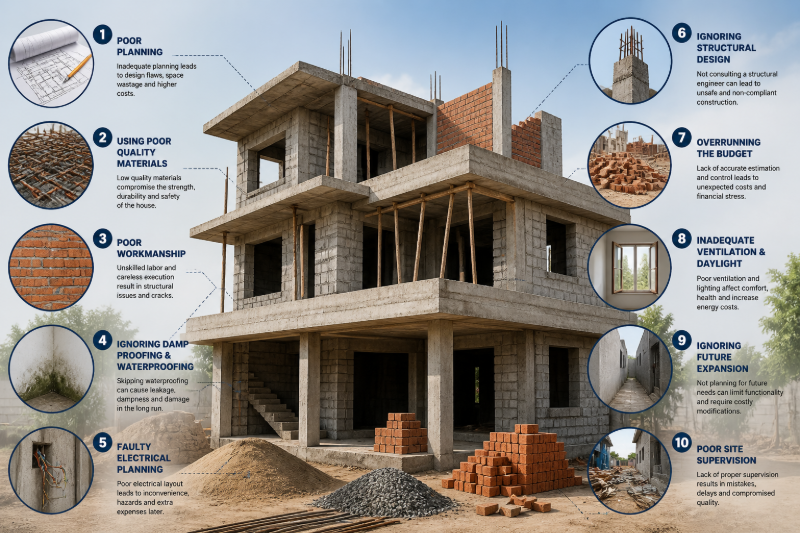
2. Inadequate Planning and No Detailed Design
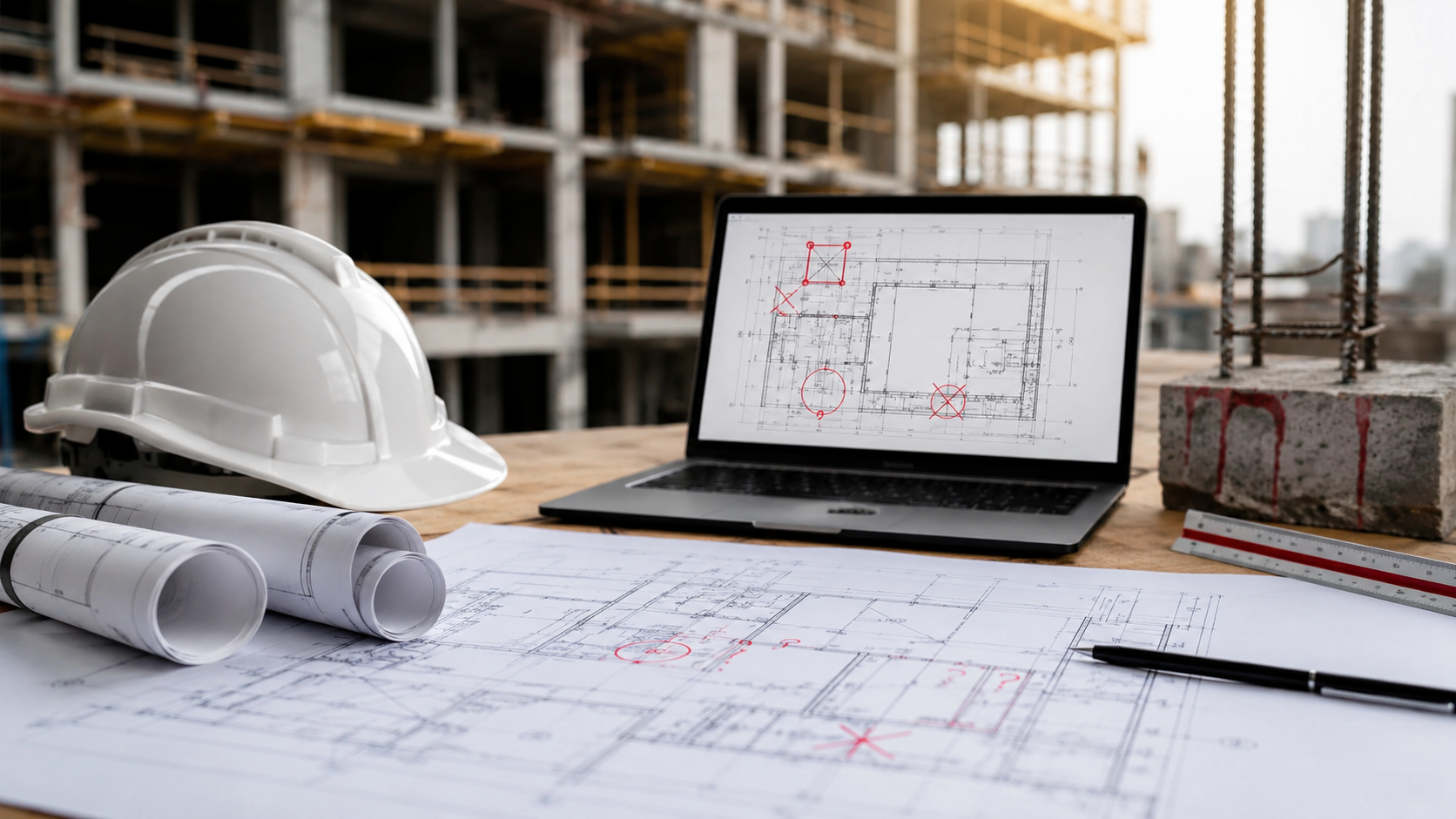
Starting construction without complete architectural and structural drawings is like driving without a map. Many homeowners begin building based on rough sketches or incomplete plans, leading to modifications mid-construction that inflate costs and timelines.
The real cost: Each design change during construction increases costs by 15-30%. A simple modification like relocating a bathroom can require replumbing, rewiring, and structural adjustments affecting the entire floor.
What you should do: Engage a qualified architect early in the process to create comprehensive drawings including:
Detailed floor plans with dimensions
Elevation drawings
Structural design by a licensed structural engineer
MEP (Mechanical, Electrical, Plumbing) drawings
Compliance with local building codes and bye-laws
Professional architectural and structural design typically costs 3-5% of the total construction budget but prevents costly errors. When searching for experienced professionals, platforms like AECORD can connect you with verified architects and engineers in your city who understand local regulations.
3. Ignoring Local Building Regulations and Permits
India's construction landscape is heavily regulated, with different rules in each city and state. Ignoring these regulations can result in legal notices, forced demolition of non-compliant portions, or inability to obtain occupancy certificates.
Common regulatory oversights:
Not obtaining necessary permissions from municipal corporations
Violating setback requirements (distance from property boundaries)
Exceeding Floor Space Index (FSI) limits
Non-compliance with parking requirements
Ignoring fire safety and accessibility standards
For example, Bangalore's building bye-laws require specific setbacks (typically 3-5 meters from front, 1.5-2 meters from sides), while Mumbai has different requirements based on road width. Delhi's regulations differ again, particularly regarding water harvesting and green building requirements.
What you should do: Before purchasing land or starting design, consult with your architect or a legal expert about applicable regulations. Obtain all necessary approvals including:
Sanctioned plan approval from municipal corporation
Environmental clearance (if applicable)
Occupancy certificate permission
Water and sewage connection approvals
4. Hiring Unqualified or Inexperienced Contractors
The contractor you choose can make or break your construction project. Many homeowners select contractors based solely on price, not experience or credentials. This is a false economy that often results in poor quality work, delays, and disputes.
Risks of unqualified contractors:
Substandard material usage
Poor workmanship and structural defects
Missed deadlines and project delays
Safety violations and accidents
Incomplete or abandoned projects
What you should do: Select contractors based on:
Verified experience with similar projects
References from previous clients
Proper licensing and registration
Financial stability and insurance coverage
Clear communication and professional approach
Request detailed quotations from multiple contractors and compare not just price, but scope of work, timelines, and warranty terms. A contractor quoting significantly lower than others may be cutting corners. AECORD can help you find qualified contractors in your area with verified credentials and client reviews.
Frequently asked
5. Poor Quality Control and Material Selection
Construction quality directly impacts your home's durability, safety, and resale value. Many homeowners don't monitor material quality or allow contractors to substitute approved materials with cheaper alternatives.
Common quality issues:
Using substandard cement, steel, or aggregates
Poor concrete mixing and curing
Inadequate reinforcement in structural elements
Low-quality electrical wiring and fixtures
Cheap plumbing materials prone to leaks
What you should do: Establish a quality control protocol:
Specify material grades and standards in the contract (IS codes for Indian standards)
Conduct regular site inspections (at least weekly)
Request material certifications and test reports
Hire a third-party quality auditor for critical stages
Maintain a site inspection log documenting progress and issues
Investing in quality materials adds 5-10% to construction costs but extends your home's lifespan by decades and prevents expensive repairs.
6. Inadequate Budget Planning and Contingency Reserves
Construction cost overruns are endemic in India. Studies show that 70% of residential projects exceed their initial budgets by 15-40%. Without proper budgeting and contingency reserves, many homeowners run out of funds mid-construction.
Why budgets fail:
Underestimating material and labor costs
Design changes and modifications
Unforeseen site conditions (rock, water, soil issues)
Inflation in material costs during construction
Regulatory compliance costs
What you should do: Create a detailed budget including:
Land cost
Design and planning fees
Structural and MEP work
Finishes and fixtures
Permits and approvals
Contingency reserve (15-20% of total budget)
For a ₹50 lakh project, allocate ₹7.5-10 lakhs as contingency. Track expenses meticulously and update your budget monthly. Engage a cost consultant or project manager to monitor expenses and prevent overruns.
7. Neglecting Structural Design and Seismic Considerations
Many homeowners, particularly in areas not traditionally considered earthquake-prone, skip proper structural design. This is dangerous. India's seismic zones range from I (least active) to V (most active), and even Zone II areas can experience damaging earthquakes.
Risks of poor structural design:
Inadequate lateral load resistance
Unbalanced structural systems
Poor column-beam connections
Insufficient reinforcement
What you should do: Ensure your structural design:
Complies with IS 1893 (seismic design code)
Accounts for your area's seismic zone classification
Includes proper detailing for ductility
Has adequate shear walls or bracing systems
Is designed by a qualified structural engineer
Cities like Bangalore, Delhi, and parts of Maharashtra require Zone II or III compliance. Coastal cities like Mumbai need additional considerations for wind and liquefaction risks.
8. Inadequate Drainage and Waterproofing
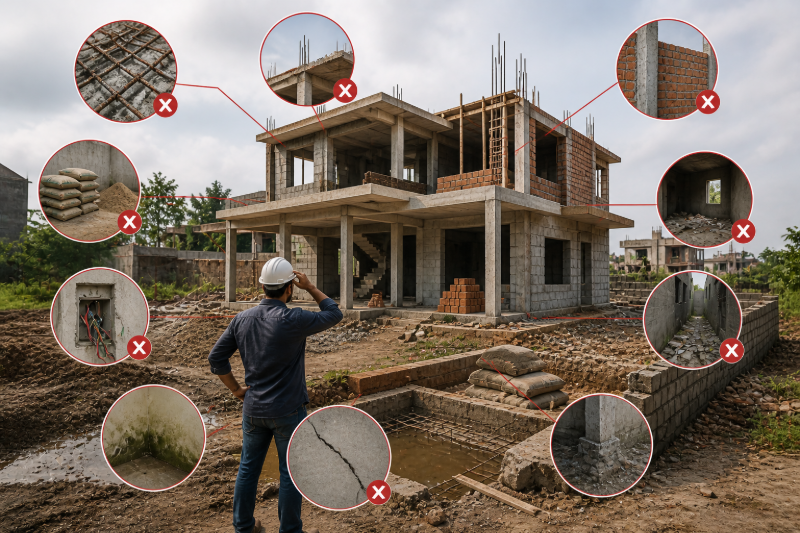
Water damage is one of the most common and expensive problems in Indian homes. Poor drainage, inadequate waterproofing, and moisture management lead to seepage, mold, structural deterioration, and health issues.
Common waterproofing failures:
No waterproofing membrane in basements or below-grade spaces
Poor surface drainage around the building
Inadequate slope for water runoff
Cracked concrete allowing water infiltration
Poor maintenance of gutters and downpipes
What you should do: Implement comprehensive waterproofing:
Use quality waterproofing membranes (bituminous, PU, or cementitious)
Apply waterproofing to all wet areas (bathrooms, kitchens, terraces)
Design proper surface and subsurface drainage
Ensure adequate slope (minimum 1:100) for water runoff
Use water-resistant materials in wet areas
Conduct water testing before completion
This is especially critical in Mumbai and other high-rainfall areas. Budget 3-5% of construction cost for proper waterproofing.
9. Poor Planning for MEP (Mechanical, Electrical, Plumbing) Systems
Mechanical, Electrical, and Plumbing systems are the lifeline of modern homes. Inadequate planning for these systems leads to insufficient capacity, poor performance, expensive retrofitting, and safety hazards.
Common MEP mistakes:
Undersized electrical panels and wiring
Inadequate water supply and storage capacity
Poor HVAC design for climate control
Plumbing layout causing low pressure or drainage issues
No provision for future expansion
What you should do: Engage a qualified MEP consultant to design systems that account for:
Current and future electrical load requirements
Water demand based on occupants and usage
Adequate storage tanks (typically 135 liters per person per day)
Proper ventilation and air quality
Efficient waste management and sewage treatment
Safety standards and code compliance
Conduct third-party quality audits at critical stages
Professional MEP design costs 2-3% of total construction but ensures systems function optimally and last longer.
10. Lack of Project Monitoring and Supervision
Many homeowners entrust their projects entirely to contractors without adequate oversight. This lack of supervision often results in poor quality, delays, and disputes.
Consequences of poor supervision:
Work not matching approved plans
Substandard materials and workmanship
Safety violations
Undiscovered defects until after completion
Disputes and litigation
What you should do: Establish robust project management practices:
Conduct regular site inspections (weekly minimum)
Maintain detailed inspection and progress logs
Hire a project manager or site engineer for oversight
Document all changes and approvals in writing
Schedule regular meetings with contractor and consultants
Perform final inspections before payment milestones
Many homeowners find it valuable to hire an independent site engineer (₹15,000-30,000 per month) to monitor quality and progress. This investment typically saves 10-15% of total project costs through prevention of rework and disputes.
Creating Your Construction Success Plan
Building a house successfully requires balancing multiple considerations: proper planning, qualified professionals, quality control, and active management. The mistakes outlined above are preventable with diligence and professional guidance.
Your construction journey should follow this sequence:
Site investigation and soil testing
Regulatory research and approvals
Engage qualified architects and engineers
Detailed design and planning
Comprehensive budgeting with contingency
Select experienced contractors through proper vetting
Establish quality control protocols
Implement active project management
Regular inspections and documentation
Final verification before handover
Whether you're building in Bangalore, Mumbai, Delhi, Pune, Hyderabad, or any other Indian city, these principles ensure your project stays on track, within budget, and meets quality standards.
Finding the Right Professionals for Your Project
The success of your construction project depends significantly on the professionals you hire. Rather than searching for architects, engineers, contractors, and consultants individually through word-of-mouth or unreliable sources, consider using a dedicated platform that connects you with verified AECO professionals.
AECORD is India's leading B2B2C marketplace for architecture, engineering, construction, and operations professionals. On AECORD, you can find and connect with:
Experienced architects and designers
Qualified structural and MEP engineers
Vetted contractors and builders
Quality auditors and project managers
Specialized consultants for your specific needs
All professionals on AECORD are verified, with transparent credentials, portfolios, and client reviews. This eliminates the guesswork and risk associated with hiring unknown contractors.
Start your construction journey right: Visit AECORD today to find qualified professionals in your city, compare their expertise and experience, read verified client reviews, and connect with the right team to bring your dream home to life. With the right professionals and proper planning, you can avoid the costly mistakes outlined in this guide and build a home that stands the test of time.
Frequently Asked Questions
What is soil testing and why is it important before building a house in India?
Soil testing is a geotechnical survey that analyzes soil composition, bearing capacity, and groundwater levels to determine the appropriate foundation design. It's crucial because poor soil conditions can require expensive remedial measures like deep piling or ground stabilization, costing ₹5-10 lakhs or more, making the initial ₹15,000-₹50,000 investment worthwhile.
How much do architectural and structural designs cost for house construction?
Professional architectural and structural design typically costs 3-5% of your total construction budget. While this seems like an additional expense, it prevents costly mid-construction modifications that can increase costs by 15-30% each time a design change is made.
What are the main building regulations homeowners need to follow in India?
Key regulations include obtaining necessary municipal permits, adhering to setback requirements (distance from property boundaries), respecting Floor Space Index (FSI) limits, meeting parking requirements, and complying with fire safety codes. Non-compliance can result in legal notices, forced demolition, or inability to obtain occupancy certificates.
What should be included in a complete architectural design before construction starts?
A comprehensive design should include detailed floor plans with dimensions, elevation drawings, structural design by a licensed engineer, MEP (Mechanical, Electrical, Plumbing) drawings, and compliance documentation with local building codes and bye-laws to prevent costly modifications during construction.
How much can construction costs increase due to design changes during building?
Each design change during construction increases costs by 15-30%. For example, a simple modification like relocating a bathroom can require replumbing, rewiring, and structural adjustments that affect the entire floor, making proper planning before construction essential.