


Construction Costs in India (2026)
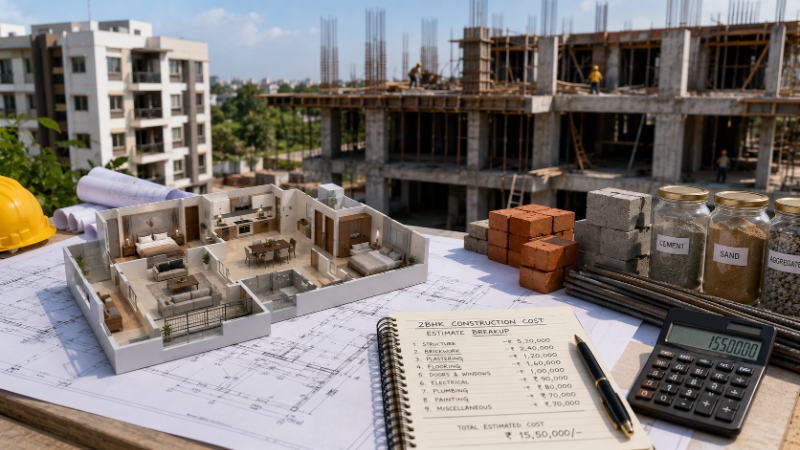
Construction costs in India vary significantly by city, building type, and specification level. As of 2026, the typical cost of constructing a residential building ranges from ₹1,800 to ₹3,500 per square foot for the built-up area. This includes structure (foundation to slab), masonry, plastering, flooring, electrical, plumbing, painting, and basic finishing — but excludes interior design, landscaping, and premium fixtures.
In metro cities, expect: Bengaluru ₹2,200-3,200/sq ft, Mumbai ₹2,500-4,000/sq ft, Delhi NCR ₹2,000-3,500/sq ft, Chennai ₹1,800-3,000/sq ft, and Hyderabad ₹1,900-3,000/sq ft. Tier 2 cities are typically 15-25% lower. Key cost components include: structure and civil work (40-45%), finishing and MEP (25-30%), materials (55-65% of total), and labor (25-35% of total).
Cost escalation is a major concern in Indian construction. Material prices — particularly steel, cement, and sand — fluctuate significantly. TMT steel has varied between ₹55,000 to ₹75,000 per metric ton in recent years. A well-drafted construction contract should include a price escalation clause pegged to Reserve Bank of India wholesale price indices for key materials. Without this, disputes between owners and contractors are almost guaranteed.
Selecting the Right Contractor
Choosing the right contractor is perhaps the single most important decision in an Indian construction project. Start by shortlisting 3-5 contractors and obtain detailed, itemized quotations — not lump-sum quotes. Compare them on a line-item basis covering all major heads: excavation, RCC work, masonry, plastering, flooring, electrical, plumbing, painting, waterproofing, and external development.
Verify the contractor's credentials: check completed projects (visit them), ask for a labour license and GST registration, confirm they have adequate insurance (workmen's compensation at minimum), and speak to at least three previous clients. In India, the contractor industry is largely unorganized, and quality varies enormously. Contractors registered with PWD (Public Works Department) or those empaneled with reputed developers offer a baseline credibility.
Payment terms matter significantly. The standard practice is milestone-based payments — 10% advance, then payment against verified completion of each construction stage (foundation, plinth, slab casting, masonry, finishing). Never pay ahead of work completion. Use a third-party quantity surveyor for bills verification on projects above ₹50 lakh. On AECORD, you can find verified construction firms with transparent project histories and client reviews.
Project Scheduling and Timeline Management
A standard G+2 residential building (3,000-4,000 sq ft) in India takes 10-14 months to construct from foundation to finishing. Multi-story apartments (G+4 to G+12) take 18-30 months. Key phases include: site preparation and foundation (6-8 weeks), structure — columns, beams, slabs per floor (3-4 weeks per floor), masonry and plastering (6-10 weeks), MEP rough-in (concurrent with masonry, 6-8 weeks), flooring and tiling (4-6 weeks), finishing — painting, fixtures, woodwork (6-10 weeks), and external works (4-6 weeks).
Monsoon management is critical in India. Most regions experience 3-4 months of heavy rainfall (June-September) when concrete work, plastering, and painting are either impossible or compromised. Smart scheduling completes foundation and structural work before monsoon and reserves the rainy season for interior activities like electrical wiring, plumbing, and carpentry.
RERA mandates that registered projects complete construction within the declared timeline. Delays trigger penalty provisions. Even for non-RERA projects, the construction agreement should specify milestone dates, a completion date, and liquidated damages for delays. Track progress using a simple bar chart (Gantt chart) and hold weekly site meetings with the contractor.
Quality Control on Indian Construction Sites
Quality control on Indian construction sites requires active vigilance. Key checkpoints include: concrete cube testing (cast cubes at every pour and test at 7 and 28 days — mandatory per IS 456), reinforcement verification (check bar diameter, spacing, lap lengths, and cover against structural drawings before every pour), plumb and level checks (columns must be within 5mm per 3m height), masonry joint thickness (10-12mm mortar joints), and waterproofing testing (ponding test for 48 hours on slabs and terraces).
Material testing at source is equally important. Cement should be tested for fineness and setting time, sand for silt content (wash test — silt should be below 6% for fine sand), and aggregates for gradation and water absorption. On most Indian sites, these tests are skipped, leading to poor concrete quality and long-term durability issues.
Engage a third-party quality inspection service for critical stages — foundation, each structural slab pour, waterproofing, and final finishing. This costs ₹2-5/sq ft but prevents expensive defects. Common defects on Indian sites include honeycombing in concrete (due to poor vibration), cold joints (due to delayed pours), inadequate curing (concrete needs 7-14 days of water curing in Indian temperatures), and reinforcement displacement during pouring.
Common Construction Pitfalls in India
The most expensive mistakes in Indian construction projects are avoidable with proper planning. The top pitfalls include: starting construction without complete drawings (leads to improvised decisions and rework), choosing the cheapest contractor (penny wise, pound foolish — quality issues surface within 2-3 years), not testing soil before foundation design (foundation failures are the most catastrophic and expensive to rectify), skipping waterproofing or using cheap products (water leakage is the number one complaint in Indian buildings), and not budgeting for contingency (always keep 10-15% contingency).
Cash flow mismanagement is another major pitfall. Indian construction materials are increasingly cash-and-carry (especially sand and aggregates), and delays in payment stall the project. Maintain a project fund with adequate liquidity for 2-3 months of expenses. Related to this, avoid making advance payments to contractors beyond 10% — if a contractor demands more, it signals cash flow problems on their side.
Finally, document everything. Maintain a site diary, photograph all concealed work (reinforcement, plumbing lines, electrical conduits) before covering, preserve all material test reports, and keep copies of all bills and receipts. This documentation is invaluable if disputes arise or if you need to trace a defect later.