


Cement: Types, Brands, and Selection
Cement is the most fundamental building material, and India is the world's second-largest cement producer. The three primary types used in Indian construction are OPC (Ordinary Portland Cement, IS 269) for general concrete work, PPC (Portland Pozzolana Cement, IS 1489) for general construction with better durability, and PSC (Portland Slag Cement, IS 455) for marine and sulphate-resistant applications.
PPC has largely replaced OPC for general construction in India because it offers better long-term strength, reduced heat of hydration (important in massive structures), and improved workability. OPC is preferred when high early strength is needed (precast, cold weather concreting). Leading brands include UltraTech, ACC, Ambuja, Shree Cement, Dalmia Cement, and Ramco — prices range from ₹350 to ₹450 per 50kg bag in 2026, varying by region and brand.
Quality checks at site: cement bags should not have hardened lumps (indicates moisture exposure), the manufacturing date should be within 60 days (cement loses strength over time), and the ISI mark (BIS certification) must be present. For significant concrete work, get cement tested for fineness and setting time at a local testing lab (₹1,000-2,000 per test). Store cement in a dry, covered area elevated from the ground on a platform — moisture and ground dampness are the biggest enemies.
Steel Reinforcement: TMT Bars and Quality
TMT (Thermo-Mechanically Treated) steel bars are the standard reinforcement in Indian construction, rated as Fe500 or Fe500D per IS 1786. The "D" in Fe500D indicates higher ductility — mandatory for earthquake-resistant construction in Zones III, IV, and V. Fe500D has become the de facto standard across India, even in lower seismic zones, for its superior bendability and weld-ability.
Current TMT steel prices in India range from ₹55,000 to ₹70,000 per metric ton (2026), translating to approximately ₹55-70 per kg. Leading manufacturers include Tata Tiscon, SAIL, JSW NeoSteel, Kamdhenu, and Shyam Steel. Price fluctuates with global iron ore prices and demand cycles — historically, prices dip post-monsoon (October-November) and peak during the construction season (January-April).
Quality verification is critical since counterfeit and sub-standard TMT bars are unfortunately common in Indian markets. Check for: BIS certification mark (ISI), manufacturer's name and grade stamped on every bar, consistent rib pattern, and proper weight (a 12mm bar should weigh approximately 0.89 kg per meter, 16mm should weigh 1.58 kg/m). For projects above ₹25 lakh, get sample bars tested at an NABL-accredited lab for tensile strength, elongation, and bend test — the cost is ₹3,000-5,000 per sample and provides assurance against sub-standard material.
Bricks and Blocks: Options for Indian Construction
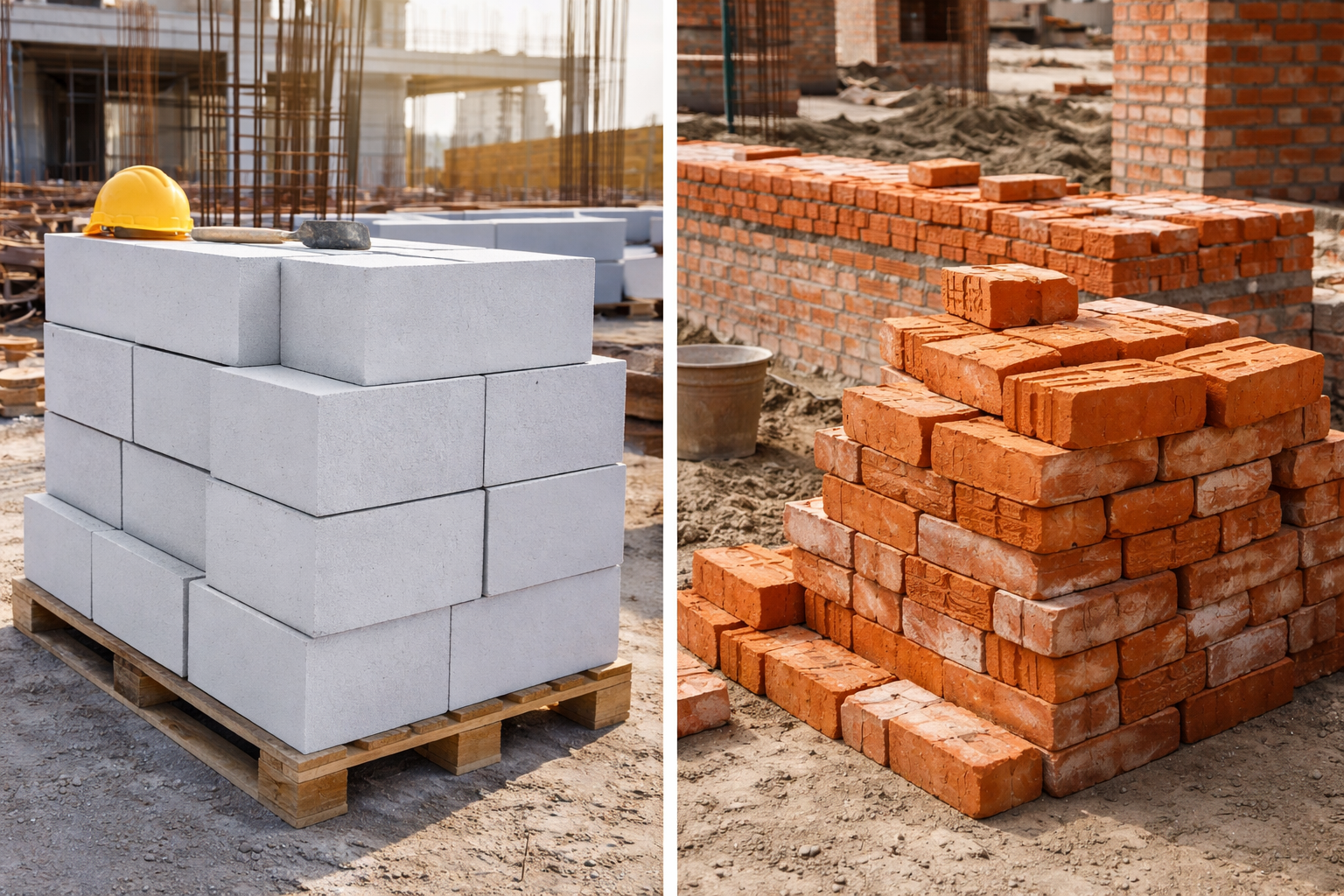
The Indian construction industry is transitioning from traditional clay bricks to manufactured alternatives. Red clay bricks remain the most widely used (₹5-10 per brick) but their environmental impact (topsoil depletion, high kiln emissions) and inconsistent quality make alternatives increasingly attractive.
AAC (Autoclaved Aerated Concrete) blocks have gained significant market share in metro cities. At ₹4,000-5,500 per cubic meter, AAC blocks offer 30-40% faster construction (due to larger block size), better thermal insulation, consistent quality, and no curing requirement. They require only thin-bed adhesive mortar instead of thick cement mortar, further reducing costs. However, AAC blocks have lower compressive strength than clay bricks and require special fasteners for heavy wall-mounted items.
Fly ash bricks (₹5-8 per brick) are made from thermal power plant waste, offering consistent dimensions, higher compressive strength than clay bricks (70-100 kg/cm² vs 35-50 kg/cm²), and lower water absorption. CLC (Cellular Lightweight Concrete) blocks are another option for non-load-bearing walls. Hollow concrete blocks (₹30-50 per block) are used for partition walls and offer good sound insulation. The choice between these options depends on local availability, structural requirements, thermal performance needs, and budget.
Flooring Materials: From Tiles to Natural Stone
Flooring is a highly visible and durable choice that defines a home's character. In India, the main options include vitrified tiles, ceramic tiles, natural stone (marble, granite, sandstone), engineered wood, and polished concrete. Each has distinct cost, maintenance, and aesthetic characteristics.
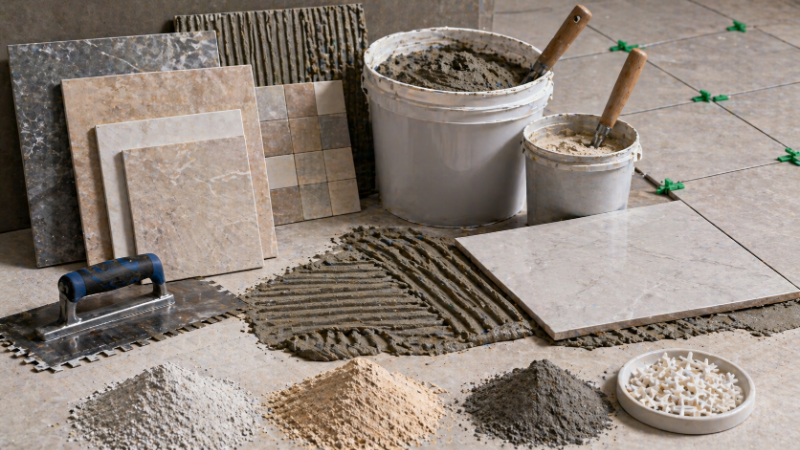
Vitrified tiles dominate the Indian residential market. Double-charged vitrified tiles (₹40-100/sq ft) offer excellent durability, water resistance, and low maintenance. Glazed vitrified tiles with digital printing (₹60-200/sq ft) can convincingly mimic marble, wood, and stone. Top brands include Kajaria, Somany, Johnson, Nitco, and Orient Bell. For high-traffic areas, choose tiles with hardness rating of Mohs 6-7 and water absorption below 0.5%.
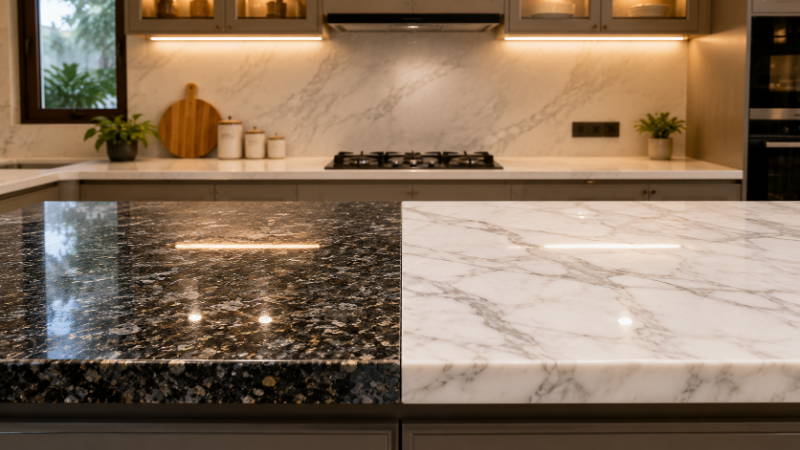
Indian marble from Rajasthan (₹80-200/sq ft for Makrana, Ambaji varieties) and Italian marble (₹200-600/sq ft for Statuario, Carrara) are aspirational choices but require sealing, polishing every 2-3 years, and careful maintenance against staining. Granite (₹80-250/sq ft) is more durable and stain-resistant than marble, making it ideal for kitchens and bathrooms. Engineered wood flooring (₹150-500/sq ft) adds warmth but is unsuitable for bathrooms, kitchens, and areas with high moisture — a significant limitation in Indian climate conditions.
Material Procurement Strategy
Smart procurement can save 10-20% on material costs in Indian construction. The key strategies include: buying cement and steel during off-peak seasons (monsoon months typically see lower demand and prices), purchasing tiles, sanitaryware, and hardware during annual sales (most brands offer 20-40% discounts during Diwali and year-end), and buying in bulk for better dealer margins.
Establish a material schedule aligned with your construction timeline. Cement should be purchased no more than 2-3 weeks before use (shelf life concerns). Steel can be procured in bulk at project start for price certainty. Tiles, sanitaryware, and fixtures should be finalized during the design phase but procured 4-6 weeks before installation to ensure availability of specific designs.
Always compare prices from multiple dealers and authorized distributors. Avoid purchasing from unauthorized channels to prevent counterfeit materials. For projects above ₹50 lakh, consider engaging a procurement consultant or quantity surveyor who can negotiate bulk rates and verify material quality. AECORD's marketplace connects you with verified material suppliers and helps compare prices across brands.
Maintain a material tracker spreadsheet documenting: item, specification, quantity required, supplier, unit rate, delivery date, and actual delivery. This prevents both shortages (which stall work) and excess procurement (which ties up capital). For high-value items like steel and tiles, negotiate a rate contract with the supplier that locks in prices for 3-6 months.