


Understanding Modern Waterproofing Solutions in India
Waterproofing has become one of the most important aspects of modern construction in India. From intense monsoons in Mumbai to humid coastal conditions in Chennai and temperature fluctuations in northern regions, buildings today face constant moisture-related challenges. Poor waterproofing can lead to seepage, mold, structural deterioration, and expensive repairs.
As construction standards evolve, India’s building industry is moving beyond traditional cement coatings and bitumen layers toward advanced waterproofing technologies that offer better durability, sustainability, and long-term performance.
Build cost · Bengaluru, May 2026
The Shift Toward Advanced Waterproofing
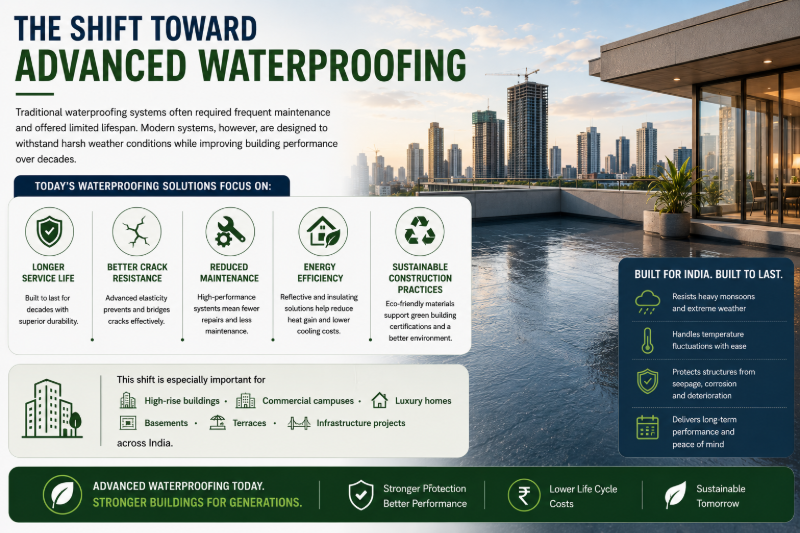
Traditional waterproofing systems often required frequent maintenance and offered limited lifespan. Modern systems, however, are designed to withstand harsh weather conditions while improving building performance over decades.
Today’s waterproofing solutions focus on:
Longer service life
Better crack resistance
Reduced maintenance
Energy efficiency
Sustainable construction practices
This shift is especially important for high-rise buildings, commercial campuses, luxury homes, basements, terraces, and infrastructure projects across India.
Liquid Waterproofing Membranes
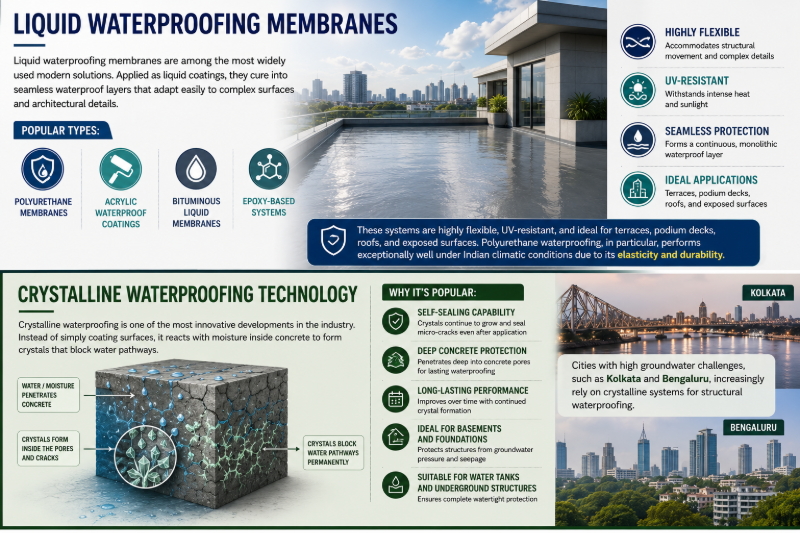
Liquid waterproofing membranes are among the most widely used modern solutions. Applied as liquid coatings, they cure into seamless waterproof layers that adapt easily to complex surfaces and architectural details.
Popular Types:
Polyurethane membranes
Acrylic waterproof coatings
Bituminous liquid membranes
Epoxy-based systems
These systems are highly flexible, UV-resistant, and ideal for terraces, podium decks, roofs, and exposed surfaces. Polyurethane waterproofing, in particular, performs exceptionally well under Indian climatic conditions due to its elasticity and durability.
Frequently asked
Crystalline Waterproofing Technology
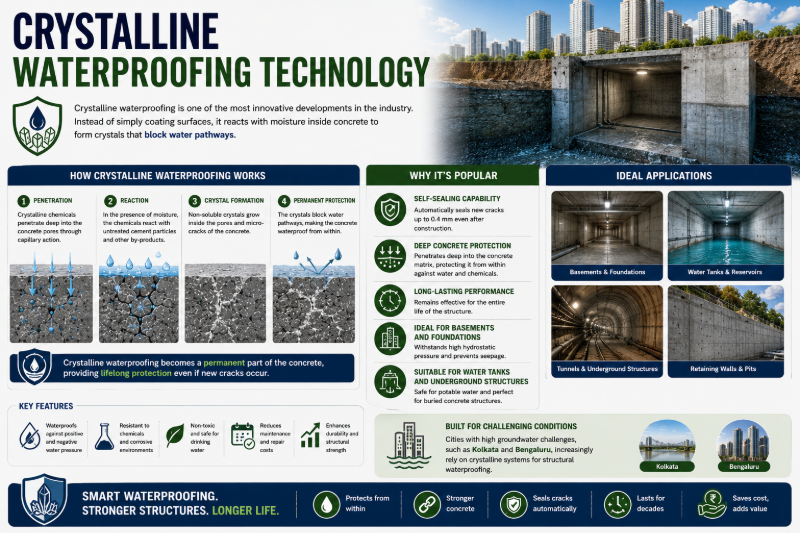
Crystalline waterproofing is one of the most innovative developments in the industry. Instead of simply coating surfaces, it reacts with moisture inside concrete to form crystals that block water pathways.
Why It’s Popular:
Self-sealing capability
Deep concrete protection
Long-lasting performance
Ideal for basements and foundations
Suitable for water tanks and underground structures
Cities with high groundwater challenges, such as Kolkata and Bengaluru, increasingly rely on crystalline systems for structural waterproofing.
Sustainable Waterproofing Solutions
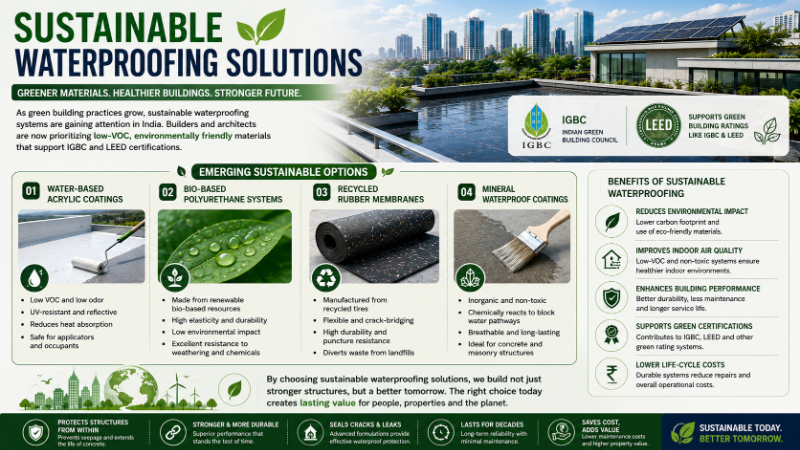
As green building practices grow, sustainable waterproofing systems are gaining attention in India. Builders and architects are now prioritizing low-VOC, environmentally friendly materials that support IGBC and LEED certifications.
Emerging Sustainable Options:
Water-based acrylic coatings
Bio-based polyurethane systems
Recycled rubber membranes
Mineral waterproof coatings
These materials reduce environmental impact while improving indoor air quality and building lifespan.
Self-Healing Waterproofing Systems
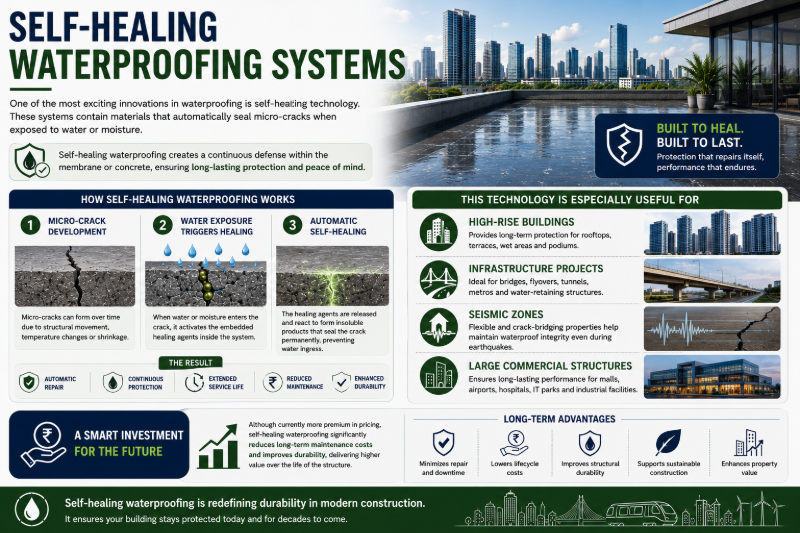
One of the most exciting innovations in waterproofing is self-healing technology. These systems contain materials that automatically seal micro-cracks when exposed to water or moisture.
This technology is especially useful for:
High-rise buildings
Infrastructure projects
Seismic zones
Large commercial structures
Although currently more premium in pricing, self-healing waterproofing significantly reduces long-term maintenance costs and improves durability.
Terrace and Basement Waterproofing
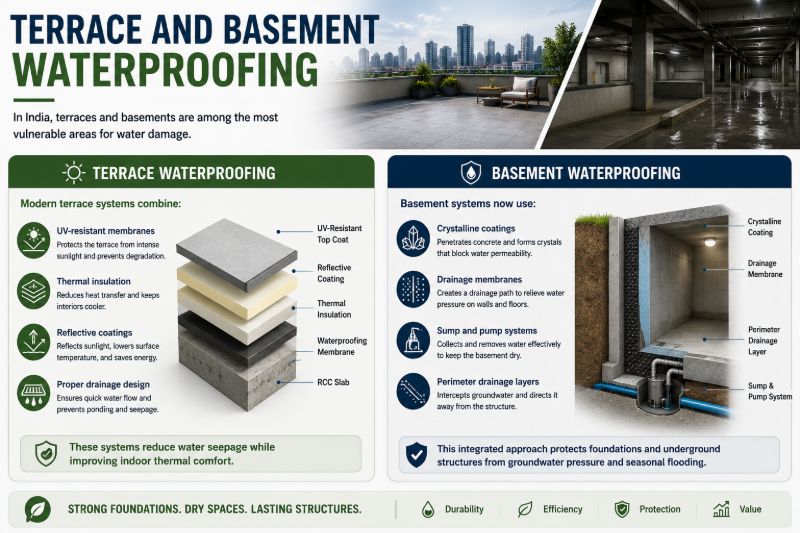
In India, terraces and basements are among the most vulnerable areas for water damage.
Terrace Waterproofing
Modern terrace systems combine:
UV-resistant membranes
Thermal insulation
Reflective coatings
Proper drainage design
These systems reduce water seepage while improving indoor thermal comfort.
Basement Waterproofing
Basement systems now use:
Crystalline coatings
Drainage membranes
Sump and pump systems
Perimeter drainage layers
This integrated approach protects foundations and underground structures from groundwater pressure and seasonal flooding.
Waterproofing as Part of Modern Building Design
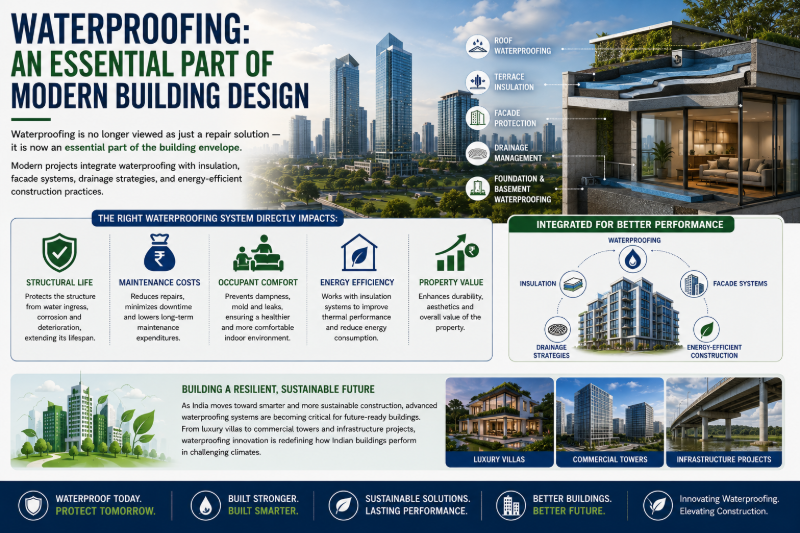
Waterproofing is no longer viewed as just a repair solution — it is now an essential part of the building envelope. Modern projects integrate waterproofing with insulation, facade systems, drainage strategies, and energy-efficient construction practices.
For architects and developers, selecting the right waterproofing system today directly impacts:
Structural life
Maintenance costs
Occupant comfort
Energy efficiency
Property value
As India moves toward smarter and more sustainable construction, advanced waterproofing systems are becoming critical for future-ready buildings. From luxury villas to commercial towers and infrastructure projects, waterproofing innovation is redefining how Indian buildings perform in challenging climates.
