Understanding Oxide Flooring in India: The Sustainable Floor Making a Strong Comeback
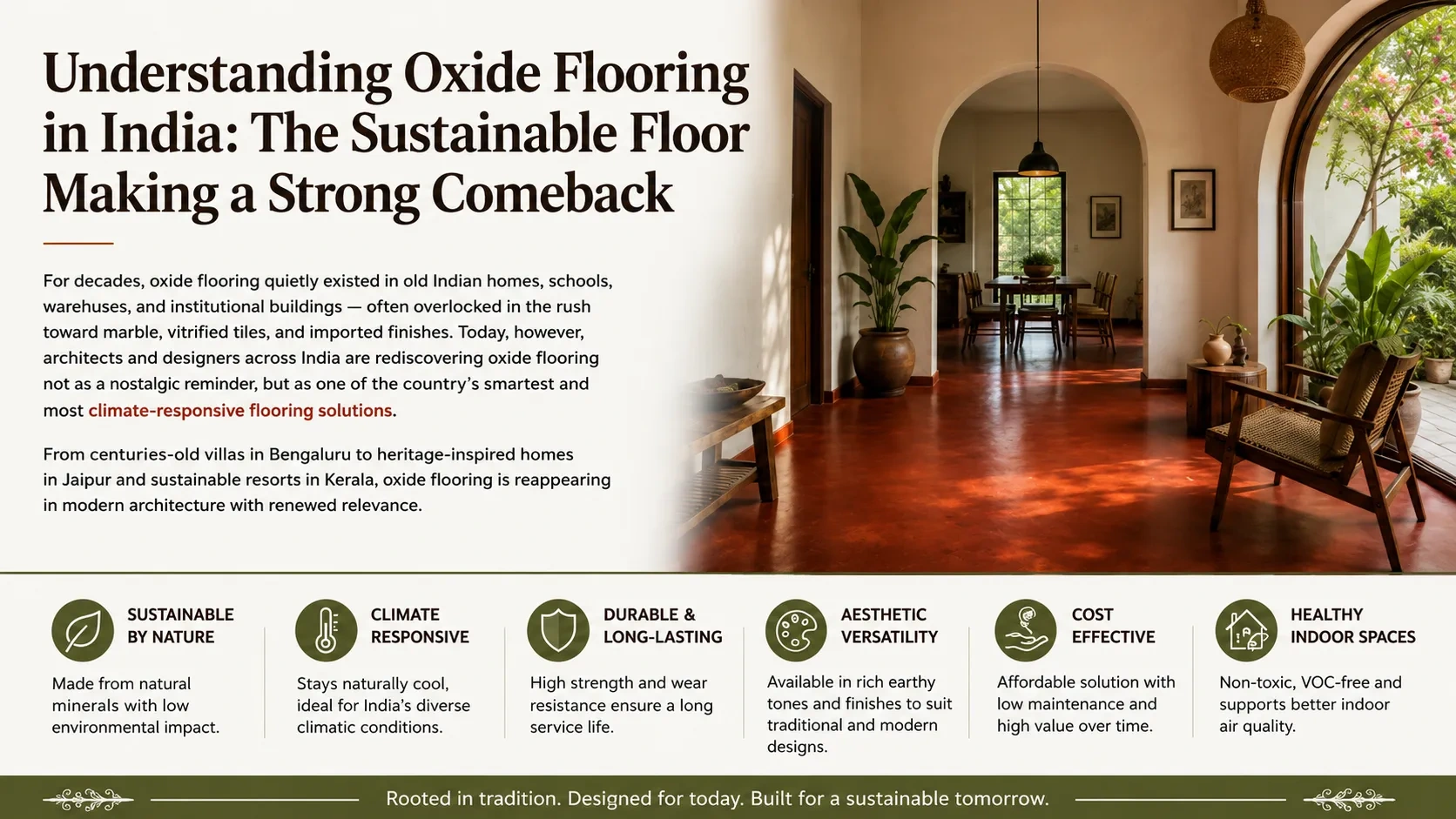
For decades, oxide flooring quietly existed in old Indian homes, schools, verandahs, and institutional buildings often overlooked in the rush toward marble, vitrified tiles, and imported finishes. Today, however, architects and designers across India are rediscovering oxide flooring not as a nostalgic material, but as one of the country’s smartest and most climate-responsive flooring solutions.
From contemporary villas in Bangalore to heritage-inspired homes in Jaipur and sustainable resorts in Kerala, oxide flooring is reappearing in modern architecture with renewed relevance.
Build cost · Bengaluru, May 2026
What Is Oxide Flooring?
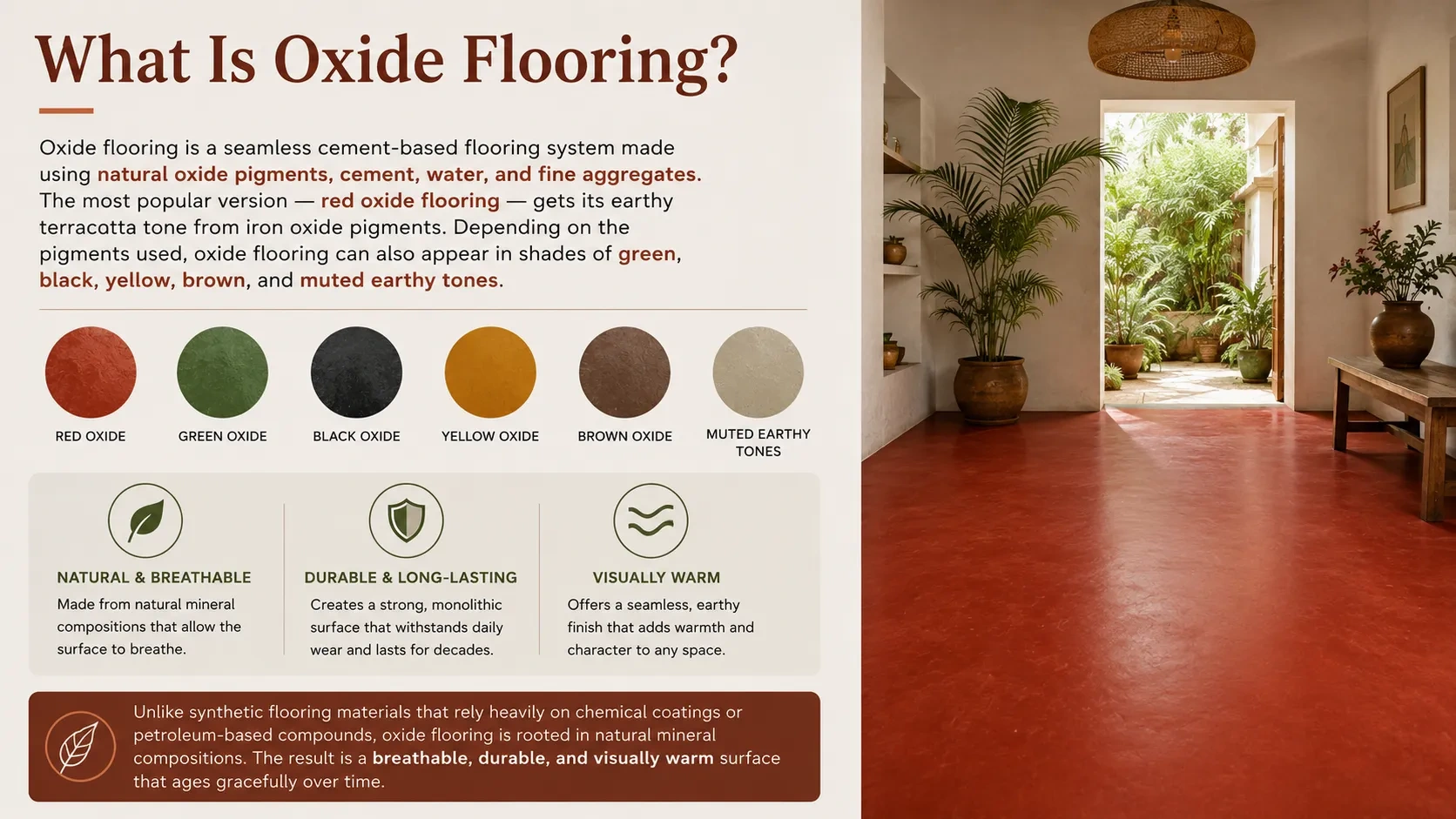
Oxide flooring is a seamless cement-based flooring system made using natural oxide pigments, cement, water, and fine aggregates. The most popular version, red oxide flooring gets its earthy terracotta tone from iron oxide pigments. Depending on the pigments used, oxide flooring can also appear in shades of green, black, yellow, brown, and muted earthy tones.
Unlike synthetic flooring materials that rely heavily on chemical coatings or petroleum-based compounds, oxide flooring is rooted in natural mineral compositions. The result is a breathable, durable, and visually warm surface that ages gracefully over time.
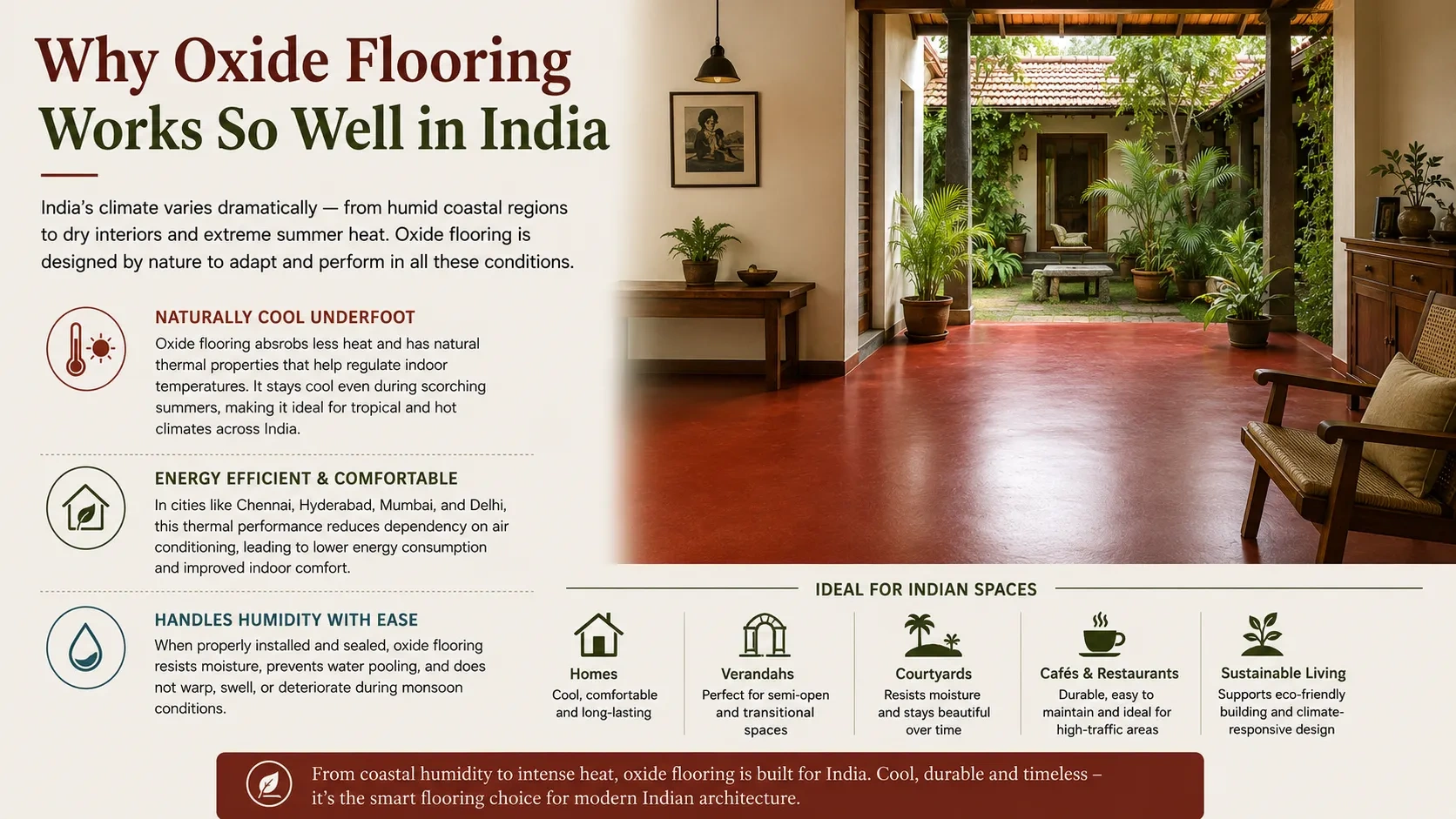
Why Oxide Flooring Works So Well in India
India’s climate varies dramatically from humid coastal regions to dry interiors and extreme summer heat. One of oxide flooring’s greatest advantages is its ability to remain naturally cool underfoot. The flooring absorbs less heat and helps regulate indoor temperatures, making it particularly valuable in tropical and hot climates.
In cities like Chennai, Hyderabad, Mumbai, and Delhi, this thermal performance can contribute to reduced dependency on air conditioning and improved indoor comfort.
Oxide flooring also handles humidity remarkably well when properly installed and sealed. Unlike certain wooden or laminate flooring systems, it does not warp, swell, or deteriorate easily during monsoon conditions. This makes it highly suitable for Indian homes, verandahs, courtyards, cafés, and semi-open spaces.
A Sustainable Flooring Choice
As the Indian construction industry moves toward sustainable and low-impact building practices, oxide flooring is gaining attention for its environmental benefits. The material uses relatively simple, locally available ingredients and requires significantly less processing compared to ceramic tiles or imported stone finishes.
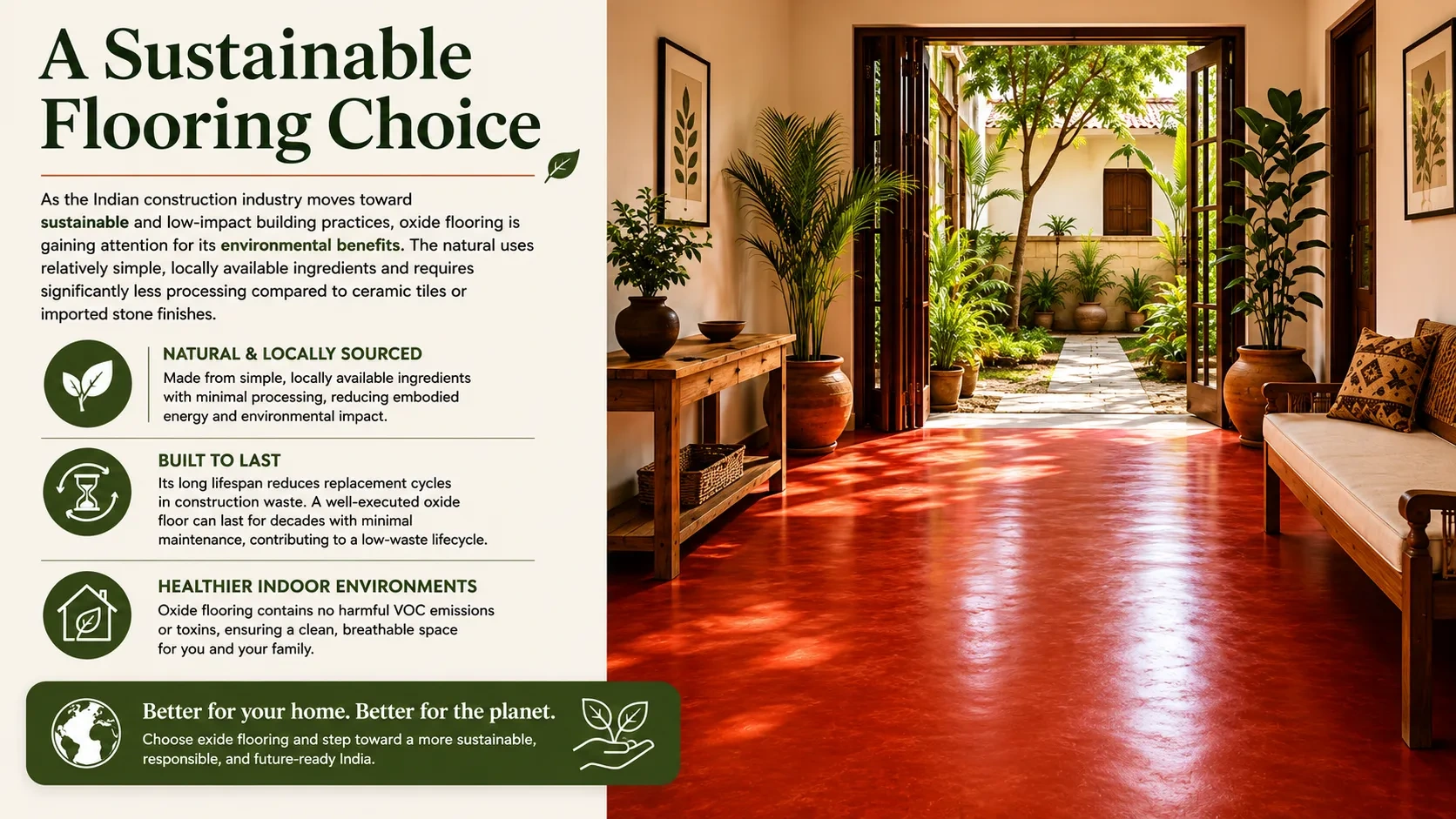
Its long lifespan also reduces replacement cycles and construction waste. A well-executed oxide floor can last for decades with minimal maintenance, making it both environmentally and economically efficient.
Additionally, oxide flooring supports healthier indoor environments because it contains no harmful VOC emissions commonly associated with synthetic flooring products.
Frequently asked
The Beauty of Handmade Imperfection
One of the reasons designers are increasingly drawn to oxide flooring is its handcrafted character. No two oxide floors look exactly alike. Slight tonal variations, polishing marks, and natural texture shifts create surfaces that feel authentic rather than factory-made.
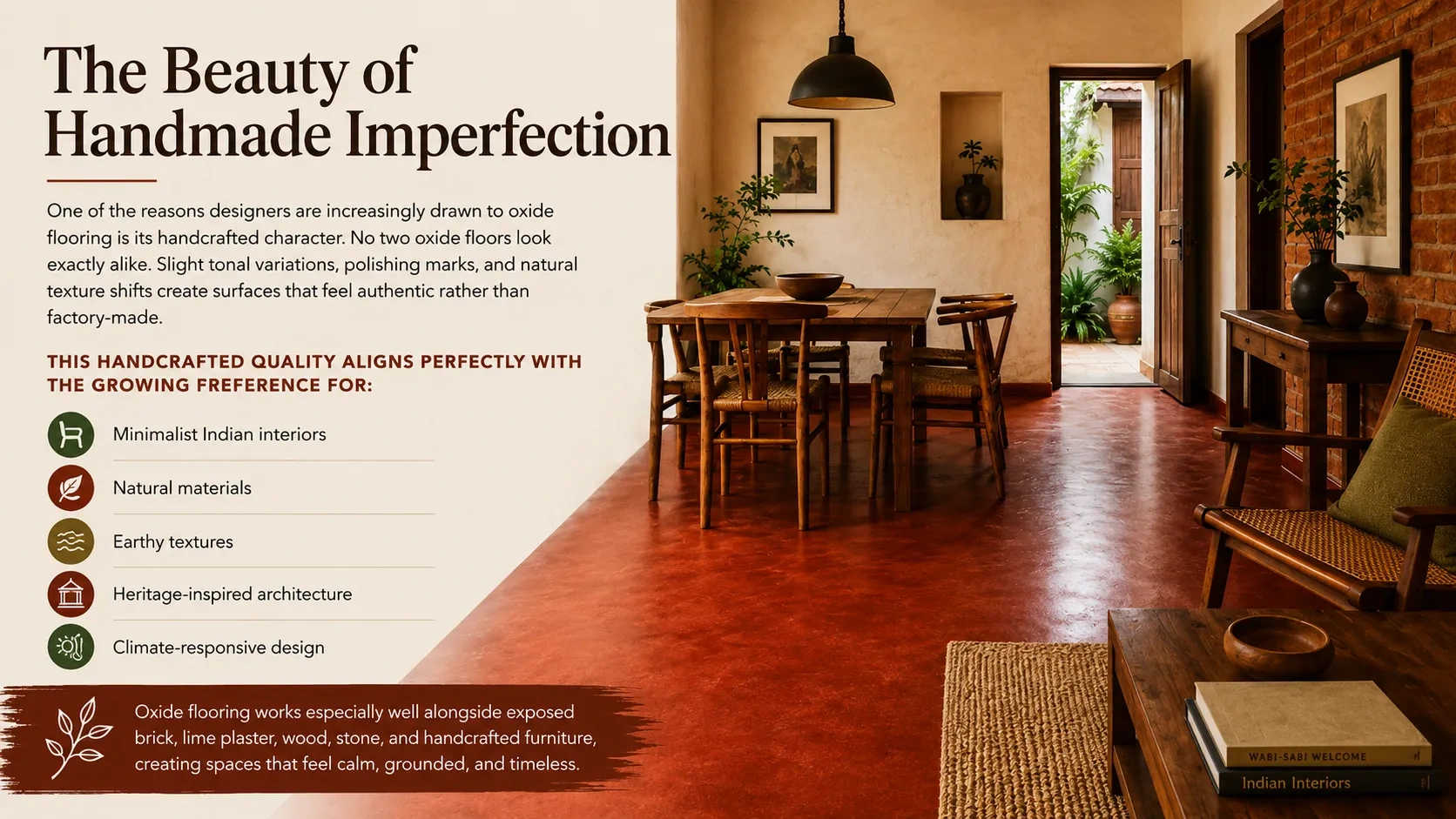
This handcrafted quality aligns perfectly with the growing preference for:
Minimalist Indian interiors
Natural materials
Earthy textures
Heritage-inspired architecture
Climate-responsive design
Oxide flooring works especially well alongside exposed brick, lime plaster, wood, stone, and handcrafted furniture, creating spaces that feel calm, grounded, and timeless.
Applications Across Modern Projects
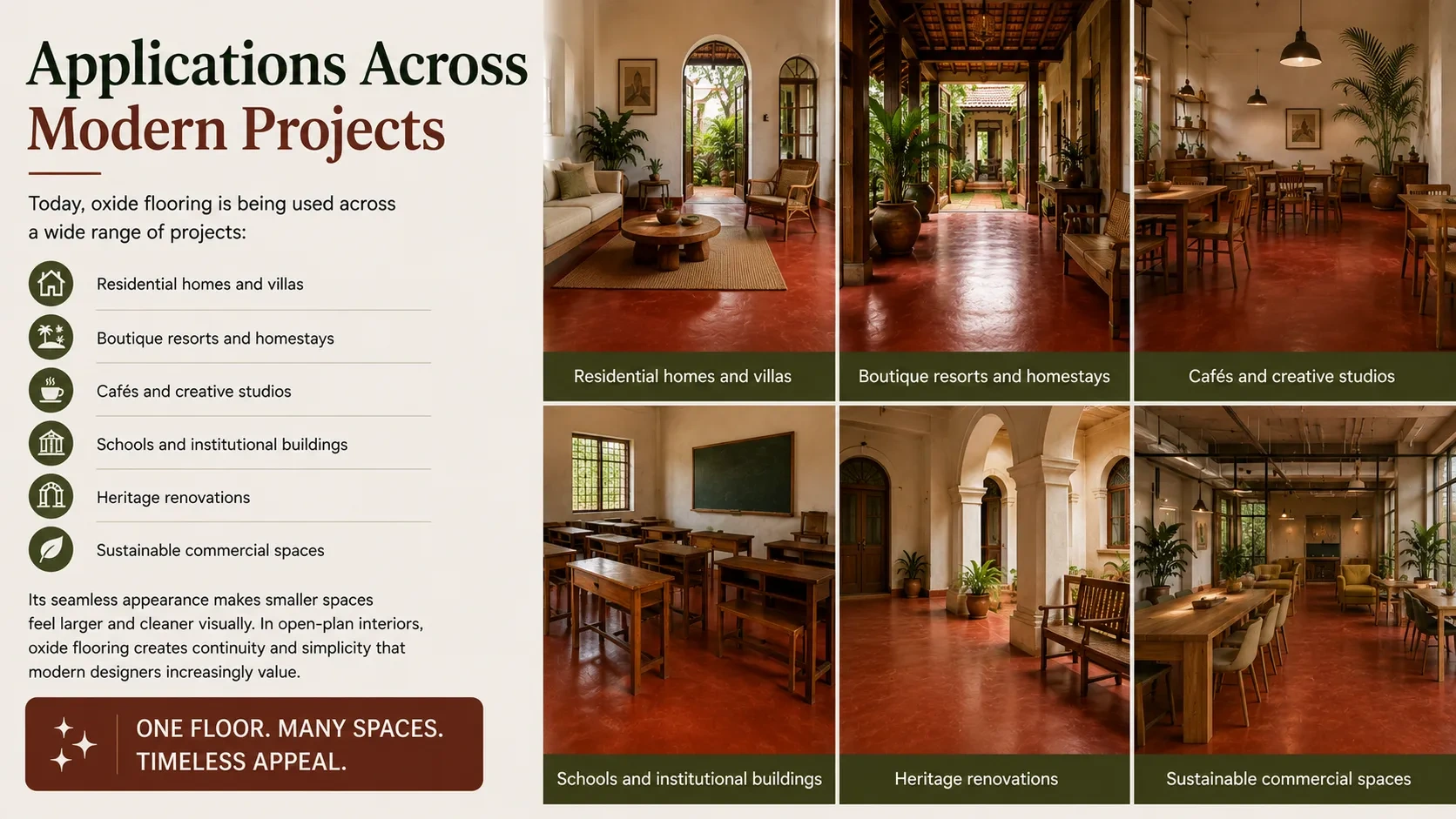
Today, oxide flooring is being used across a wide range of projects:
Residential homes and villas
Boutique resorts and homestays
Cafés and creative studios
Schools and institutional buildings
Heritage renovations
Sustainable commercial spaces
Its seamless appearance makes smaller spaces feel larger and cleaner visually. In open-plan interiors, oxide flooring creates continuity and simplicity that modern designers increasingly value.
Cost and Maintenance
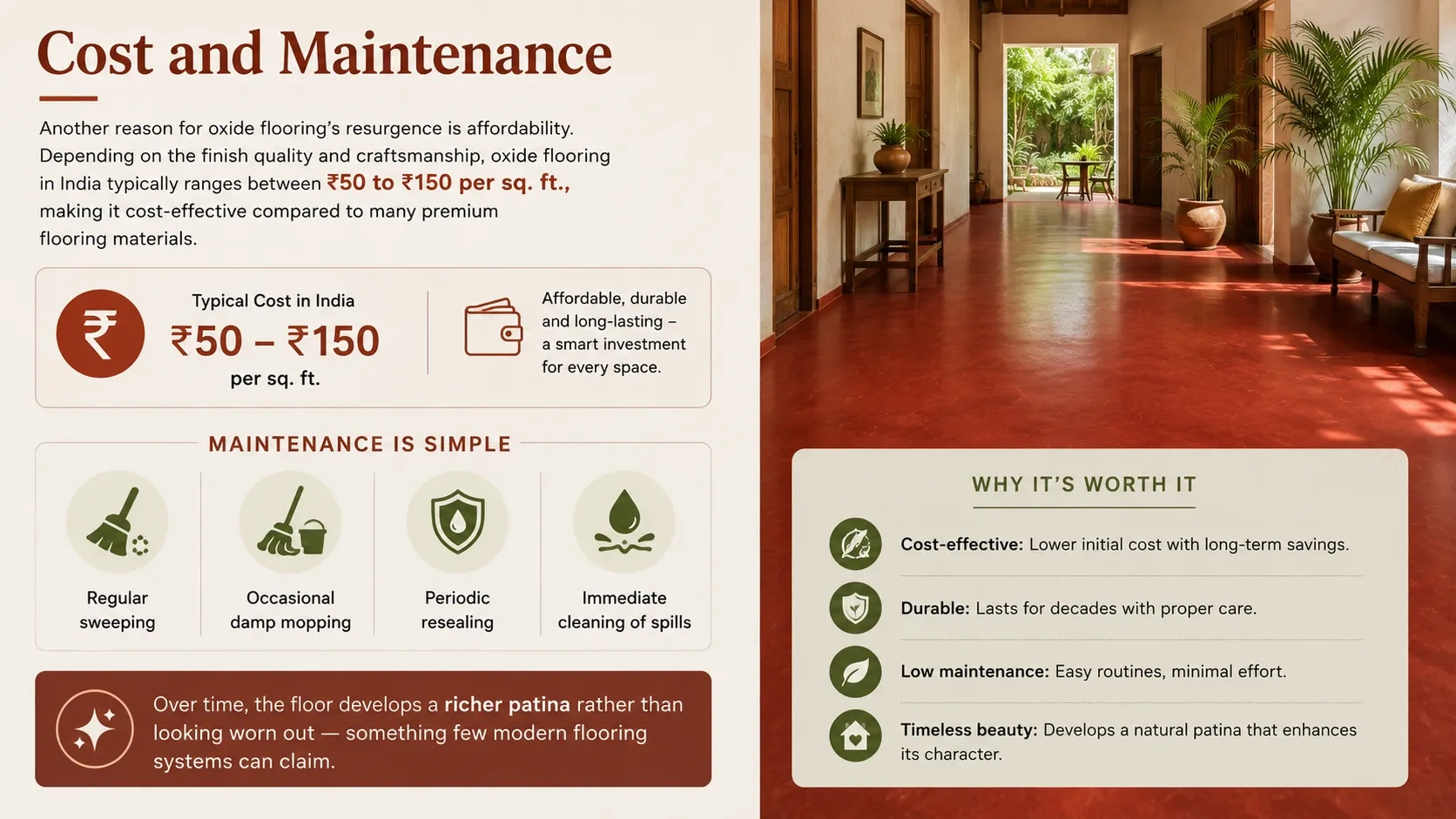
Another reason for oxide flooring’s resurgence is affordability. Depending on the finish quality and craftsmanship, oxide flooring in India typically ranges between ₹50 to ₹150 per sq. ft., making it cost-effective compared to many premium flooring materials.
Maintenance is relatively simple:
Regular sweeping
Occasional damp mopping
Periodic resealing
Immediate cleaning of spills
Over time, the floor develops a richer patina rather than looking worn out something few modern flooring systems can claim.
The Return of Intelligent Flooring
For years, Indian construction associated luxury with glossy imported surfaces and heavily processed materials. Oxide flooring challenges that mindset by proving that true luxury may lie in comfort, longevity, craftsmanship, and sustainability.
Its comeback reflects a larger shift in Indian architecture one that values authenticity, climate responsiveness, and locally rooted design over purely decorative finishes.
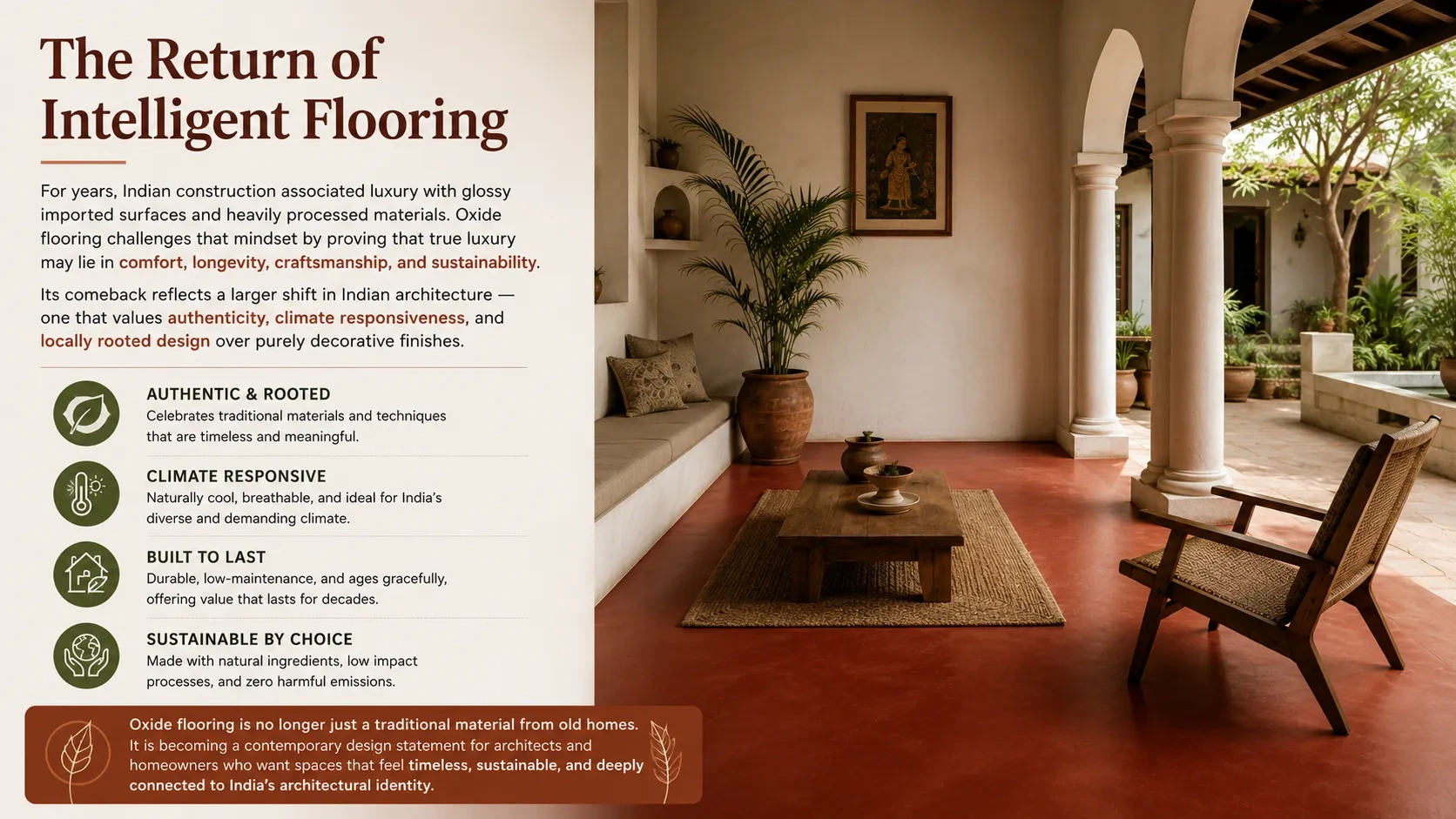
Oxide flooring is no longer just a traditional material from old homes. It is becoming a contemporary design statement for architects and homeowners who want spaces that feel timeless, sustainable, and deeply connected to India’s architectural identity.
Frequently Asked Questions
What is oxide flooring made of?
Oxide flooring is a seamless cement-based flooring system made using natural oxide pigments, cement, water, and fine aggregates. The popular red oxide variant gets its terracotta tone from iron oxide pigments, and it can also be created in shades of green, black, yellow, and brown depending on the pigments used.
Why is oxide flooring good for Indian climate?
Oxide flooring remains naturally cool underfoot and absorbs less heat, helping regulate indoor temperatures in India's hot and tropical climates. It also handles humidity well without warping or swelling during monsoon conditions, making it ideal for coastal regions and semi-open spaces.
Is oxide flooring sustainable?
Yes, oxide flooring is sustainable because it uses locally available, simple ingredients requiring minimal processing compared to ceramic tiles or imported stone. It has a long lifespan lasting decades with minimal maintenance, reduces replacement cycles, and contains no harmful VOC emissions.
How long does oxide flooring last?
A well-executed oxide floor can last for decades with minimal maintenance, making it both environmentally and economically efficient. Its durability reduces the need for replacements and helps minimize construction waste.
What makes oxide flooring unique in design?
Oxide flooring has a handcrafted character where no two floors look exactly alike, with slight tonal variations, polishing marks, and natural texture shifts creating authentic surfaces that feel artisanal rather than factory-made.