


Simplifying online search for construction materials: An explanatory Note for Professionals
A practical help article for architects, designers, contractors, and project professionals
Sourcing products usually means a lot of back-and-forth: calling suppliers, sending the same email to several brands, and chasing for specifications. An RFI / SR (Request For Information/ Specification Request) gives you one place to state what you need and connect with relevant brands and suppliers.
This Note explains what an RFI is, when to raise one, and how to do it step by step.
Build cost · Bengaluru, May 2026
What Is an RFI?
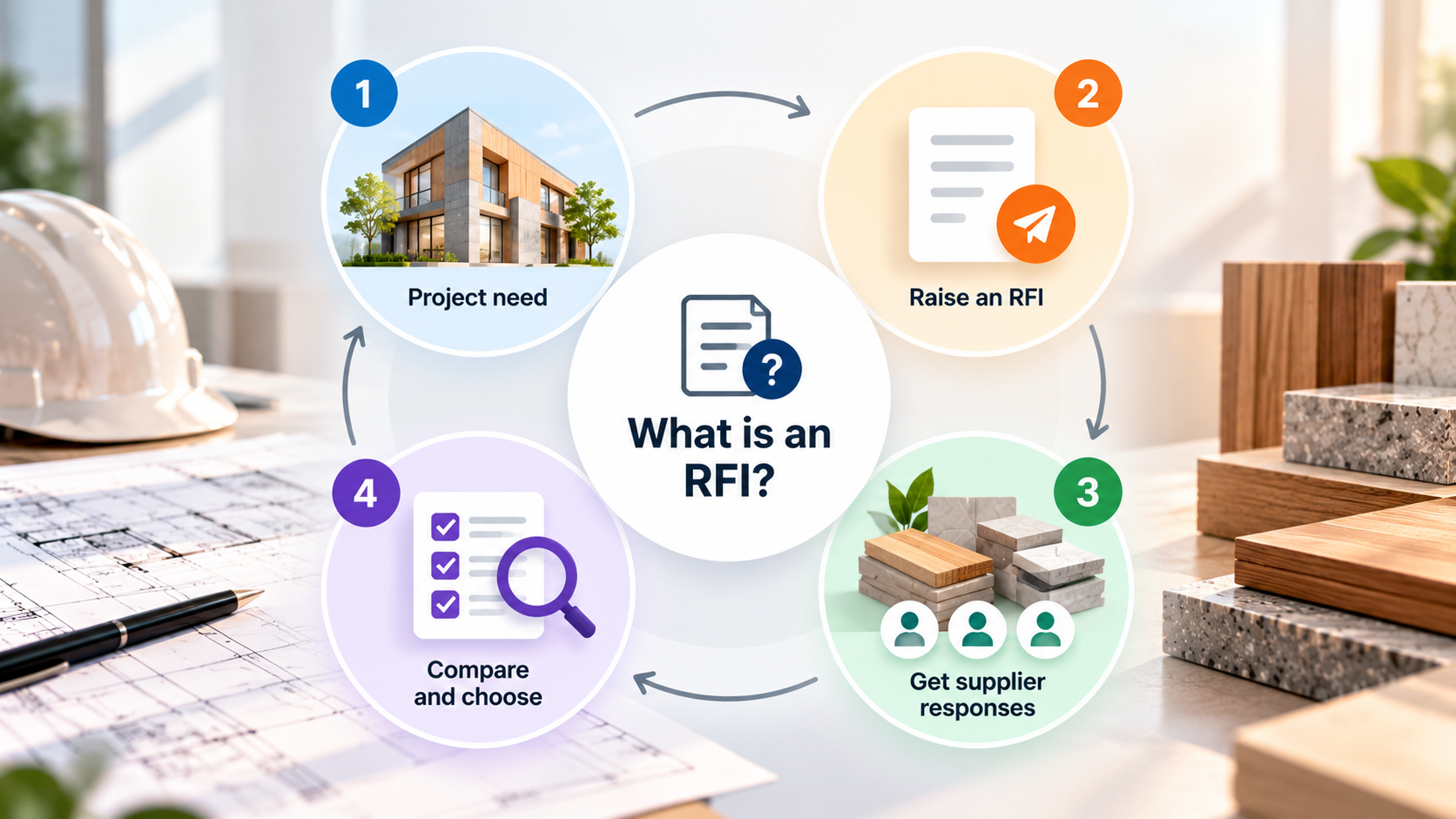
An RFI, or Request for Information, is a formal request for product or supplier details. In procurement, it helps you:
Identify suitable products
Understand technical specifications
Explore alternatives
Start conversations with suppliers before you commit to a purchase
In other words, you share your project requirements once, and relevant brands and suppliers can respond.
Why Raise an RFI?
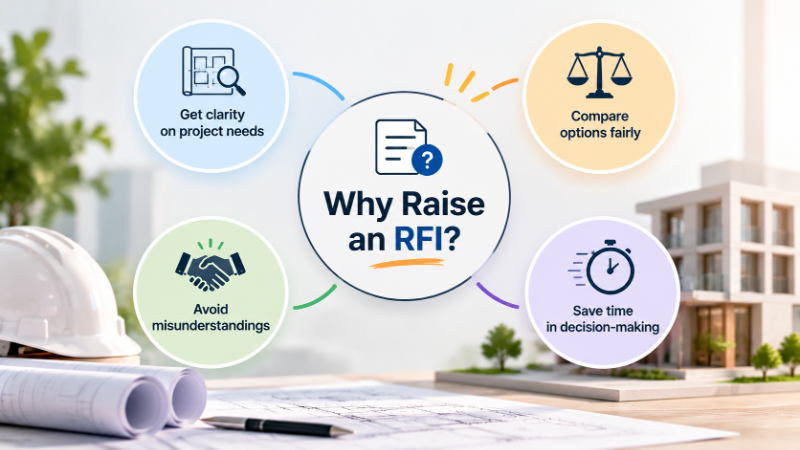
Reach relevant suppliers faster. Instead of searching for suppliers one by one, you describe your requirement and connect with businesses that offer matching products.
Start procurement with clarity. A well-written RFI gives suppliers a clear starting point, so you spend less time on repeated inquiries.
Compare more options. Every project has its own design, technical, and budget needs. Supplier responses help you see what's available before you finalise a decision.
Make better-informed decisions. Price matters, but so do quality, technical compliance, availability, delivery timelines, warranties, and after-sales support. Responses let you weigh all of these.
When Should You Raise an RFI?
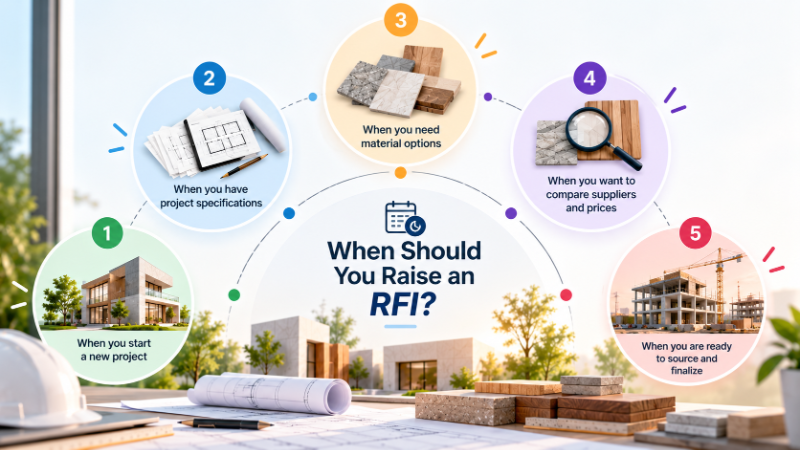
Consider raising one when:
You're starting a new residential or commercial project
You need product recommendations for a specific application
You're sourcing materials, furniture, lighting, sanitaryware, finishes, or other construction products
You want to explore alternative products or suppliers
You need technical specifications or more product information
You're preparing procurement estimates or comparing options
You have an upcoming project and want to identify suppliers early
Tip: Raise your RFI early in procurement planning. The sooner suppliers are involved, the more time you have to evaluate options and coordinate purchases.
Raise an RFI on AECORD : Steps to follow
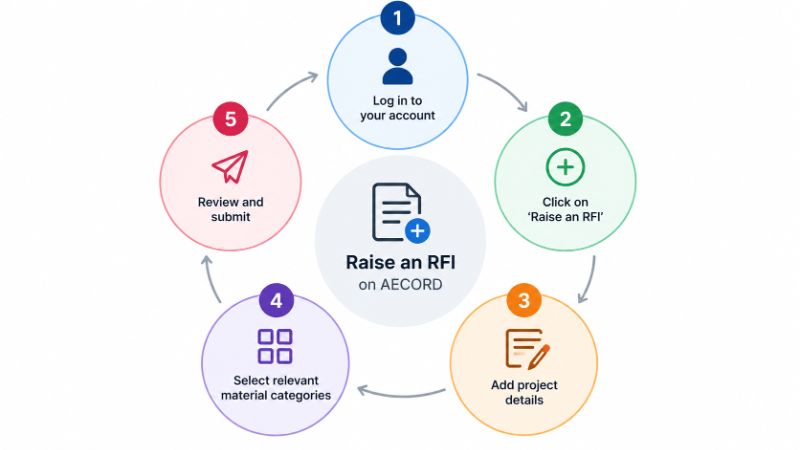
AECORD has templatised the process to simplify the steps for our professionals.
1. Sign in. Log in to your professional account on AECORD.
2. Open the RFI section. Find the RFI feature on the platform and start a new request.
3. Enter your requirements. Fill in as much of the following as you can:
Detail | What to include |
|---|---|
Project details | Project type, name, and location |
Product requirements | The product category or materials you need |
Specifications | Dimensions, finishes, technical requirements, preferred brands (if any) |
Quantity | Estimated quantity or scope |
Budget | Expected budget or target price range, if available |
Timeline | When you need the products or expect procurement to begin |
Additional notes | Any special requirements suppliers should know |
4. Review and submit. Check that your requirements are clear and accurate, then submit.
5. Review responses. Read what suppliers send back. If something is unclear, ask for more information.
6. Shortlist and move ahead. Compare options on specifications, pricing, quality, availability, and delivery timelines. Then contact your preferred suppliers to discuss quotations, samples, negotiation, and next steps.
Note: Platform features, supplier responses, and procurement arrangements may vary depending on your request.
A Quick Example
Here is the kind of detail that makes an RFI easy for suppliers to answer. The example is illustrative only.
Project: 3-storey office fit-out, Bengaluru
Requirement: Vitrified floor tiles for common areas
Specifications: 600 × 600 mm, matte finish, light grey
Quantity: Approx. 1,200 sq. m.
Timeline: Delivery needed within 8 weeks
Notes: Samples requested before final order
Tips for a Better RFI
Be specific. State the product type, application, and technical details.
Include quantities. Even estimates help suppliers judge the scope.
Mention your location. It helps suppliers plan delivery and logistics.
Share your timeline. Say when you'll decide and when you need delivery.
Attach supporting documents. Drawings, schedules, reference images, and specifications all help.
Reply promptly. Quick answers to supplier questions keep things moving.
Frequently Asked Questions
Is an RFI useful for small projects? Yes. It works for residential renovations, single-product needs, and interior projects as well as large commercial developments. Just match the level of detail to your project's scope.
Can I use an RFI to find new suppliers? Yes. It helps you communicate your requirements and discover manufacturers, brands, and suppliers available through AECORD.
Does an RFI guarantee quotations? No. An RFI helps start supplier engagement, but responses, quotations, availability, and pricing depend on the suppliers and your request.
What should I include? Project type, location, product category, specifications, estimated quantities, budget, and timeline. The more relevant detail you give, the easier it is for suppliers to respond.
How does AECORD support better procurement? It helps you communicate requirements and connect with relevant brands and suppliers, which makes supplier discovery, information gathering, and planning more organised.
Start Your Next Procurement the Easy Way
Good procurement starts with clear requirements and the right supplier connections. If you have an upcoming project, don't wait until procurement becomes urgent.
Visit AECORD and Raise Your RFI Today: https://aecord.com/dashboard/projects/rfis